
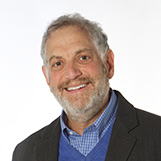
Distinguished University Professor Jordan Goodman has been named the winner of the 2017 Yodh Prize for “outstanding leadership in the development of water Cherenkov instruments in high-energy gamma-ray astronomy”. The prize was awarded at the 35th International Cosmic Ray Conference 2017 (ICRC2017) in Busan, South Korea.
Goodman is currently the U.S. scientific spokesperson and PI for the High Altitude Water Cherenkov experiment (HAWC) in the Sierra Negra mountains of Mexico. Previously, he was co-spokesperson/PI for the MILAGRO Gamma Ray Experiment in New Mexico, where he and his collaborators developed a detector designed to measure the energy and arrival direction of gamma and cosmic rays via Cherenkov radiation in massive vats of water.
In addition, Goodman has worked on the IceCube South Pole Neutrino Observatory and the Super-Kamiokande Neutrino Experiment in Japan. Physics World named IceCube the 2013 Breakthrough of the Year for making the first observations of cosmic neutrinos. The Super-K experiment proved that neutrinos have mass and was the basis of Takaaki Kajita’s 2015 Nobel Prize in Physics and the 2016 Breakthrough Prize, which was shared by the collaboration including Goodman and UMD Professor Greg Sullivan and UMD Research Scientist Erik Blaufuss.
The Yodh prize was endowed by Gaurang and Kanwal Yodh to the University of California Irvine Foundation in 1998 and is given out bi-annually at the International Cosmic Ray Conference. Professor Yodh, a noted astrophysicist, received his Ph.D. at the University of Chicago, working under Enrico Fermi, and before settling at UCI was a professor at UMD, where he oversaw Goodman’s graduate work. Yodh’s many research contributions include extracting rising proton-air cross sections from the analysis of cosmic ray data and developing early transition radiation detectors for particle detection. He is a Fellow of the American Physical Society, the American Association for the Advancement of Science, and the UK Institute of Physics. Yodh is also an accomplished sitar player, and while in College Park offered a course in Indian classical music performance that helped launch the UMD ethnomusicology program.

