• Home
  • About Us
    • Physics Administration
    • Directions
    • Awards
    • Student Awards
    • Make a Donation
    • News
      • Research News
      • Department News
      • Newsletters
    • PTK Policy
  • People
    • All
    • Faculty
      • Current
      • Emeritus
      • Adjunct
      • Affiliate
      • Research Professors
    • Research Scientists
    • Postdocs
    • Staff
    • Lecturers
    • Visitors
    • Graduate Students
  • Research
    • Research Areas
      • AI and Physical Sciences
      • Astro Metrology
      • Atomic, Molecular & Optical
      • Biophysics
      • Chemical Physics
      • Condensed Matter Experiment
      • Condensed Matter Theory
      • Cosmic Ray Physics
      • Elementary Particles
      • Gravitation Experiment
      • Gravitational Theory
      • High Energy Physics
      • Nonlinear Dynamics, Chaos and Complex Systems
      • Nuclear Physics
      • Particle Astrophysics
      • Physics Education Research
      • Plasma Physics
      • Plasma Theory
      • Quantum Science and Technology
      • Quarks, Hadrons and Nuclei
      • Space Physics
    • Centers & Institutes
  • Academics
    • OSES Home (Student Services)
    • OSES News
    • Undergraduate Program
      • Prospective Students
      • Apply Now
      • Degree Requirements and Policies
      • Scholarships
      • Undergraduate Research
      • Advising
      • Undergraduate Forms
      • Undergraduate Events
      • Departmental Honors
      • Society of Physics Students
      • FAQ
      • Undergraduate Student Committee
    • Graduate Program
      • Prospective Students
      • Open House
      • Degree Requirements
      • Graduate Resources
      • Deadlines and Forms
      • PhD Defenses
        • PhD Defenses 2026
        • PhD Defenses 2025
        • PhD Defenses 2024
        • PhD Defenses 2023
        • PhD Defenses 2022
        • PhD Defenses 2021
        • PhD Defenses 2020
        • PhD Defenses 2019
        • PhD Defenses 2018
        • PhD Defenses 2017
        • PhD Defenses 2016
      • Events
      • Scholarships & Awards
      • Qualifier
      • Graduate Student Organizations
      • FAQ
    • Student Opportunities
      • GRAD-MAP
      • Graduate Student Organizations
      • Outreach Volunteering
      • Society of Physics Students
      • NSF S-STEM Program
      • Undergraduate Research
      • Women in Physics
      • Undergraduate Quantum Association
    • Courses
    • Academic Support
    • NSF S-STEM Program
    • Teaching Assistants
    • Where's my TA?
  • Events
    • Calendar
    • Physics Colloquia
    • W.J. Carr Lecture
    • Research Interaction Team (RIT) Math/Physics
    • Mechanick Quantum Biology Lecture
    • Irving and Renee Milchberg Endowed Lectureship
    • Charles W. Misner Endowed Lectureship in Gravitational Physics
    • John S. Toll Endowed Lecture
    • Prange Prize Lecture
    • Maryland Day
    • Outreach
      • Outreach Home
      • Physics is Phun
      • Discovery Days
    • Summer Programs
      • Physics Makers Camp
      • Physics of Quidditch
      • Science Discovery Camp
      • Advanced Physics Summer Program
      • Toolkit for Success
    • CUWiP
    • Vortex Makerspace
    • QURiSE Conference
  • Services
    • Building Access Requests
    • Computing Services
    • Conference Room Reservations
    • Department Operations Directory
    • Electronic and Mechanical Development
    • Hiring Procedures
    • Lecture Demo
    • Mental Health Resources
    • Parking
    • Physics Ombudspersons
    • Printing Services
      • Poster Print Request
    • Proposal Submissions
    • Purchase Order
    • Suggestion Box
    • Textbook Information
  • Give

Written on January 22, 2024. Posted in Department News.

Distinguished University Professor Ellen Williams Retires


Ellen D. Williams, a Distinguished University Professor in the Department of Physics and the Institute for Physical Science and Technology at the University of Maryland and director of the university’s Earth System Science Interdisciplinary Center (ESSIC), retired on December 30, 2023, after 42 years at the university. Following her official retirement, Williams is now a research professor of physics and executive director of ESSIC’s Cooperative Institute for Satellite Earth System Studies (CISESS).

“Dr. Ellen D. Williams is an iconic figure at the University of Maryland. Not only was she a trailblazer as one of the first female full professors in physics, but she was a transformational scholar and leader,” said UMD President Darryll J. Pines. “Because of her scholarly excellence, she was recognized with the highest honor that the university bestows on its faculty, which is the title of Distinguished University Professor. I am deeply grateful for Dr. Williams' many contributions to the University of Maryland. I sincerely wish her well in her retirement!”

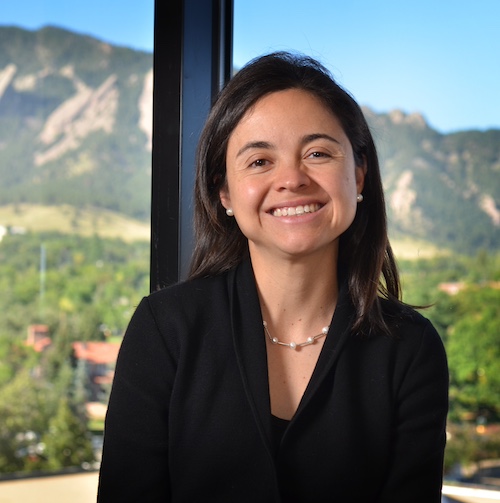
Williams came to UMD in 1981 for a postdoctoral fellowship and rose to the rank of professor by 1991.Ellen WilliamsEllen Williams

“I have had a wonderful career at the University of Maryland,” Williams said. “It has been my great pleasure to work with talented colleagues in interdisciplinary work that crossed both departmental and college lines. I am happy that I’ll be able to continue engaging with the university as I move into the next stage of my life.”

At Maryland, she established an internationally recognized research program in experimental surface science, exploring fundamental issues in statistical mechanics and nanotechnology. To accomplish this work, she pioneered the use of powerful scanning tunneling microscopy to quantify atomic scale order and disorder on the surface of materials such as silicon. In 1996, Williams founded the National Science Foundation-supported University of Maryland Materials Research Science and Engineering Center, serving as its director until 2009.

“Ellen Williams made fundamental contributions in applying statistical mechanics tools in surface science and nanotechnology,” said Steve Rolston, chair of UMD’s Department of Physics. “In addition, she has provided great insight and tireless effort to finding solutions to immense problems that threaten our entire planet.”

Within the Department of Physics, Williams also championed diversity in hiring and was active in the American Physical Society’s Committee on the Status of Women in Physics. In addition, she was an early proponent of the importance of computational tools in physics education. In 2004, she developed a Python-based course “Introduction to Programming for the Physical Sciences,” which subsequently became a required course in the undergraduate physics curriculum. 

Williams has a distinguished history of professional service both within the university, including serving as chair of the University Senate, and externally. Her external service includes work on national security, including chairing the development of the National Academy of Sciences’ 2012 report on “Technical Issues Related to the Comprehensive Nuclear Test Ban Treaty” and providing extensive technical advice to the U.S. government, primarily through the Departments of Energy and Defense. 

“Ellen Williams contributed immensely to the University of Maryland community and the global scientific community during her 42-year career here,” said Amitabh Varshney, dean of UMD’s College of Computer, Mathematical, and Natural Sciences (CMNS). “She has demonstrated distinction as an innovative scholar and teacher, valued mentor and colleague, and effective leader.”

Williams took a leave of absence from the university and served as the chief scientist for British Petroleum (BP) from 2010 to 2014, where her work included sustainability studies in collaborations including the Carbon Mitigation Initiative at Princeton University and the Energy Biosciences Institute at the University of California, Berkeley and the University of Illinois. In 2014, she was confirmed by the U.S. Senate as the director of the Advanced Research Projects Agency-Energy (ARPA-E). Williams led the agency in its mission to advance high-potential, high-impact clean energy technologies that are too early in development for private-sector investment. One of her goals while at ARPA-E was to establish a documentation process for research outcomes, so that every project, whether it succeeded or failed, would have a record of what worked or didn’t and a clear explanation of why to help guide future explorations in similar areas.

Williams returned to UMD in January 2017 and began work on bridging policy and technology perspectives for clean energy innovation. She established a graduate course to foster interactions between public policy students and students in the natural sciences and engineering called “Intersections of Technology and Policy in Modernizing the Energy System.” In 2018-19, she led a report to the State of Maryland on “The Present Status and Future Potential of Maryland’s Clean Energy Innovation System,” which was instrumental for continuing state support of the Maryland Energy Innovation Institute in UMD’s A. James Clark School of Engineering.  

Most recently, in 2020, she accepted the role of ESSIC director. As the largest research center at UMD, ESSIC serves a unique role as a collaboration hub within the national Earth system science research community by linking research efforts in UMD’s Departments of Atmospheric and Oceanic Science, Geology, and Geographical Sciences with NASA and the National Oceanic and Atmospheric Administration (NOAA). Under Williams’ leadership, ESSIC was awarded a new five-year, $95 million cooperative agreement with NASA in 2022 to support research, teaching and career training in Earth system science. In 2023, Williams presented the mid-term review of ESSIC’s cooperative institute, CISESS, to a NOAA committee. This resulted in the highest ranking of outstanding and an endorsement for continuing CISESS.

In 2023, a team led by Williams of researchers from ESSIC and the Departments of Atmospheric and Oceanic Science, Geology, and Geographical Sciences received a three-year, $3 million Grand Challenges Institutional Grant from the university to address climate change for a sustainable Earth. The team is working with federal partners as well as regional and state agencies to develop systems capable of providing early warning to communities about climate-related floods, tornadoes and other weather disasters. Using satellite data, ground-based sensors and other tools, the team is also working to deliver information to Maryland farmers and agribusinesses to help shield food production from changing climate.

Williams’ research and service accomplishments have been widely recognized. She has been elected as a member of the National Academy of Sciences, the American Academy of Arts and Sciences, and a foreign member of the Royal Society (London). She is also a fellow of the American Association for the Advancement of Science, the American Physical Society and the American Vacuum Society. She has also been recognized by awards from the American Physical Society and the Materials Research Society, and Distinguished Alumnus Awards from the California Institute of Technology and Michigan State University. 

Williams has also been a very generous donor to the university, creating a legacy of support for future generations of scientists. Her late husband Neil Gehrels, a College Park Professor of Astronomy and chief of the Astroparticle Physics Laboratory at NASA’s Goddard Space Flight Center, was named a 2017 Dan David Prize laureate a few days before he passed away. The prize included a $1 million award, and Williams donated his share to establish the Neil Gehrels Memorial Endowment in Astrophysics to support UMD students and postdocs engaged in research with astrophysicists at NASA Goddard. Five individuals have received Neil Gehrels Prize Postdoctoral Fellowships since 2018 and Williams continues to add to the endowment annually.

“In addition to the Gehrels Fellowship, Ellen has also generously supported diversity efforts within CMNS, undergraduate students with financial need, and the Department of Physics,” Varshney added. “She established renowned scientific and philanthropic legacies here at Maryland.”


Written on January 08, 2024. Posted in Department News.

Faculty, Staff, Student and Alumni Awards & Notes

We proudly recognize members of our community who recently garnered major honors, began new positions and more.

Department News
  • A memorial symposium commemorating the life and scientific career of Charles W. Misner was held on November 11. Videos and slides from the day can be found here.
Faculty and Staff
  • Thomas Antonsen received the James Clerk Maxwell Prize of the American Physical Society (APS).
  • Alberto Belloni was quoted in New Scientist.
  • Alessandra Buonanno received the Oskar Klein Medal.
  • Sankar Das Sarma described How AI and ML Will Affect Physics in Physics magazine.
  • Sarah Eno was lected to the leadership track of the APS Division of Particles and Fields (APS DPF).
  • Victor Galitski was quoted in Nature.
  • Sylvester "Jim" Gates gave an online presentation, "C.S. Wu: Mandated Observer of Nature's Secrets" as part of the Inaugural International Frontier Science Forum of The School of Physics and Optoelectronic Engineering at Hainan University. Also participating was Bill Phillips. 
    • Gates also spoke at the Joint Mathematics Meeting 2024 on the future of mathematics as it relates to the impact of IT/computationally enabled
      technology.
  • Work by a collaboration including Michael Gullans was featured in Phys.org.
  • Wendell Hill was featured in Physics magazine.
  • Wolfgang Losert was named an MPower Professor.
  • Howard Milchberg was awarded the APS Arthur L. Schawlow Prize in Laser Science,
  • Kartik Srinivasan was quoted in Phys.org.
  • Nicole Yunger Halpern was quoted in Phys.org and received the Mary Somerville Medal and Prize.
  Students
  • John Labbate was commended for his poster at the APS Division of Plasma Physics (APS-DPP) meeting in Denver.
  • Physics magazine Junheng Tao, Mingshu Zhao and Ian Spielman 
  • Simone Pierpaoli was mentioned in The Diamondback.
  • Isaac Sherwood was quoted in Maryland Today.
Alumni
  • William Raphael “Raph” Hix (B.S., '89) was elected a Fellow of the American Physical Society.
  • Samuel Lofland (Ph.D., '95) was elected a Fellow of the American Physical Society.
  • Michael Shay (Ph.D., '98) was elected a Fellow of the American Geophysical Union.

Written on November 16, 2023. Posted in Department News.

Losert Named MPower Professor

Wolfgang Losert has been named an MPower Professor.  Three professors from UMD and from the University of Maryland, Baltimore (UMB)  received this distinction from the University of Maryland Strategic Partnership: MPowering the State (MPower), which recognizes, incentivizes, and fosters collaborations between the two institutions.

Losert holds a joint appointment in physics and the Institute for Physical Science and Technology (IPST). He also holds an affiliate appointment in the Fischell Department of Bioengineering, andan adjunct appointment with the University of Maryland Medical System's Greenebaum Comprehensive Cancer Center. He is co-director of the National Cancer Institute-University of Maryland Partnership for Integrative Cancer Research. Losert's research — supported by $2 million-plus a year in funding for the past seven years — is at the convergence of physics, biology, and artificial intelligence and focuses on the nonlinear dynamics of living systems.
Wolfgang Losert. Credit: UMD/Lisa Helfert. Wolfgang Losert. Credit: UMD/Lisa Helfert.

In his research, Losert aims to discover emergent dynamic properties of complex systems at the interface of physics and biology. He currently leads a Multidisciplinary University Research Initiative program funded by the Air Force Office of Scientific Research that transformed our understanding of how cells sense their physical environment. He also serves as co-principal investigator on a Brain Research through Advancing Innovative Neurotechnologies (BRAIN) initiative center grant from the National Institutes of Health focused on information processing in sensory brain circuits.

Losert actively fosters cross-disciplinary interactions and new research and educational opportunities on campus and beyond. He helped launch and currently co-leads the American Physical Society Group on Data Science. He was part of a trans-university initiative of the Howard Hughes Medical Institute (called NEXUS) that developed new science and math courses for biology majors and pre-health care students that are being widely adopted. He led the development of and co-directs the NCI-UMD Partnership for Integrative Cancer Research, which provides UMD faculty members and graduate students the opportunity to tackle pressing problems in cancer research in collaboration with National Cancer Institute experts. 

A Fellow of the American Physical Society and the American Association for the Advancement of Science, Losert joined UMD in 2000 as an assistant professor and served as an associate dean in CMNS (2014-22) and as interim IPST director (2019-20). He earned his Ph.D. in physics from the City College of the City University of New York in 1998 and his diplom in applied physics from the Technical University of Munich in Germany in 1995.

Also selected were Jessica Magidson and Steven Prior from UMD and Lisa Berlin, Osamah Saeedi and James Polli from UMB.

Written on November 10, 2023. Posted in Department News.

Buonanno to Receive Oskar Klein Medal

Research Professor Alessandra Buonanno will receive the 2023 Oskar Klein Medal by the Stockholm University and the Nobel Committee of the Royal Swedish Academy of Sciences. Each year, a distinguished physicist is invited to deliver the Memorial Lecture and to receive the Oskar Klein medal. Buonanno will give the Memorial Lecture on “Gravitational-Wave Astronomy: Theoretical Advances and Challenges” on November 23 at the AlbaNova Center in Stockholm.Alessandra Buonanno  © Markus Scholz for the Leopoldina Alessandra Buonanno © Markus Scholz for the Leopoldina

Buonanno is the director of the Astrophysical and Cosmological Relativity Department at the Max Planck Institute for Gravitational Physics  (Albert Einstein Institute) in Potsdam.

Buonanno's research has spanned several topics in gravitational wave theory, data analysis and cosmology. She is a Principal Investigator of the LIGO Scientific Collaboration, and her waveform modeling of cosmological events has been crucial in the experiment’s many successes. Her work has merited election to the U.S. National Academy of Sciences and Leopoldina, the German National Academy of Sciences.

In 2018, Buonanno received the Leibniz Prize, Germany's prestigious research award. Other accolades include the Galileo Galilei Medal of the National Institute for Nuclear Physics (INFN), the Tomalla Prize, the Dirac Medal (with Thibault Damour, Frans Pretorius, and Saul Teukolsky) and the Balzan Prize (with Damour).

She is a Fellow of the American Physical Society and the International Society of General Relativity and Gravitation and a recipient of the Alfred P. Sloan Foundation Fellowship and the Richard A. Ferrell Distinguished Faculty Fellowship.

Buonanno, Charlie Misner, Peter Shawhan and others detailed UMD's contributions to gravitational studies in a 2016 forum, A Celebration of Gravitational Waves. 

Originally published by the Max Plank Institute: https://www.aei.mpg.de/1092354/alessandra-buonanno-awarded-oskar-klein-medal

More Articles …

  1. Eno Elected to Leadership Line
  2. Milchberg Receives APS Schawlow Prize
  3. Simulations of ‘Backwards Time Travel’ Can Improve Scientific Experiments
  4. Pablo Jarillo-Herrero to Give Prange Prize Lecture on Oct. 24

Page 39 of 254

  • 34
  • 35
  • 36
  • 37
  • 38
  • 39
  • 40
  • 41
  • 42
  • 43
  • Physics Administration
  • Directions
  • Awards
  • Student Awards
  • Make a Donation
  • News
    • Research News
    • Department News
    • Newsletters
  • PTK Policy

College and Department Links

Department of Physics

Physical Sciences Complex
4296 Stadium Dr
College Park, MD 20742
Phone: 301.405.3401

Information

  • Campus Directory
  • Undergraduate Research
  • Scholarships
  • Prospective Undergraduates
  • Directions & Transit
  • Web Accessibility
© 2026 Department of Physics - University of Maryland
Back to Top
  • Home
  • About Us
    • Physics Administration
    • Directions
    • Awards
    • Student Awards
    • Make a Donation
    • News
      • Research News
      • Department News
      • Newsletters
    • PTK Policy
  • People
    • All
    • Faculty
      • Current
      • Emeritus
      • Adjunct
      • Affiliate
      • Research Professors
    • Research Scientists
    • Postdocs
    • Staff
    • Lecturers
    • Visitors
    • Graduate Students
  • Research
    • Research Areas
      • AI and Physical Sciences
      • Astro Metrology
      • Atomic, Molecular & Optical
      • Biophysics
      • Chemical Physics
      • Condensed Matter Experiment
      • Condensed Matter Theory
      • Cosmic Ray Physics
      • Elementary Particles
      • Gravitation Experiment
      • Gravitational Theory
      • High Energy Physics
      • Nonlinear Dynamics, Chaos and Complex Systems
      • Nuclear Physics
      • Particle Astrophysics
      • Physics Education Research
      • Plasma Physics
      • Plasma Theory
      • Quantum Science and Technology
      • Quarks, Hadrons and Nuclei
      • Space Physics
    • Centers & Institutes
  • Academics
    • OSES Home (Student Services)
    • OSES News
    • Undergraduate Program
      • Prospective Students
      • Apply Now
      • Degree Requirements and Policies
      • Scholarships
      • Undergraduate Research
      • Advising
      • Undergraduate Forms
      • Undergraduate Events
      • Departmental Honors
      • Society of Physics Students
      • FAQ
      • Undergraduate Student Committee
    • Graduate Program
      • Prospective Students
      • Open House
      • Degree Requirements
      • Graduate Resources
      • Deadlines and Forms
      • PhD Defenses
        • PhD Defenses 2026
        • PhD Defenses 2025
        • PhD Defenses 2024
        • PhD Defenses 2023
        • PhD Defenses 2022
        • PhD Defenses 2021
        • PhD Defenses 2020
        • PhD Defenses 2019
        • PhD Defenses 2018
        • PhD Defenses 2017
        • PhD Defenses 2016
      • Events
      • Scholarships & Awards
      • Qualifier
      • Graduate Student Organizations
      • FAQ
    • Student Opportunities
      • GRAD-MAP
      • Graduate Student Organizations
      • Outreach Volunteering
      • Society of Physics Students
      • NSF S-STEM Program
      • Undergraduate Research
      • Women in Physics
      • Undergraduate Quantum Association
    • Courses
    • Academic Support
    • NSF S-STEM Program
    • Teaching Assistants
    • Where's my TA?
  • Events
    • Calendar
    • Physics Colloquia
    • W.J. Carr Lecture
    • Research Interaction Team (RIT) Math/Physics
    • Mechanick Quantum Biology Lecture
    • Irving and Renee Milchberg Endowed Lectureship
    • Charles W. Misner Endowed Lectureship in Gravitational Physics
    • John S. Toll Endowed Lecture
    • Prange Prize Lecture
    • Maryland Day
    • Outreach
      • Outreach Home
      • Physics is Phun
      • Discovery Days
    • Summer Programs
      • Physics Makers Camp
      • Physics of Quidditch
      • Science Discovery Camp
      • Advanced Physics Summer Program
      • Toolkit for Success
    • CUWiP
    • Vortex Makerspace
    • QURiSE Conference
  • Services
    • Building Access Requests
    • Computing Services
    • Conference Room Reservations
    • Department Operations Directory
    • Electronic and Mechanical Development
    • Hiring Procedures
    • Lecture Demo
    • Mental Health Resources
    • Parking
    • Physics Ombudspersons
    • Printing Services
      • Poster Print Request
    • Proposal Submissions
    • Purchase Order
    • Suggestion Box
    • Textbook Information
  • Give