Rehearsals, Recitals and Research

University of Maryland physics and astronomy dual-degree senior Delina Levine got her first introduction to music when she just was six years old, soon after she pestered her parents to sign her up for piano lessons. Delina LevineDelina Levine

As her fingers rhythmically tapped the black and white keys, Levine noticed that the sounds she created with the piano differed depending on the amount of force her hands exerted on the keys. Applying the piano’s pedals while she played created variations in the sounds she produced and while some chords harmonized, others didn’t. It wasn’t until years later that she learned why and how these changes influenced the music she played.

In middle school, her teacher asked the students to write a paper on any topic, so long as that topic tied back to math. Although Levine was skeptical, her teacher assured her that there was a mathematical connection to almost anything she could think of. 

“Of course, I chose to write about music for that assignment,” Levine recalled. “I wasn’t sure at first, but when I researched for the paper, I got to learn about the relationship between math, physics and music. What really struck me was how physics is so involved in music, especially with concepts like acoustics. It was then that I realized how important physics is when it comes to understanding how things work.”

After that assignment, Levine believed physics could be the key to satisfying her natural inquisitiveness about music, stars and outer space. At UMD, Levine’s trifecta of interests prompted her to pursue a dual degree in astronomy and physics in addition to a minor in music performance. 

“My first year here, I attended a class taught by Professor Bhatti that talked about the detection and analysis of dark matter. I remember that the class made a big impression on me,” Levine explained. “That was a big step for me into the overlap between physics and astronomy.”

Levine also participated in the 2020 Student Summer Theoretical Physics Research Session (SSTPRS), a program developed by Distinguished University Professor of Physics S. James Gates Jr. Designed to introduce undergraduates to the world of experimental physics research, SSTPRS provided Levine’s first opportunity to see real-world applications for the science she learned in the classroom. 

“We spent the first few weeks learning the math and physics needed for the calculations we needed to make later in the program,” said Levine. “That summer, I worked on supersymmetry projects with a group of other undergrads like me, and it gave me critical insight into research and all of the collaborative effort behind it.”

According to Levine, UMD’s Society of Physics Students (SPS) has also been one of the most instrumental parts of her journey to becoming a full-fledged researcher. As a member since 2019, Levine participated in exclusive behind-the-scenes lab tours led by professors and industry physicists, professional development workshops and training sessions, field trips to the campus nuclear reactor and movie nights. In her sophomore year, Levine served as SPS board communications officer. By fall 2022, she was elected president—taking a leadership role in the organization that guided her since the beginning of her journey in physics. 

“All the camaraderie and knowledge-sharing that I experienced with SPS inspired me to get more involved with its activities and leadership,” Levine said. “I just wanted to continue that tradition and remind my peers that we’re all in this together.”

"As SPS president, Delina is an inspiring leader,” said Donna Hammer, SPS faculty advisor and director of education for UMD’s Department of Physics. “Her vision for SPS includes providing the opportunity for every physics major to feel included, informed and supported.”

Off-campus, Levine puts the skills she developed at UMD into practice. She currently works as an undergraduate research assistant at the National Astronomical Observatory of Japan (NAOJ), where she studies gamma-ray bursts. Since she started her remote position with NAOJ in 2021, Levine has already written on gamma rays, their luminosity and their potential to be used as a way to measure cosmological distances. 

“Although my work at NAOJ is done online, the research environment I’m part of is incredibly diverse. My colleagues are from different time zones and countries all over the world—Italy, India, Japan, just to name a few. I also have a female principal investigator, which is still a rare occurrence in the world of physics and astronomy,” Levine said. “I see her as a role model and mentor, and I’d like to become someone like that in the future for other young scientists. What I’ve learned from NAOJ and also UMD makes me feel better equipped to tackle future challenges and goals that may come to me as a researcher."

Despite her busy schedule, Levine continues to make time for music. Over the years, she accompanied choirs and played with jazz bands, which she says helped her explore her talents beyond her classical training and develop additional layers of flexibility. In May 2022, Levine performed a piano recital at the Clarice Smith Performing Arts Center to an audience full of her peers, something she hopes to do again before she graduates in May 2023. 

“Having these experiences with SPS, my music and my research is very fulfilling for me. I especially appreciate the collaborativeness, creativity and diversity of thought that all these parts of my life encourage,” Levine said. “As president of SPS, I really want to continue supporting my fellow physics students with more opportunities to support and learn from each other—just as SPS and my mentors have done for me.” 

Recent Alumnus Embraced Community and Service at UMD

Joining a graduate program is not just about choosing a university and studying a subject. It’s also about joining a community of people who help shape the experience and can support and welcome people who are new to the world of academic research.

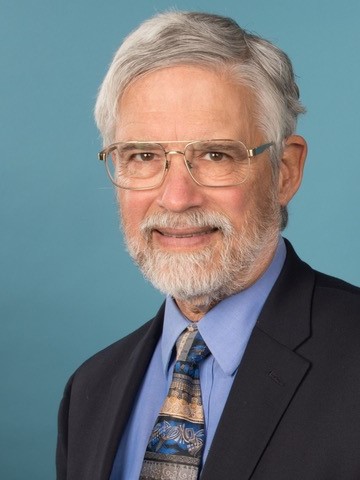
Andrew Guo (Ph.D. ’22, physics) spent a lot of his time at UMD researching the underpinnings of quantum interactions and algorithms as a graduate student at the Joint Quantum Institute and the Joint Center for Quantum Information and Computer Science (QuICS). During that period he also made time to connect with surrounding communities and to invite other people to participate in physics and astronomy research through the graduate student organization called Graduate Resources for Advancing Diversity with Maryland Astronomy and Physics (GRAD-MAP).

Andrew Guo teaching a lesson as part of the 2018 ASDAN Math Tournament in Beijing, China.Andrew Guo teaching a lesson as part of the 2018 ASDAN Math Tournament in Beijing, China.Guo credits his choice to study physics to a natural spark of curiosity, along with his childhood enjoyment of math and science. 

“Physics in particular inspired me, both because of its elegance and simplicity and its ability to have a huge impact on society,” Guo said. “For me, personal curiosity was a big factor. But also, knowing that there's potential societal impact as a result of research was a key motivating factor.”

Before coming to UMD, Guo studied physics as an undergraduate at Stanford University, where he became particularly intrigued by quantum information and quantum computing. 

“I thought UMD was doing great work at that area from sort of the full stack—from experimental trapped ion quantum computing all the way up to the theoretical complexity theory side,” Guo said. “So, I wanted to dive in, and they offered me a fellowship through QuICS, which I've been affiliated with through all my six plus years here. And I think I found a great community there.”

 Andrew Guo with three other recipients of QuICS Lanczos Graduate Fellowships. From left to right: Aniruddha Bapat, Minh Tran, Andrew Guo, and Eddie Schoute.  Image credit: Arushi Bodas Andrew Guo with three other recipients of QuICS Lanczos Graduate Fellowships. From left to right: Aniruddha Bapat, Minh Tran, Andrew Guo, and Eddie Schoute. Image credit: Arushi Bodas

After Guo decided to come to UMD, he hadn’t settled on exactly what aspects of quantum research to focus on, and there were several professors he was open to working with. Alexey Gorshkov, an adjunct associate professor of physics at UMD, approached him about research into long-range interacting systems. This research looked at how interactions between quantum particles that aren’t immediate neighbors influence the spread of the property called quantum entanglement and can speed up quantum computations. 

“I was excited that I was able to get such an outstanding student,” Gorshkov said. “It was fantastic, from both the research aspect and the mentoring service aspect. He did well in both, wrote excellent papers, and also was very helpful to other people in the group.”

Pursuing the line of research, Guo and his colleagues were able to make several advances, including identifying how speed limits for quantum information can depend on the particular task and making a protocol that achieves the theoretical speed limit for certain tasks.

“I found it very, very helpful to have close collaborators—people to talk to who can help you when you're stuck, who can bounce ideas off each other,” Guo said. “It was a pleasant surprise to find that the collaborative environment at Maryland was such an integral part of grad school.”

While beginning graduate research, Guo also wanted to do community outreach. Guo learned about GRAD-MAP during his first year at UMD, when one of the organization’s leaders gave a presentation to the physics graduate students. GRAD-MAP is dedicated to promoting diversity, equity and inclusion in the fields of physics and astronomy. The organization strongly focuses on reaching out to students with backgrounds that are underrepresented in physics and astronomy and bringing them to UMD to share valuable experiences in the field. 

“We are grad students working to promote inclusive environments for fellow grad students, as well as increase the proportion of students who come from underrepresented minority backgrounds,” Guo said. 

GRAD-MAP organizes programs to give undergraduate students insight into the world of physics and astronomy research and help them develop useful skills. The organization runs a weeklong Winter Workshop where undergraduates tour scientific facilities, perform mini-research projects and develop skills, such as writing application essays and computer programing. GRAD-MAP also organizes a 10-weeks-long Summer Scholars Program where undergraduate students can build on the Winter Workshop skills with a full research project under the supervision of a mentor. GRAD-MAP has worked with students from nearby institutions like Prince George’s Community College, Montgomery College and Howard University, as well as students from across the U.S. and outside the country.

Guo’s first January at UMD, he taught the programming language Python at the Winter Workshop. He said he was inspired by the students and kept teaching programing as part of GRAD-MAP. He eventually worked his way up to leading the entire Python portion of the workshop.

“For these students to learn programming, I think is pretty significant because it gives them a playground to test their ideas,” Guo said. “And it's very good practical training for them, regardless of what career they pursue in the future, be it physics or astronomy grad school or even a career as a software engineer.” 

In the fall of 2019, he became the physics co-lead of GRAD-MAP. Then, in the face of the coronavirus pandemic, he had to pivot the program. The GRAD-MAP graduate students transitioned their outreach events online for their 2020 and 2021 Winter Workshops and 2020 Summer Scholars Program.

“A lot of credit goes to my fellow graduate colleagues who really stepped up,” Guo said. “The biggest challenge was to replicate that sense of community online, without leading to basically Zoom fatigue and burnout among the students. I think the students really were the ones who put in the most heroic effort—just going through enduring and then sticking with us as we performed this huge experiment that everybody was doing at that time.”


Andrew Guo and his co-leads Milena Crnogorčević and Charlotte Ward on a video chat with five participants of the 2021 Summer Scholars Program. Andrew Guo and his co-leads Milena Crnogorčević and Charlotte Ward on a video chat with five participants of the 2021 Summer Scholars Program. Despite the additional stress, Guo fondly recalled a GRAD-MAP video chat event where the Winter Workshop participants could show off talents, like playing an instrument, or share other things they cared about, like a participant discussing their plant terrarium. Guo said seeing both the engagement and lasting impact on the students from the program was very fulfilling.

During his time at UMD, Guo also joined communities outside of GRAD-MAP and his lab group. Throughout his time at UMD he lived with other physicists. 

“It was definitely a uniquely collaborative, uniquely enriching experience for me,” Guo said. “Throughout COVID not being able to see your coworkers in person made this all the more valuable because you could have informal conversations.”

He also played the cello as a member of the UMD Repertoire Orchestra (now rebranded as the University Orchestra), which is open to members of the campus community, including students from non-music degree programs. He said participating in that creative expression was a nice pressure valve.

Next, Guo will be joint a new community at Sandia National Laboratories as a postdoctoral researcher and said he hopes to participate in outreach efforts there. 


Story by Bailey Bedford

Related news stories: 

https://jqi.umd.edu/news/new-quantum-information-speed-limits-depend-task-hand

https://jqi.umd.edu/news/new-approach-information-transfer-reaches-quantum-speed-limit

UMD Physicists Hope to Strike Gold by Finding Dark Matter in an Old Mine

Nestled in the mountains of western South Dakota is the little town of Lead, which bills itself as “quaint” and “rough around the edges.” Visitors driving past the hair salon or dog park may never guess that an unusual—even otherworldly—experiment is happening a mile below the surface.

A research team that includes University of Maryland physics faculty members and graduate students hopes to lure a hypothesized particle from outer space to the town’s Sanford Underground Research Facility, housed in a former gold mine that operated at the height of the 1870s gold rush. 

More specifically, they are searching for WIMPs—weakly interacting massive particles which are thought to have formed when the universe was just a microsecond old. The research facility suits this type of search because the depth allows the absorption of cosmic rays, which would otherwise interfere with experiments.

If WIMPs are observed, they could hold clues to the nature of dark matter and structure of the universe, which remain some of the most perplexing problems in physics.

Just getting started
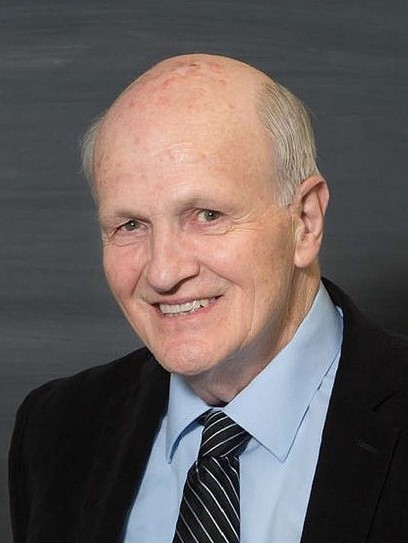
The UMD team is led by Physics Professor Carter Hall, who has been looking for dark matter for 15 years. Excited by the prospect of observing unexplained physical phenomena, Hall joined the Large Underground Xenon (LUX) experiment, an earlier instrument at the Sanford Lab that attempted to detect dark matter from 2012 to 2016.

LUX was the most sensitive WIMP dark matter detector in the world until 2018. Its successor at Sanford, the new and improved LUX-ZEPLIN (LZ) experiment, launched last year. Hall believes LZ has even better odds of detecting or ruling out dark matter due to its significantly larger target. It’s specifically designed to search for WIMPs—a strong candidate for dark matter that, if proven to exist, could help account for the missing 85% of the universe’s mass.

Unlike experiments conducted at particle smashers like the Large Hadron Collider (LHC) in Switzerland, the LZ attempts to directly observe—rather than manufacture—dark matter. Anwar Bhatti, a research professor in UMD’s Department of Physics, said there are pros and cons to both approaches. He worked at the LHC from 2005 to 2013 and is now part of the LZ team at UMD.

Bhatti said the odds of finding irrefutable proof of WIMPs are slim, but he hopes previously undiscovered particles will show up in their experiment, leaving a trail of clues in their wake.

“There’s a chance we will see hints of dark matter, but whether it’s conclusive remains to be seen,” Bhatti said. 

UMD physics graduate students John Armstrong, Eli Mizrachi, and John Silk are also part of this experiment, and the team published its first set of results in July 2022 following a few months of data collection. No dark matter was detected, but their results show that the experiment is running smoothly. Researchers expect to continue collecting data for up to five years.

“That was just a little taste of the data,” Hall said. “It convinced us that the experiment is working well, and we were able to rule out certain types of WIMPs that had not been explored before. We’re currently the world’s most sensitive WIMP search.”

Sparks in the dark

These direct searches for dark matter can only be conducted underground because researchers need to eliminate surface-level cosmic radiation, which can muddle dark matter signals and make them easier to miss. 

“Here, on the surface of the Earth, we’re constantly being bathed in cosmic particles that are raining down upon us. Some of them have come from across the galaxy and some of them have come across the universe,” Hall explained. “Our experiment is about a mile underground, and that mile of rock absorbs almost all of those conventional cosmic rays. That means that we can look for some exotic component which doesn’t interact very much and would not be absorbed by the rock.”

In the LZ experiment, bursts of light are produced by particle collisions. Researchers then work backward, using the characteristics of these flashes of light to determine the type of particle.

The UMD research group calibrates the instrument that powers the LZ experiment, which involves preparing and injecting tritium—a radioactive form of hydrogen—into a liquefied form of xenon, an extremely dense gas. Once mixed, the radioactive mixture is pumped throughout the instrument, which is where the particle collisions can be observed.

The researchers then analyze the mixture’s decay to determine how the instrument responds to background events that are not dark matter. By process of elimination, the researchers learn the types of interactions are—and aren’t—important.

“That tells us what dark matter does not look like, so what we’re going to be looking for in the dark matter search data are events that don’t fit that pattern,” Hall said.

The UMD team also built, and now operates, two mass spectrometry systems that monitor xenon to ensure it isn’t poisoned by impurities like krypton, a gas found in the atmosphere. To detect dark matter scatterings, xenon must be extremely pure with no more than 100 parts per quadrillion of krypton.

Rewriting the physics playbook

The researchers will not know if they found dark matter until their next data set is released. This could take at least a year because they want the sensitivity of the second data set to significantly exceed that of the first, which requires a larger amount of data overall.

If detected, these WIMP particles would prompt a massive overhaul of the Standard Model of particle physics, which explains the fundamental forces of the universe. While this experiment could answer pressing questions about the universe, there is a good chance it will also create new ones. Hall thinks up-and-coming physicists will welcome that challenge. 

“It would mean that a lot of our basic ideas about the fundamental constituents of nature would need to be revised in one way or another,” Hall said. “Understanding how that would fit into particle physics as we know it would immediately become the big challenge for the next generation of particle physicists.”

Written by Emily Nunez

When Higgs Fly

When Christopher Palmer was a physics graduate student at UC San Diego, he had to decide whether to specialize in supersymmetry or search for the Higgs boson.

Though there was no experimental evidence of the Higgs boson’s existence at the time, Palmer was convinced that this elusive elementary particle—believed to be linked to a field that gave mass to everything in the universe—was somewhere out there.Chris PalmerChris Palmer

“The Higgs boson is such a cornerstone of a very well-established theory called electroweak theory,” Palmer said. “It could be a lack of imagination on my part, but I could not imagine the Higgs boson not existing.”

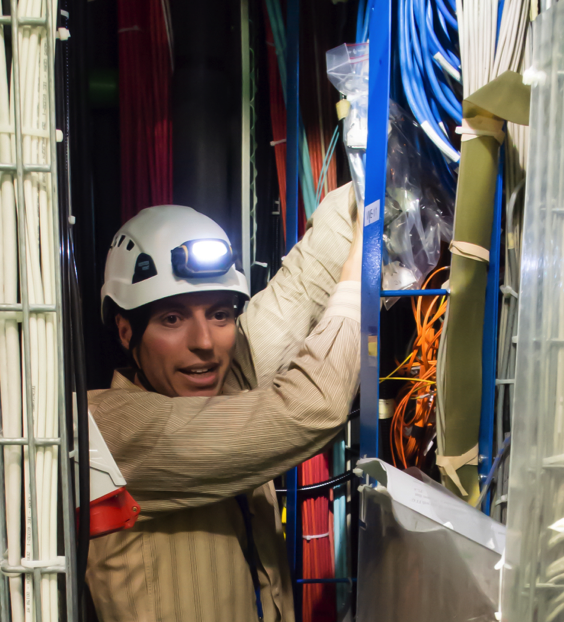
He trusted his gut and dedicated his studies to the Higgs, which set him on course to Switzerland to join one of the experiments at the Large Hadron Collider (LHC) beginning in 2010. Luck was on his side, and he ended up being part of the research group that recorded the highest number of Higgs bosons in their analyses, contributing to the particle’s official discovery the following year.

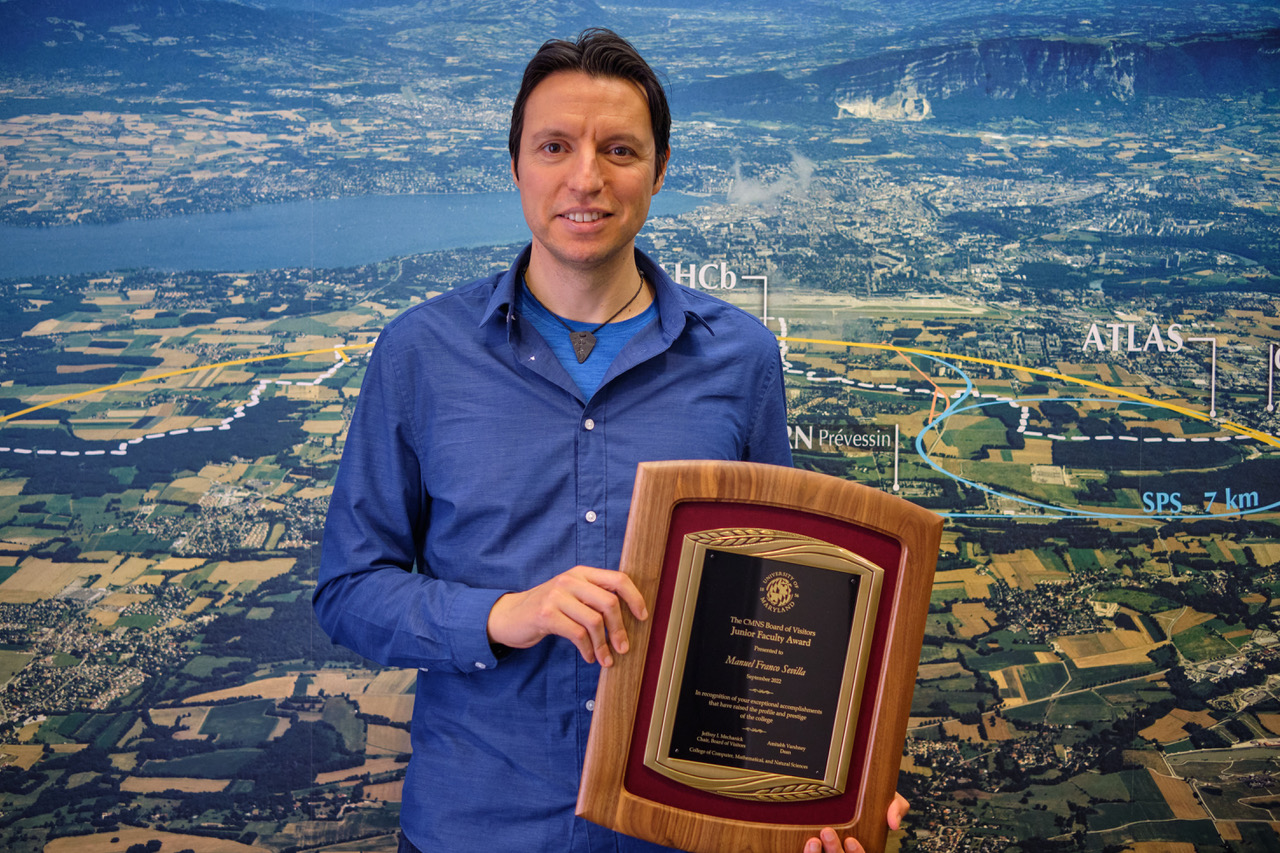
He hasn’t looked back since. In March 2021, Palmer became an assistant professor of physics at the University of Maryland, where he continues to study the Higgs in search of the next big discovery.

‘Deeply weird’ physics

Palmer’s first academic love wasn’t actually physics—it was math.

“I loved math in high school, so I thought, ‘Yeah, I’ll do math in college,’ but that was sort of my ‘hobby major’—and I’m glad it was because I ended up not enjoying mathematical proofs that much,” he said with a laugh.

A fascination with what existed “beyond Earth” prompted Palmer to declare a second major in astronomy as an undergraduate student at USC. But it wasn’t until he took an upper-level course in quantum mechanics—and became enamored with its mathematical intricacies—that he developed a deeper appreciation for physics. 

“It was a new way to use many different aspects of math,” Palmer said. “There’s linear algebra and complex numbers. Taking these integrals and mixing all that up in a pot was really fun for me. But there was also some new physics that was deeply weird, and I couldn’t get enough of it.”

Palmer needed only one quantum mechanics course to meet the requirements of an astronomy major but enjoyed it so much that he took two. After graduating with a bachelor’s degree in mathematics and astronomy in 2007, he took a short drive south to UC San Diego to continue his studies—this time as a Ph.D. student in physics.

Right place, right time

Once Palmer decided to search for the Higgs boson, he joined the Compact Muon Solenoid (CMS) experiment at the LHC. Palmer teamed up with a group that was looking for evidence of the Higgs boson’s decay into two photons during proton-proton collisions.

This turned out to be a serendipitous assignment. His group ultimately saw an enormous excess of Higgs bosons in their analysis. 

“At the time in 2011, no one else at CMS had actually seen much of anything in their data, and in my analysis there was the biggest excess of Higgs boson particles in any of CMS’ searches,” Palmer said. “The discovery was literally happening at my fingertips.”

Palmer was so focused on the work that he didn’t have time to get excited about the actual discovery of the Higgs boson, which was confirmed and publicized in 2012.

“There was a whole lot of double- and triple-checking everything in early 2012. I wasn’t sleeping all that much,” he said. “I got excited afterward.” 

With one major discovery under his belt, Palmer was hooked on Higgs. After earning his Ph.D. in 2014, he became a postdoctoral researcher at Princeton University, where he participated in luminosity experiments and studied the Higgs boson’s decay to bottom quarks—the “most elusive decay” anyone had observed up to that point. 

In 2021, Palmer joined UMD with plans to study signatures of the Higgs boson in greater detail and depth, while also having the flexibility to explore other research interests down the line. 

“One of the things that I really love about this department is that there are so many different types of research that are represented by the faculty,” Palmer said. “In 10 years, if I want to do something different, I don’t know any place where it would be easier.”

Continent-spanning research

Palmer continues to participate in LHC experiments, and much of his work can be done without ever leaving campus. He is part of a team that is studying a new CMS detector, called the MIP Timing Detector, that will more precisely measure charged particles. Because the CMS experiment will need to be operational at -30 degrees Celsius, Palmer and his team are building a cold box at UMD to test components of the detector under extreme conditions.

This research is funded by a Department of Energy grant, which also supports the work of Physics Professor Sarah Eno and Associate Professor Alberto Belloni. Though all three faculty members are involved in LHC experiments, Palmer said they each have their own interests and areas of expertise, which keeps things interesting.

“It’s nice to see what other people are doing, and you don’t always get that when you work in a group that has all the same physics interests,” Palmer said. “It’s also good for the students because they really get to see what is going on in vastly different corners of the experiment, which is important in a giant experiment like CMS that has 3,000-some people in it.” 

In addition to his research, Palmer works to make physics a more inclusive field and is currently exploring ways to improve student mentorship and support for students from historically underrepresented groups. He serves on the executive committee of the American Physical Society’s Forum on Diversity & Inclusion, as well as the College of Computer, Mathematical, and Natural Sciences’ Diversity & Inclusion Advisory Council. He is also the director of Pathway to Physics PhD (P3), a UMD fellowship program that offers fully funded physics degrees, with priority given to applicants from historically Black colleges and universities and minority-serving institutions.

Eye on the collider

When he’s not busy with campus initiatives or teaching classes, Palmer keeps tabs on the data flowing out of the LHC. A monitor next to his office door displays numbers and charts showing the latest data from LHC experiments, including the luminosity measurements that Palmer specializes in. 

“Most of the time I’m engaged in my classes and meetings and other things that I’m immediately involved with,” Palmer said, “but I’m always keeping an eye on what’s going on at the LHC out of the corner of my eye.”

Palmer’s research—and a touch of luck—brought him face-to-face with some of the biggest discoveries in physics. When the next uncharted phenomenon shows up in an experiment, Palmer doesn’t want to miss it.


Written by Emily Nunez