
Elizabeth Beise helps Inverse fact-check the particle physics in official "Ghostbusters" trailer.
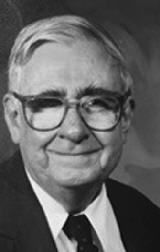 Carroll Alley Professor Carroll O. Alley, who retired in 2008 after a remarkable career at the University of Maryland Department of Physics, died on Feb 24, 2016.
A memorial service was held on June10 in the Garden Chapel on campus. (Remarks from the service are available, here.)
Carroll was a 1948 graduate in electrical engineering and physics at the University of Richmond, before beginning graduate studies at Princeton. He received an MA in 1952, and rejoined Richmond to teach physics. In 1954 he returned to Princeton, and secured his PhD in 1962. He was a student of Robert Dicke, with a thesis on optically pumped rubidium atomic clocks, studying the ground state hyperfine transition.
He began his research in laser physics at the Institute of Optics and Physics Department of the University of Rochester, and was then recruited by John Toll to join the University of Maryland in 1963.
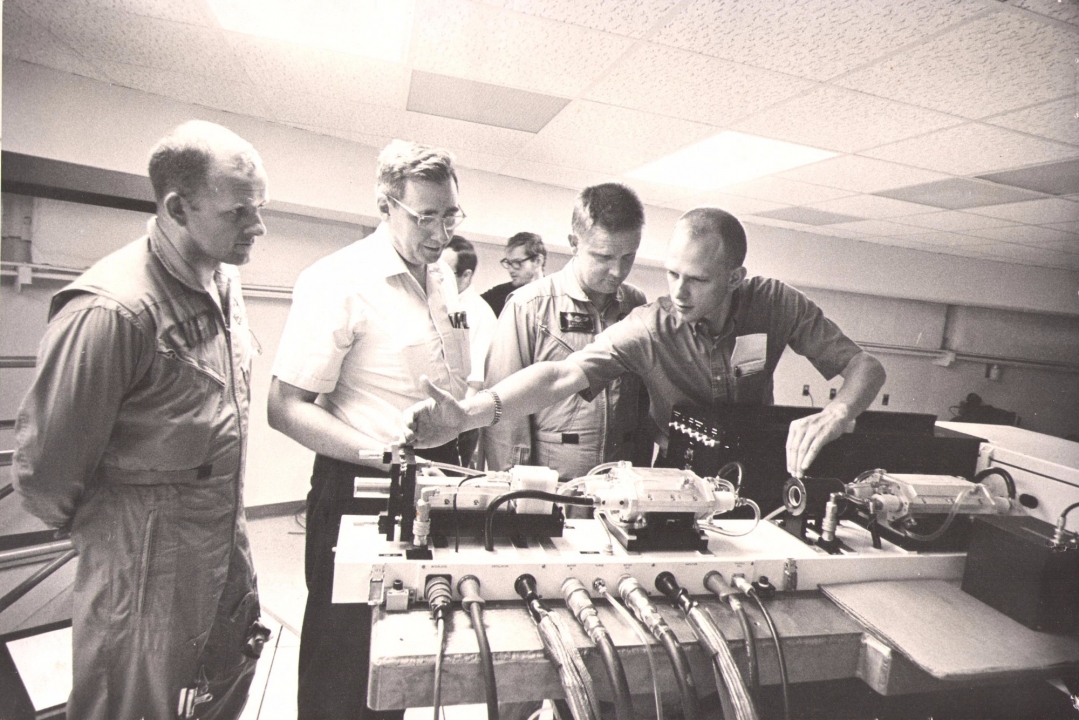
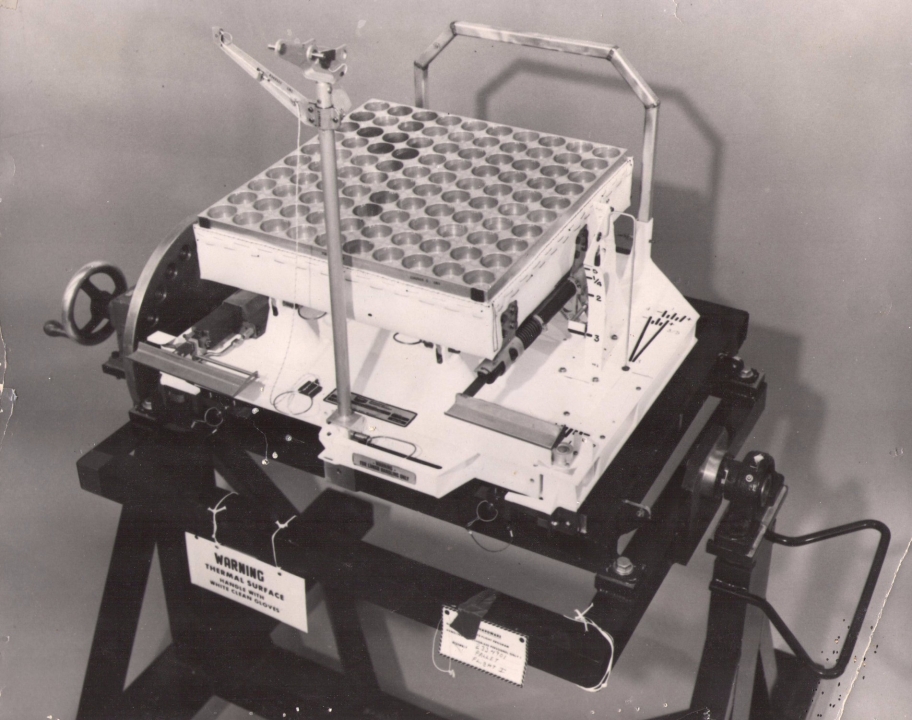
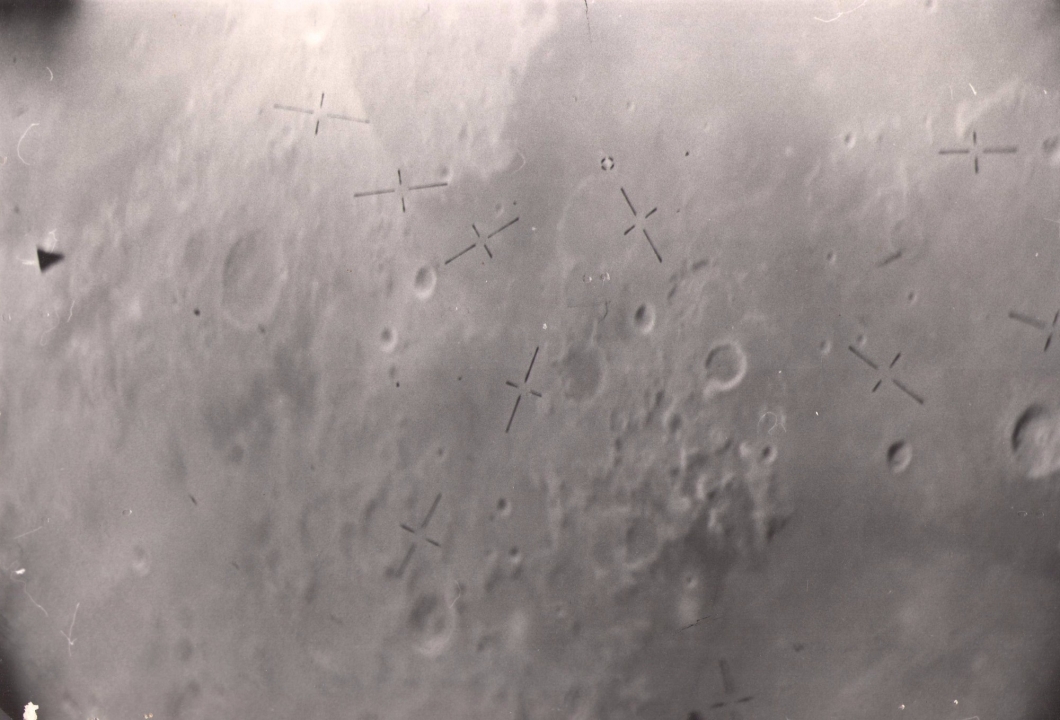
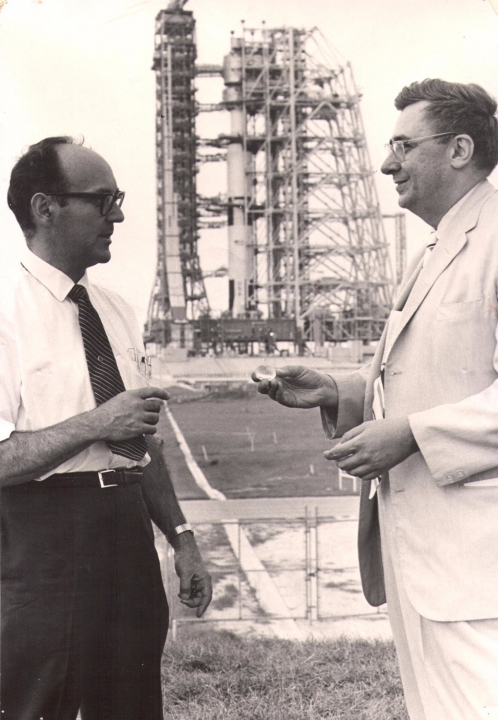
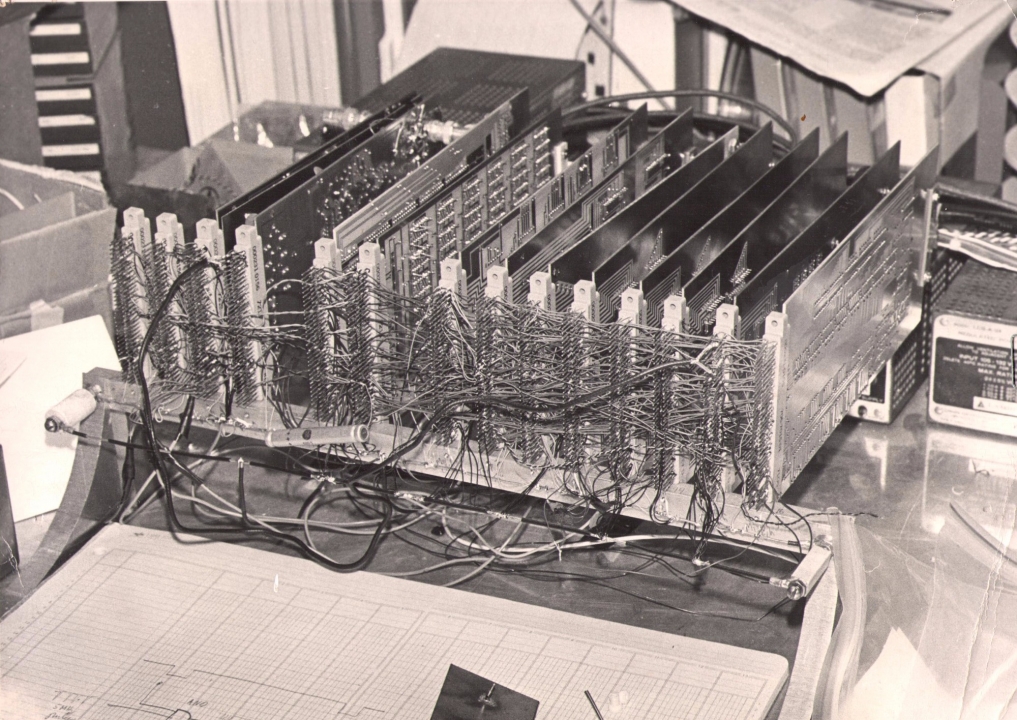
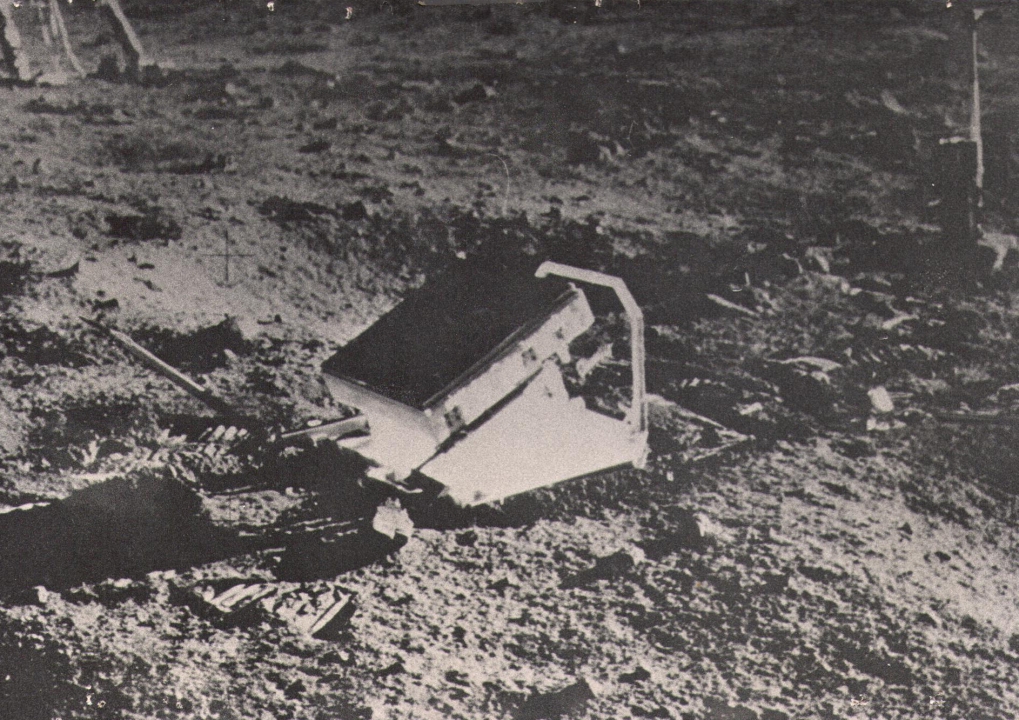
Carroll was intensely active in the field of experimental gravitation and played a role in the commissioning of GPS by contributing to the calculations of how to correct for time dilation in gravitational fields. He was the Principal Investigator on Lunar Laser Ranging Retroreflector experiment that was placed on the moon in 1969 by NASA’s Apollo 11 crew. 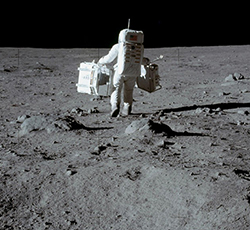 Buzz Aldrin from the Apollo 11 mission in July 1969 carrying Carroll's retroreflector on the moon (right hand has the reflector, left hand has a seismometer).
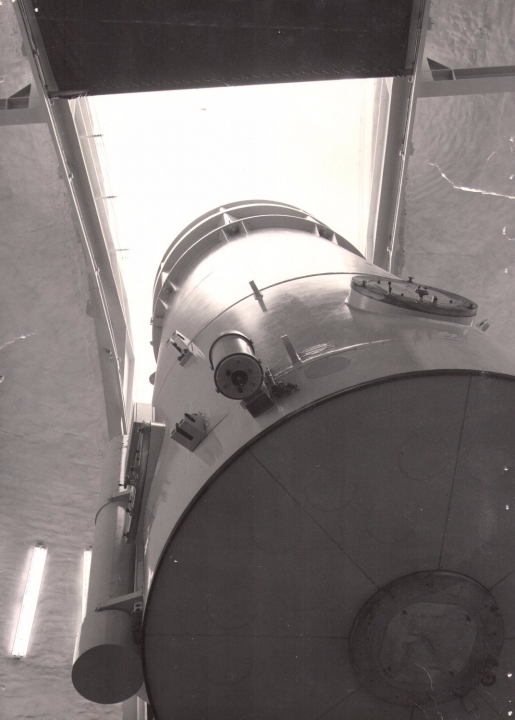
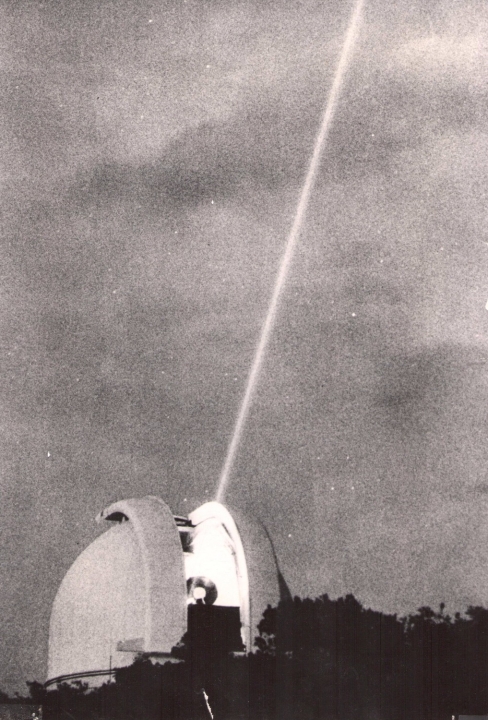
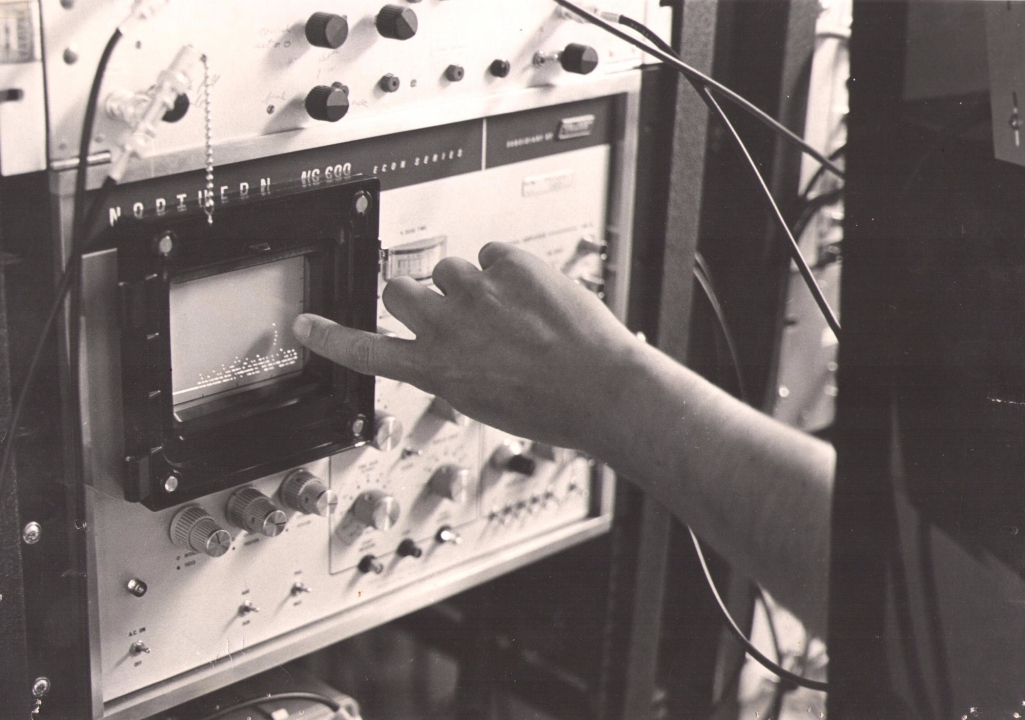
From Carroll's experiment, the distance from a point on the surface of the earth (we believe it was the MacDonald Observatory in Texas) to the reflector on the moon was measured with ~3 cm accuracy. From that experiment, he had to understand quantum measurements of single photons, and this led him to the field of quantum optics. (Note: a typical laser at that time had a diameter of about 7 km when it reached the moon, and 20 km when it reached the earth. Each laser pulse returned with [on average] less than 1 photon, requiring several hours to make a measurement. The accuracy was in the .1 ppm range.)
In his last few years on the UMD faculty, he sent optical signals on closed paths to measure possible relativistic deviations due to rotations, and he pursued alternatives to GR and standard solutions to the field equations.
Carroll was a truly dedicated educator. He played a pivotal role in building our lecture demonstration facility and innovative lecture halls. The design, with a rotating stage and back area for setup, has been copied countless times since being built in the late 1960s. He pushed for the retractable wall and large rear projection screens, showing a remarkable persistence that characterized his approach to physics.
The picture below shows the department around 1976. All people are listed left to right, the number lists the rows and row 1 is in the front. Carroll is in the first row 3rd from the left:
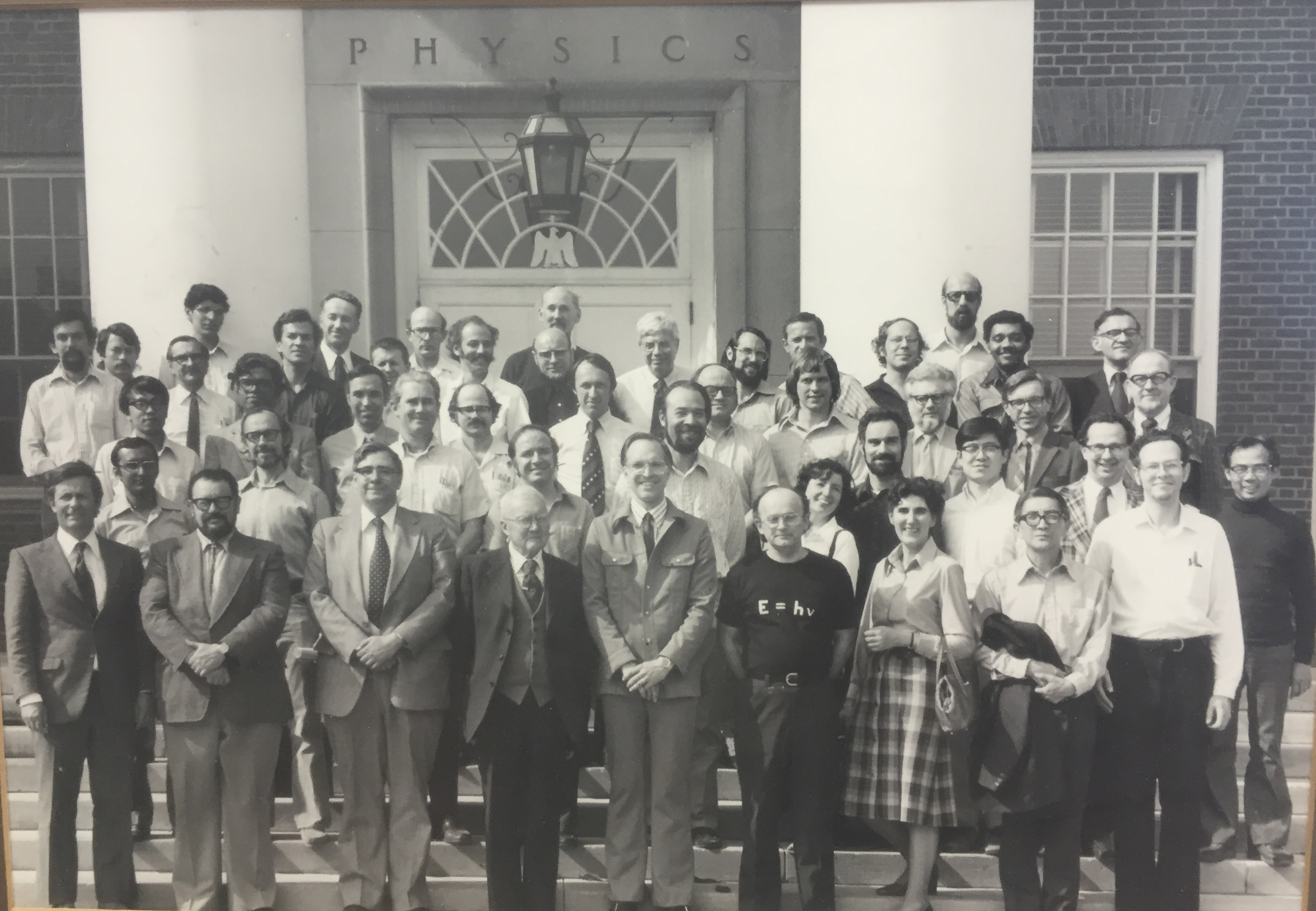 1.Hans Griem, Bill Hornyak, Carroll Alley, Ernst Opik, Alex Dragt (Chair), Joe Sucher, Bice Zorn, Sadao Oneda, John Gilroy 2.Amitabha Bagchi, Arnie Glick, Alvin Trivelpiece, Angelo Bardasis, Richard Prange, Paulette Liewer, Dennis Drew, Madoka Tokumoto, Bob Glasser 3. Kuo-ho Yang, T. N. Padekl, Dieter Brill, Dave Falk, Charlie Misner, Bill Rose, Gene McClellan, George Snow, Larry Krisher, Gus Zorn 4.Yehuda Alexander, Ralph Myers, Ron Davidson, Bob Anderson, Claude Kacser, Jan Sengers, Herb Lashinksy, Ted Einstein, Bob Park, Richard Sohn, Milton Slaughter, Phil Steinberg 5. Steve Detwiler, Bahram Mashhoon, I Bialwicki-Birula, Wally Greenberg, Rolfe Glover, S. Buchner
He received the NASA Exceptional Scientific Achievement Award in 1973 for leadership in the Apollo 11 Laser Ranging Retroreflector Experiment, and an Honorary Degree of Doctor of Science at the University of Richmond in 1978. For its 1976 Bicentennial Exhibit, the Maryland Academy of Sciences named Carroll Alley one of two outstanding scientists of the 20th Century.
As part of its Oral History Interviews series, the American Institute of Physics interviewed Carroll about his career in 2006; he discussed, among other topics, the influence of Princeton’s Eugene Wigner and John Wheeler on his career. The transcript is available at the link below:
https://www.aip.org/history-programs/niels-bohr-library/oral-histories/30249
The Diamondback talks to Peter Shawhan and other members of the Maryland Gravitation group.
When it comes to quantum physics, light and matter are not so different. Under certain circumstances, negatively charged electrons can fall into a coordinated dance that allows them to carry a current through a material laced with imperfections. That motion, which can only occur if electrons are confined to a two-dimensional plane, arises due to a phenomenon known as the quantum Hall effect.
Researchers, led by Mohammad Hafezi, a JQI Fellow, have made the first direct measurement that characterizes this exotic physics in a photonic platform. The research was published online Feb. 22 and featured on the cover of the March 2016 issue of Nature Photonics. These techniques may be extended to more complex systems, such as one in which strong interactions and long-range quantum correlations play a role. Read More
Jay Sau was awarded a Sloan Research Fellowship for 2016. This award, granted by the Alfred P. Sloan Foundation, identifies 126 early-career scientists based on their potential to contribute fundamentally significant research to a wider academic community.
Sau, a theoretical condensed matter physicist interested in applying topological principles to create protected solid-state and cold-atomic systems for quantum information processing, will use the fellowship to further his research focus on predicting phenomena that could help pave the way for topological quantum computation.
“Receiving the Sloan Research fellowship, to me, represents validation of my work from some rather distinguished members of the condensed matter physics community and is therefore a great honor,” said Sau. “This fellowship encourages me to continue my pursuit to predict truly macroscopic quantum systems and phenomena, in collaboration with experimental colleagues at Maryland who elucidate the beautiful physics of topological field theory.”
While quantum mechanics naturally operates at excruciatingly tiny length scales—such as those found in a single atom—physicists are also interested in examining much larger quantum systems where the individual quantum pieces can interact through many pathways. In this case, stabilizing the associated quantum phenomena can be exceedingly difficult due to the detrimental influence of the unavoidable interaction of the large system with its surroundings. One possible approach to creating and studying such macroscopic quantum phenomena is based on recently discovered topological phases in condensed matter systems, which for fundamental reasons are effectively protected from the environment.
Sau’s research aims to investigate the rich variety of static and dynamical phenomena that arise from the interplay of novel topological phases with conventional physics, such as electrostatic interactions, crystal lattice vibrations and material impurities. Recent experiments indicate that the physics of topological systems cannot be understood without considering these conventional ingredients. In addition, exploring the physics resulting from this interplay will likely lead to the discovery of new phenomena, which could influence the design of quantum computers.
Sau has authored more than 75 peer-reviewed journal publications. Before joining the UMD faculty in 2013, Sau worked as a postdoctoral researcher in physics at Harvard University and UMD, where he did some of his most important work. He earned his bachelor’s degree in electrical engineering from the Indian Institute of Technology in Kanpur, India, and his doctoral degree in physics from the University of California, Berkeley.
Sau joins the list of 49 current UMD College of Computer, Mathematical, and Natural Sciences faculty members who have received Sloan Research Fellowships.
Each 2016 Sloan Research Fellow is awarded a two-year $55,000 grant to support his or her research interests. Administered and funded by the Sloan Foundation, the fellowships are awarded in eight scientific fields—chemistry, computer science, economics, mathematics, computational and evolutionary molecular biology, neuroscience, ocean sciences, and physics. Winners are selected through close cooperation with the scientific community. To qualify, candidates must first be nominated by their fellow research scientists and are subsequently selected by an independent panel of senior scholars.
“Getting early-career support can be a make-or-break moment for a young scholar,” said Paul L. Joskow, president of the Alfred P. Sloan Foundation. “In an increasingly competitive academic environment, it can be difficult to stand out, even when your work is first rate. The Sloan Research Fellowships have become an unmistakable marker of quality among researchers. Fellows represent the best-of-the-best among young scientists.”
More Articles …
Page 141 of 206