• Home
  • About Us
    • Physics Administration
    • Directions
    • Awards
    • Student Awards
    • Make a Donation
    • News
      • Research News
      • Department News
      • Newsletters
    • PTK Policy
  • People
    • All
    • Faculty
      • Current
      • Emeritus
      • Adjunct
      • Affiliate
      • Research Professors
    • Research Scientists
    • Postdocs
    • Staff
    • Lecturers
    • Visitors
    • Graduate Students
  • Research
    • Research Areas
      • AI and Physical Sciences
      • Astro Metrology
      • Atomic, Molecular & Optical
      • Biophysics
      • Chemical Physics
      • Condensed Matter Experiment
      • Condensed Matter Theory
      • Cosmic Ray Physics
      • Elementary Particles
      • Gravitation Experiment
      • Gravitational Theory
      • High Energy Physics
      • Nonlinear Dynamics, Chaos and Complex Systems
      • Nuclear Physics
      • Particle Astrophysics
      • Physics Education Research
      • Plasma Physics
      • Plasma Theory
      • Quantum Science and Technology
      • Quarks, Hadrons and Nuclei
      • Space Physics
    • Centers & Institutes
  • Academics
    • OSES Home (Student Services)
    • OSES News
    • Undergraduate Program
      • Prospective Students
      • Apply Now
      • Degree Requirements and Policies
      • Scholarships
      • Undergraduate Research
      • Advising
      • Undergraduate Forms
      • Undergraduate Events
      • Departmental Honors
      • Society of Physics Students
      • FAQ
      • Undergraduate Student Committee
    • Graduate Program
      • Prospective Students
      • Open House
      • Degree Requirements
      • Graduate Resources
      • Deadlines and Forms
      • PhD Defenses
        • PhD Defenses 2026
        • PhD Defenses 2025
        • PhD Defenses 2024
        • PhD Defenses 2023
        • PhD Defenses 2022
        • PhD Defenses 2021
        • PhD Defenses 2020
        • PhD Defenses 2019
        • PhD Defenses 2018
        • PhD Defenses 2017
        • PhD Defenses 2016
      • Events
      • Scholarships & Awards
      • Qualifier
      • Graduate Student Organizations
      • FAQ
    • Student Opportunities
      • GRAD-MAP
      • Graduate Student Organizations
      • Outreach Volunteering
      • Society of Physics Students
      • NSF S-STEM Program
      • Undergraduate Research
      • Women in Physics
      • Undergraduate Quantum Association
    • Courses
    • Academic Support
    • NSF S-STEM Program
    • Teaching Assistants
  • Events
    • Calendar
    • Physics Colloquia
    • W.J. Carr Lecture
    • Research Interaction Team (RIT) Math/Physics
    • Mechanick Quantum Biology Lecture
    • Irving and Renee Milchberg Endowed Lectureship
    • Charles W. Misner Endowed Lectureship in Gravitational Physics
    • John S. Toll Endowed Lecture
    • Prange Prize Lecture
    • Maryland Day
    • Outreach
      • Outreach Home
      • Physics is Phun
      • Discovery Days
    • Summer Programs
      • Physics Makers Camp
      • Physics of Quidditch
      • Science Discovery Camp
      • Advanced Physics Summer Program
      • Toolkit for Success
    • CUWiP
    • Vortex Makerspace
    • QURiSE Conference
  • Services
    • Building Access Requests
    • Computing Services
    • Conference Room Reservations
    • Department Operations Directory
    • Electronic and Mechanical Development
    • Hiring Procedures
    • Lecture Demo
    • Mental Health Resources
    • Parking
    • Physics Ombudspersons
    • Printing Services
      • Poster Print Request
    • Proposal Submissions
    • Purchase Order
    • Suggestion Box
    • Textbook Information
  • Give
  1. Home
  2. About Us
  3. News
  4. Department News

Written on 21 December 2022.

December Physics Discovery Days!

On Saturday, December 10th, local elementary and middle school students participated in Physics Superspies, a Physics Discovery Day outreach event on WavAudience participation! Angel Torres and audience volunteer demonstrating the power of an electromagnet.Audience participation! Angel Torres and audience volunteer demonstrating the power of an electromagnet.es and Satellites.  Outreach Coordinator Angel Torres kicked off the program with a series of captivating demonstrations that had students energized! The demonstration show was designed to prepare students for a fun series of hands-on activities that further demonstrated the properties of the electromagnetic spectrum and how scientists use different wavelengths to study the universe.  Thanks to the expertise of physics majors Jade LeShack, Lincoln Doney, Wenxi Wu, David Bour and Bergen Dahl, the attendees learned new concepts as they completed their Discovery Day physics passport at each activity station. Undergraduate volunteers were able to utilize their knowledge beyond the classroom to answer questions from inquisitive participants.

Attending parents enjoyed the program and were appreciative of the activities. One parent stated, “My son is a huge physics and math fan. He had a great day learniA miniature model of a galaxy in "infrared" light.A miniature model of a galaxy in "infrared" light.ng through fun interactive demonstrations. Thanks for having such a cool event!” Activity stations included simulating the launch of a satellite into orbit using stomp rockets, creating waves across the visible spectrum with Slinkys, and understanding the effects of magnetic fields on satellites through iron filings and magnets.

This Discovery Days program was developed by Outreach Coordinator Angel Torres and Director of Education Donna Hammer.  New to the program, a collection of “miniature galaxies” in bottles using colored Jell-O and tiny pieces of candy was developed by Torres. By using specific colored filters, attendees were able to reveal the galaxy inside Time to Launch! Undergraduate Bergen Dahl, Donna Hammer, and attendees posing with their rockets.Time to Launch! Undergraduate Bergen Dahl, Donna Hammer, and attendees posing with their rockets.of an opaque bottle (universe). These galaxies allowed students to personally engage with using different wavelengths, through light filters, to see all the features of a galaxy.  In order to demonstrate the curvature of spacetime, Hammer designed a model of personal spacetime hoops. Each participant was able to simulate satellites orbiting a celestial body using metal spheres and marbles. Students increased the number of “satellites” until they created a solar system.

The Physics Outreach Team is excited to host more events this Spring. Discovery Days are geared toward upper-elementary school students and are complemented by Physics is Phun for high school audiences. To stay informed on future Discovery Days and upcoming outreach events, visit our outreach page and join our mailing list.

Written on 20 December 2022.

UMD Establishes Endowed Professorship in Quantum Computing

The University of Maryland’s College of Computer, Mathematical, and Natural Sciences (CMNS) will establish the IonQ Professorship with a $1 million gift from IonQ (NYSE: IONQ), an industry leader in quantum computing. IonQ’s gift is being matched by $1 million through the Maryland E-Nnovation Initiative (MEI), a state program created to spur basic and applied research in scientific and technical fields at the state’s colleges and universities.

The IonQ Professorship will be held by a faculty member in either the Department of Physics or the Department of Computer Science who conducts quantum computing research.

“IonQ is a revolutionary startup born out of physics research at the University of Maryland and the first publicly traded pure-play hardware and software company in the quantum computing space,” said UMD President Darryll J. Pines. “We are grateful to IonQ and the state of Maryland for their continued investment in research, programming and the overall quantum ecosystem at the University of Maryland. This is another step forward in building the Capital of Quantum.”

IonQ also supports UMD’s Quantum Startup Foundry, Quantum Technology Center, Corporate Partners in Computing, and Bitcamp and Technica student-run hackathons. In addition, UMD and IonQ established the National Quantum Lab at Maryland (Q-Lab) to accelerate practical quantum computing applications by providing privileged access to a commercial-grade quantum computer and IonQ experts to UMD-affiliated students, researchers and partners across the country.

“IonQ is delighted to continue their close ties with the University of Maryland and stimulate their already leading stature in quantum science and technology,” said Christopher Monroe, IonQ co-founder and chief scientist, and College Park Professor of Physics at UMD.

IonQ was founded in 2015 by Monroe and Duke University’s Jungsang Kim based on 25 years of pioneering research. The company, which is located in the UMD Discovery District with over 100 employees, received the 2021 Innovation Award from the Association of University Research Parks and was named to the TIME100 Most Influential Companies list in 2022.

“The new endowed IonQ Professorship will allow us to attract top talent from premier universities, government labs or companies who are doing the most interesting and translational work in quantum science, computing and information,” said CMNS Dean Amitabh Varshney.

UMD is already an established powerhouse of quantum discovery and innovation, with over 200 researchers on campus, partnerships with government laboratories, strong connections with industry and an international research network. These UMD scientists and engineers are working to develop quantum computers capable of currently impossible calculations, ultra-secure quantum networking and exotic new quantum materials.

Today, UMD boasts 12 quantum research centers:

  • Condensed Matter Theory Center
  • Institute for Physical Science and Technology
  • Institute for Research in Electronics and Applied Physics
  • Joint Center for Quantum Information and Computer Science
  • Joint Quantum Institute
  • LPS Qubit Collaboratory
  • Maryland Quantum-Thermodynamics Hub
  • National Quantum Laboratory (Q-Lab)
  • Quantum Leap Challenge Institute for Robust Quantum Simulation
  • Quantum Materials Center
  • Quantum Startup Foundry
  • Quantum Technology Center

UMD also organizes and facilitates the Mid-Atlantic Quantum Alliance (MQA), a rapidly growing hub of quantum technology research, development, innovation and education with 32 university, government, industry and nonprofit partners. Together, MQA members are building a vibrant and diverse ecosystem designed to foster U.S. and regional leadership in the coming quantum technology revolution.

“Maryland is consistently one of the top-ranked states for innovation, and our colleges and universities are critical drivers of cutting-edge research and bold new ideas,” said Maryland Commerce Secretary Mike Gill. “We’re thrilled to support the groundbreaking and forward-thinking work being led by our higher education institutions.”


Written on 02 December 2022.

Department Hosts PhysCon 2022 Attendees

As a 2022 Physics Congress (PhysCon) local host, UMD Physics was a popular destination for undergraduate attendees to visit on the first day of the conference. Over 80 undergraduate students from US colleges and universities visited campus during the 2022 National Physics Congress (PhysCon) event held in Washington, DC. PhysCon Lunch at UMD PhysCon Lunch at UMD Although the students had different ideas about their futures, they shared a passion for physics and an interest in learning more about graduate school at the University of Maryland.

PhysCon SPS Chapter ShowcasePhysCon SPS Chapter ShowcaseVisitors arrived on campus to find a large group of UMD physics majors and graduate students waiting to welcome them to the department. The program for the day was designed to give a snapshot of the department by showcasing exciting research including Quantum Mechanics and Quantum Computing, Biophysics, Particle Physics, Geophysics, and Astrophysics. Yanda Geng and  2022 PhysCon attendeesYanda Geng and 2022 PhysCon attendeesTo provide a window into graduate life at UMD, a graduate student panel engaged visitors in a discussion about their personal trajectories and career goals with a PhD in physics.  A highlight of the day was the Undergraduate Quantum Association (UQA)’s interactive quantum-focused discussion during lunch. Following the lively lunch, the day ended the way every event should, with a bang, as Angel Torres, Outreach Coordinator, propelled a pencil through a piece of plywood!

The packed day of activities was organized by Director of Education and SPS Advisor, Donna Hammer.  Pleased with the outcome of the visit, Hammer shared, “Our physics department is home to an extraordinary group of students, faculty, and staff.  Their dedication and commitment to the physics community is the foundation of today’s success.”

Please see UMD PhysCon video highlights:

{source}<iframe width="600" height="338" src="https://www.youtube.com/embed/hYiccsLzQuk" title="UMD PhysCon Video 2022" frameborder="0" allow="accelerometer; autoplay; clipboard-write; encrypted-media; gyroscope; picture-in-picture" allowfullscreen></iframe>{/source}

Written on 16 November 2022.

Sankar Das Sarma Named Highly Cited Researcher

Sankar Das Sarma has again been included on Clarivate Analytics list of Highly Cited Researchers, a compilation of influential names in science.

Das Sarma is the Richard E. Prange Chair of Physics, the Director of the Condensed Matter Theory Center and a Fellow of the Joint Quantum Institute. 

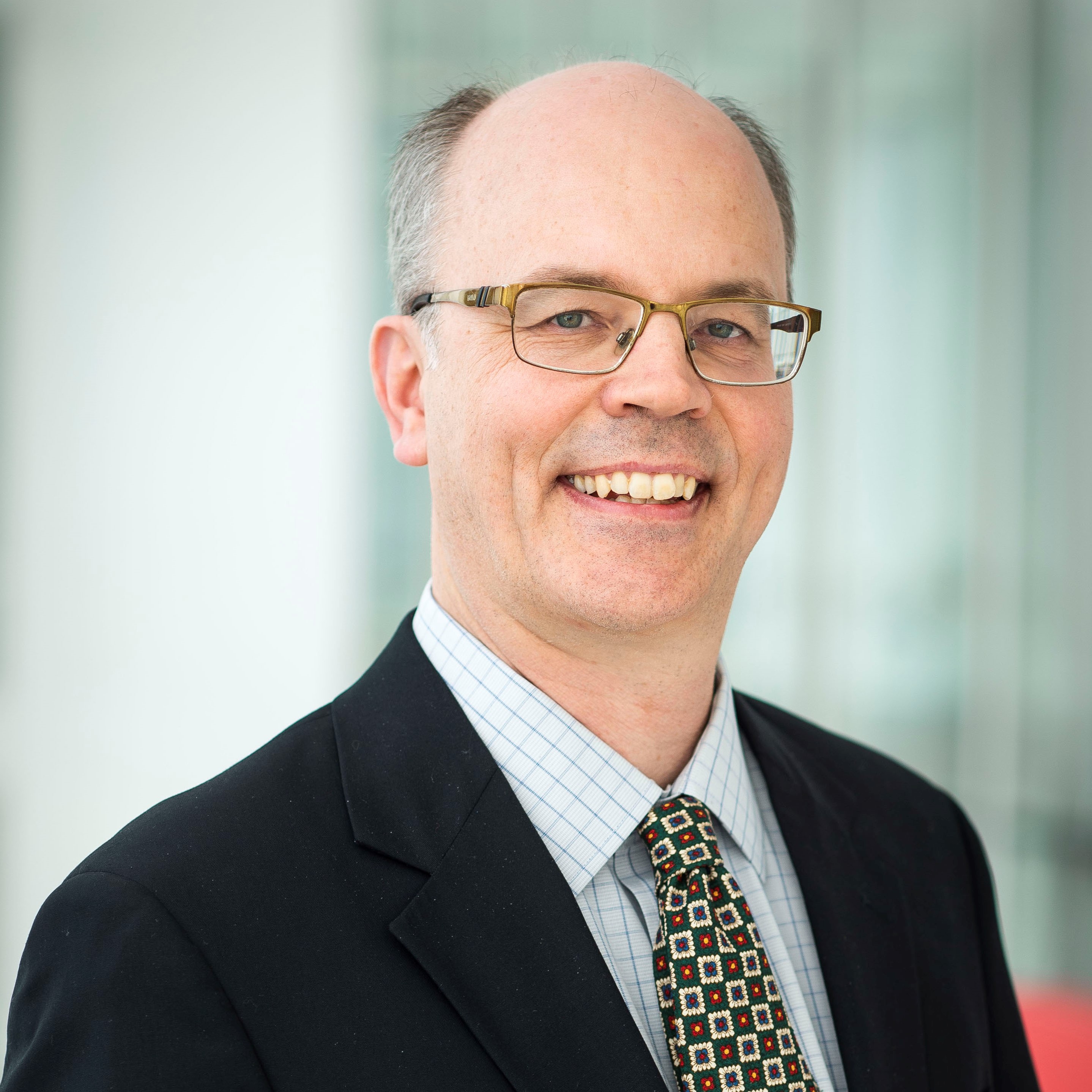
After receiving his Ph.D. from Brown University in 1979—studying under UMD alumnusSankar Das SarmaSankar Das Sarma John Quinn (Ph.D., '58)—Das Sarma joined the UMD faculty in 1982. He was named a Distinguished University Professor in 1995, and in 2008 received the Kirwan Faculty Research Prize for his groundbreaking work in topological quantum computing.

In 2013, Das Sarma received the CMNS Distinguished Faculty Award in recognition of his stellar career. In 2020, a paper he co-wrote was included in Physical Review B's list of the "milestone" papers published in its first 50 years of existence. 

Das Sarma has been included in all previous listings of highly-cited researchers: 2021, 2020, 2019, 2018, 2017, 2016, 2015, 2014 and 2001.

College Park Professor Chris Monroe also appeared on the list.

Written on 26 October 2022.

Schedule

CWM

Home  Logistics  Register CWM


Saturday, Nov. 11, 2023,  Eastern Standard Time (UTC -05:00)

9:00-9:25      Registration and Coffee
9:25-9:30   Opening Remarks
9:30-10:15    Ted Jacobson: Charlie Misner and “the beauty and intelligibility of the Universe”
10:15-11:00   Saul Teukolsky: Black hole perturbations, ringdowns, and all that
11:00-11:30   Coffee break
11:30-12:30   Remarks and Reminiscences
12:30-2:00   Lunch
2:00-2:45   Steve Carlip: (Mostly) Quantum Cosmology
2:45-3:30                 Kip Thorne: The Huge Impact that Charlie and His Students Have Had on Me: Black holes, wormholes, singularities, gravitational waves, chronological pathologies, and MTW
3:30-4:00   Coffee break
4:00-5:00   Remarks and Reminiscences, plus Closing Remarks 

More Articles …

  1. Dragt Awarded Robert R. Wilson Prize
  2. Maryland Quantum-Thermodynamics Hub Launches With $2M Grant
  3. From Unexpected Opportunity to Game-changing Discovery
  4. Faculty, Staff, Student and Alumni Awards & Notes
  5. Women in Physics Group Changes its Name to Physicists of Underrepresented Genders

Page 33 of 152

  • 28
  • 29
  • 30
  • 31
  • 32
  • 33
  • 34
  • 35
  • 36
  • 37
  • Physics Administration
  • Directions
  • Awards
  • Student Awards
  • Make a Donation
  • News
    • Research News
    • Department News
    • Newsletters
  • PTK Policy

College and Department Links

Department of Physics

Physical Sciences Complex
4296 Stadium Dr
College Park, MD 20742
Phone: 301.405.3401

Information

  • Campus Directory
  • Undergraduate Research
  • Scholarships
  • Prospective Undergraduates
  • Directions & Transit
  • Web Accessibility
© 2026 University of Maryland - Department of Physics
Top
  • Home
  • About Us
    • Physics Administration
    • Directions
    • Awards
    • Student Awards
    • Make a Donation
    • News
      • Research News
      • Department News
      • Newsletters
    • PTK Policy
  • People
    • All
    • Faculty
      • Current
      • Emeritus
      • Adjunct
      • Affiliate
      • Research Professors
    • Research Scientists
    • Postdocs
    • Staff
    • Lecturers
    • Visitors
    • Graduate Students
  • Research
    • Research Areas
      • AI and Physical Sciences
      • Astro Metrology
      • Atomic, Molecular & Optical
      • Biophysics
      • Chemical Physics
      • Condensed Matter Experiment
      • Condensed Matter Theory
      • Cosmic Ray Physics
      • Elementary Particles
      • Gravitation Experiment
      • Gravitational Theory
      • High Energy Physics
      • Nonlinear Dynamics, Chaos and Complex Systems
      • Nuclear Physics
      • Particle Astrophysics
      • Physics Education Research
      • Plasma Physics
      • Plasma Theory
      • Quantum Science and Technology
      • Quarks, Hadrons and Nuclei
      • Space Physics
    • Centers & Institutes
  • Academics
    • OSES Home (Student Services)
    • OSES News
    • Undergraduate Program
      • Prospective Students
      • Apply Now
      • Degree Requirements and Policies
      • Scholarships
      • Undergraduate Research
      • Advising
      • Undergraduate Forms
      • Undergraduate Events
      • Departmental Honors
      • Society of Physics Students
      • FAQ
      • Undergraduate Student Committee
    • Graduate Program
      • Prospective Students
      • Open House
      • Degree Requirements
      • Graduate Resources
      • Deadlines and Forms
      • PhD Defenses
        • PhD Defenses 2026
        • PhD Defenses 2025
        • PhD Defenses 2024
        • PhD Defenses 2023
        • PhD Defenses 2022
        • PhD Defenses 2021
        • PhD Defenses 2020
        • PhD Defenses 2019
        • PhD Defenses 2018
        • PhD Defenses 2017
        • PhD Defenses 2016
      • Events
      • Scholarships & Awards
      • Qualifier
      • Graduate Student Organizations
      • FAQ
    • Student Opportunities
      • GRAD-MAP
      • Graduate Student Organizations
      • Outreach Volunteering
      • Society of Physics Students
      • NSF S-STEM Program
      • Undergraduate Research
      • Women in Physics
      • Undergraduate Quantum Association
    • Courses
    • Academic Support
    • NSF S-STEM Program
    • Teaching Assistants
  • Events
    • Calendar
    • Physics Colloquia
    • W.J. Carr Lecture
    • Research Interaction Team (RIT) Math/Physics
    • Mechanick Quantum Biology Lecture
    • Irving and Renee Milchberg Endowed Lectureship
    • Charles W. Misner Endowed Lectureship in Gravitational Physics
    • John S. Toll Endowed Lecture
    • Prange Prize Lecture
    • Maryland Day
    • Outreach
      • Outreach Home
      • Physics is Phun
      • Discovery Days
    • Summer Programs
      • Physics Makers Camp
      • Physics of Quidditch
      • Science Discovery Camp
      • Advanced Physics Summer Program
      • Toolkit for Success
    • CUWiP
    • Vortex Makerspace
    • QURiSE Conference
  • Services
    • Building Access Requests
    • Computing Services
    • Conference Room Reservations
    • Department Operations Directory
    • Electronic and Mechanical Development
    • Hiring Procedures
    • Lecture Demo
    • Mental Health Resources
    • Parking
    • Physics Ombudspersons
    • Printing Services
      • Poster Print Request
    • Proposal Submissions
    • Purchase Order
    • Suggestion Box
    • Textbook Information
  • Give