
Professor Ted Jacobson will receive the American Physical Society's (APS) 2027 Einstein Prize, which recognizes outstanding accomplishments in the field of gravitational physics. Jacobson was cited for foundational contributions to questions in gravitational physics, including deriving Einstein’s equations from thermodynamics, and advancing our understanding of Hawking radiation. 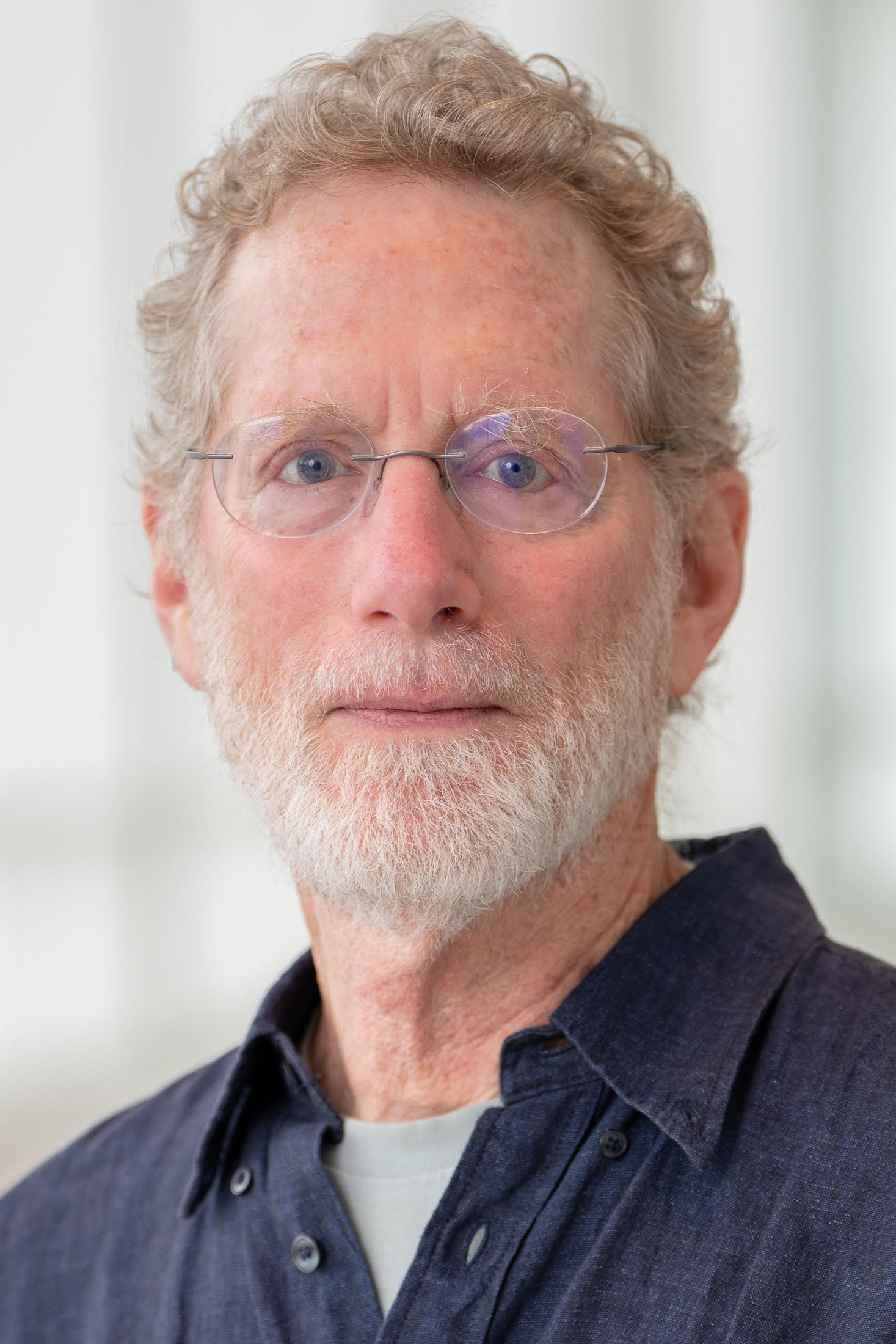 Ted Jacobson
A member of the Maryland Center for Fundamental Physics and the Joint Space-Science Institute, Jacobson is both a UMD Distinguished University Professor and Distinguished Scholar-Teacher. He received his B.A. in Physics and Mathematics from Reed College in 1977 and his Ph.D. in physics from the University of Texas at Austin in 1983, joining the Maryland faculty in 1988.
He has investigated the foundations of gravitation and its connections to quantum theory and thermodynamics, including the nature of black hole horizon entropy and its generalizations, the robustness of Hawking radiation to unknown short-distance physics, and condensed matter analogs of black holes and Hawking radiation.
In 1995 he showed how Einstein's gravitational field equation can be derived from the thermodynamic relation between entropy, heat, and temperature of local causal horizons, and in 2015 demonstrated a connection between Einstein's equation and a principle of maximal vacuum entanglement entropy.
His early work with Lee Smolin helped establish the Loop Quantum Gravity program, and with many collaborators he explored observational signatures and constraints on hypothetical Lorentz symmetry violation in particle physics and gravitation, the latter within Einstein-aether theory, developed with David Mattingly.
Jacobson is a Fellow of the American Physical Society, the American Association for the Advancement of Science, and the International Society on General Relativity and Gravitation, and a Distinguished Visiting Research Chair at Perimeter Institute. He was an invited speaker at Stephen Hawking’s 75th birthday conference in 2017, where he discussed "Hawking radiation, infinite redshifts, and black hole analogues”.
His work has been featured in the lay press, including The Economist and Salon, and he has written for Scientific American, including a cover story, “Echoes of Black Holes”. He described his interest in physics and the various themes of his research in a long-form YouTube interview in 2025.
“The UMD physics department has had a long and distinguished role in both the experimental and theoretical interrogation of gravity,” said department chair Kara Hoffman. “Ted has continued that tradition with deep contributions to the field. In addition, his inquisitive nature has led him to engage with a broad range of colleagues in adjacent fields, often leading to fruitful discussions and collaborations. He is most deserving of this recognition.”
Jacobson will receive the $10,000 award at the APS Global Physics Summit next April in Atlanta.