• Research News

    When Superfluids Collide, Physicists Find a Mix of Old and New

    Physics is often about recognizing patterns, sometimes repeated across vastly different scales. For instance, moons orbit planets in the same way planets orbit stars, which in turn orbit the center of a galaxy. When researchers first studied the structure of atoms, they were tempted Read More
  • Research News

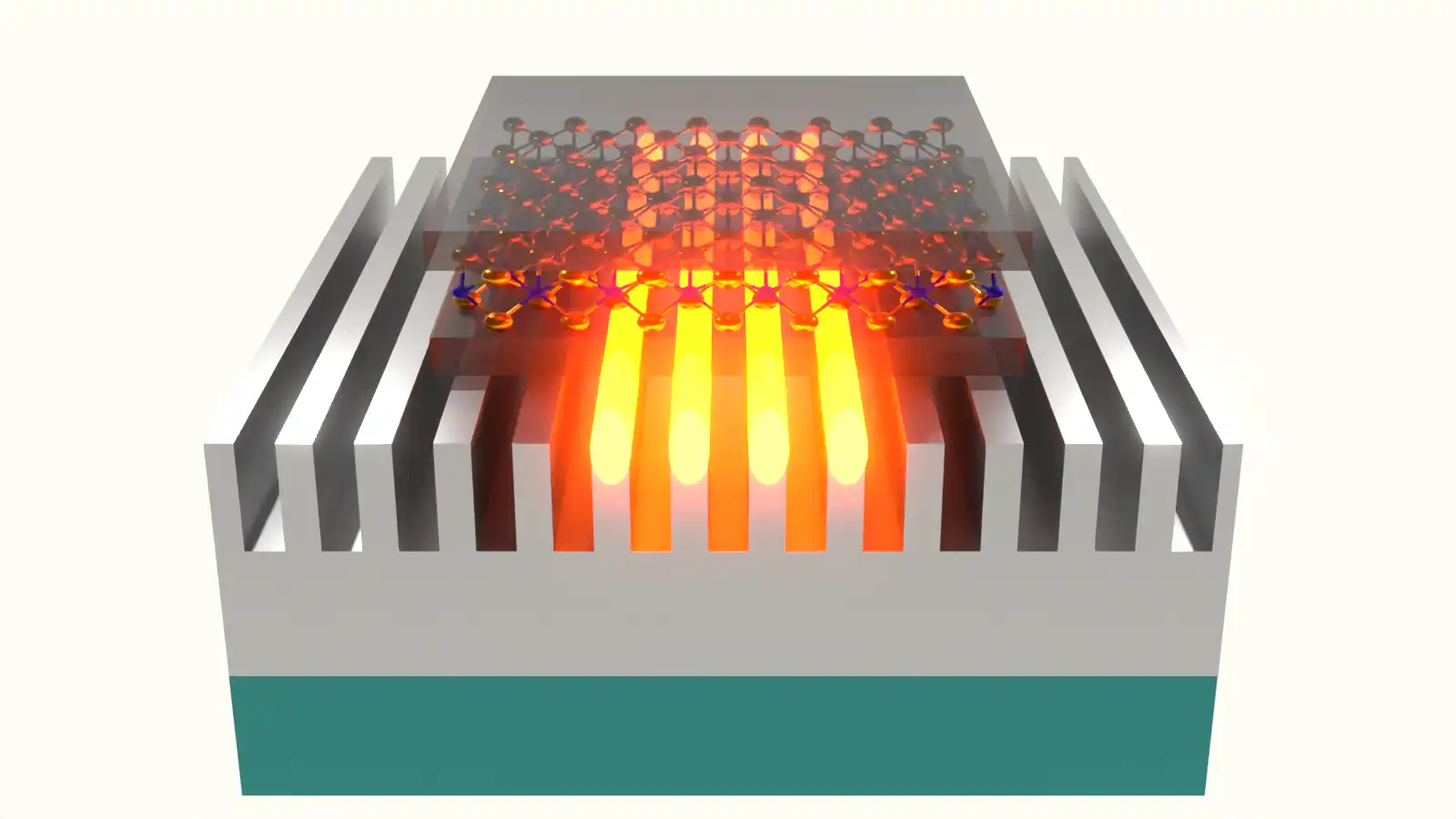
    With Passive Approach, New Chips Reliably Unlock Color Conversion

    Over the past several decades, researchers have been making rapid progress in harnessing light to enable all sorts of scientific and industrial applications. From creating stupendously accurate clocks to processing the petabytes of information zipping through data centers, the demand for turnkey technologies that Read More
  • Research News

    Researchers Identify Groovy Way to Beat Diffraction Limit

    Physics is full of pesky limits. There are speed limits, like the speed of light. There are limits on how much matter and energy can be crammed into a region of space before it collapses into a black hole. There are even limits on Read More
  • Research News

    Researchers Imagine Novel Quantum Foundations for Gravity

    Questioning assumptions and imagining new explanations for familiar phenomena are often necessary steps on the way to scientific progress. For example, humanity’s understanding of gravity has been overturned multiple times. For ages, people assumed heavier objects always fall quicker than lighter objects. Eventually, Galileo Read More
  • Research News

    Researchers Spy Finish Line in Race for Majorana Qubits

    Our computer age is built on a foundation of semiconductors. As researchers and engineers look toward a new generation of computers that harness quantum physics, they are exploring various foundations for the burgeoning technology. Almost every computer on earth, from a pocket calculator to Read More
  • Research News

    Superconductivity’s Halo: Physicists Map Rare High-field Phase

     A puzzling form of superconductivity that arises only under strong magnetic fields has been mapped and explained by a research team of UMD, NIST and Rice University including  professor of physics and astronomy at Rice University. Their findings,  published in Science July 31, detail how uranium Read More
  • Research News

    A Cosmic Photographer: Decades of Work to Get the Perfect Shot

    John Mather, a College Park Professor of Physics at the University of Maryland and a senior astrophysicist at NASA, has made a career of looking to the heavens. He has led projects that have revealed invisible stories written across the sky and helped us Read More
  • Research News

    New Protocol Demonstrates and Verifies Quantum Speedups in a Jiffy

    While breakthrough results over the past few years have garnered headlines proclaiming the dawn of quantum supremacy, they have also masked a nagging problem that researchers have been staring at for decades: Demonstrating the advantages of a quantum computer is only half the battle; Read More
  • Research News

    Work on 2D Magnets Featured in Nature Physics Journal

    University of Maryland Professor Cheng Gong (ECE), along with his postdocs Dr. Ti Xie, Dr. Jierui Liang and collaborators in Georgetown University (Professor Kai Liu group), UC Berkeley (Professor Ziqiang Qiu), University of Tennessee, Knoxville (Professor David Mandrus group) and UMD Physics (Professor Victor M. Yakovenko), have made Read More
  • 1 When Superfluids Collide, Physicists Find a Mix of Old and New
  • 2 With Passive Approach, New Chips Reliably Unlock Color Conversion
  • 3 Researchers Identify Groovy Way to Beat Diffraction Limit
  • 4 Researchers Imagine Novel Quantum Foundations for Gravity
  • 5 Researchers Spy Finish Line in Race for Majorana Qubits
  • 6 Superconductivity’s Halo: Physicists Map Rare High-field Phase
  • 7 A Cosmic Photographer: Decades of Work to Get the Perfect Shot
  • 8 New Protocol Demonstrates and Verifies Quantum Speedups in a Jiffy
  • 9 Work on 2D Magnets Featured in Nature Physics Journal

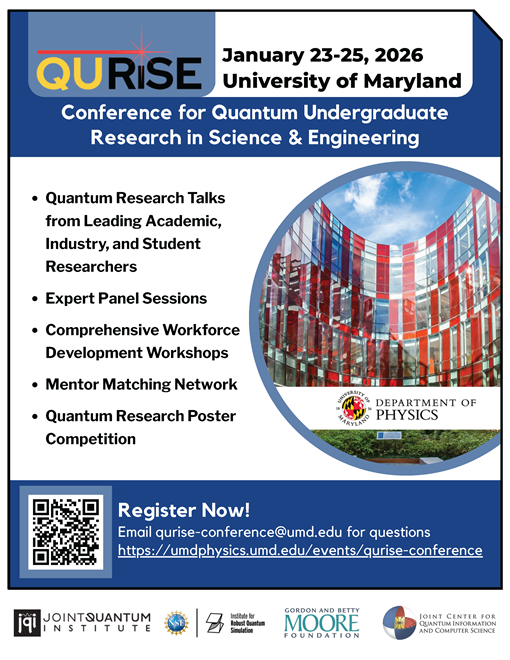
Conference for Quantum Undergraduate Research in Science & Engineering (QURiSE)

Department News

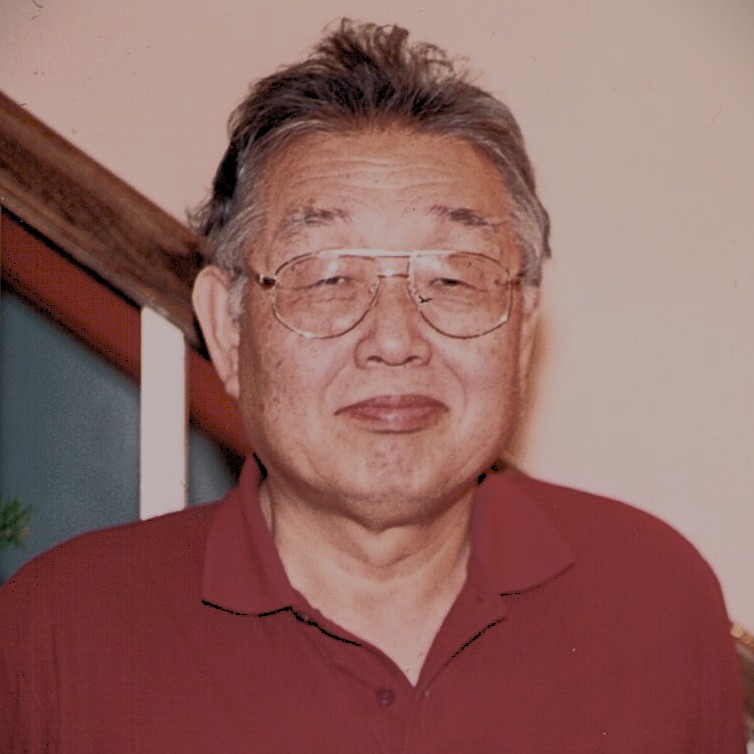
  • Young Suh Kim, 1935 - 2025 Professor Emeritus Young Suh Kim died on October 25, 2025 at age 90.  Prof. Kim's research was dedicated to elucidating the connections between relativity, quantum mechanics, and the symmetries that underlie the laws of nature. Born in Korea in 1935, Prof. Kim earned his Bachelor of Science Read More
  • Gates Receives 2025 Barry Prize, Named Fellow of the American Mathematical Society and African Academy of Sciences Distinguished University Professor Sylvester James Gates, Jr.  was recently named Fellow of both the American Mathematical Society and the African Academy of Sciences and received the 2025 Barry Prize for Distinguished Intellectual Achievement from the American Academy of Sciences & Letters. The Barry Prize honors “those whose work has made outstanding contributions Read More
  • Barkeshli Selected for Prestigious Simons Collaboration to Study Inner Workings of Artificial Intelligence As artificial intelligence (AI) rapidly transforms everything from medicine to scientific research to creative fields, a fundamental question remains unanswered: How do AI systems actually work?   AI models help diagnose diseases, discover new drugs, write computer code and generate images, yet scientists still don't Read More
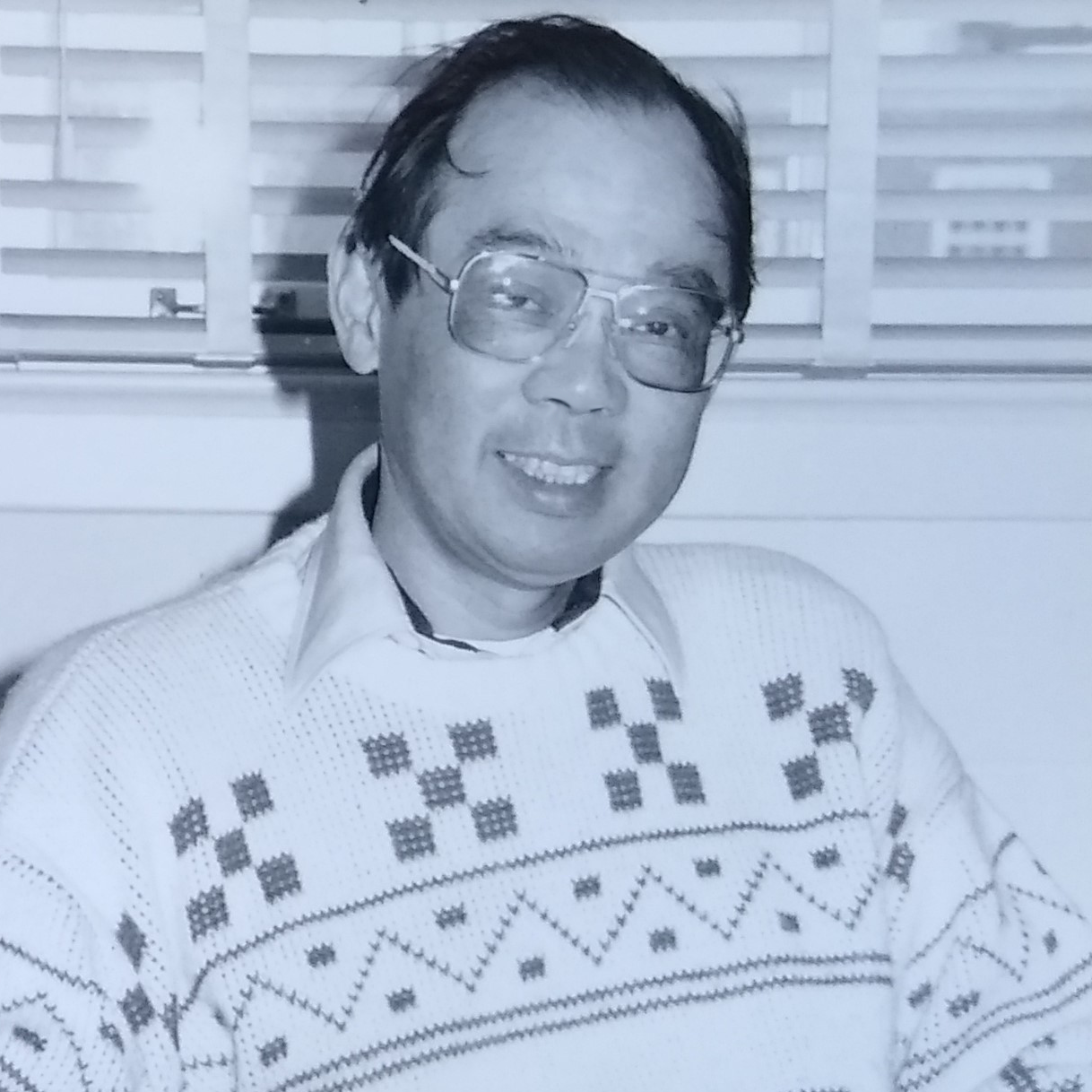
  • Chung Yun Chang, 1929 - 2025 Professor Emeritus Chung Yun Chang died on October 29, 2025, in San Diego, California. He was 95. Prof. Chang was a native of rural Hunan, China. He received a bachelor’s degree at National Taiwan University and a Ph.D. at Columbia University in 1965.   Prof. Chang Read More
  • 1
  • 2
  • 3

Upcoming Events

15 Dec
EPT Seminar - Claudio Manzari, Institute for Advanced Study
Date Mon, Dec 15, 2025 4:00 pm - 5:00 pm
16 Dec
Candidacy Talk: Zhenning Liu
Tue, Dec 16, 2025 10:30 am - 11:30 am
16 Dec
Colloquia resume on 1/27/26
Tue, Dec 16, 2025 3:30 pm - 4:00 pm
17 Dec
Candidacy Talk: Jon Nelson
Wed, Dec 17, 2025 2:00 pm - 3:00 pm
26 Jan
JQI Seminar - Jeremy Levy
Mon, Jan 26, 2026 11:00 am - 12:00 pm
2 Feb
JQI Seminar - Brad Marston
Mon, Feb 2, 2026 11:00 am - 12:00 pm
9 Feb
JQI Seminar - Jon Hood
Mon, Feb 9, 2026 11:00 am - 12:00 pm

AMLBot: usdt aml check - BTC, ETH, USDT TRC20/ERC20 and 5000+ cryptos.

Space as an Open Plasma Laboratory

Dennis Papadopoulos, University of Maryland
October 28, 2014

By the late 19th century engineers and experimental scientists knew the behavior of radio waves and understood how and at what frequencies they could transmit information over large distances. However the puzzling question was why the signals followed the curvature of the earth. It took more than 20 years to discover the “ionosphere” an “electrically active” region starting 100km above the earth that reflected the radio waves similar to a mirror returning to the ground. The importance of controlling the long-range propagation of radio waves for military and commercial purposes necessitated the understanding of the properties of the new medium, the ionosphere, and initiated a novel method of experimentation radio sounding: sending radio waves to the ionosphere and detecting the properties of the return signal (travel time, amplitude, direction and polarization). Radio sounding transformed atmospheric studies from passive observations to active “cause and effect” studies similar to laboratory experiments. It revealed that the ionosphere is a very unusual magnetized plasma medium with relatively low electron concentration and low dissipation, extending from 100 to 300 km above the ground. While initially radio sounding was performed with low power radio transmitters recently developed phased array transmitters with Effective Radiative Power (ERP) larger than 1 GW allowed frontier research in nonlinear plasma physics, geophysics and radio science with implications to space weather, Van Allen belts, GPS signals and magnetospheric probing. Following a historical introduction to the subject the presentation will focus on recent physics achievements, including:

• Creation of artificial ionization layers.

• Langmuir waves, parametric instabilities, electron acceleration and artificial aurora.

• Virtual antennas at ELF/VLF frequencies and their use in magnetospheric, ionospheric and underground probing.

• Artificial mirrors for frequencies in the GHz range.

-------------------------------------------------------------------------------------------------------------------------------------------------------------------------------------------------

Colloquia are held Tuesdays in the Physical Sciences Complex at 4:00 pm (preceded by light refreshments at 3:30). If you have additional questions, please call 301-405-5946.