• Home
  • About Us
    • Physics Administration
    • Directions
    • Awards
    • Student Awards
    • Make a Donation
    • News
      • Research News
      • Department News
      • Newsletters
    • PTK Policy
  • People
    • All
    • Faculty
      • Current
      • Emeritus
      • Adjunct
      • Affiliate
      • Research Professors
    • Research Scientists
    • Postdocs
    • Staff
    • Lecturers
    • Visitors
    • Graduate Students
  • Research
    • Research Areas
      • AI and Physical Sciences
      • Astro Metrology
      • Atomic, Molecular & Optical
      • Biophysics
      • Chemical Physics
      • Condensed Matter Experiment
      • Condensed Matter Theory
      • Cosmic Ray Physics
      • Elementary Particles
      • Gravitation Experiment
      • Gravitational Theory
      • High Energy Physics
      • Nonlinear Dynamics, Chaos and Complex Systems
      • Nuclear Physics
      • Particle Astrophysics
      • Physics Education Research
      • Plasma Physics
      • Plasma Theory
      • Quantum Science and Technology
      • Quarks, Hadrons and Nuclei
      • Space Physics
    • Centers & Institutes
  • Academics
    • OSES Home (Student Services)
    • OSES News
    • Undergraduate Program
      • Prospective Students
      • Apply Now
      • Degree Requirements and Policies
      • Scholarships
      • Undergraduate Research
      • Advising
      • Undergraduate Forms
      • Undergraduate Events
      • Departmental Honors
      • Society of Physics Students
      • FAQ
      • Undergraduate Student Committee
    • Graduate Program
      • Prospective Students
      • Open House
      • Degree Requirements
      • Graduate Resources
      • Deadlines and Forms
      • PhD Defenses
        • PhD Defenses 2026
        • PhD Defenses 2025
        • PhD Defenses 2024
        • PhD Defenses 2023
        • PhD Defenses 2022
        • PhD Defenses 2021
        • PhD Defenses 2020
        • PhD Defenses 2019
        • PhD Defenses 2018
        • PhD Defenses 2017
        • PhD Defenses 2016
      • Events
      • Scholarships & Awards
      • Qualifier
      • Graduate Student Organizations
      • FAQ
    • Student Opportunities
      • GRAD-MAP
      • Graduate Student Organizations
      • Outreach Volunteering
      • Society of Physics Students
      • NSF S-STEM Program
      • Undergraduate Research
      • The Noether Physics Society
      • Undergraduate Quantum Association
    • Courses
    • Academic Support
    • NSF S-STEM Program
    • Teaching Assistants
  • Events
    • Calendar
    • Physics Colloquia
    • W.J. Carr Lecture
    • Research Interaction Team (RIT) Math/Physics
    • Mechanick Quantum Biology Lecture
    • Irving and Renee Milchberg Endowed Lectureship
    • Charles W. Misner Endowed Lectureship in Gravitational Physics
    • Charles W. Misner Memorial Symposium
    • John S. Toll Endowed Lecture
    • Prange Prize Lecture
    • Maryland Day
    • Outreach
      • Outreach Home
      • Physics is Phun
      • Discovery Days
    • Summer Programs
      • Physics Makers Camp
      • Physics of Quidditch
      • Science Discovery Camp
      • Advanced Physics Summer Program
      • Toolkit for Success
    • CUWiP
    • Vortex Makerspace
    • QURiSE Conference
  • Services
    • Building Access Requests
    • Computing Services
    • Conference Room Reservations
    • Department Operations Directory
    • Electronic and Mechanical Development
    • Hiring Procedures
    • Lecture Demo
    • Mental Health Resources
    • Parking
    • Physics Ombudspersons
    • Printing Services
      • Poster Print Request
    • Proposal Submissions
    • Purchase Order
    • Suggestion Box
    • Textbook Information
  • Give
  1. Home
  2. About Us
  3. News

Written on 17 November 2020. Posted in Research News.

Going Beyond the Anti-Laser May Enable Long-Range Wireless Power Transfer

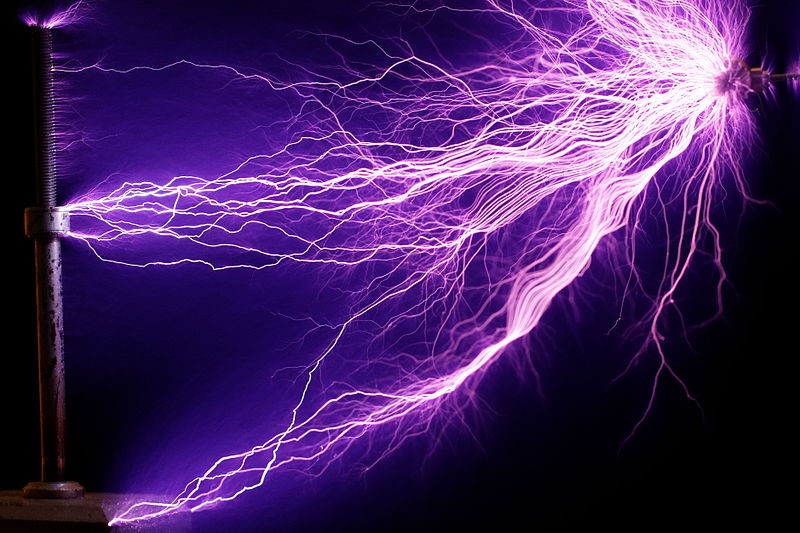
Ever since Nikola Tesla spewed electricity out in all directions with his coil back in 1891, scientists have been thinking up ways to send electrical power through the air. The dream is to charge your phone or laptop, or maybe even a healthcare device such as a pacemaker, without the need for wires and plugs. The tricky bit is getting the electricity to find its intended target, and getting that target to absorb the electricity instead of just reflect it back into the air—all preferably without endangering anyone along the way.

These days, you can wirelessly charge a smartphone by putting it within an inch of a charging station. But usable long-range wireless power transfer, from one side of a room to another or even across a building, is still a work in progress. Most of the methods currently in development involve focusing narrow beams of energy and aiming them at their intended target. These methods have had some success, but are so far not very efficient. And having focused electromagnetic beams flying around through the air is unsettling.Arcs of electricity generated by a Tesla coil. (Credit: Airarcs/CC BY-SA 3.0)Arcs of electricity generated by a Tesla coil. (Credit: Airarcs/CC BY-SA 3.0)

Now, a team of researchers at the University of Maryland (UMD), in collaboration with a colleague at Wesleyan University in Connecticut, have developed an improved technique for wireless power transfer technology that may promise long-range power transmission without narrowly focused and directed energy beams. Their results, which widen the applicability of previous techniques, were published Nov. 17, 2020 in the journal Nature Communications.

The team generalized a concept known as an “anti-laser.” In a laser, one photon triggers a cascade of many photons of the same color shooting out in a coherent beam. In an anti-laser, the reverse happens. Instead of boosting the number of photons, an anti-laser coherently and perfectly absorbs a beam of many precisely tuned photons. It’s kind of like a laser running backwards in time.

The new work, led by UMD Professor of Physics Steven Anlage of the Quantum Materials Center (QMC), demonstrates that it’s possible to design a coherent perfect absorber outside of the original time-reversed laser framework—a relaxation of some of the key constraints in earlier work. Instead of assuming directed beams traveling along straight lines into an absorption target, they picked a geometry that was disorderly and not amenable to being run backwards in time.

“We wanted to see this effect in a completely general environment where there's no constraints,” says Anlage. “We wanted a sort of random, arbitrary, complex environment, and we wanted to make perfect absorption happen under those really demanding circumstances. That was the motivation for this, and we did it.”

Anlage and his colleagues wanted to create a device that could receive energy from a more diffuse source, something that was less beam and more bath. Before tackling the wireless challenge, they set up their generalized anti-laser as a labyrinth of wires for electromagnetic waves to travel through. Specifically, they used microwaves, a common candidate for power transfer applications. The labyrinth consisted of a bunch of wires and boxes connected in a purposefully disordered way. Microwaves going through this labyrinth would get so tangled up that, even if it were possible to reverse time, this still wouldn’t untangle them.

Buried in the midst of this labyrinth was an absorber, the target to deliver power to. The team sent microwaves of different frequencies, amplitudes and phases into the labyrinth and measured how they were transformed. Based on these measurements, they were able to calculate the exact properties of input microwaves that would result in perfect power transfer to the absorber. They found that for correctly chosen input microwaves, the labyrinth absorbed an unprecedented 99.999% of the power they sent into it. This showed explicitly that coherent perfect absorption can be achieved even without a laser run backwards in time.

The team then took a step towards wireless power transfer. They repeated the experiment in a cavity, a plate of brass several feet in each direction with an oddly shaped hole in the middle. The shape of the hole was designed so that the microwaves would bounce around it in an unpredictable, chaotic way. They placed a power absorber inside the cavity, and sent microwaves in to bounce around the open space inside. They were able to find the right input microwave conditions for coherent perfect absorption with 99.996% efficiency.

Recent work by a collaboration of teams in France and Austria also demonstrated coherent perfect absorption in their own disordered microwave labyrinth. However, their experiment was not quite as general as the new work from Anlage and colleagues. In the previous work, the microwaves entering the labyrinth would still be untangled by a hypothetical reversal of time. This might seem like a subtle distinction, but the authors say showing that coherent perfect absorption doesn’t require any kind of order in the environment promises applicability virtually anywhere.

Generalizing previous techniques in this way invites ideas that sound like science fiction, like being able to wirelessly and remotely charge any object in a complex environment, such as an office building, with near perfect efficiency. Such schemes would require that the frequency, amplitude, and phase of the electric power is custom tuned to specific targets. But there would be no need to focus a high-powered beam and aim it at the laptop or phone—the electrical waves themselves would be designed to find their chosen target.

“If we have an object which we want to deliver power to, we will first use our equipment to measure some properties of the system,” says Lei Chen, a graduate student in electrical and computer engineering at UMD and the lead author of the paper. “Based on those properties we can get the unique microwave signals for this kind of system. And it will be perfectly absorbed by the object. For every unique object, the signals will be different and specially designed.”

Although this technique shows great promise, much remains to be done before the advent of wireless and plug-less offices. The perfect absorber depends crucially on the power being tuned just right for the absorber. A slight change in the environment—such as moving the target laptop or raising the blinds in the room—would require an immediate retuning of all the parameters. So, there would need to be a way to quickly and efficiently find the right conditions for perfect absorption on the fly, without using too much power or bandwidth. Additionally, more work needs to be done to determine the efficacy and safety of this technique in realistic environments.

Even though it’s not yet time to throw away all your power cords, coherent perfect absorption may come in handy in many ways. Not only is it general to any kind of target, it is also not limited to optics or microwaves.  “It's not wedded to one specific technology,” says Anlage, “This is a very general wave phenomenon. And the fact that it's done in microwaves is just because that's where the strengths are in my lab. But you could do all of this with acoustics, you could do this with matter waves, you could do this with cold atoms. You could do this in many, many different contexts.”

In addition to Chen and Anlage, Tsampikos Kottos, a professor at Wesleyan University, was a co-author on the paper.

Written by Dina Genkina ()


Written on 12 November 2020. Posted in Department News.

PRB Highlights Work of Das Sarma and Hwang

To mark the 50th anniversary of Physical Review B, editors selected “milestone” papers that have made lasting contributions to condensed matter physics, including one co-written by Distinguished University Professor Sankar Das Sarma.pr50 social cropped ratio 0

Das Sarma wrote the selected paper, Dielectric function, screening, and plasmons in two-dimensional graphene, with Euyheon Hwang. Hwang earned his doctorate in 1996 under Das Sarma, and after appointments as a UMD research associate and assistant research scientist, accepted a faculty post at Sungkyunkwan University (SKKU) in South Korea.  He is one of about 100 of Das Sarma’s students and postdocs who have gone on to faculty appointHwang DasSarma 2003Euyheon Hwang (seated, yellow shirt) and Sankar Das Sarma (red shirt) with CMTC colleagues in 2003.ments.

Hwang and Das Sarma have written about 120 articles together, including 88 papers in PRB from 1994 to 2019.

The milestone paper was published in 2007 and has 1,744 citations. In it, the authors developed a many body theory for the dynamical dielectric function of doped graphene at an arbitrary wave vector and frequency.   The dielectric function directly determines many physical properties, including electrical and optical properties.  This ‘milestone’ publication by Hwang and Das Sarma has been instrumental not only in the development of the fundamental physics of graphene, but has also ushered in the technological field of ‘graphene plasmonics’ which is being widely pursued worldwide for practical engineering use in optics and photonics.

Das Sarma, the Richard E. Prange Chair in Physics, is a Distinguished University Professor, a Fellow of the Joint Quantum Institute, and the director of the Condensed Matter Theory Center. He is internationally known for his work on topological quantum computation, Majorana physics, spin quantum computation, many body phenomena, quantum localization and nonequlibrium statistical mechanics, and has recently entered into the study of twisted bilayer graphene and higher-order topological systems. Google Scholar counts 90,227 citations and calculates an h-index of 124.


(link sends e-mail)
 

Written on 02 November 2020. Posted in Research News.

UMD Physicists Contribute to New B Meson Finding

Scientists have known for decades of a massive imbalance between the amount of matter and antimatter in the universe. To resolve the discrepancy, they attempt to recreate the first instant after the Big Bang through fierce collisions of subatomic particles, followed by intense scrutiny of the resulting forces and pieces.  A premiere effort is CERN’s LHCb experiment, in which B mesons’ disintegration provides clues that may someday explain why matter has predominated over antimatter. Although the Standard Model is shown to contain a mechanism that violates the charge-parity (CP) symmetry – the symmetry that ensures equal treatment of reactions involving matter or antimatter particles – it can only account for a small part of the observed matter-antimatter imbalance in the universe. A major goal of the LHCb experiment is to discover possible sources of CP violation beyond the Standard Model.

Now, the LHCb collaboration has announced a major new development, based on data collected during LHC Run 2, confirming and significantly strengthening an anomalous observation in decays of B mesons. At an October 28 CERN workshop, a result of a measurement of the CP violation in a B meson B+→K+π0 was announced.  This is the most precise measurement of CP asymmetry yet found in this decay, and an important data point in studies of B meson decays, following results gained by the BaBar, Belle and Tevatron experiments, as well as LHCb.  This result significantly strengthens the anomalous difference with the measured CP asymmetry in the counterpart decay channel of the neutral B meson (B0→K+π-), an effect yet to be satisfactorily explained in the Standard Model.The images above show the reconstructed invariant mass distribution of K+π0 and K-π0 mass distributions. Clear enhancements at the B+ (left) and B- (right) masses are visible.The images above show the reconstructed invariant mass distribution of K+π0 and K-π0 mass distributions. Clear enhancements at the B+ (left) and B- (right) masses are visible.

UMD postdoc Will Parker made the recent presentation, which can be seen here.

The UMD flavor physics group has been working on B meson decays since 1995 with the design and development of the BaBar experiment at SLAC and since 2014 with the LHCb experiment at CERN. “We are happy that we now have the most precise measurement of this anomaly, which is of huge interest in the particle physics community,” said Distinguished University Professor Hassan Jawahery.

Along with Jawahery, Parker, Phoebe Hamilton and Jason Andrews (PhD 2018),  who carried out this measurement, the UMD LHCb group includes Assistant Professor Manuel Franco Sevilla, researcher Svende Braun, and graduate students Alex Fernez, Yipeng Sun, and Zishuo Yang. In 2019, the LHCb experiment observed CP violation in decays of D mesons. That finding was rated a Physics World Breakthrough of the Year finalist for 2019. 

To learn more about the new B+→K+π0 result, see the LHCb announcement: https://lhcb-public.web.cern.ch/Welcome.html#Kpi.  The full paper will be submitted to Physical Review Letters.

Written on 30 October 2020. Posted in Department News.

Nick Butch Honored by NIST

Adjunct Associate Professor Nicholas Butch will receive the National Institute of Standards and Technology’s 2020 Samuel Wesley Stratton Award "for pioneering research into the exotic physics and extremely high-field re-entrant superconductivity in uranium ditelluride." The Stratton Award, named after the first director of the National Bureau of Standards, as NIST was then known, recognizes an unusually significant research contribution to science or engineering that merits the acclaim of the scientific world and supports NIST’s mission objectives.Nick ButchNick Butch

Butch, a physicist at NIST’s Center for Neutron Research, is a member of the Quantum Materials Center (QMC). His first UMD appointment was as a Rolfe Glover Postdoctoral Fellow in 2008.

Among Butch’s research pursuits are quantum materials and superconductivity. In 2019, he and collaborators discovered superconductivity in the material uranium ditelluride (UTe2) and then described a remarkable quirk: high magnetic fields seem to stabilize, not destroy, its superconducting state. This resilience could make UTe2 a promising material for use in quantum computers.

Earlier in 2020, Butch and collaborators also announced that experiments with UTe2 revealed that it might contain the long-sought Majorana fermion.

Butch earned his Ph.D. in 2008 at the University of California, San Diego. In 2017, he received a Presidential Early Career Award for Scientists and Engineers (PECASE), the highest honor bestowed by the United States government on science and engineering professionals in the early stages of their research careers.

Written on 22 October 2020. Posted in Research News.

A Billion Tiny Pendulums Could Detect the Universe’s Missing Mass

Researchers at the National Institute of Standards and Technology (NIST), the University of Maryland's Joint Quantum Institute (JQI), and their colleagues have proposed a novel method for finding dark matter, the cosmos’s mystery material that has eluded detection for decades. Dark matter makes up about 27% of the universe; ordinary matter, such as the stuff that builds stars and planets, accounts for just 5% of the cosmos. (A mysterious entity called dark energy, accounts for the other 68%.)

According to cosmologists, all the visible material in the universe is merely floating in a vast sea of dark matter—particles that are invisible but nonetheless have mass and exert a gravitational force. Dark matter’s gravity would provide the missing glue that keeps galaxies from falling apart and account for how matter clumped together to form the universe’s rich galactic tapestry. 

The proposed experiment, in which a billion millimeter-sized pendulums would act as dark matter sensors, would be the first to hunt for dark matter solely through its gravitational interaction with visible matter. The experiment would be one of the few to search for dark matter particles with a mass as great as that of a grain of salt, a scale rarely explored and never studied by sensors capable of recording tiny gravitational forces.

Previous experiments have sought dark matter by looking for nongravitational signs of interactions between the invisible particles and certain kinds of ordinary matter. That’s been the case for searches for a hypothetical type of dark matter called the WIMP (weakly interacting massive particles), which was a leading candidate for the unseen material for more than two decades. Physicists looked for evidence that when WIMPs occasionally collide with chemical substances in a detector, they emit light or kick out electric charge. {source}<iframe src="https://cdnapisec.kaltura.com/p/684682/sp/68468200/embedIframeJs/uiconf_id/31013851/partner_id/684682?iframeembed=true&playerId=iframeVid&entry_id=1_io53hicg&flashvars[streamerType]=auto" width="853" height="505" allowfullscreen webkitallowfullscreen mozAllowFullScreen allow="autoplay *; fullscreen *; encrypted-media *" frameborder="0"></iframe>{/source}

Dark matter, the hidden stuff of our universe, is notoriously difficult to detect. In search of direct evidence, NIST researchers have proposed using a 3D array of pendulums as force detectors, which could detect the gravitational influence of passing dark matter particles. When a dark matter particle is near a suspended pendulum, the pendulum should deflect slightly due to the attraction of both masses. However, this force is very small, and difficult to isolate from environmental noise that causes the pendulum to move. To better isolate the deflections from passing particles, NIST researchers propose using a pendulum array. Environmental noise affects each pendulum individually, causing them to move independently. However, particles passing through the array will produce correlated deflections of the pendulums. Because these movements are correlated, they can be isolated from the background noise, revealing how much force a particle delivers to each pendulum and the particle’s speed and direction, or velocity.

Researchers hunting for WIMPs in this way have either come up empty-handed or garnered inconclusive results; the particles are too light (theorized to range in mass between that of an electron and a proton) to detect through their gravitational tug. 

With the search for WIMPs seemingly on its last legs, researchers at NIST and their colleagues are now considering a more direct method to look for dark matter particles that have a heftier mass and therefore wield a gravitational force large enough to be detected.

“Our proposal relies purely on the gravitational coupling, the only coupling we know for sure that exists between dark matter and ordinary luminous matter,” said study co-author Daniel Carney, a theoretical physicist jointly affiliated with JQI, the National Institute of Standards and Technology (NIST), the Joint Center for Quantum Information and Computer Science (QuICS), and the Fermi National Accelerator Laboratory. 

The researchers—who also include Adjunct Professor Jacob Taylor, Sohitri Ghosh of JQI and QuICS, and Gordan Krnjaic of the Fermi National Accelerator Laboratory—calculate that their method can search for dark matter particles with a minimum mass about half that of a grain of salt, or about a billion billion times the mass of a proton. The scientists reported their findings recently in Physical Review D(link is external).

Because the only unknown in the experiment is the mass of the dark matter particle, not how it couples to ordinary matter, “if someone builds the experiment we suggest, they either find dark matter or rule out all dark matter candidates over a wide range of possible masses,” said Carney. The experiment would be sensitive to particles ranging from about 1/5,000 of a milligram to a few milligrams. 

That mass scale is particularly interesting because it covers the so-called Planck mass, a quantity of mass determined solely by three fundamental constants of nature and equivalent to about 1/5,000 of a gram. 

Carney, Taylor and their colleagues propose two schemes for their gravitational dark matter experiment. Both involve tiny, millimeter-size mechanical devices acting as exquisitely sensitive gravitational detectors. The sensors would be cooled to temperatures just above absolute zero to minimize heat-related electrical noise and shielded from cosmic rays and other sources of radioactivity. In one scenario, a myriad of highly sensitive pendulums would each deflect slightly in response to the tug of a passing dark matter particle.

Similar devices (with much larger dimensions) have already been employed in the recent Nobel-prize-winning detection of gravitational waves, ripples in the fabric of space-time predicted by Einstein’s theory of gravity. Carefully suspended mirrors, which act like pendulums, move less than the length of an atom in response to a passing gravitational wave. 

In another strategy, the researchers propose using spheres levitated by a magnetic field or beads levitated by laser light. In this scheme, the levitation is switched off as the experiment begins, so that the spheres or beads are in free fall. The gravity of a passing dark matter particle would ever so slightly disturb the path of the free-falling objects. 

“We are using the motion of objects as our signal,” said Taylor. “This is different from essentially every particle physics detector out there.” 

The researchers calculate that an array of about a billion tiny mechanical sensors distributed over a cubic meter is required to differentiate a true dark matter particle from an ordinary particle or spurious random electrical signals or “noise” triggering a false alarm in the sensors. Ordinary subatomic particles such as neutrons (interacting through a nongravitational force) would stop dead in a single detector. In contrast, scientists expect a dark matter particle, whizzing past the array like a miniature asteroid, would gravitationally jiggle every detector in its path, one after the other. 

Noise would cause individual detectors to move randomly and independently rather than sequentially, as a dark matter particle would. As a bonus, the coordinated motion of the billion detectors would reveal the direction the dark matter particle was headed as it zoomed through the array.

To fabricate so many tiny sensors, the team suggests that researchers may want to borrow techniques that the smartphone and automotive industries already use to produce large numbers of mechanical detectors.

Thanks to the sensitivity of the individual detectors, researchers employing the technology needn’t confine themselves to the dark side. A smaller-scale version of the same experiment could detect the weak forces from distant seismic waves as well as that from the passage of ordinary subatomic particles, such as neutrinos and single, low-energy photons (particles of light). 

The smaller-scale experiment could even hunt for dark matter particles—if they impart a large enough kick to the detectors through a nongravitational force, as some models predict, Carney said. 

“We are setting the ambitious target of building a gravitational dark matter detector, but the R&D needed to achieve that would open the door for many other detection and metrology measurements,” said Carney. 

Researchers at other institutions have already begun conducting(link is external) preliminary experiments using the NIST team’s blueprint.

This story was originally published by NIST News(link is external). It has been adapted with minor changes here. JQI is a research partnership between UMD and NIST, with the support and participation of the Laboratory for Physical Sciences

Reference Publication: 
"Proposal for gravitational direct detection of dark matter,"Daniel Carney, Sohitri Ghosh, Gordan Krnjaic, Jacob M. Taylor., Phys. Rev. D, 102, 072003 (2020)


More Articles …

  1. PRA Highlights Work of Ian Spielman
  2. Monroe Elected OSA Fellow
  3. Beverly Berger Receives APS Isaacson Award
  4. UMD Welcomes 16-year-old Ph.D. Student

Page 69 of 206

  • 64
  • 65
  • 66
  • 67
  • 68
  • 69
  • 70
  • 71
  • 72
  • 73
  • Physics Administration
  • Directions
  • Awards
  • Student Awards
  • Make a Donation
  • News
    • Research News
    • Department News
    • Newsletters
  • PTK Policy

College and Department Links

Department of Physics

Physical Sciences Complex
4296 Stadium Dr
College Park, MD 20742
Phone: 301.405.3401

Information

  • Campus Directory
  • Undergraduate Research
  • Scholarships
  • Prospective Undergraduates
  • Directions & Transit
  • Web Accessibility
© 2026 University of Maryland - Department of Physics
Top
  • Home
  • About Us
    • Physics Administration
    • Directions
    • Awards
    • Student Awards
    • Make a Donation
    • News
      • Research News
      • Department News
      • Newsletters
    • PTK Policy
  • People
    • All
    • Faculty
      • Current
      • Emeritus
      • Adjunct
      • Affiliate
      • Research Professors
    • Research Scientists
    • Postdocs
    • Staff
    • Lecturers
    • Visitors
    • Graduate Students
  • Research
    • Research Areas
      • AI and Physical Sciences
      • Astro Metrology
      • Atomic, Molecular & Optical
      • Biophysics
      • Chemical Physics
      • Condensed Matter Experiment
      • Condensed Matter Theory
      • Cosmic Ray Physics
      • Elementary Particles
      • Gravitation Experiment
      • Gravitational Theory
      • High Energy Physics
      • Nonlinear Dynamics, Chaos and Complex Systems
      • Nuclear Physics
      • Particle Astrophysics
      • Physics Education Research
      • Plasma Physics
      • Plasma Theory
      • Quantum Science and Technology
      • Quarks, Hadrons and Nuclei
      • Space Physics
    • Centers & Institutes
  • Academics
    • OSES Home (Student Services)
    • OSES News
    • Undergraduate Program
      • Prospective Students
      • Apply Now
      • Degree Requirements and Policies
      • Scholarships
      • Undergraduate Research
      • Advising
      • Undergraduate Forms
      • Undergraduate Events
      • Departmental Honors
      • Society of Physics Students
      • FAQ
      • Undergraduate Student Committee
    • Graduate Program
      • Prospective Students
      • Open House
      • Degree Requirements
      • Graduate Resources
      • Deadlines and Forms
      • PhD Defenses
        • PhD Defenses 2026
        • PhD Defenses 2025
        • PhD Defenses 2024
        • PhD Defenses 2023
        • PhD Defenses 2022
        • PhD Defenses 2021
        • PhD Defenses 2020
        • PhD Defenses 2019
        • PhD Defenses 2018
        • PhD Defenses 2017
        • PhD Defenses 2016
      • Events
      • Scholarships & Awards
      • Qualifier
      • Graduate Student Organizations
      • FAQ
    • Student Opportunities
      • GRAD-MAP
      • Graduate Student Organizations
      • Outreach Volunteering
      • Society of Physics Students
      • NSF S-STEM Program
      • Undergraduate Research
      • The Noether Physics Society
      • Undergraduate Quantum Association
    • Courses
    • Academic Support
    • NSF S-STEM Program
    • Teaching Assistants
  • Events
    • Calendar
    • Physics Colloquia
    • W.J. Carr Lecture
    • Research Interaction Team (RIT) Math/Physics
    • Mechanick Quantum Biology Lecture
    • Irving and Renee Milchberg Endowed Lectureship
    • Charles W. Misner Endowed Lectureship in Gravitational Physics
    • Charles W. Misner Memorial Symposium
    • John S. Toll Endowed Lecture
    • Prange Prize Lecture
    • Maryland Day
    • Outreach
      • Outreach Home
      • Physics is Phun
      • Discovery Days
    • Summer Programs
      • Physics Makers Camp
      • Physics of Quidditch
      • Science Discovery Camp
      • Advanced Physics Summer Program
      • Toolkit for Success
    • CUWiP
    • Vortex Makerspace
    • QURiSE Conference
  • Services
    • Building Access Requests
    • Computing Services
    • Conference Room Reservations
    • Department Operations Directory
    • Electronic and Mechanical Development
    • Hiring Procedures
    • Lecture Demo
    • Mental Health Resources
    • Parking
    • Physics Ombudspersons
    • Printing Services
      • Poster Print Request
    • Proposal Submissions
    • Purchase Order
    • Suggestion Box
    • Textbook Information
  • Give