• Home
  • About Us
    • Physics Administration
    • Directions
    • Awards
    • Student Awards
    • Make a Donation
    • News
      • Research News
      • Department News
      • Newsletters
    • PTK Policy
  • People
    • All
    • Faculty
      • Current
      • Emeritus
      • Adjunct
      • Affiliate
      • Research Professors
    • Research Scientists
    • Postdocs
    • Staff
    • Lecturers
    • Visitors
    • Graduate Students
  • Research
    • Research Areas
      • AI and Physical Sciences
      • Astro Metrology
      • Atomic, Molecular & Optical
      • Biophysics
      • Chemical Physics
      • Condensed Matter Experiment
      • Condensed Matter Theory
      • Cosmic Ray Physics
      • Elementary Particles
      • Gravitation Experiment
      • Gravitational Theory
      • High Energy Physics
      • Nonlinear Dynamics, Chaos and Complex Systems
      • Nuclear Physics
      • Particle Astrophysics
      • Physics Education Research
      • Plasma Physics
      • Plasma Theory
      • Quantum Science and Technology
      • Quarks, Hadrons and Nuclei
      • Space Physics
    • Centers & Institutes
  • Academics
    • OSES Home (Student Services)
    • OSES News
    • Undergraduate Program
      • Prospective Students
      • Apply Now
      • Degree Requirements and Policies
      • Scholarships
      • Undergraduate Research
      • Advising
      • Undergraduate Forms
      • Undergraduate Events
      • Departmental Honors
      • Society of Physics Students
      • FAQ
      • Undergraduate Student Committee
    • Graduate Program
      • Prospective Students
      • Open House
      • Degree Requirements
      • Graduate Resources
      • Deadlines and Forms
      • PhD Defenses
        • PhD Defenses 2026
        • PhD Defenses 2025
        • PhD Defenses 2024
        • PhD Defenses 2023
        • PhD Defenses 2022
        • PhD Defenses 2021
        • PhD Defenses 2020
        • PhD Defenses 2019
        • PhD Defenses 2018
        • PhD Defenses 2017
        • PhD Defenses 2016
      • Events
      • Scholarships & Awards
      • Qualifier
      • Graduate Student Organizations
      • FAQ
    • Student Opportunities
      • GRAD-MAP
      • Graduate Student Organizations
      • Outreach Volunteering
      • Society of Physics Students
      • NSF S-STEM Program
      • Undergraduate Research
      • The Noether Physics Society
      • Undergraduate Quantum Association
    • Courses
    • Academic Support
    • NSF S-STEM Program
    • Teaching Assistants
  • Events
    • Calendar
    • Physics Colloquia
    • W.J. Carr Lecture
    • Research Interaction Team (RIT) Math/Physics
    • Mechanick Quantum Biology Lecture
    • Irving and Renee Milchberg Endowed Lectureship
    • Charles W. Misner Endowed Lectureship in Gravitational Physics
    • Charles W. Misner Memorial Symposium
    • John S. Toll Endowed Lecture
    • Prange Prize Lecture
    • Maryland Day
    • Outreach
      • Outreach Home
      • Physics is Phun
      • Discovery Days
    • Summer Programs
      • Physics Makers Camp
      • Physics of Quidditch
      • Science Discovery Camp
      • Advanced Physics Summer Program
      • Toolkit for Success
    • CUWiP
    • Vortex Makerspace
    • QURiSE Conference
  • Services
    • Building Access Requests
    • Computing Services
    • Conference Room Reservations
    • Department Operations Directory
    • Electronic and Mechanical Development
    • Hiring Procedures
    • Lecture Demo
    • Mental Health Resources
    • Parking
    • Physics Ombudspersons
    • Printing Services
      • Poster Print Request
    • Proposal Submissions
    • Purchase Order
    • Suggestion Box
    • Textbook Information
  • Give
  1. Home
  2. About Us
  3. News

Written on 25 September 2026. Posted in Research News.

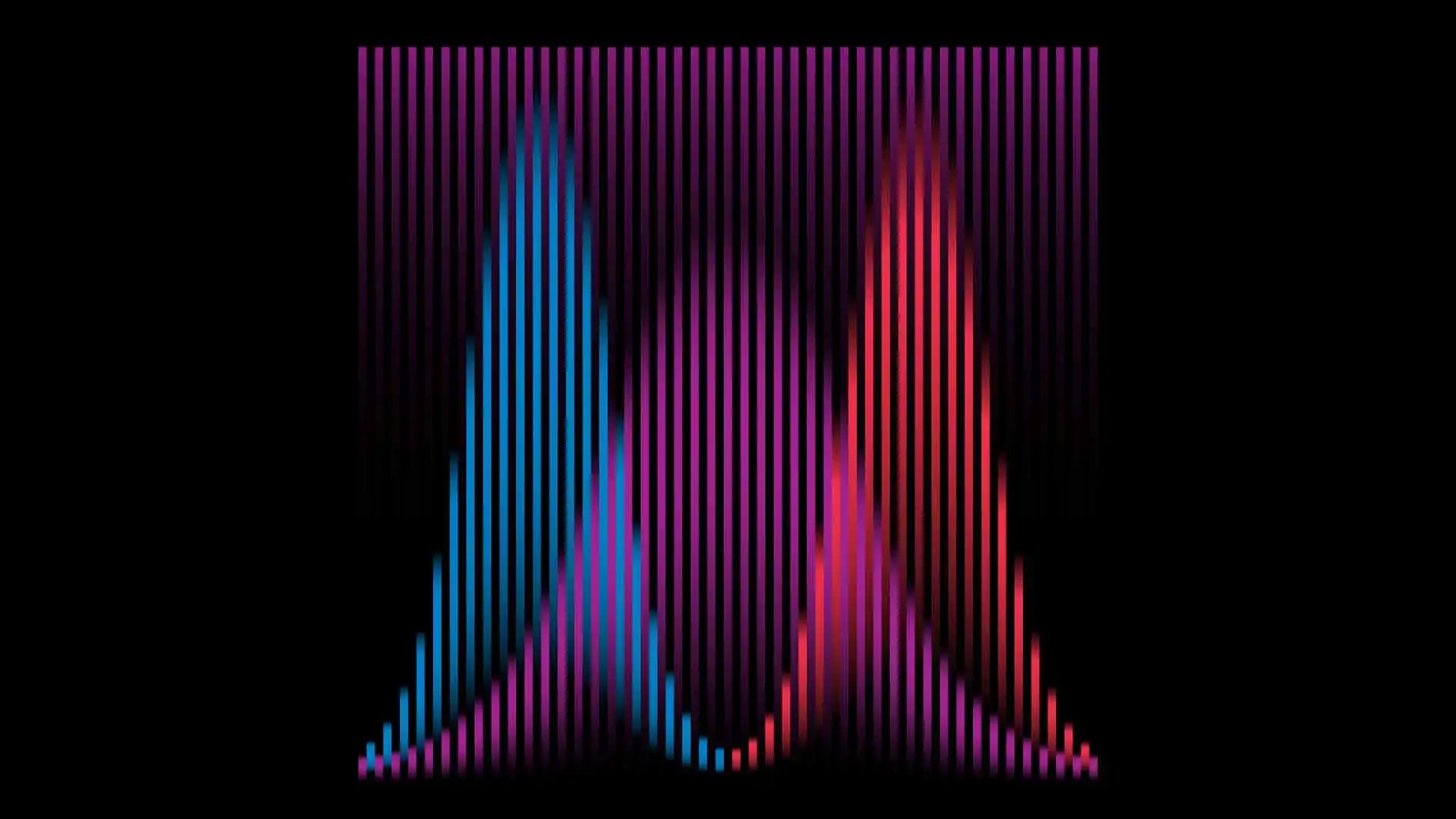
Quantum Device Simulates Matter “Popping” into Existence

A team led by faculty at the Duke Quantum Center (DQC), in collaboration with researchers at the JQI, has used a small number of atoms to simulate an aspect of the extreme physics at play in modern particle colliders and in the chaotic environment that existed shortly after the big bang.

This approach, described in a paper published in the journal Nature Physics on Sept. 23, 2026, demonstrates the viability of trapped-ion quantum computers to begin probing fundamental questions about the universe. The experiment emulates a phenomenon called string breaking in which two connected fundamental building blocks of matter stretch apart, eventually creating so much energy that new particles “pop into existence” when the connection snaps.  

“Quantum computer simulations provide the best platform to investigate complex questions like matter formation, short of having witnessed the big bang itself,” says Christopher Monroe, a professor of electrical and computer engineering and physics at Duke and a College Park Professor of Physics at the University of Maryland (UMD), who led this research. “These findings signal a marked development in the quantum science field and open new avenues for us to understand string-breaking dynamics.”

This research was conducted by an international collaboration that also included researchers working at Oxford University, the California Institute of Technology, Cornell University and KU Leuven. The results join two similar published findings, led by other research teams in the field, which simulated the same phenomenon on different quantum computer platforms.

"This beautiful experiment builds on an earlier collaboration with Chris Monroe, in which we demonstrated the closely related phenomenon of confinement,” says JQI Fellow Alexey Gorshkov, who is also a theoretical physicist at the National Institute for Standards and Technology, a Fellow of the Joint Center for Quantum Information and Computer Science (QuICS) and a Senior Investigator at the National Science Foundation Quantum Leap Challenge Institute for Robust Quantum Simulation (RQS). “My graduate student Fangli Liu was the one who first got me interested in simulating high-energy physics with trapped-ion chains. Bringing together experimentalists and theorists with different areas of expertise has been incredibly rewarding."

The Building Blocks of Matter

The fundamental building blocks of matter, quarks, only exist when bound together inside particles such as protons and neutrons. They are about a billion times smaller than an atom and can’t currently be observed directly. Pairs of these tiny, charged particles are held together by a force that acts like a taut string; quarks want to stick together, and it takes quite a bit of energy to pull them apart. 

But once they are forced apart, the energy built up in their connection can be enough to create more charged particles. When this happens, the string snaps, leaving two or more pairs of particles rather than one. This process requires so much energy, however, that it only happens in extreme environments like the Large Hadron Collider or the aftermath of the big bang. 

In the new study, the team successfully observed analogous string-breaking dynamics on a trapped-ion quantum platform. Quantum simulators, with their high degree of controllability, can be programmed to recreate the real-world processes occurring at the atomic or even subatomic quantum scales.

“Working at the intersection of quantum simulation and high-energy physics is incredibly exciting,” said Arinjoy De, the first author on the paper and a former JQI and Duke graduate student who now works at QuEra Computing. “By simulating quark confinement and string-breaking phenomena in a controlled lab environment, we're opening up new pathways for experimental investigations into the behavior of matter at its most fundamental level.”

How the Simulation Worked

To perform the simulation, the team encoded a string-breaking model into a chain of 13 trapped ions. Using precisely controlled laser beams, researchers were able to tune the interactions among the ions. These interactions effectively control the energy to the system in a way that mimics the stretching and eventual breaking of a string. 

By preparing the system out of equilibrium and tracking its evolution over time, the researchers observed the emergence of effective charges and reconstructed the resulting string dynamics.

The team also simulated the process on a classical computer and confirmed that their experimental results were accurate. As the problem size grows in future experiments, however, only quantum computers will be able to solve these problems. 

The string-breaking process in other models was also recreated by teams led by Google and QuEra Computing on platforms built using superconducting circuits and neutral atoms, respectively, which each have their own advantages and challenges.

“These are the three platforms leading the charge in quantum computing, so it’s a nice benchmark and comparison for the quantum community,” Monroe says.

The authors say that the trapped-ion platform results mark an exciting step forward in building quantum simulations complex enough to exceed the capabilities of even the largest supercomputers, which will eventually allow researchers to explore the most fundamental questions of the universe, like matter evolution after the big bang. 

“As a physicist, it is incredibly exciting to investigate the conditions of the early universe in an atomic-level computing machine,” says Zohreh Davoudi, an associate professor of physics at UMD, who was part of the research team and is also a QuICS Fellow and a Senior Investigator at RQS. “Even the slightest insights from an out-of-equilibrium physics model will guide us in the future.”

This story was written by Andrew Tie and originally published by the Duke Pratt School of Engineering. It has been adapted here with minor changes.

This work was supported by the Department of Energy (DE-SC0020312, DE-SC0025341, DESC0019040, DE-SC0024220, DE-SC0020271), National Science Foundation (OMA-2120757), Air Force Office of Scientific Research, Defense Advanced Research Projects Agency and Amazon Web Services.


Zohreh Davoudi

Written on 23 September 2026. Posted in Department News.

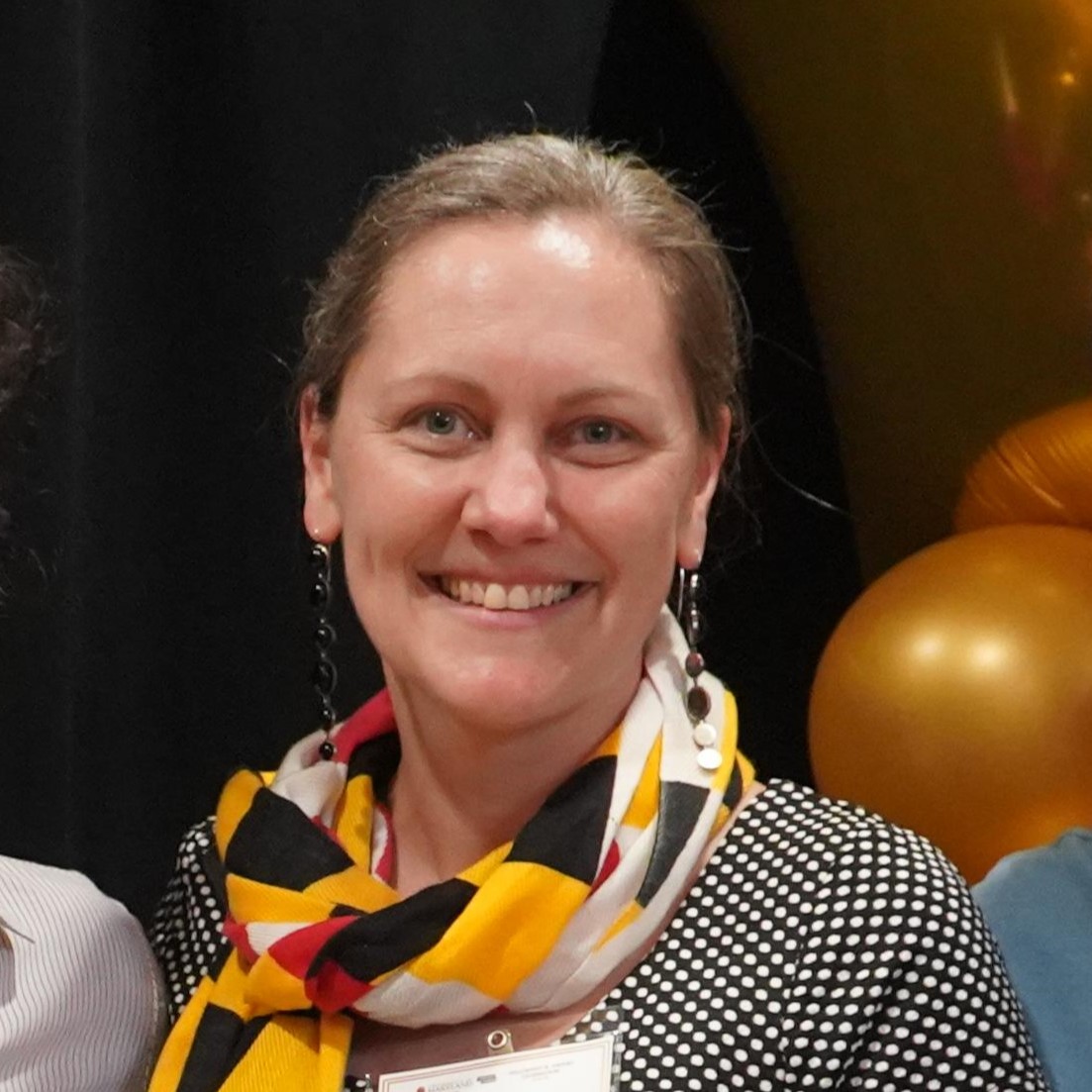
Zohreh Davoudi Named 2026 Schmidt Polymath

University of Maryland Associate Professor of Physics Zohreh Davoudi is one of eight academics around the globe named a 2026 Schmidt Polymath. 

Founded in 2021, the Schmidt Sciences Polymath Program recognizes risky, cross-disciplinary work undertaken by researchers who push the boundaries of their fields to achieve scientific breakthroughs. Davoudi and the other awardees will each receive up to $2.5 million over five years to support their research. 

“The flexibility and freedom offered by this award is a dream come true,” Davoudi said. “It allows one to explore the wildest ideas and not be afraid of crossing traditional boundaries set within institutions and funding agencies.” 

To date, the Polymath award has been awarded to 43 researchers at 31 institutions across nine countries.Zohreh Davoudi. Credit: Riley Sims.Zohreh Davoudi. Credit: Riley Sims.

“We are elated to hear of this prestigious and well-deserved acknowledgment of Dr. Davoudi’s considerable talent,” said Kara Hoffman, chair of UMD’s Department of Physics. “We are proud of her accomplishments and look forward to hearing about the many findings that this generous award will enable.”

Since joining UMD in 2017, Davoudi has worked at the intersection of nuclear physics, particle physics, and computer science. Her research explores how to build the universe from the bottom up: physicists have a good description of nature’s basic ingredients, but translating those fundamental equations into concrete predictions—about the structure of an atomic nucleus or the matter inside a neutron star—is enormously difficult. 

“Most researchers specialize in one or a few tools to close that gap,” Davoudi said. “But my approach has always been that I would pick any means that would help me solve these problems.”

Davoudi began her career as a pure theorist, working through equations with analytical methods. Her results showed how real-world quantities—the fusion reactions that power the sun and a rare nuclear decay that would prove our current theory of physics incomplete—could be extracted from numerical calculations. Then, Davoudi moved on to results obtained from supercomputers, helping to produce some of the first calculations of nuclear interactions, reactions and structure derived from first principles. But she concluded that even these large, powerful computing machines would never be enough.

“No matter how large these computers are, eventually they will come to a point where they can’t solve certain problems for us,” Davoudi said. 

That realization led her to quantum computing. Unlike classical computers, which store information as simple on/off switches, quantum computers exploit the strange rules of quantum mechanics to process certain types of problems far more efficiently. Davoudi is now considered a pioneer in the subfield that applies quantum computing to nuclear and particle physics.

When physicists try to simulate how large numbers of subatomic particles interact and evolve, the amount of information involved grows faster than any classical computer can handle. That bottleneck affects research connected to some of the world's leading facilities, including the Large Hadron Collider and the Relativistic Heavy Ion Collider, where particles are smashed together at extreme energies to reveal the fundamental nature of matter. Davoudi's work is building the tools to run those simulations on quantum computers instead.

“I develop theoretical foundations, quantum algorithms, and experimental proposals for simulating quantum systems that increasingly resemble the subatomic systems we ultimately like to simulate. This endeavor has put me in the sphere of several amazing theoretical and experimental researchers from across physics, computer sciences, and engineering at the UMD and beyond, and turned my research into an exciting multidisciplinary journey,” Davoudi said.

For Davoudi, the Polymath award will help support her next ventures into uncharted territory. She plans to bring tools she has never used before—quantum sensing and artificial intelligence—into her research, and to apply her existing expertise to fields she has not yet explored, including cosmology and even bioscience.

Davoudi sees a hidden thread connecting some of the most extreme environments in science, from the universe in its earliest moments to collisions inside particle accelerators to even the chemistry of living cells. At each scale, quantum mechanics governs the underlying physics. But at some point, those quantum effects give way to the ordinary rules of classical physics. Davoudi believes that this transition holds untapped scientific potential.

“Can we trace the ‘quantumness’ in these systems? Can we leverage it to discover new phenomena and new applications?" Davoudi said. “New simulation and sensing strategies can reach far beyond what scientists consider possible today, and artificial intelligence could accelerate that process beyond our imagination. It’s exciting to think about these directions and discover both answers and new questions in the process.”

The Polymath award will allow Davoudi to build new collaborations with scientists in quantum sensing, artificial intelligence, cosmology and beyond, and to launch new activities alongside the talent this award will support.

“I’m not an expert in any of these fields. But I am an expert in nuclear and particle physics and its intersections with quantum information science. And I am passionate about seeking answers from many different angles. That’s what I bring to the table,” Davoudi said. “I am grateful to Schmidt Sciences for placing their trust in researchers like me to explore freely in pursuit of science.”

Original story by Georgia Jiang: University of Maryland Physicist Zohreh Davoudi Named 2026 Schmidt Polymath | College of Computer, Mathematical, and Natural Sciences | University of Maryland

Written on 23 September 2026. Posted in Department News.

James Drake Selected for John Adam Fleming Medal

Distinguished University Professor James F. Drake has been selected for the John Adam Fleming Medal of the American Geophysical Union (AGU). The medal is awarded for original research and technical leadership in geomagnetism, atmospheric electricity, aeronomy, space physics, and/or related sciences. Drake was cited for pioneering theoretical investigations of space plasmas leading to discovery of fundamental properties and effects of magnetic reconnection.

James DrakeJames Drake

Drake received his Ph.D. from the University of California, Los Angeles, and held appointments there before joining the University of Maryland as a postdoctoral associate in 1978. He became a full professor in 1990, jointly with the Institute for Physical Sciences and Technology. At UMD, he has served as co-director of the Joint Space-Science Institute, a research partnership between the UMD Astronomy and Physics departments and NASA Goddard Space Flight Center. He was named a UMD Distinguished University Professor in 2014.  

Drake is a Fellow of the AGU and the American Physical Society, and in 2010, received the APS James Clerk Maxwell Prize for Plasma Physics for pioneering investigations of plasma instabilities in magnetically-confined, astrophysical and laser-driven plasmas; in particular, explication of the fundamental mechanism of fast reconnection of magnetic fields in plasmas; and leadership in promoting plasma science.

He has also received the Popular Writing Award of the Solar Physics Division of the American Astronomical Society.

During his career, Drake has investigated many aspects of plasma physics, including the solar corona, the earth's magnetosphere and ionosphere, magnetically confined plasma, and the interaction of intense lasers with plasma. He is now a co-Principal Investigator on the NASA Parker Solar Probe (PSP) mission, which in 2024 came within 10 solar radii of the sun. Data from the PSP will help scientists determine the mechanism that heats the solar corona and drives the solar wind. Drake is also active in the NASA Magnetospheric Multiscale Mission, which is a four-satellite effort launched in 2015 to explore the physics of magnetic reconnection at exceedingly small spatial scales.

The Fleming Medal honors geophysicist John Adam Fleming (1877–1956), who made notable contributions to the establishment of magnetic standards. It will be awarded in December at the AGU’s annual meeting in San Francisco, California.

John Biddle

Written on 31 August 2026. Posted in Department News.

Sensing Innovations

John Biddle (Ph.D. ’13, physics) is often inspired by a challenging problem at work: How do you locate, identify or inspect something that you can’t actually see?

“It’s something that’s very interesting to me—how do you learn something about a particular thing without necessarily seeing it? How can you look inside a box without ever opening it or figure out what's under the ground,” he said. “It’s very interesting exploring the technologies you can use to see things and testing the different types of sensors that are out there to see if you can get them to work.”John BiddleJohn Biddle

Biddle is the senior scientist at Spectrohm, a McLean, Virginia tech startup where he’s developing smarter sensing technologies that can ‘see’ inside everything from shipping boxes to backpacks. The company aims to disrupt the screening and inspection industry by providing a safe, cost-effective way to screen the billions of cargo containers, e-commerce packages and personal items that travel worldwide every year but often go uninspected. 

Instead of X-rays or manual searches, Spectrohm’s unique approach uses radio frequency imaging technology paired with artificial intelligence to rapidly inspect packages and identify prohibited or dangerous contents—imagine a system that can scan a backpack crammed full of stuff and quickly determine whether the liquid in a plastic bottle inside is water, milk or gasoline. 

“We’re piloting a system called CheckStream, and that system would be used to look at, say, a backpack or a bag, identify what’s in it and decide whether there is a threat inside it or not,” Biddle explained. “Another system called CargoStream is for applications like mail and package screening, cargo and commercial inspection, and that’s our more advanced system that’s basically creating internal images of what’s inside.”

The goal is to create problem-solving automated sensing systems that are safe, cost-effective and user-friendly. 

“There are a lot of packages that are sent around the world that are allowed to go through without actually being checked, because there are so many and the cost of going through all of them would be pretty high with current technology,” Biddle said. “We’re trying to lower that barrier to make the screening process easier.”

Discovering the beauty of physics

Growing up in Little Rock, Arkansas, Biddle was an inquisitive kid who competed in math contests and tinkered with Radio Shack electronics kits. His fascination with science took him all the way to Harvard, where, as an undergraduate, he discovered the beauty of physics.  

“I think it was when I first took my electricity and magnetism courses, where I thought, wow, this is really cool stuff. Once you kind of get past that initial barrier of entry, you can see things that look kind of beautiful; you also see how so many things can be explained with just very few first principles,” he said. “That really intrigued me.”

In 2004, after graduating with a degree in physics and electrical engineering, Biddle landed a position as a research associate at the Institute for Defense Analyses (IDA), a nonprofit Washington, D.C. think tank, where he got his first introduction to sensing technology.

“I landed in the science and technology division, where they were consulting about acquiring new technologies,” Biddle said. “At the time, there was a big focus on landmines and improvised explosive devices, so there were plenty of new technologies claiming they could either detect or mitigate these threats. And the question for us was how could we test to see if these technologies work.”

In 2006, inspired by the colleagues with physics doctorates he worked with at IDA—including many who studied at the University of Maryland—Biddle decided to take his physics education to the next level. He began his graduate work in condensed matter physics at UMD, exploring Anderson localization and quasi-disordered systems and doing innovative research with his advisor, Distinguished University Professor Sankar Das Sarma.

“He was well-known in the field, and what was great was that he was on top of a lot of different topics, so he always had a good sense of the next big thing people were working on,” Biddle recalled. “I would typically do a lot of research on my own and then come back and do a gut check with him. And then, at some point, he’d say, ‘Okay, we're at the point where I think this is going to turn into a publication.’ So, I had three or four research publications during that time.”

‘It’s cutting-edge research, and it’s fun’

After earning his Ph.D., Biddle joined IDA’s research team full time, continuing his work with sensing systems.

“I looked at a wide range of different sensing technologies like ground-penetrating radar, metal detection and acoustics to see how accurately they could identify what’s underground or what’s inside a package,” he explained. “I enjoyed the challenge.”

Then one night in 2019, a decision to attend a D.C. Tech Meetup event opened the door to a whole new opportunity.

“The founder of Spectrohm and I happened to sit next to each other,” Biddle explained, “and it was one of those things where the person next to you turns to you and says, ‘What do you do?’ And I said, ‘I'm a physics Ph.D., and I've been working on sensing technology. And he was like, ‘Really? I happen to be working on sensor technology too.’ The rest is history.”

In 2021, Biddle made the move to Spectrohm, and since then, he’s been drawing from his physics background and sensing experience to work on the company’s high-speed inspection systems, applying his scientific skills in ways he would have never envisioned a decade ago.

“There's a lot of applied physics because I'm doing lots of electricity and magnetism modeling. We have to turn these signals from the sensing technology into something that’s human-interpretable. So that involves taking certain sensors, having a model for how we think the sensors will respond and then doing essentially an inverse problem—we have a sensor output, so what can we say about what's inside the portal,” Biddle explained. “They’re hard problems, but it's cutting-edge research, and it's fun.”

And Biddle believes they’re just scratching the surface of what these innovative sensing technologies can do.

“There could be plenty of applications,” Biddle said, “like security situations where you have people coming in with bags and backpacks, but you want to check to make sure their bags don't have a threat without using very cumbersome technology like X-rays. Or for logistics, if you have a lot of products going down the assembly line, and you want to check to make sure things are okay without manually inspecting every single item on the line. Our technology can do that.”

As Spectrohm’s products begin to enter the marketplace, Biddle still sees more testing and problem-solving on the road ahead. But it’s work he enjoys, science that’s challenging and especially meaningful because he’s making a difference. 

“There’s definitely something rewarding about this work, and it's not just seeing the research come to fruition,” he said. “Most of all, seeing your work turn into an actual product and being able to say, ‘We made that,’ that’s very cool. Having that kind of impact, making something that makes someone's life easier or solves a problem—it’s great.” 

Richard Isaacson

Written on 28 August 2026. Posted in Department News.

A Gravitational Gift for the Future

Fifty years ago, long before he gained international recognition and “hero” status for his contributions to gravitational wave theory and the game-changing Laser Interferometer Gravitational-wave Observatory (LIGO), Richard Isaacson (Ph.D. ’67, physics) had one of his most memorable adventures as a Ph.D. student at the University of Maryland: traveling to his first scientific conference and “surviving the experience” of giving his first research talk to an audience of legendary scientists.

“I knew I was going to be talking to some noteworthy scientists. One of the people who was there was Peter Bergmann, a physicist who was an assistant to Albert Einstein, and he was very influential in the field. I knew all these people were going to ask me about my little calculations. Could I withstand the questions, the probing from every wild direction? It was my first big exposure,” Isaacson recalled. “I had gone and sat in the audience at conferences before, but that was very different from this. And, you know, it wasn't terrifying; it was an incredibly valuable experience.”

Now half a century later, Isaacson is supporting a new generation of graduate students taking on the challenges of gravitational physics while honoring the mentor whose “encouragement, enthusiasm, intellectual breadth, mathematical analytic facilities and vision [provided] the intellectual foundations and audacity” for his success. With a generous gift, Isaacson established the Richard Isaacson Graduate Student Travel Award in Gravitational Physics in memory of Physics Professor Charles Misner, the gravitational theorist who inspired Isaacson—and an entire generation of physics students—at UMD.

“Misner was awfully impressive. He had a joy of doing research and of probing the unknown and learning about it that he communicated to his students, and he was enormously helpful and influential,” Isaacson said. “My own reaction was that I held him in awe. I think he would be delighted that I’m remembering him this way, and I think he would certainly approve.”

Isaacson’s gift supports Forward: The University of Maryland Campaign for the Fearless, a $2.5 billion fundraising initiative that aims to expand access to UMD’s world-class education, accelerate groundbreaking research and build stronger communities. 

His philanthropy also leverages the college's Bequest Legacy Challenge, an incentive program that provides an immediate cash match for donors who document new or increased planned commitments to the College of Computer, Mathematical, and Natural Sciences.

“The department is very proud of our foundational role in the development of gravitational wave theory and its experimental confirmation.  I was delighted to learn of the role one of our alumni, Dr. Isaacson, played in that discovery,” said Kara Hoffman, professor and chair of the Department of Physics. “Charlie Misner was certainly a luminary, and I can’t think of a more appropriate way to honor his memory.  We are humbled by this gift.”

For IsaacsRichard IsaacsonRichard Isaacsonon, it’s all about giving something back to the place that gave so much to him.

“I’m at a stage of life where I think things now have a different perspective and priority. So, I started thinking about that, and I realized that I'd like to pay back a bit, for the experience that changed my life at Maryland,” he explained. “I'm not in the multi-millionaire or billionaire class, but I thought that in today’s uncertain and rapidly changing environment for basic research I could do something, at least, that could help students out in a field which is now flourishing, and I think will do so for the next 50 years.”

Making academic dreams a reality

Isaacson came from a working-class family, and support from scholarships and graduate fellowships helped make his academic dreams a reality. His generous gift to UMD will support graduate students studying gravitational physics, funding travel awards that will allow them to attend scientific meetings and conferences, present their research and expand their graduate experience.

“It's not just to give them the enjoyment of going to a conference. It's to enable them to do something to help their career, to get out and meet people and spread the word about what they're doing, and so it gives them a little extra push,” he said. “That was something I appreciated as a graduate student, and I think I'd like to continue the tradition.”

When Isaacson began his Ph.D. research on gravitational waves, inspired by some of Einstein’s most fascinating theories, he had no idea where the work would take him. What he did know was that UMD was a widely recognized leader in the field, one of a very few U.S. institutions where gravitational work was being done both theoretically and experimentally. With Misner’s support and mentorship, Isaacson studied how gravitational waves behave and how they might be measured, answering some critical questions along the way.

“I think my thesis contributed to making it very simple and clear how these waves propagated and how in many ways they were like light,” he said. “So, it opened up a new experimental realm and made clear that this was going to be an interesting way to explore the universe.”

Advancing science ‘by a hundred years’

Isaacson went on to teach at the Illinois Institute of Technology. Then in 1973 he became the founding program director of the National Science Foundation’s (NSF) gravitational physics program, where he was soon reviewing the plan for the massive LIGO project, a bold experiment aimed at detecting gravitational waves using lasers. For decades, Isaacson worked tirelessly, securing funding and support to make sure LIGO became a reality. 

“You know, it was just this extraordinary opportunity, and I was crazy enough not to know what would be involved,” Isaacson reflected. “I'm one of an army of a thousand scientists who were involved in the project, and we had a totally different Congress that had a view of the future and could take risks and were willing to go for it,” Isaacson said. “I think Einstein said something like ‘You have to choose a problem outside of your reach—not outside of your grip, but not beyond your reach.’ This was definitely a stretch, but it was a miraculous time, and we could do that stretch.”

On September 14, 2015, two LIGO facilities did something that had never been done before—they succeeded in detecting gravitational waves resulting from the collision of two black holes. Since then, the project has yielded a host of other groundbreaking discoveries in the U.S. and around the world.Richard Isaacson's UMD ID card from the 1960s.Richard Isaacson's UMD ID card from the 1960s.

“I certainly knew that as soon as they got something working to detect these gravitational waves and even more spectacularly, prove the existence of black holes, it would change everything,” Isaacson said. “We advanced science by a hundred years.”

Isaacson was honored by the American Physical Society in 2018 with the establishment of the Richard A. Isaacson Award in Gravitational-Wave Science, recognizing outstanding contributions in gravitational-wave physics, gravitational-wave astrophysics and the technologies that enable this science. Meanwhile, UMD’s influence in gravitational research continues today, with alumni and faculty members engaged in the LIGO project and related work. Looking ahead, Isaacson hopes his gift can help take gravitational physics—and the students who study it—into the future.

“Supporting students in the gravitational physics group, that's the highest priority of this, to keep this field strong. Every brick that you can put in helps build the wall,” Isaacson said. “I hope I can help these young students, pay something back for the opportunities I’ve had and keep science alive.”

Written by Leslie Miller

More Articles …

  1. Three UMD Physics Adjunct Faculty Members Receive Federal Recognition
  2. Assembling a Multi-Purpose Tool for Materials Science Research
  3. NSF Renews Maryland-Led Quantum Simulation Institute’s Funding
  4. In Memoriam

Page 1 of 205

  • 1
  • 2
  • 3
  • 4
  • 5
  • 6
  • 7
  • 8
  • 9
  • 10
  • Physics Administration
  • Directions
  • Awards
  • Student Awards
  • Make a Donation
  • News
    • Research News
    • Department News
    • Newsletters
  • PTK Policy

College and Department Links

Department of Physics

Physical Sciences Complex
4296 Stadium Dr
College Park, MD 20742
Phone: 301.405.3401

Information

  • Campus Directory
  • Undergraduate Research
  • Scholarships
  • Prospective Undergraduates
  • Directions & Transit
  • Web Accessibility
© 2026 University of Maryland - Department of Physics
Top
  • Home
  • About Us
    • Physics Administration
    • Directions
    • Awards
    • Student Awards
    • Make a Donation
    • News
      • Research News
      • Department News
      • Newsletters
    • PTK Policy
  • People
    • All
    • Faculty
      • Current
      • Emeritus
      • Adjunct
      • Affiliate
      • Research Professors
    • Research Scientists
    • Postdocs
    • Staff
    • Lecturers
    • Visitors
    • Graduate Students
  • Research
    • Research Areas
      • AI and Physical Sciences
      • Astro Metrology
      • Atomic, Molecular & Optical
      • Biophysics
      • Chemical Physics
      • Condensed Matter Experiment
      • Condensed Matter Theory
      • Cosmic Ray Physics
      • Elementary Particles
      • Gravitation Experiment
      • Gravitational Theory
      • High Energy Physics
      • Nonlinear Dynamics, Chaos and Complex Systems
      • Nuclear Physics
      • Particle Astrophysics
      • Physics Education Research
      • Plasma Physics
      • Plasma Theory
      • Quantum Science and Technology
      • Quarks, Hadrons and Nuclei
      • Space Physics
    • Centers & Institutes
  • Academics
    • OSES Home (Student Services)
    • OSES News
    • Undergraduate Program
      • Prospective Students
      • Apply Now
      • Degree Requirements and Policies
      • Scholarships
      • Undergraduate Research
      • Advising
      • Undergraduate Forms
      • Undergraduate Events
      • Departmental Honors
      • Society of Physics Students
      • FAQ
      • Undergraduate Student Committee
    • Graduate Program
      • Prospective Students
      • Open House
      • Degree Requirements
      • Graduate Resources
      • Deadlines and Forms
      • PhD Defenses
        • PhD Defenses 2026
        • PhD Defenses 2025
        • PhD Defenses 2024
        • PhD Defenses 2023
        • PhD Defenses 2022
        • PhD Defenses 2021
        • PhD Defenses 2020
        • PhD Defenses 2019
        • PhD Defenses 2018
        • PhD Defenses 2017
        • PhD Defenses 2016
      • Events
      • Scholarships & Awards
      • Qualifier
      • Graduate Student Organizations
      • FAQ
    • Student Opportunities
      • GRAD-MAP
      • Graduate Student Organizations
      • Outreach Volunteering
      • Society of Physics Students
      • NSF S-STEM Program
      • Undergraduate Research
      • The Noether Physics Society
      • Undergraduate Quantum Association
    • Courses
    • Academic Support
    • NSF S-STEM Program
    • Teaching Assistants
  • Events
    • Calendar
    • Physics Colloquia
    • W.J. Carr Lecture
    • Research Interaction Team (RIT) Math/Physics
    • Mechanick Quantum Biology Lecture
    • Irving and Renee Milchberg Endowed Lectureship
    • Charles W. Misner Endowed Lectureship in Gravitational Physics
    • Charles W. Misner Memorial Symposium
    • John S. Toll Endowed Lecture
    • Prange Prize Lecture
    • Maryland Day
    • Outreach
      • Outreach Home
      • Physics is Phun
      • Discovery Days
    • Summer Programs
      • Physics Makers Camp
      • Physics of Quidditch
      • Science Discovery Camp
      • Advanced Physics Summer Program
      • Toolkit for Success
    • CUWiP
    • Vortex Makerspace
    • QURiSE Conference
  • Services
    • Building Access Requests
    • Computing Services
    • Conference Room Reservations
    • Department Operations Directory
    • Electronic and Mechanical Development
    • Hiring Procedures
    • Lecture Demo
    • Mental Health Resources
    • Parking
    • Physics Ombudspersons
    • Printing Services
      • Poster Print Request
    • Proposal Submissions
    • Purchase Order
    • Suggestion Box
    • Textbook Information
  • Give