• Home
  • About Us
    • Physics Administration
    • Directions
    • Awards
    • Student Awards
    • Make a Donation
    • News
      • Research News
      • Department News
      • Newsletters
    • PTK Policy
  • People
    • All
    • Faculty
      • Current
      • Emeritus
      • Adjunct
      • Affiliate
      • Research Professors
    • Research Scientists
    • Postdocs
    • Staff
    • Lecturers
    • Visitors
    • Graduate Students
  • Research
    • Research Areas
      • AI and Physical Sciences
      • Astro Metrology
      • Atomic, Molecular & Optical
      • Biophysics
      • Chemical Physics
      • Condensed Matter Experiment
      • Condensed Matter Theory
      • Cosmic Ray Physics
      • Elementary Particles
      • Gravitation Experiment
      • Gravitational Theory
      • High Energy Physics
      • Nonlinear Dynamics, Chaos and Complex Systems
      • Nuclear Physics
      • Particle Astrophysics
      • Physics Education Research
      • Plasma Physics
      • Plasma Theory
      • Quantum Science and Technology
      • Quarks, Hadrons and Nuclei
      • Space Physics
    • Centers & Institutes
  • Academics
    • OSES Home (Student Services)
    • OSES News
    • Undergraduate Program
      • Prospective Students
      • Apply Now
      • Degree Requirements and Policies
      • Scholarships
      • Undergraduate Research
      • Advising
      • Undergraduate Forms
      • Undergraduate Events
      • Departmental Honors
      • Society of Physics Students
      • FAQ
      • Undergraduate Student Committee
    • Graduate Program
      • Prospective Students
      • Open House
      • Degree Requirements
      • Graduate Resources
      • Deadlines and Forms
      • PhD Defenses
        • PhD Defenses 2026
        • PhD Defenses 2025
        • PhD Defenses 2024
        • PhD Defenses 2023
        • PhD Defenses 2022
        • PhD Defenses 2021
        • PhD Defenses 2020
        • PhD Defenses 2019
        • PhD Defenses 2018
        • PhD Defenses 2017
        • PhD Defenses 2016
      • Events
      • Scholarships & Awards
      • Qualifier
      • Graduate Student Organizations
      • FAQ
    • Student Opportunities
      • GRAD-MAP
      • Graduate Student Organizations
      • Outreach Volunteering
      • Society of Physics Students
      • NSF S-STEM Program
      • Undergraduate Research
      • The Noether Physics Society
      • Undergraduate Quantum Association
    • Courses
    • Academic Support
    • NSF S-STEM Program
    • Teaching Assistants
  • Events
    • Calendar
    • Physics Colloquia
    • W.J. Carr Lecture
    • Research Interaction Team (RIT) Math/Physics
    • Mechanick Quantum Biology Lecture
    • Irving and Renee Milchberg Endowed Lectureship
    • Charles W. Misner Endowed Lectureship in Gravitational Physics
    • John S. Toll Endowed Lecture
    • Prange Prize Lecture
    • Maryland Day
    • Outreach
      • Outreach Home
      • Physics is Phun
      • Discovery Days
    • Summer Programs
      • Physics Makers Camp
      • Physics of Quidditch
      • Science Discovery Camp
      • Advanced Physics Summer Program
      • Toolkit for Success
    • CUWiP
    • Vortex Makerspace
    • QURiSE Conference
  • Services
    • Building Access Requests
    • Computing Services
    • Conference Room Reservations
    • Department Operations Directory
    • Electronic and Mechanical Development
    • Hiring Procedures
    • Lecture Demo
    • Mental Health Resources
    • Parking
    • Physics Ombudspersons
    • Printing Services
      • Poster Print Request
    • Proposal Submissions
    • Purchase Order
    • Suggestion Box
    • Textbook Information
  • Give
  1. Home
  2. About Us
  3. News
Richard Isaacson

Written on 28 August 2026. Posted in Department News.

Three UMD Physics Adjunct Faculty Members Receive Federal Recognition

Physicists Nicholas Butch, Michael Gullans and William Phillips of the National Institute of Standards and Technology (NIST) will be honored with awards for their federal service.  Butch and Gullans will receive Arthur S. Flemming Awards for exceptional civil service while pursuing basic science. Phillips will receive the Katharine B. Gebbie Lifetime Achievement Award for Outstanding Federal Service. 

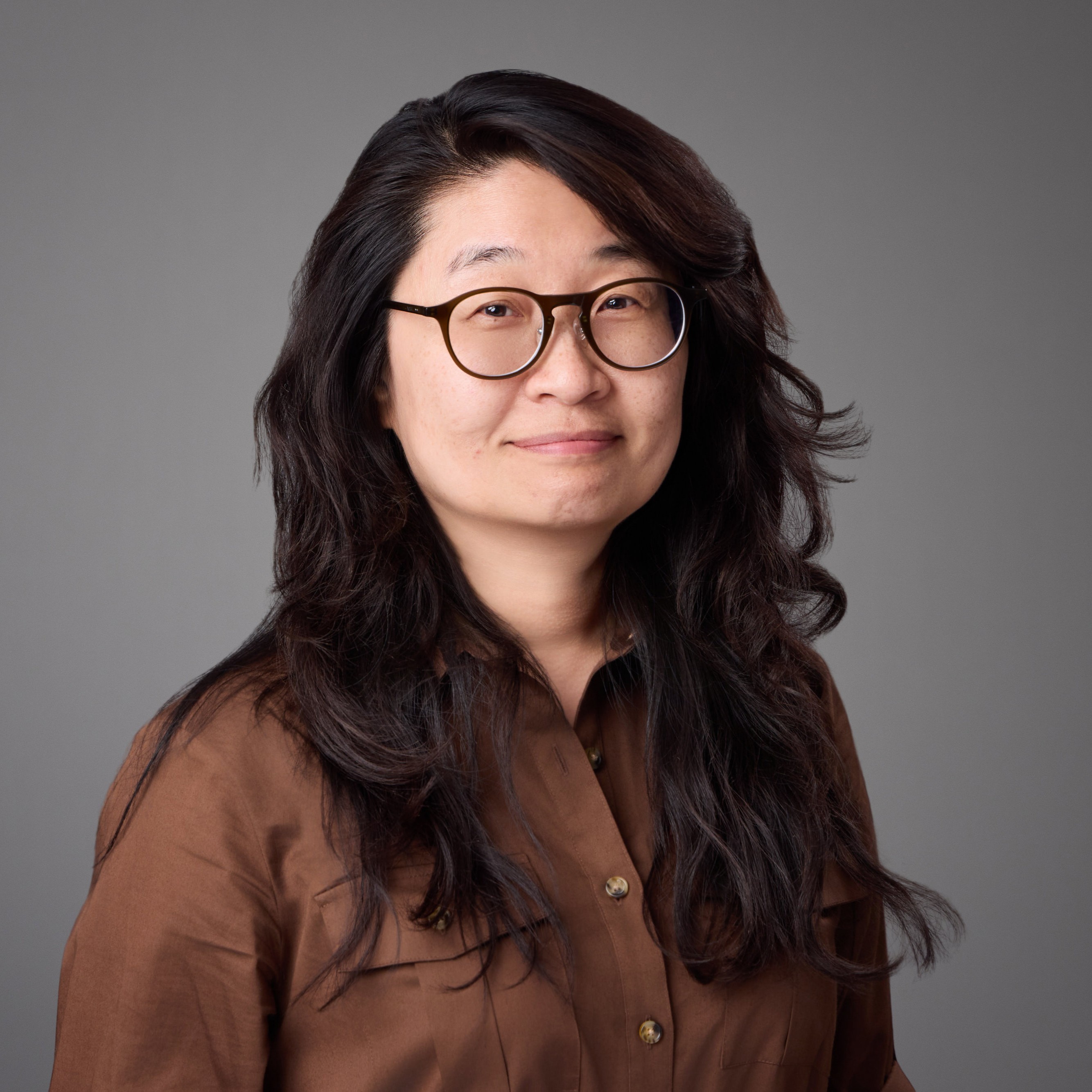
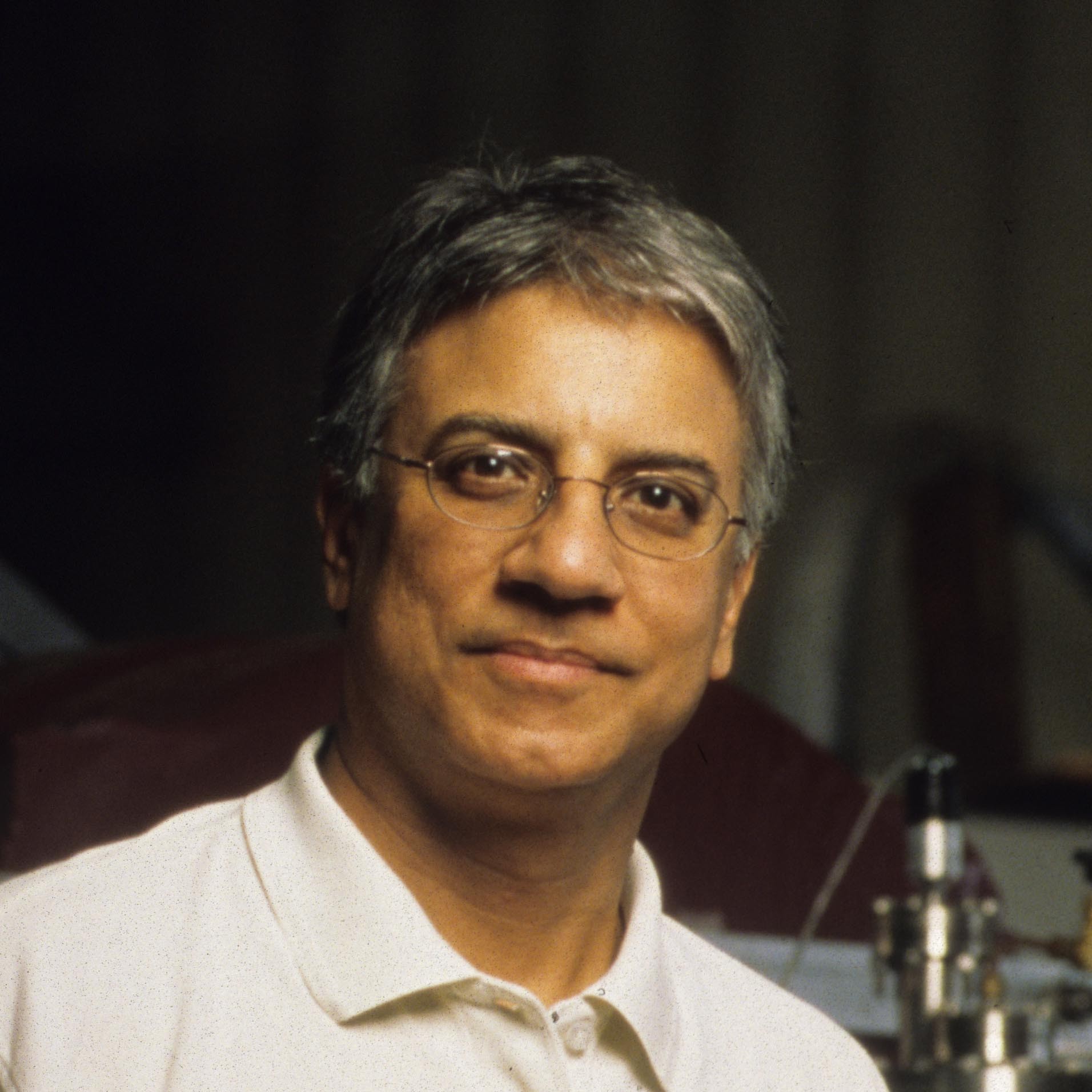
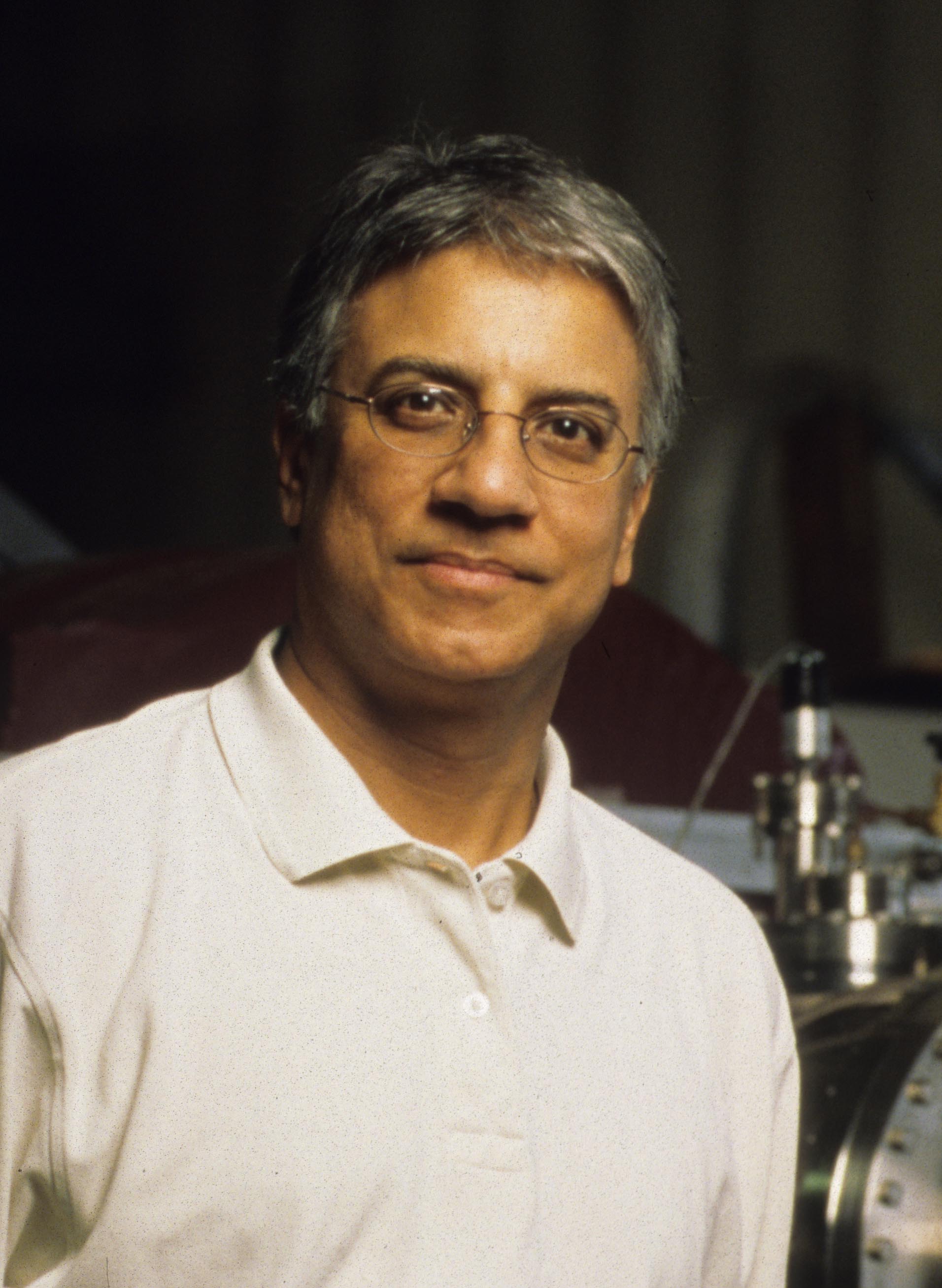
Butch, an experimentalist working with the UMD Quantum Materials Center, studies novel electron interactions in materials. He received hiNicholas ButchNicholas Butchs Ph.D. at the University of California, San Diego, and joined NIST's  Center for Neutron Research in 2013. He was appointed to an adjunct position in the Department of Physics that same year.  Among his other honors are Fellowship in the American Physical Society, the NIST Samuel Wesley Stratton Award, a Presidential Early Career Award for Scientists and Engineers and the NIST Sigma Xi Katharine Gebbie Young Investigator Award.

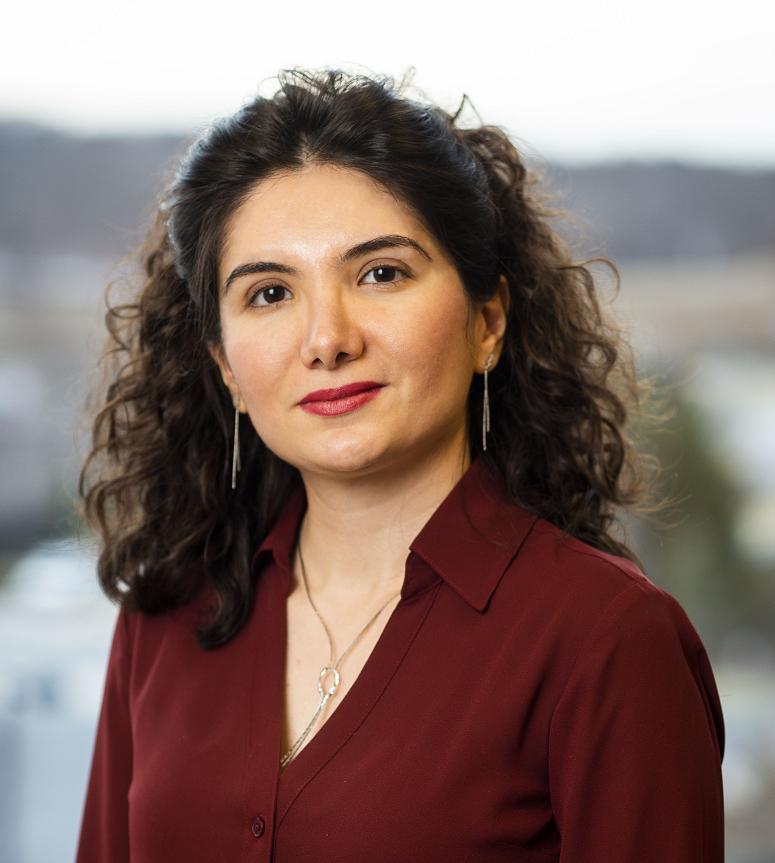
Gullans, a physicist in NIST's Nanoscale Device Characterization Division and a Fellow of the Michael GullansMichael GullansJoint Center for Quantum Information and Computer Science (QuICS), studies the theoretical realm of quantum information systems and quantum simulators in nonperturbative and strongly-interacting limits.  He is the deputy director of the NSF Quantum Leap Challenge Institute for Robust Quantum Simulation. Gullans received his Ph.D. from Harvard University. He held postdoctoral appointments at UMD and Princeton University. 

Phillips, a Distinguished University Professor and Fellow of the Joint Quantum Institute, joined NIST in 1978 after receiving hisWilliam D. PhillipsWilliam D. Phillips Ph.D. from the Massachusetts Institute of Technology. His awards include the 1997 Nobel Prize (with Steven Chu and Claude Cohen-Tannoudji) for "development of methods to cool and trap atoms with laser light”. He was first cited with the Gebbie award in 2020, but conferral was delayed by the COVID-19 pandemic. The award honors and recalls Katharine Gebbie, founding Director of NIST's Physical Measurement Laboratory.

Butch, Gullans and Phillips will be honored on November 8, 2026 at the National Academy of Sciences in Washington, D.C.

Written on 26 August 2026. Posted in Department News.

Assembling a Multi-Purpose Tool for Materials Science Research

Undergraduate student Raymond Qin (left), Ryo Mori (center) and postdoctoral researcher Kaishu Kawaguchi (right) after assembling a gantry crane system in Mori’s new lab.Undergraduate student Raymond Qin (left), Ryo Mori (center) and postdoctoral researcher Kaishu Kawaguchi (right) after assembling a gantry crane system in Mori’s new lab.

Ryo Mori was intimidated by quantum physics when he took a quantum chemistry class as an undergraduate in Japan. He was studying applied physics, which he found more approachable, and thought he would stick to that. However, when he learned about quantum computing during his senior year, it gave him a taste of quantum physics that has drawn him into a career studying the intricate quantum behaviors underlying exotic material properties.

After graduating from Keio University in Japan, Mori went to the University of California, Berkeley, where he pursued a Ph.D. in applied science and technology. He initially worked in a lab studying how imperfections in diamonds could be used to manipulate quantum information.

“I was not a serious physics guy back then, and this quantum information group actually belonged to the chemistry department,” Mori said.

After a couple of years, he wasn’t hooked on quantum information and began looking around for a different research focus. He was drawn to the vibrant, symmetric data being produced by a lab studying quantum materials using a technique called angle-resolved photoemission spectroscopy, or ARPES for short.

“ARPES data looks really beautiful,” Mori said. “It's really visual. I really couldn't believe that nature itself, especially in just a normal material, shows this type of beautiful, symmetric data.”

The data was produced by the group of Alassandra Lanzara, a physics professor at the University of California, Berkeley, who had pioneered a new way to extract extra data during ARPES measurements. Mori decided to join her group, which required taking additional classes and basically starting his graduate journey over from scratch.

In her group, he learned that the beautiful data reflected the beauty of the underlying physics, and the tools used to observe it gave him a grounded, practical way to engage with the world of quantum physics that he initially found so intimidating.

“It turned out this ‘data looks like art’ or ‘data looks so beautiful’ was not a bad story for the experiment technique,” Mori said. “My path was not linear, and I found ARPES itself beautiful before I truly understood it.”

In 2025, Mori joined UMD as the Alford L. Ward Assistant Professor of physics and a member of the Quantum Materials Center. At UMD, he is building on his research experience and working to combine a variety of techniques into an experimental platform that can provide an expansive look at quantum materials. His research goes beyond interesting quantum effects, like superconductivity, that naturally arise in materials. It also explores ways that researchers can produce and control quantum states and properties by shining a light on a material or adjusting a material’s structure, such as by stretching it or sticking two layers together in different ways.

A Bright Idea

As a member of Lanzara’s group, Mori learned both the basics of ARPES and the range of flavors that it comes in. ARPES uses the natural way light interacts with the surface of materials. Light with enough energy can knock electrons out of the surface of a material, and researchers can collect them. After capturing the ejected electrons, ARPES becomes a game of energetic accounting.

The researchers know how much energy and momentum they injected into the material using light, and they measure how much comes out with the ejected electron. With a little balancing of the books, they can do the math and determine how much energy and momentum the electron was carrying around before they forced it out of the material. With enough data, researchers paint a picture of the momentum carried by electrons in the material—crucial information for describing its electrical properties.

“ARPES measures the electrons as a function of energy and momentum,” Mori said. “And electrons' natural language is actually that—the momentum and energy. So ARPES matches very well to the natural language of the electrons, and electrons are involved in some exotic phenomena in quantum materials. That's why I think an ARPES group is very important for a strong research university.”

ARPES has evolved over time into a few different forms that specialize in revealing additional details of what electrons are doing inside of materials. For example, researchers can observe the behaviors of electrons during transitions by triggering a change in a material using one pulse of light and then ejecting an electron a fixed amount of time later with a different light pulse. Piecing together several different delays between pulses produces a time-lapse-like video of how the electron behavior changes over time—a process dubbed time- and angle-resolved photoelectron spectroscopy (trARPES).

In another variation called spin-resolved ARPES, researchers add sensors that allow them to also measure the spin of ejected electrons. Spin indicates the magnetic orientation of ejected electrons and is crucial for understanding many quantum properties of materials, including superconductivity.

In Lanzara’s Lab, Mori refined his skills at using ARPES techniques and began to look for new behaviors in materials that had already been well-studied using other approaches. He went through many materials looking for interesting results. In multiple materials, he and his colleagues found interesting things happening with excitons—quasiparticles made from an electron partnered with a hole, the positive charge left behind when an electron abandons its spot in a material’s structure. For example, Mori and his colleagues used time-resolved ARPES to observe excitons form in a material and used combined time- and spin-resolved ARPES to study how spins behave in an excitonic state created by light in another material.

After completing his Ph.D. at the University of California, Berkeley, Mori continued his research there as a postdoctoral researcher before moving to the Institute for Solid State Physics at the University of Tokyo. Now that Mori has joined UMD and is building his own lab, he plans to continue using ARPES, and he is designing his equipment to give him a more complete picture of each sample.

“What I'm trying to build at UMD is a combination of all these three techniques: ARPES, spin-resolved ARPES, and time-resolved ARPES,” Moris said.

The equipment he is assembling will take up a lot of space in his new lab. It not only needs to include equipment to perform the various ARPES measurements but also requires a bulky vacuum chamber to keep the samples isolated from the air. Often a reaction with oxygen or other molecules changes the properties of a sample’s surface and can ruin an experiment.

Mori is also designing his equipment with a host of other convenient tricks in addition to the trio of ARPES techniques. For example, he plans to install multiple optical windows that will allow additional ways to study how a sample interacts with light, such as measuring how much light is reflected from a material.

Combining his tools into one experimental setup will reduce the chances of misalignment or the sample being damaged or altered as it is moved between devices. Each measurement will reflect the same sample, in the same position, within a fixed environment, which will let the data tell a clearer story. The new experiments will be able to provide an even richer picture than the initial data that originally caught Mori’s eye.

A Growing Lab

Mori is gradually recruiting students and post-docs to his group and is ordering all the equipment that is needed to construct his versatile ARPES setup.

He expects that once the lab is set up, combining insights from the host of tools will reveal new features of materials—even ones that have already been studied extensively. As the experiments explore new research territory, phenomena related to things like magnetism and how spin influences the behaviors of electrons may be uncovered that eventually prove relevant to quantum information science.

Mori said that UMD is one of the top schools in his field of quantum materials and offers many professional and personal advantages, from multiple airports for when he needs to travel for his research and expert colleagues to collaborate with to convenient places to hike in nature and all the things for his family to do in DC.

“I think UMD is in a good location and a very good community,” Mori said. “I think this is for sure one of the best places in the world—not in the states—in the world.”

Written by Bailey Bedford

Written on 25 August 2026. Posted in Department News.

NSF Renews Maryland-Led Quantum Simulation Institute’s Funding

QuantumChip KollarLabShown is a quantum chip developed in the laboratory of University of Maryland physicist Alicia Kollár, a senior investigator with the NSF Quantum Leap Challenge Institute for Robust Quantum Simulation (NSF RQS). The institute’s renewed award will support the next phase of research in robust quantum simulation. Photo by John T. Consoli / University of MarylandA University of Maryland-led institute focused on robust quantum simulation will launch a new phase of research with a five-year U.S. National Science Foundation award expected to total $37.5 million.

The renewal for the NSF Quantum Leap Challenge Institute for Robust Quantum Simulation (NSF RQS), which takes effect Sept. 1, reflects UMD’s long-term commitment to advancing quantum computing to take on society’s grand challenges and to spark a new era of scientific, technological and economic development, UMD President Darryll J. Pines said.

“Our researchers in quantum simulation are an important part of the vibrant quantum ecosystem we’ve built,” Pines said, “helping establish our campus and the surrounding region as the Capital of Quantum and making our Discovery District a dynamic hub where research, industry and community combine for real-world impact on the public good.”

Established in 2021 with a $25 million federal award, NSF RQS has developed novel ways to verify quantum systems, reduce errors and demonstrate increasingly sophisticated quantum simulations while building a collaborative community of scientists, engineers, educators and students.

Quantum simulation is widely viewed as one of the first practical applications of quantum computing. Rather than trying to make every type of computation faster, quantum simulators are designed to model extraordinarily complex quantum systems that overwhelm even today’s most powerful conventional computers.

The new award expands the institute’s scientific agenda; sustains education and workforce development programs; strengthens partnerships across academia, federal laboratories and industry; and positions NSF RQS to pursue the next generation of challenges in quantum simulation. Harvard University also will join the NSF RQS consortium, expanding the current collaboration between UMD, Duke University, Princeton University, Yale University and researchers from the National Institute of Standards and Technology (NIST).

NSF RQS is one of eight NSF Quantum Leap Challenge Institutes (QLCI), a network of interdisciplinary research centers created to accelerate advances in quantum information science through collaborative research, education and workforce development.

“For more than four decades, NSF has been laying the foundational groundwork of research and discovery that is powering today’s modern quantum computing, sensing and communication,” said Brian Stone, performing the duties of the NSF director. “It’s time for focused activities to leverage that base of knowledge to drive us even farther forward to the benefit of all Americans. The NSF Quantum Leap Challenge Institutes are a next step for us in understanding the quantum world we live in.”

Hafezi inset imageMohammad Hafezi, a Minta Martin Professor of Physics and Electrical and Computer Engineering at the University of Maryland, will become director of the NSF Quantum Leap Challenge Institute for Robust Quantum Simulation under its renewed five-year award. Image courtesy of NSF RQSDuring its first funding cycle, NSF RQS researchers achieved breakthroughs in fault-tolerant quantum simulation with neutral atoms, new methods for verifying quantum advantage on analog quantum simulators, erasure detection in Rydberg atoms and quantum simulations of gauge theories and quantum materials. Together, these advances brought robust quantum simulation closer to becoming a practical tool for scientific discovery.

That progress was matched by the institute’s growth as a national research enterprise. NSF RQS researchers collectively produced more than 600 papers, generating nearly 17,000 citations. Along the way, NSF RQS trained more than 400 graduate students and postdoctoral researchers while developing programs designed to strengthen the nation’s future quantum workforce.

“NSF’s investment in the QLCIs established hubs for research on critical topics in quantum information science at a time when the field is rapidly advancing,” said Andrew Childs, a UMD professor of computer science who directed NSF RQS during its first five years. “I’m grateful for all the collaborations it enabled and proud of the progress RQS researchers made in just five short years.”

Childs is stepping down as director after guiding the institute through its formative years. Mohammad Hafezi, a UMD Minta Martin Professor with joint appointments in physics and electrical and computer engineering, will become director. Michael Gullans, a physicist at NIST and an adjunct assistant professor in physics and the University of Maryland Institute for Advanced Computer Studies (UMIACS), will serve as deputy director.

“We are at the cusp of determining exactly what quantum computers can and cannot do in the near future,” Hafezi said. “Realizing that potential will require vibrant partnerships among universities, federal laboratories and private industry, and we’re grateful for this renewed support to help lead that effort.”

The new award funds a shift toward what institute leaders call “quantum simulation engineering”—developing quantum technologies that are increasingly scalable and capable of addressing important scientific problems. Researchers will focus on three research themes: interacting fermion simulation, which seeks to model the particles that make up matter; fermion-boson simulation, which examines how matter particles interact with force-carrying particles in complex quantum systems; and dissipative quantum simulation, which studies quantum systems interacting with their environments instead of treating environmental effects solely as unwanted noise.

NSF RQS benefits from technical and administrative support provided by UMIACS, which helps coordinate research activities across the institute’s university and federal partners, Hafezi said.

The institute also will expand its educational mission alongside its research portfolio.

During its first funding cycle, NSF RQS helped launch the University of Maryland’s quantum science and engineering minor, supported K-12 teacher professional development workshops that reached 75 educators, and developed innovative quantum activity toolkits used by 100 teachers to introduce more than 2,000 middle and high school students to concepts like superposition and measurement.

The institute also established an international QSim conference series that attracted more than 600 attendees and launched the Quantum Leap Career Nexus, which connects students with more than 50 companies, government laboratories and universities through career fairs and networking opportunities.

The renewed award will build on those efforts through additional teacher development workshops, public outreach, K-12 quantum education programs, research seminars and summer schools while creating new opportunities for students and postdoctoral researchers to prepare for careers throughout the quantum workforce.

Gretchen Campbell, associate vice president for quantum research and education at UMD, will lead the institute’s education and workforce development efforts moving forward.

“Preparing the future quantum workforce means creating opportunities at every stage—from K-12 classrooms to graduate education and professional careers,” Campbell said. “By connecting students, educators and researchers across that entire pipeline, we can help ensure the talent needed to advance quantum science and technology is ready when the next breakthroughs arrive.”

—Story by UMIACS communications group

Written on 25 August 2026. Posted in Department News.

In Memoriam

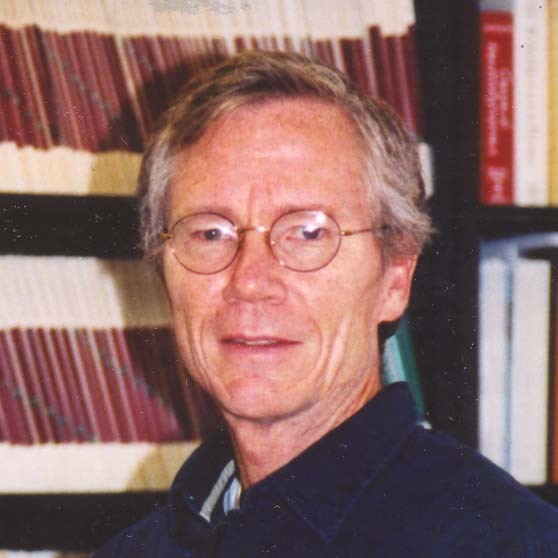
Bob Ellsworth,  Zoa Conner, Betty Alexander, Me-Li Chen, Jordan Goodman.Bob Ellsworth, Zoa Conner, Betty Alexander, Me-Li Chen, Jordan Goodman.Bob Ellsworth, a UMD Physics visiting professor and professor emeritus at George Mason University, died on August 6, 2026 at the age of 89. He earned his Ph.D. from the University of Rochester and pursued a distinguished career in experimental particle and cosmic-ray physics. Working with Professor Gaurang Yodh, Bob helped establish UMD’s cosmic-ray research group. His pioneering measurements using cosmic rays provided the first experimental evidence that the proton-proton cross section increases with energy, a fundamental result in high-energy particle physics. His later research included contributions to the Super-Kamiokande neutrino experiment in Japan, the Cygnus and Milagro observatories in New Mexico, and the HAWC Observatory in Mexico. Professor Jordan Goodman first met Bob as a UMD freshman and recalls, “Bob was a tremendous mentor to me. He taught me the importance of careful experimental work: Always start by looking at the signal.”


Claude Kacser, a faculty member from 1964 to 1997, died on Aug. 24, 2026 at the age of 92.  Kacser received his doctorate at Oxford University and accepted postions at Princeton and Columbia universities before joining UMD. He was the author of the 1967 textbook, Introduction to the Special Theory of Relativity.   Claude KacserClaude KacserKacser was sent to America from Europe as a six-year old in 1940 to escape the Nazi threat. He told his story as part of the "One Thousand Children" project in 2012: Claude Kacser's One Thousand Children Story (American Kindertransport).


Miriam L. Ferrell died on June 8, 2026. She was the wife of Dr. Richard Ferrell and a strong supporter of the Department of Physics.Miriam Ferrell and Steve RolstonMiriam Ferrell and Steve Rolston

Born in Princeton, New Jersey, in 1928, she was the ninth of 11 children. She married Richard Ferrell
in 1952 while employed by Educational Testing Service (the creator of the SAT and GRE tests) in Princeton. When John Toll hired Richard to strengthen the condensed matter theory efforts in the UMD Physics department, the Ferrells settled in University Park. Both were avid hikers and skiers. As Richard’s research became internationally renowned, he, Miriam and their children learned new languages and were invited and honored at universities and professional conferences all over the world. Miriam reciprocally hosted numerous international guests visiting UMD, was active in the UMD Faculty Wives Club and International Wives Club, and was a docent at the Riversdale House. Richard died in Miriam’s loving arms at their home in 2005.

Miriam is survived by her son Robert Ferrell and daughter Rebecca Clark, their
respective spouses Lisa and Jeff, and four grandchildren: Thomas, Gabriela, Melissa,
and Jessica.

Written on 18 August 2026. Posted in Department News.

Advancing Nuclear Safety, From UMD’s Reactor to the Nuclear Regulatory Commission

A glimpse at Mary Keen’s resume might suggest that she always wanted to work in nuclear energy—but that’s far from the case. 

UMD junior physics major Mary Keen is a summer intern at the U.S. Nuclear Regulatory Commission. Photo courtesy of Mary Keen.

The junior physics major is president of the University of Maryland’s chapter of the American Nuclear Society and took a course designed to train students to operate UMD’s nuclear reactor. This summer as an intern at the U.S. Nuclear Regulatory Commission (NRC) headquarters in Rockville, Maryland, she’s working on licensing for nuclear waste storage and transportation. 

But Keen wasn’t always on this path. When she first came to UMD, she was unsure of her career trajectory. She chose to major in physics—despite having never taken a physics class in high school—because it offered a wide range of career possibilities. But it didn’t take long for her to find her way. UMD junior physics major Mary Keen is a summer intern at the U.S. Nuclear Regulatory Commission. Photo courtesy of Mary Keen.UMD junior physics major Mary Keen is a summer intern at the U.S. Nuclear Regulatory Commission. Photo courtesy of Mary Keen.

“I've become so passionate about nuclear energy,” Keen said. “Going into college with an open mind and being okay with whatever comes your way has been so fun.”

Keen’s path to a career in nuclear energy started when she joined UMD’s chapter of the American Nuclear Society during her first week as a freshman. Vaguely familiar with nuclear science from her high school chemistry class, she joined the club in an effort to make friends. Unexpectedly, she fell in love with the topic and joined the group’s executive board. 

As part of the club’s leadership team, Keen connected with the director of UMD’s nuclear reactor and enrolled in the introductory course for the reactor's operator training program. Located in the Chemical and Nuclear Engineering Building, the reactor is used for coursework, radiation experiments and neutron imaging. For Keen, the reactor provides a training ground to learn how to safely operate nuclear machinery. 

“Even though my parents, Ann Keen (B.S. '00, microbiology) and Edward Keen (B.S. '00, microbiology; B.A. '00, history), and grandparents went to UMD, none of us knew there was a reactor on campus,” she said. “For our reactor, there is a checklist with over 100 steps to make sure that all of the systems are functioning correctly.”

Mary Keen and other UMD researchers presented their work at the International Association for Probabilistic Safety Assessment and Management’s conference in Pittsburgh this summer. Photo courtesy of Mary KeenMary Keen and other UMD researchers presented their work at the International Association for Probabilistic Safety Assessment and Management’s conference in Pittsburgh this summer. Photo courtesy of Mary Keen

Keen also conducts nuclear safety research with Civil and Environmental Engineering Associate Professor Michelle Bensi, who previously worked for the NRC and contributed to the agency's response to the 2011 Fukushima Daiichi reactor accidents. Working with Bensi and UMD Radiation Facilities Director Amber Johnson, Keen studies safety culture at research reactors, where she identifies errors that operators may be at risk for. She develops training modules that help reactor staff recognize risks before they become problems. 

Keen presented this work at the International Association for Probabilistic Safety Assessment and Management’s conference in Pittsburgh this summer, and her findings will be published in the conference proceedings. 

Now, as an intern at the NRC, Keen works in a licensing branch focused on the storage and transportation of spent nuclear fuel. Surprisingly, she said, her favorite part of the job doesn’t require getting close and personal with nuclear reactors at all. 

"I've absolutely fallen in love with making handbooks," Keen said, describing the internal guides she writes to help colleagues navigate agency databases and systems. "I remember I was about to go to sleep, and my coworker messaged me and said, 'Hey, I'm having a lot of trouble finding a document. Can you tell me how to use our search database?' So when I got to work the next morning, I whipped up a handbook and sent it to him."

Keen is still deciding whether she wants to work in regulation, research or industry in the future. But, whichever path she chooses, she’s moving forward with an open mind—just as she did at UMD. 

“Stepping out of your comfort zone is what is going to prepare you for anything in the future, and it’s not so scary once you learn that people are there for you,” Keen said. “I’ve had such wonderful people behind me at UMD. I’ve grown so much, and I don’t think I would trade that for anything.”

Original story by Jason P. Dinh: https://cmns.umd.edu/news-events/news/mary-keen-nuclear-safety-nrc-internship

More Articles …

  1. Researchers Unlock High-Res View of 2D Materials by Doing a Microscopic Twist
  2. Chasing Neutrinos at the ‘End of the World’
  3. Quantum World Congress Announces UMD as 2026 Lead Academic Partner
  4. Researchers Explore How Quantum Computers—and Their Errors—May Enhance AI

Page 1 of 205

  • 1
  • 2
  • 3
  • 4
  • 5
  • 6
  • 7
  • 8
  • 9
  • 10
  • Physics Administration
  • Directions
  • Awards
  • Student Awards
  • Make a Donation
  • News
    • Research News
    • Department News
    • Newsletters
  • PTK Policy

College and Department Links

Department of Physics

Physical Sciences Complex
4296 Stadium Dr
College Park, MD 20742
Phone: 301.405.3401

Information

  • Campus Directory
  • Undergraduate Research
  • Scholarships
  • Prospective Undergraduates
  • Directions & Transit
  • Web Accessibility
© 2026 University of Maryland - Department of Physics
Top
  • Home
  • About Us
    • Physics Administration
    • Directions
    • Awards
    • Student Awards
    • Make a Donation
    • News
      • Research News
      • Department News
      • Newsletters
    • PTK Policy
  • People
    • All
    • Faculty
      • Current
      • Emeritus
      • Adjunct
      • Affiliate
      • Research Professors
    • Research Scientists
    • Postdocs
    • Staff
    • Lecturers
    • Visitors
    • Graduate Students
  • Research
    • Research Areas
      • AI and Physical Sciences
      • Astro Metrology
      • Atomic, Molecular & Optical
      • Biophysics
      • Chemical Physics
      • Condensed Matter Experiment
      • Condensed Matter Theory
      • Cosmic Ray Physics
      • Elementary Particles
      • Gravitation Experiment
      • Gravitational Theory
      • High Energy Physics
      • Nonlinear Dynamics, Chaos and Complex Systems
      • Nuclear Physics
      • Particle Astrophysics
      • Physics Education Research
      • Plasma Physics
      • Plasma Theory
      • Quantum Science and Technology
      • Quarks, Hadrons and Nuclei
      • Space Physics
    • Centers & Institutes
  • Academics
    • OSES Home (Student Services)
    • OSES News
    • Undergraduate Program
      • Prospective Students
      • Apply Now
      • Degree Requirements and Policies
      • Scholarships
      • Undergraduate Research
      • Advising
      • Undergraduate Forms
      • Undergraduate Events
      • Departmental Honors
      • Society of Physics Students
      • FAQ
      • Undergraduate Student Committee
    • Graduate Program
      • Prospective Students
      • Open House
      • Degree Requirements
      • Graduate Resources
      • Deadlines and Forms
      • PhD Defenses
        • PhD Defenses 2026
        • PhD Defenses 2025
        • PhD Defenses 2024
        • PhD Defenses 2023
        • PhD Defenses 2022
        • PhD Defenses 2021
        • PhD Defenses 2020
        • PhD Defenses 2019
        • PhD Defenses 2018
        • PhD Defenses 2017
        • PhD Defenses 2016
      • Events
      • Scholarships & Awards
      • Qualifier
      • Graduate Student Organizations
      • FAQ
    • Student Opportunities
      • GRAD-MAP
      • Graduate Student Organizations
      • Outreach Volunteering
      • Society of Physics Students
      • NSF S-STEM Program
      • Undergraduate Research
      • The Noether Physics Society
      • Undergraduate Quantum Association
    • Courses
    • Academic Support
    • NSF S-STEM Program
    • Teaching Assistants
  • Events
    • Calendar
    • Physics Colloquia
    • W.J. Carr Lecture
    • Research Interaction Team (RIT) Math/Physics
    • Mechanick Quantum Biology Lecture
    • Irving and Renee Milchberg Endowed Lectureship
    • Charles W. Misner Endowed Lectureship in Gravitational Physics
    • John S. Toll Endowed Lecture
    • Prange Prize Lecture
    • Maryland Day
    • Outreach
      • Outreach Home
      • Physics is Phun
      • Discovery Days
    • Summer Programs
      • Physics Makers Camp
      • Physics of Quidditch
      • Science Discovery Camp
      • Advanced Physics Summer Program
      • Toolkit for Success
    • CUWiP
    • Vortex Makerspace
    • QURiSE Conference
  • Services
    • Building Access Requests
    • Computing Services
    • Conference Room Reservations
    • Department Operations Directory
    • Electronic and Mechanical Development
    • Hiring Procedures
    • Lecture Demo
    • Mental Health Resources
    • Parking
    • Physics Ombudspersons
    • Printing Services
      • Poster Print Request
    • Proposal Submissions
    • Purchase Order
    • Suggestion Box
    • Textbook Information
  • Give