• Home
  • About Us
    • Physics Administration
    • Directions
    • Awards
    • Student Awards
    • Make a Donation
    • News
      • Research News
      • Department News
      • Newsletters
    • PTK Policy
  • People
    • All
    • Faculty
      • Current
      • Emeritus
      • Adjunct
      • Affiliate
      • Research Professors
    • Research Scientists
    • Postdocs
    • Staff
    • Lecturers
    • Visitors
    • Graduate Students
  • Research
    • Research Areas
      • AI and Physical Sciences
      • Astro Metrology
      • Atomic, Molecular & Optical
      • Biophysics
      • Chemical Physics
      • Condensed Matter Experiment
      • Condensed Matter Theory
      • Cosmic Ray Physics
      • Elementary Particles
      • Gravitation Experiment
      • Gravitational Theory
      • High Energy Physics
      • Nonlinear Dynamics, Chaos and Complex Systems
      • Nuclear Physics
      • Particle Astrophysics
      • Physics Education Research
      • Plasma Physics
      • Plasma Theory
      • Quantum Science and Technology
      • Quarks, Hadrons and Nuclei
      • Space Physics
    • Centers & Institutes
  • Academics
    • OSES Home (Student Services)
    • OSES News
    • Undergraduate Program
      • Prospective Students
      • Apply Now
      • Degree Requirements and Policies
      • Scholarships
      • Undergraduate Research
      • Advising
      • Undergraduate Forms
      • Undergraduate Events
      • Departmental Honors
      • Society of Physics Students
      • FAQ
      • Undergraduate Student Committee
    • Graduate Program
      • Prospective Students
      • Open House
      • Degree Requirements
      • Graduate Resources
      • Deadlines and Forms
      • PhD Defenses
        • PhD Defenses 2026
        • PhD Defenses 2025
        • PhD Defenses 2024
        • PhD Defenses 2023
        • PhD Defenses 2022
        • PhD Defenses 2021
        • PhD Defenses 2020
        • PhD Defenses 2019
        • PhD Defenses 2018
        • PhD Defenses 2017
        • PhD Defenses 2016
      • Events
      • Scholarships & Awards
      • Qualifier
      • Graduate Student Organizations
      • FAQ
    • Student Opportunities
      • GRAD-MAP
      • Graduate Student Organizations
      • Outreach Volunteering
      • Society of Physics Students
      • NSF S-STEM Program
      • Undergraduate Research
      • Women in Physics
      • Undergraduate Quantum Association
    • Courses
    • Academic Support
    • NSF S-STEM Program
    • Teaching Assistants
  • Events
    • Calendar
    • Physics Colloquia
    • W.J. Carr Lecture
    • Research Interaction Team (RIT) Math/Physics
    • Mechanick Quantum Biology Lecture
    • Irving and Renee Milchberg Endowed Lectureship
    • Charles W. Misner Endowed Lectureship in Gravitational Physics
    • John S. Toll Endowed Lecture
    • Prange Prize Lecture
    • Maryland Day
    • Outreach
      • Outreach Home
      • Physics is Phun
      • Discovery Days
    • Summer Programs
      • Physics Makers Camp
      • Physics of Quidditch
      • Science Discovery Camp
      • Advanced Physics Summer Program
      • Toolkit for Success
    • CUWiP
    • Vortex Makerspace
    • QURiSE Conference
  • Services
    • Building Access Requests
    • Computing Services
    • Conference Room Reservations
    • Department Operations Directory
    • Electronic and Mechanical Development
    • Hiring Procedures
    • Lecture Demo
    • Mental Health Resources
    • Parking
    • Physics Ombudspersons
    • Printing Services
      • Poster Print Request
    • Proposal Submissions
    • Purchase Order
    • Suggestion Box
    • Textbook Information
  • Give
  1. Home
  2. About Us
  3. News

Written on 16 March 2017. Posted in Department News.

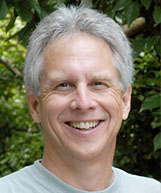
Wellstood named new UMD Co-Director of JQI

Physics professor and JQI Fellow Fred Wellstood has been appointed the newest UMD Co-Director of JQI. He assumed the role on March 1.

"Fred has played a major role in the JQI since its founding," says Gretchen Campbell, the current NIST Co-Director of JQI. "Most recently, his tireless efforts helped to design and ultimately build the new Physical Sciences Center at Maryland that many JQI labs now call home. I look forward to working with him to carefully steward JQI's future."

Written on 08 March 2017. Posted in Research News.

Ions sync up into world's first time crystal

Consider, for a moment, the humble puddle of water. If you dive down to nearly the scale of molecules, it will be hard to tell one spot in the puddle from any other. You can shift your gaze to the left or right, or tilt your head, and the microscopic bustle will be identical—a situation that physicists call highly symmetric.  

That all changes abruptly when the puddle freezes. In contrast to liquid water, ice is a crystal, and it gains a spontaneous rigid structure as the temperature drops. Freezing fastens neighboring water molecules together in a regular pattern, and a simple tilt of the head now creates a kaleidoscopic change.

In 2012, Nobel-prize winning physicist Frank Wilczek, a professor at the Massachusetts Institute of Technology, proposed something that sounds pretty strange. It might be possible, Wilczek argued, to create crystals that are arranged in time instead of space. The suggestion prompted years of false starts and negative results that ruled out some of the most obvious places to look for these newly named time crystals.

Read more.

Written on 05 March 2017. Posted in Department News.

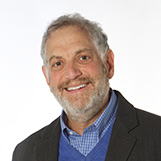
Ellen Williams Returns to UMD

Distinguished University Professor Ellen D. Williams recently returned to UMD Physics and the Institute for Physical Science and Technology (IPST) after spending several years working for energy company BP and later, the U.S. Department of Energy. Prof. Williams will give a colloquium on her experiences and outlook on Tuesday, April 25 at 4pm in the lobby of the PSC.

Prof. Williams first arrived at UMD in 1981, working as a postdoctoral researcher for Prof. Bob Park after completing her doctorate in chemistry at Caltech. She joined the physics faculty in 1983, studying materials and surface physics; her specific areas of research included experimental statistical mechanics, statistical properties of nanostructures and flexible electronics. In 1991, she founded what would become the University of Maryland Materials Research Science and Engineering Center (MRSEC). She was elected to the American Academy of Arts and Sciences in 2003 and the National Academy of Sciences in 2005.

In 2010, Prof. Williams was recruited to be Chief Scientist at BP, succeeding physicist Steve Koonin. In response to climate change, BP had been exploring alternative energy sources for a decade. She accepted the job in London, and plunged into the extraordinary array of issues involved in the production of energy with minimal environmental disruption. Examples include land use decisions in the production of biofuels, management of the quantities of water involved in fossil fuel production, availability of rare earth elements for electric motors and lithium for batteries for electric vehicles. Prof. Williams oversaw a consortium of university researchers studying these and other topics in BP's Energy Sustainability Challenge. The research led to publication of Materials Critical to the Energy Industry, Water in the Energy Industry and Biomass in the Energy Industry.

Another major responsibility was heading BP’s technical advisory committee, which studies innovations upstream (getting oil and gas out of the Earth) and downstream (refining to create fuels, petrochemicals and other products). The TAC met four times a year to review all the company’s technical R&D activities. Prof. Williams notes that innovations in science over the last few decades allow for greater efficiencies and new approaches to technical problems in energy production. Supercomputers have played a significant role, whether used with seismic imaging and geophysics to determine the likely locations of oil reserves, or to model efficient means of breaking cellulosic materials into usable biofuels.

As one of the world’s largest producers and consumers of energy, the United States is keenly interested in such questions. A 2007 report published by the National Academies, Rising Above the Gathering Storm: Energizing and Employing America for a Brighter Economic Future, recommended the establishment of the Advanced Research Projects Agency-Energy (ARPA-E) in the Department of Energy’s Office of Science to foster innovation toward energy efficiency and sustainability using grants on specific energy or environmental topics. ARPA-E was first funded as part of the American Recovery and Reinvestment Act of 2009. In 2013, newly-installed Energy Secretary Ernest Moniz contacted Prof. Williams, who recalled that she “could hardly contain my joy” at the prospect of leading ARPA-E.

The federal vetting process and assorted delays took several months; the congressional approval process took a year. During that time, Prof. Williams resigned from BP and worked as a senior advisor to Secretary Moniz until her appointment was confirmed; she took the helm at ARPA-E in December 2014.

Prof. Williams very much enjoyed the broad scope of sciences cultivated by ARPA-E. For example: soil depletion of agricultural land releases carbon into the atmosphere and spurs greater use of fertilizer, a major source of nitrous oxide emissions. ROOTS, or Rhizosphere Observations Optimizing Terrestrial Sequestration, supported research to keep carbon in the ground through creative scanning and phenotyping techniques for root systems. MONITOR, or Methane Observation Networks with Innovative Technology to Obtain Reductions, aimed to limit leaks of methane during the processing and transport of natural gas. Nimble combinations of lasers, computing, photonics and fluid dynamics yielded ultra-precise sensors of interest to the Environmental Protection Agency, the Department of the Interior and the energy industry.

Well before she joined the Department of Energy, Prof. Williams held a deep interest in government and public policy. She has served on the International Security Advisory Board of the U.S. Department of State and on JASON, an independent scientific advisory group that provides consulting services to the U.S. government on matters of defense science and technology. She chaired the National Academy of Science’s committee on Technical Issues Concerning the Comprehensive Test Ban Treaty from 2009-11, and was a member of the NAS Policy and Global Affairs Committee. She is currently developing a class on the interplay of clean energy technology, policy and regulations to be offered in the Fall of 2017.

Written on 03 March 2017. Posted in Research News.

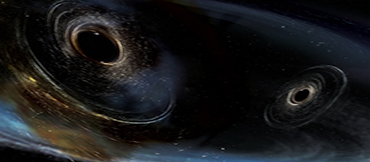
High-flying Experiments Tackle the Mysteries of Cosmic Rays

Cosmic rays are not rays at all, but highly energetic particles that zoom through space at nearly the speed of light.  The particles range in size, from subatomic protons to the atomic nuclei of elements such as carbon and boron. Scientists suspect that the particles are bits of subatomic shrapnel produced by supernovae, but could also be signatures of other cataclysmic phenomena.

Read more.

Written on 03 March 2017. Posted in Department News.

Katherine Blodgett Gebbie Honored Posthumously by Maryland Women's Hall of Fame

On March 16, 2017, the Maryland Commission for Women and the Women Legislators of the Maryland General Assembly will induct eight women into the Maryland Women's Hall of Fame and will present "Women of Tomorrow" awards to five students during a 5:30 p.m. ceremony at the Miller Senate Office
Building in Annapolis.

More Articles …

  1. JQI graduate student named ARCS Endowment Fellow
  2. Destabilized solitons perform a disappearing act
  3. Crossing the quantum-chaotic divide
  4. Ed Ott Honored with Richardson Medal and Moser Lecture

Page 118 of 203

  • 113
  • 114
  • 115
  • 116
  • 117
  • 118
  • 119
  • 120
  • 121
  • 122
  • Physics Administration
  • Directions
  • Awards
  • Student Awards
  • Make a Donation
  • News
    • Research News
    • Department News
    • Newsletters
  • PTK Policy

College and Department Links

Department of Physics

Physical Sciences Complex
4296 Stadium Dr
College Park, MD 20742
Phone: 301.405.3401

Information

  • Campus Directory
  • Undergraduate Research
  • Scholarships
  • Prospective Undergraduates
  • Directions & Transit
  • Web Accessibility
© 2026 University of Maryland - Department of Physics
Top
  • Home
  • About Us
    • Physics Administration
    • Directions
    • Awards
    • Student Awards
    • Make a Donation
    • News
      • Research News
      • Department News
      • Newsletters
    • PTK Policy
  • People
    • All
    • Faculty
      • Current
      • Emeritus
      • Adjunct
      • Affiliate
      • Research Professors
    • Research Scientists
    • Postdocs
    • Staff
    • Lecturers
    • Visitors
    • Graduate Students
  • Research
    • Research Areas
      • AI and Physical Sciences
      • Astro Metrology
      • Atomic, Molecular & Optical
      • Biophysics
      • Chemical Physics
      • Condensed Matter Experiment
      • Condensed Matter Theory
      • Cosmic Ray Physics
      • Elementary Particles
      • Gravitation Experiment
      • Gravitational Theory
      • High Energy Physics
      • Nonlinear Dynamics, Chaos and Complex Systems
      • Nuclear Physics
      • Particle Astrophysics
      • Physics Education Research
      • Plasma Physics
      • Plasma Theory
      • Quantum Science and Technology
      • Quarks, Hadrons and Nuclei
      • Space Physics
    • Centers & Institutes
  • Academics
    • OSES Home (Student Services)
    • OSES News
    • Undergraduate Program
      • Prospective Students
      • Apply Now
      • Degree Requirements and Policies
      • Scholarships
      • Undergraduate Research
      • Advising
      • Undergraduate Forms
      • Undergraduate Events
      • Departmental Honors
      • Society of Physics Students
      • FAQ
      • Undergraduate Student Committee
    • Graduate Program
      • Prospective Students
      • Open House
      • Degree Requirements
      • Graduate Resources
      • Deadlines and Forms
      • PhD Defenses
        • PhD Defenses 2026
        • PhD Defenses 2025
        • PhD Defenses 2024
        • PhD Defenses 2023
        • PhD Defenses 2022
        • PhD Defenses 2021
        • PhD Defenses 2020
        • PhD Defenses 2019
        • PhD Defenses 2018
        • PhD Defenses 2017
        • PhD Defenses 2016
      • Events
      • Scholarships & Awards
      • Qualifier
      • Graduate Student Organizations
      • FAQ
    • Student Opportunities
      • GRAD-MAP
      • Graduate Student Organizations
      • Outreach Volunteering
      • Society of Physics Students
      • NSF S-STEM Program
      • Undergraduate Research
      • Women in Physics
      • Undergraduate Quantum Association
    • Courses
    • Academic Support
    • NSF S-STEM Program
    • Teaching Assistants
  • Events
    • Calendar
    • Physics Colloquia
    • W.J. Carr Lecture
    • Research Interaction Team (RIT) Math/Physics
    • Mechanick Quantum Biology Lecture
    • Irving and Renee Milchberg Endowed Lectureship
    • Charles W. Misner Endowed Lectureship in Gravitational Physics
    • John S. Toll Endowed Lecture
    • Prange Prize Lecture
    • Maryland Day
    • Outreach
      • Outreach Home
      • Physics is Phun
      • Discovery Days
    • Summer Programs
      • Physics Makers Camp
      • Physics of Quidditch
      • Science Discovery Camp
      • Advanced Physics Summer Program
      • Toolkit for Success
    • CUWiP
    • Vortex Makerspace
    • QURiSE Conference
  • Services
    • Building Access Requests
    • Computing Services
    • Conference Room Reservations
    • Department Operations Directory
    • Electronic and Mechanical Development
    • Hiring Procedures
    • Lecture Demo
    • Mental Health Resources
    • Parking
    • Physics Ombudspersons
    • Printing Services
      • Poster Print Request
    • Proposal Submissions
    • Purchase Order
    • Suggestion Box
    • Textbook Information
  • Give