
Distinguished University Professor Emeritus Rick Greene has been honored with the 2026 Heike Kamerlingh Onnes Prize for his outstanding achievements in the realm of superconductivity.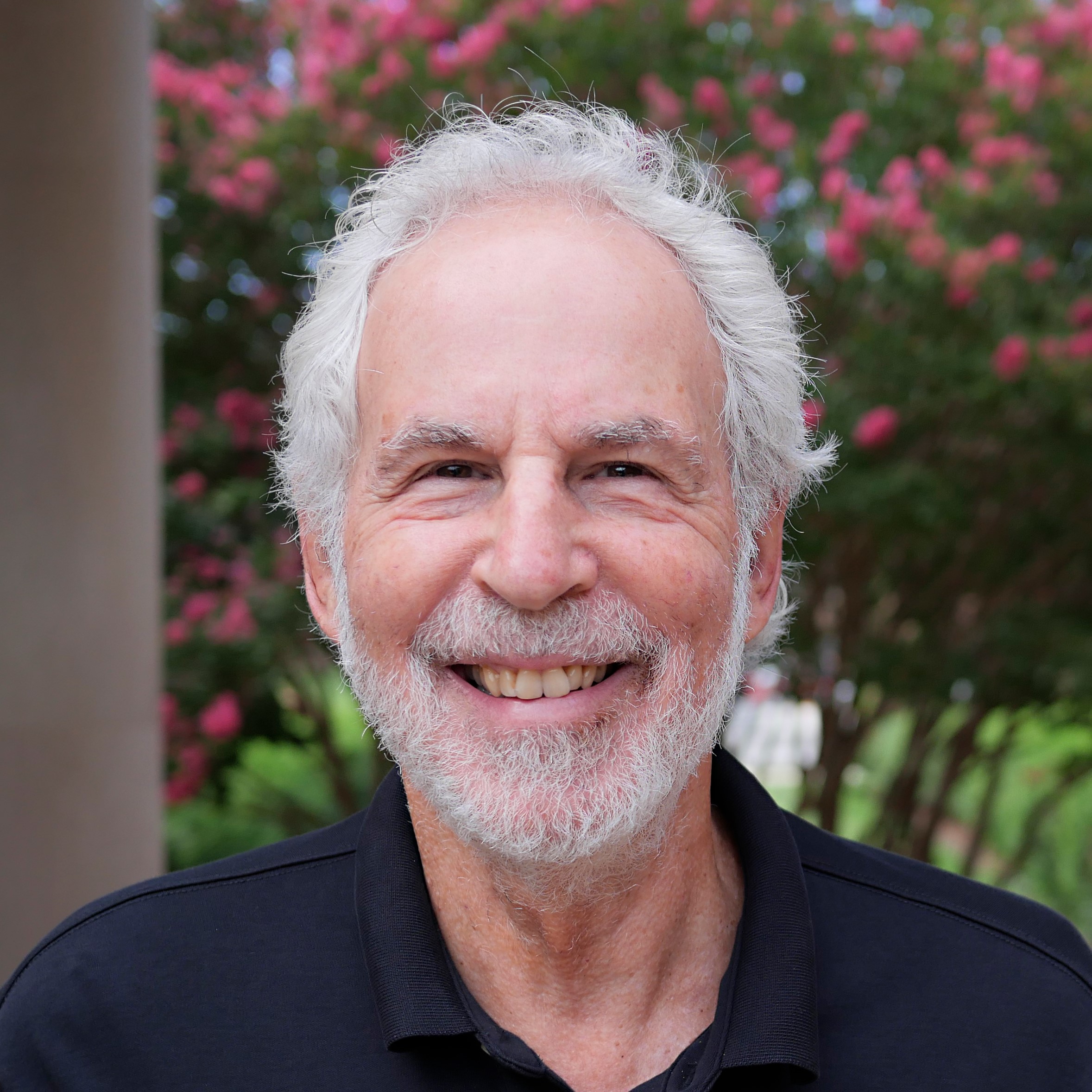 Richard L. Greene
In the early 20th century, when Dutch physicist Heike Kamerlingh Onnes cooled helium to nearly absolute zero and submerged a mercury wire, he found the wire completely lost its resistance to the flow of electric current. In the intervening decades, physicists explored this perplexing property of “superconductivity” and attempted to achieve it at more reasonable temperatures. This research has yielded modern marvels including magnetic resonance imagery (MRIs) and maglev trains traveling 270 mph.
The Kamerlingh Onnes Prize, given for outstanding experiments which illuminate the nature of superconductivity, has been awarded to some of the most prominent researchers in the world. Greene’s nomination was for longstanding contributions to the field of superconductivity, in particular his discovery of two novel types of organic superconducting materials, and his pioneering studies of the physical properties of electron-doped copper oxide superconductors. With six decades of contributions, ranging from the development of the widely utilized thermal relaxation method of measuring specific heat in 1972, to many advances in understanding magnetism and superconductivity in the cuprates, Greene’s research has had an enormous impact.
“I am very happy to see this recognition for Rick Greene,” said Steve Rolston, chair of the UMD Department of Physics. “He has had a remarkable career, with inventive approaches and meticulous methodology, yielding advances in both materials science and measurements.”
Greene’s contributions to the understanding of superconductivity in the “high-Tc” cuprate superconductors has in particular led to his recognition as one of the leading authorities on that subject.
“Rick is known the world over for his research on the electron-doped cuprates,” said Johnpierre Paglione, Director of the Maryland Quantum Materials Center. “It's been an honor to be one of the numerous generations of mentored faculty, graduate and postdoc scholars that have benefited from his guidance and efforts, and I’m very happy that his contributions have been recognized via the Onnes Prize.”
Greene earned his B.S. in physics from MIT in 1960 and his Ph.D. from Stanford University in 1967. He was recruited from IBM in 1989 as the founding director of the Center for Superconductivity Research (now the Quantum Materials Center) in the Department of Physics.
He is a Fellow of the American Association for the Advancement of Science and the American Physical Society, whose dissertation award for experimental condensed matter physics bears his name. In 2022, Greene was selected as a UMD Distinguished University Professor.
Greene shared the Kamerlingh Onnes Prize with Yasutomo J. Uemura of Columbia University. The award is sponsored by Elsevier, publisher of Physica C – Superconductivity and its Applications and will be presented at the Materials and Mechanisms of Superconductivity (M2S) conference in Stuttgart, Germany, this July.