• Home
  • About Us
    • Physics Administration
    • Directions
    • Awards
    • Student Awards
    • Make a Donation
    • News
      • Research News
      • Department News
      • Newsletters
    • PTK Policy
  • People
    • All
    • Faculty
      • Current
      • Emeritus
      • Adjunct
      • Affiliate
      • Research Professors
    • Research Scientists
    • Postdocs
    • Staff
    • Lecturers
    • Visitors
    • Graduate Students
  • Research
    • Research Areas
      • AI and Physical Sciences
      • Astro Metrology
      • Atomic, Molecular & Optical
      • Biophysics
      • Chemical Physics
      • Condensed Matter Experiment
      • Condensed Matter Theory
      • Cosmic Ray Physics
      • Elementary Particles
      • Gravitation Experiment
      • Gravitational Theory
      • High Energy Physics
      • Nonlinear Dynamics, Chaos and Complex Systems
      • Nuclear Physics
      • Particle Astrophysics
      • Physics Education Research
      • Plasma Physics
      • Plasma Theory
      • Quantum Science and Technology
      • Quarks, Hadrons and Nuclei
      • Space Physics
    • Centers & Institutes
  • Academics
    • OSES Home (Student Services)
    • OSES News
    • Undergraduate Program
      • Prospective Students
      • Apply Now
      • Degree Requirements and Policies
      • Scholarships
      • Undergraduate Research
      • Advising
      • Undergraduate Forms
      • Undergraduate Events
      • Departmental Honors
      • Society of Physics Students
      • FAQ
      • Undergraduate Student Committee
    • Graduate Program
      • Prospective Students
      • Open House
      • Degree Requirements
      • Graduate Resources
      • Deadlines and Forms
      • PhD Defenses
        • PhD Defenses 2026
        • PhD Defenses 2025
        • PhD Defenses 2024
        • PhD Defenses 2023
        • PhD Defenses 2022
        • PhD Defenses 2021
        • PhD Defenses 2020
        • PhD Defenses 2019
        • PhD Defenses 2018
        • PhD Defenses 2017
        • PhD Defenses 2016
      • Events
      • Scholarships & Awards
      • Qualifier
      • Graduate Student Organizations
      • FAQ
    • Student Opportunities
      • GRAD-MAP
      • Graduate Student Organizations
      • Outreach Volunteering
      • Society of Physics Students
      • NSF S-STEM Program
      • Undergraduate Research
      • Women in Physics
      • Undergraduate Quantum Association
    • Courses
    • Academic Support
    • NSF S-STEM Program
    • Teaching Assistants
  • Events
    • Calendar
    • Physics Colloquia
    • W.J. Carr Lecture
    • Research Interaction Team (RIT) Math/Physics
    • Mechanick Quantum Biology Lecture
    • Irving and Renee Milchberg Endowed Lectureship
    • Charles W. Misner Endowed Lectureship in Gravitational Physics
    • John S. Toll Endowed Lecture
    • Prange Prize Lecture
    • Maryland Day
    • Outreach
      • Outreach Home
      • Physics is Phun
      • Discovery Days
    • Summer Programs
      • Physics Makers Camp
      • Physics of Quidditch
      • Science Discovery Camp
      • Advanced Physics Summer Program
      • Toolkit for Success
    • CUWiP
    • Vortex Makerspace
    • QURiSE Conference
  • Services
    • Building Access Requests
    • Computing Services
    • Conference Room Reservations
    • Department Operations Directory
    • Electronic and Mechanical Development
    • Hiring Procedures
    • Lecture Demo
    • Mental Health Resources
    • Parking
    • Physics Ombudspersons
    • Printing Services
      • Poster Print Request
    • Proposal Submissions
    • Purchase Order
    • Suggestion Box
    • Textbook Information
  • Give
  1. Home
  2. Directory All
  3. Faculty
  4. Current

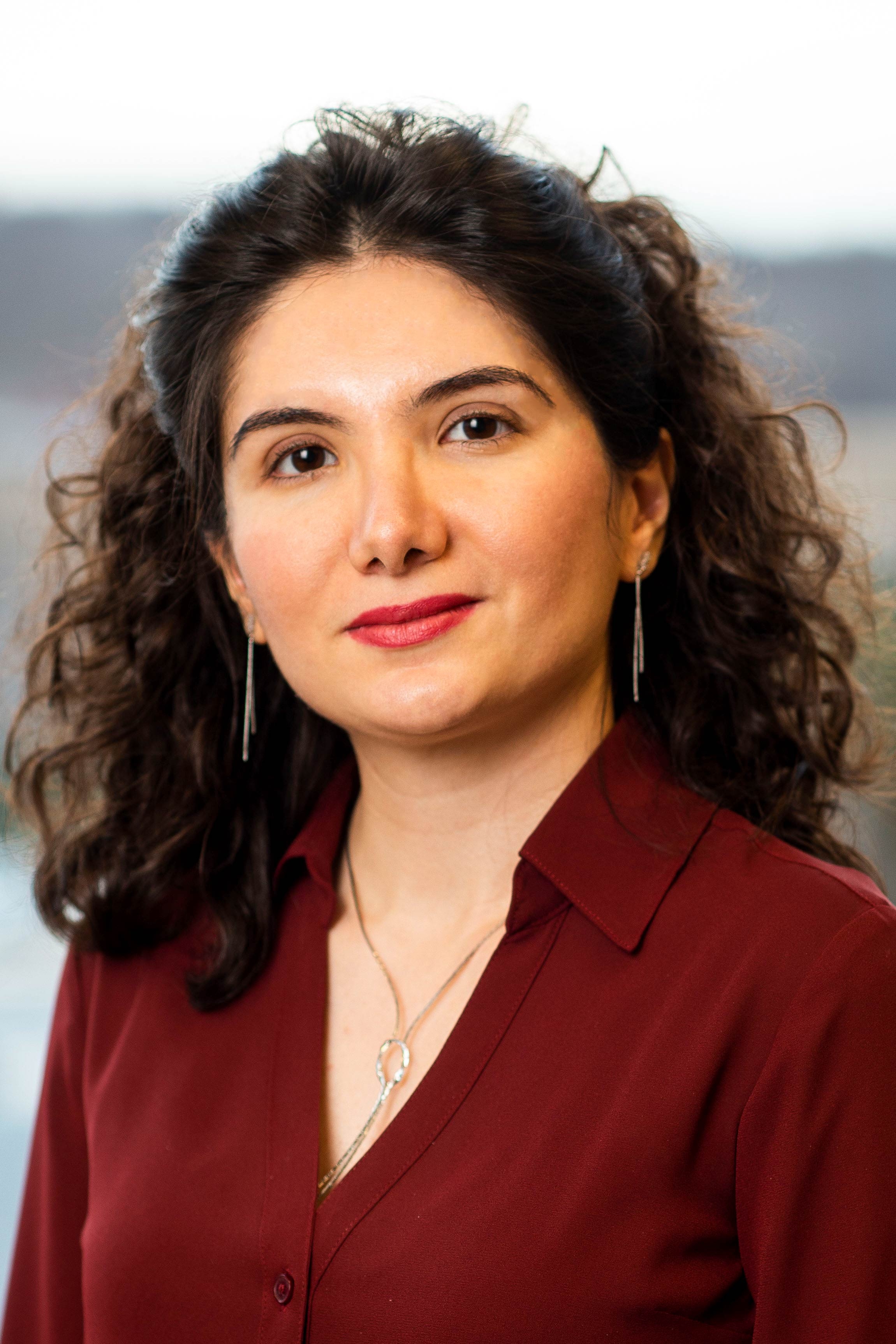
Kollár, Alicia

  • Chesapeake Associate Professor
  • 2158 Physical Sciences Complex
  • 301.405.4058
  • Website

Curriculum Vitae 

Biography

Alicia Kollár received her B.A. in Physics from Princeton University in 2010 and her Ph.D. from Stanford University in 2016. In her doctoral studies with Benjamin Lev, she worked on the design and construction of a multimode cavity-BEC apparatus to study superradiant self-organization. She was awarded a Princeton Materials Science Postdoctoral Fellowship in 2017 to work with Andrew Houck on quantum simulation of solid-state physics using circuit QED lattices. Her research will focus on using novel coplanar waveguide lattice techniques and graph theory to design and realize microwave photonic crystals with unusual structures such as gapped flat bands and spatial curvature. She will combine these structures with multimode/waveguide circuit QED to engineer quantum simulators of lattice and spin models.

Research

Research Area:

  • Atomic, Molecular and Optical Physics
  • Condensed Matter Experiment
  • Quantum Science and Technology

Notable Publications:

  • A. J. Kollár, M. Fitzpatrick, A. A. Houck, Hyperbolic Lattices in Circuit Quantum Electrodynamics, arXiv:1802.09549. 
  • V. D. Vaidya, Y. Guo, R. M. Kroeze, K. E. Ballantine, A. J. Kollár, J. Keeling, B. L. Lev, Tunable- range, photon-mediated atomic interactions in multimode cavity QED, Physical Review X, 8, 011002 (2018), arXiv:1708.08933. 
  • A. J. Kollár, A. T. Papageorge, K. Baumann, V. D. Vaidya, Y. Guo, J. Keeling, B. L. Lev, Supermode-Density-Wave-Polariton Condensation, Nature Communications, 8, 14386 (2017), arXiv:1606.04127. 

Centers & Institutes: Joint Quantum Institute, Quantum Technology Center

Teaching

  • Physics 375: Experimental Physics III: Electromagnetic Waves, Optics and Modern Physics
  • Physics 721: Atomic and Optical Physics I

News

  • New Protocol Demonstrates and Verifies Quantum Speedups in a Jiffy
  • New Design Packs Two Qubits into One Superconducting Junction
  • Alicia Kollár Bridges Abstract Math with Realities of the Lab
  • Kollár Receives CAREER Award
  • Kollár Receives Air Force Young Investigator Grant
  • Mind and Space Bending Physics on a Convenient Chip
  • Enhancing Simulations of Curved Space with Qubits
  • UMD Leads New $25M NSF Quantum Leap Challenge Institute for Robust Quantum Simulation
  • Alicia Kollár Joins UMD Physics
  • University of Maryland Launches Quantum Technology Center
  • QTC, NRL Announce New Partnership

Davoudi, Zohreh

  • Associate Professor
  • 3162 Physical Sciences Complex
  • 301.405.4859
  • Website

Curriculum Vitae

Biography

Dr. Zohreh Davoudi received her B.Sc. in 2007 and M.Sc in 2009 from Sharif University of Technology in Tehran, Iran. She then moved to the US to continue her studies in Theoretical Physics. She received her Ph.D. in 2014 from the University of Washington in Seattle, and shortly thereafter joined the Massachusetts Institute of Technology's Center for Theoretical Physics as a post-doctoral research associate. In addition to her UMD appointment, Davoudi will also be affiliated with the RIKEN research program until 2021. She studies strongly interacting systems, such as hadrons and nuclei, using analytical and computational methods including effective field theories, lattice quantum chromodynamics, quantum simulation and quantum computing. Davoudi was appointed a QuICS Fellow in 2023. She also holds the position of the Associate Director for Education at the NSF Institute for Robust Quantum Simulation.
 
Awards and recognitions: 
  • Presidential Early Career Award for Scientists and Engineers (PECASE 2025)
  • Humboldt Fellowship for Experienced Researchers (2025)
  • Simons Emmy Noether Faculty Research Fellowship (2024)
  • Alfred P. Sloan Fellowship (2019)
  • Department of Energy's Early Career Award (2019)
  • Kenneth Wilson Award in Lattice Gauge Theory (2018)

Research

Research Area:

  • Quantum Science and Technology
  • Quarks, Hadrons & Nuclei

Research goals include:

1) Developing and applying effective field theories and lattice quantum chromodynamics (LQCD) technique aiming at: i) A reliable determination of nuclear and hypernuclear few-body interactions to supplement experimental nuclear-physics programs worldwide, such as the facility for rare isotope beams (FRIB), and to refine studies of extreme astrophysical environment, such as the interior of neutron stars. ii) Constraining hadronic contributions to Standard Model and beyond-the-Standard Model processes, with an impact on both low-energy nuclear physics and high-energy particle physics research, removing some of the long-standing uncertainties in reactions such as those occurring in sun or in fusion research facilities, the cross section of various dark-matter candidates scattering off heavy nuclei in experiments, and the rate of exotic processes such as the neutrinoless double-beta decay.

2) Developing and benchmarking frameworks for quantum simulation of lattice gauge theories and nuclear effective field theories, in light of rapid progress in quantum-computing technologies worldwide. A long-term goal of this research is to combat the long-standing sign problem inherent in traditional Monte Carlo computations of fermionic systems (relevant for studies of dense matter in nature) and real-time dynamics of strongly-interacting matter (relevant for studies of the evolution of matter after Big Bang or after the collision of heavy nuclei in experiments). This problem can potentially be eliminated through mapping and tracking the dynamics of the systems on a quantum simulator. Both the algorithmic developments for efficient implementations of the problems on near-term and future digital quantum-computing platforms, as well as accurate engineering of Hamiltonians of controlled quantum systems for implementations on analog quantum simulators (e.g., ion-trap platforms) are pursued for benchmark problems

Centers & Institutes:

  • Maryland Center for Fundamental Physics
  • Joint Center for Quantum Information and Computer Science
  • NSF Institute for Robust Quantum Simulation

Teaching

  • Physics 411: Intermediate Electricity and Magnetism
  • Physics 604: Methods of Mathematical Physics
  • Physics 624: Advanced Quantum Mechanics
  • Physics 798: Advanced training in QCD, effective field theories and lattice QCD I, II (Fall 2018, Spring 2019)

News

  • A New Take on the Oldest Physics: What Actually Happened Right After the Big Bang?
  • Zohreh Davoudi Awarded Presidential Early Career Award for Scientists and Engineers
  • Particle Physics and Quantum Simulation Collide in New Proposal
  • Quantum Computers Are Starting to Simulate the World of Subatomic Particles
  • UMD Leads New $25M NSF Quantum Leap Challenge Institute for Robust Quantum Simulation
  • A Physics Career of a Thousand Steps
  • Plotting the Future of Particle Physics Research
  • Charting a Course Toward Quantum Simulations of Nuclear Physics
  • Davoudi, Manucharyan Receive DOE Early Career Research Funding
  • Zohreh Davoudi Receives 2019 Sloan Research Fellowship
  • Davoudi Receives Ken Wilson Award
  • New Members of the Department of Physics

Jarzynski, Christopher

  • Distinguished Univ Professor
  • 2106 Institute for Physical Science & Tech
  • 301.405.4439
  • Website

Curriculum Vitae

Biography

Christopher Jarzynski received his A.B. (with high honors) in 1987 from Princeton University and his Ph.D. in 1994 from University of California, Berkeley. His research focuses on statistical mechanics and thermodynamics at the molecular level, with a particular focus on the foundations of nonequilibrium thermodynamics. His research group has worked on topics that include the application of statistical mechanics to problems of biophysical interest; the analysis of artificial molecular machines; the development of efficient numerical schemes for estimating thermodynamic properties of complex systems; the relationship between thermodynamics and information processing; quantum and classical shortcuts to adiabaticity; and quantum thermodynamics. Jarzynski is a Fellow of the American Physical Society and the American Academy of Arts and Sciences, and a UMD Distinguished University Professor. He received the 2019 Lars Onsager Prize for theoretical statistical physics, a 2020 Guggenheim Fellowship and a 2020 Simons Fellowship. In 2020, he was elected to the National Academy of Sciences.

Research

Notable Publications:

    • C. Jarzynski, "Nonequilibrium equality for free energy differences", Phys. Rev. Lett. 78, 2690 (1997)
    • C. Jarzynski, “Equalities and inequalities: Irreversibility and the second law of thermodynamics at the nanoscale”, Annu. Rev. Condens. Matter Phys. 2:329-51 (2011).
    • JZ. Lu, D. Mandal and C. Jarzynski, “Engineering Maxwell’s demon”, Physics Today 67 (8), 60 (August, 2014)
    • S. Deffner, C. Jarzynski and A. del Campo, “Classical and Quantum Shortcuts to Adiabaticity for Scale-Invariant Driving, Phys. Rev. X 4, 021013 (2014)

Research Areas:

AI and Physical Sciences
Nonlinear Dynamics
Biophysics
Quantum Science and Technology

Centers & Institutes: Institute for Physical Sciences & Technology

Teaching

Physics 703:  Introduction to Nonequilibrium Statistical Physics

News

  • Maryland Quantum-Thermodynamics Hub Secures Funding for Three More Years
  • Maryland Quantum-Thermodynamics Hub Launches With $2M Grant
  • Jarzynski Elected to the National Academy of Sciences
  • Jarzynski Awarded a 2020 Guggenheim Fellowship
  • Jarzynski Wins Simons Fellowship
  • Jarzynski Wins APS Onsager Prize


Fisk, Lennard

  • College Park Professor
  • U of Michigan Space Research Building 2455 Hayward Street Ann Arbor MI 48109
  • 734.763.8184

Curriculum Vitae

Barkeshli, Maissam

  • Professor
  • 3270 PSC
  • 301.405.6156

Curriculum Vitae

Biography

Theoretical condensed matter physicist Maissam Barkeshli joined the UMD Department of Physics as an Assistant Professor and a JQI Fellow in August, 2016.

Barkeshli received his PhD in Physics from MIT in 2010 following a BS in Electrical Engineering and Computer Science and a BA in Physics from UC Berkeley. He was a Simons Postdoctoral Fellow at Stanford University (2010-2013) and a postdoctoral researcher at Microsoft's Station Q, located at UC Santa Barbara (2013-2016).

He works on complex many-body phenomena involving condensed matter physics, quantum field theory, quantum topology, and quantum information theory. He also works on the science of deep learning, studying fundamental principles underlying the inner workings of modern AI models. In 2018, he was awarded an Alfred P. Sloan Research Fellowship and a CAREER award from the National Science Foundation. 

Research

Research Area:

  • Condensed Matter Theory
  • Quantum Science and Technology

Centers & Institutes: Joint Quantum Institute, Condensed Matter Theory Center

Notable papers:

M. Barkeshli, "Charge 2e/3 Superconductivity and Topological Degeneracies without Localized Zero Modes in Bilayer Fractional Quantum Hall States," Phys. Rev. Lett. 117, 096803 (2016) 

M. Barkeshli, P. Bonderson, M. Cheng, Z. Wang,  Symmetry, Defects, and Gauging of Topological Phases," arXiv:1410.4540

M. Barkeshli, E. Berg, S. Kivelson, "Coherent transmutation of electrons into fractionalized anyons," Science, 346 6210 (2014)

Teaching

  • Physics 260: Vibrations, Waves, Heat, Electricity & Magnetism
  • Physics 274: Mathematical Methods for Physics I
  • Physics 410: Classical Mechanics 
  • Physics 732: Solid State Physics II: Survey

News

  • Barkeshli Selected for Frontiers of Science Award
  • Barkeshli Selected for Prestigious Simons Collaboration to Study Inner Workings of Artificial Intelligence
  • Nobel Prize Celebrates Interplay of Physics and AI
  • Crystal Imperfections Reveal Rich New Phases of Familiar Matter
  • Tug-of-War Unlocks Menagerie of Quantum Phases of Matter
  • UMD Leads New $25M NSF Quantum Leap Challenge Institute for Robust Quantum Simulation
  • Quantum Computers Do the (Instantaneous) Twist
  • Maissam Barkeshli Promoted to Associate Professor
  • Maissam Barkeshli Receives NSF CAREER Award
  • Assistant Professor Maissam Barkeshli Receives 2018 Sloan Research Fellowship

More Articles …

  1. Yakovenko, Victor
  2. Franco Sevilla, Manuel
  3. Hamilton, Phoebe
  4. Upadhyaya, Arpita

Page 2 of 12

  • 1
  • 2
  • 3
  • 4
  • 5
  • 6
  • 7
  • 8
  • 9
  • 10
  • All
  • Faculty
    • Current
    • Emeritus
    • Adjunct
    • Affiliate
    • Research Professors
  • Research Scientists
  • Postdocs
  • Staff
  • Lecturers
  • Visitors
  • Graduate Students

College and Department Links

Department of Physics

Physical Sciences Complex
4296 Stadium Dr
College Park, MD 20742
Phone: 301.405.3401

Information

  • Campus Directory
  • Undergraduate Research
  • Scholarships
  • Prospective Undergraduates
  • Directions & Transit
  • Web Accessibility
© 2026 University of Maryland - Department of Physics
Top
  • Home
  • About Us
    • Physics Administration
    • Directions
    • Awards
    • Student Awards
    • Make a Donation
    • News
      • Research News
      • Department News
      • Newsletters
    • PTK Policy
  • People
    • All
    • Faculty
      • Current
      • Emeritus
      • Adjunct
      • Affiliate
      • Research Professors
    • Research Scientists
    • Postdocs
    • Staff
    • Lecturers
    • Visitors
    • Graduate Students
  • Research
    • Research Areas
      • AI and Physical Sciences
      • Astro Metrology
      • Atomic, Molecular & Optical
      • Biophysics
      • Chemical Physics
      • Condensed Matter Experiment
      • Condensed Matter Theory
      • Cosmic Ray Physics
      • Elementary Particles
      • Gravitation Experiment
      • Gravitational Theory
      • High Energy Physics
      • Nonlinear Dynamics, Chaos and Complex Systems
      • Nuclear Physics
      • Particle Astrophysics
      • Physics Education Research
      • Plasma Physics
      • Plasma Theory
      • Quantum Science and Technology
      • Quarks, Hadrons and Nuclei
      • Space Physics
    • Centers & Institutes
  • Academics
    • OSES Home (Student Services)
    • OSES News
    • Undergraduate Program
      • Prospective Students
      • Apply Now
      • Degree Requirements and Policies
      • Scholarships
      • Undergraduate Research
      • Advising
      • Undergraduate Forms
      • Undergraduate Events
      • Departmental Honors
      • Society of Physics Students
      • FAQ
      • Undergraduate Student Committee
    • Graduate Program
      • Prospective Students
      • Open House
      • Degree Requirements
      • Graduate Resources
      • Deadlines and Forms
      • PhD Defenses
        • PhD Defenses 2026
        • PhD Defenses 2025
        • PhD Defenses 2024
        • PhD Defenses 2023
        • PhD Defenses 2022
        • PhD Defenses 2021
        • PhD Defenses 2020
        • PhD Defenses 2019
        • PhD Defenses 2018
        • PhD Defenses 2017
        • PhD Defenses 2016
      • Events
      • Scholarships & Awards
      • Qualifier
      • Graduate Student Organizations
      • FAQ
    • Student Opportunities
      • GRAD-MAP
      • Graduate Student Organizations
      • Outreach Volunteering
      • Society of Physics Students
      • NSF S-STEM Program
      • Undergraduate Research
      • Women in Physics
      • Undergraduate Quantum Association
    • Courses
    • Academic Support
    • NSF S-STEM Program
    • Teaching Assistants
  • Events
    • Calendar
    • Physics Colloquia
    • W.J. Carr Lecture
    • Research Interaction Team (RIT) Math/Physics
    • Mechanick Quantum Biology Lecture
    • Irving and Renee Milchberg Endowed Lectureship
    • Charles W. Misner Endowed Lectureship in Gravitational Physics
    • John S. Toll Endowed Lecture
    • Prange Prize Lecture
    • Maryland Day
    • Outreach
      • Outreach Home
      • Physics is Phun
      • Discovery Days
    • Summer Programs
      • Physics Makers Camp
      • Physics of Quidditch
      • Science Discovery Camp
      • Advanced Physics Summer Program
      • Toolkit for Success
    • CUWiP
    • Vortex Makerspace
    • QURiSE Conference
  • Services
    • Building Access Requests
    • Computing Services
    • Conference Room Reservations
    • Department Operations Directory
    • Electronic and Mechanical Development
    • Hiring Procedures
    • Lecture Demo
    • Mental Health Resources
    • Parking
    • Physics Ombudspersons
    • Printing Services
      • Poster Print Request
    • Proposal Submissions
    • Purchase Order
    • Suggestion Box
    • Textbook Information
  • Give