• Home
  • About Us
    • Physics Administration
    • Directions
    • Awards
    • Student Awards
    • Make a Donation
    • News
      • Research News
      • Department News
      • Newsletters
    • PTK Policy
  • People
    • All
    • Faculty
      • Current
      • Emeritus
      • Adjunct
      • Affiliate
      • Research Professors
    • Research Scientists
    • Postdocs
    • Staff
    • Lecturers
    • Visitors
    • Graduate Students
  • Research
    • Research Areas
      • AI and Physical Sciences
      • Astro Metrology
      • Atomic, Molecular & Optical
      • Biophysics
      • Chemical Physics
      • Condensed Matter Experiment
      • Condensed Matter Theory
      • Cosmic Ray Physics
      • Elementary Particles
      • Gravitation Experiment
      • Gravitational Theory
      • High Energy Physics
      • Nonlinear Dynamics, Chaos and Complex Systems
      • Nuclear Physics
      • Particle Astrophysics
      • Physics Education Research
      • Plasma Physics
      • Plasma Theory
      • Quantum Science and Technology
      • Quarks, Hadrons and Nuclei
      • Space Physics
    • Centers & Institutes
  • Academics
    • OSES Home (Student Services)
    • OSES News
    • Undergraduate Program
      • Prospective Students
      • Apply Now
      • Degree Requirements and Policies
      • Scholarships
      • Undergraduate Research
      • Advising
      • Undergraduate Forms
      • Undergraduate Events
      • Departmental Honors
      • Society of Physics Students
      • FAQ
      • Undergraduate Student Committee
    • Graduate Program
      • Prospective Students
      • Open House
      • Degree Requirements
      • Graduate Resources
      • Deadlines and Forms
      • PhD Defenses
        • PhD Defenses 2026
        • PhD Defenses 2025
        • PhD Defenses 2024
        • PhD Defenses 2023
        • PhD Defenses 2022
        • PhD Defenses 2021
        • PhD Defenses 2020
        • PhD Defenses 2019
        • PhD Defenses 2018
        • PhD Defenses 2017
        • PhD Defenses 2016
      • Events
      • Scholarships & Awards
      • Qualifier
      • Graduate Student Organizations
      • FAQ
    • Student Opportunities
      • GRAD-MAP
      • Graduate Student Organizations
      • Outreach Volunteering
      • Society of Physics Students
      • NSF S-STEM Program
      • Undergraduate Research
      • Women in Physics
      • Undergraduate Quantum Association
    • Courses
    • Academic Support
    • NSF S-STEM Program
    • Teaching Assistants
  • Events
    • Calendar
    • Physics Colloquia
    • W.J. Carr Lecture
    • Research Interaction Team (RIT) Math/Physics
    • Mechanick Quantum Biology Lecture
    • Irving and Renee Milchberg Endowed Lectureship
    • Charles W. Misner Endowed Lectureship in Gravitational Physics
    • John S. Toll Endowed Lecture
    • Prange Prize Lecture
    • Maryland Day
    • Outreach
      • Outreach Home
      • Physics is Phun
      • Discovery Days
    • Summer Programs
      • Physics Makers Camp
      • Physics of Quidditch
      • Science Discovery Camp
      • Advanced Physics Summer Program
      • Toolkit for Success
    • CUWiP
    • Vortex Makerspace
    • QURiSE Conference
  • Services
    • Building Access Requests
    • Computing Services
    • Conference Room Reservations
    • Department Operations Directory
    • Electronic and Mechanical Development
    • Hiring Procedures
    • Lecture Demo
    • Mental Health Resources
    • Parking
    • Physics Ombudspersons
    • Printing Services
      • Poster Print Request
    • Proposal Submissions
    • Purchase Order
    • Suggestion Box
    • Textbook Information
  • Give
  1. Home
  2. Directory All
  3. Faculty
  4. Current

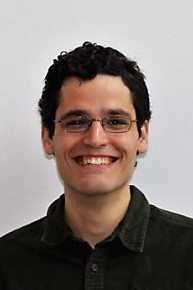
Zhao, Frank

  • Assistant Professor
  • 1365 John S. Toll Physics Building
  • 301.405.6215
  • Website

Curriculum Vitae  

Biography

Frank Zhao earned his B. Sc. (Honors) degree at University of Toronto, where he studied Mathematics and Physics. For his doctoral research, he studied emergent quantum phenomena at atomically clean interfaces between air sensitive 2D materials in mesoscopic devices, with Philip Kim at Columbia and Harvard University. He continued his research at MIT with Joe Checkelsky where he synthesized new unconventional superconductors, which he measured using structural, transport and magnetic probes at low temperature and high magnetic field. He will combine material synthesis and cryogenic van der Waals stacking techniques to discover emergent phenomena at the interface between quantum materials.

Research

The Quantum Interfaces Laboratory studies emergent quantum phenomena at the interface between crystalline lattices. We combine thermodynamic single-crystal synthesis with deterministic van der Waals stacking techniques to realize atomically clean interfaces between arbitrary (even air- or heat-sensitive) van der Waals materials. Using novel lithographic techniques, we pattern these heterostructures into micro- and nanometer scale devices without any exposure to air, heat, or chemicals. Using structural probes alongside transport, magnetic and thermodynamic measurements, we aim to elucidate the relationship between a material or heterostructure’s lattice structure and its electronic properties. Finally, we aim to use this understanding to design and benchmark devices for future technology.

Research Area:

  • Condensed Matter Experiment
  • Quantum Science and Technology
  • Chemical Physics

 Centers & Institutes: Quantum Materials Center
Teaching

 Physics 276: Experimental Physics II

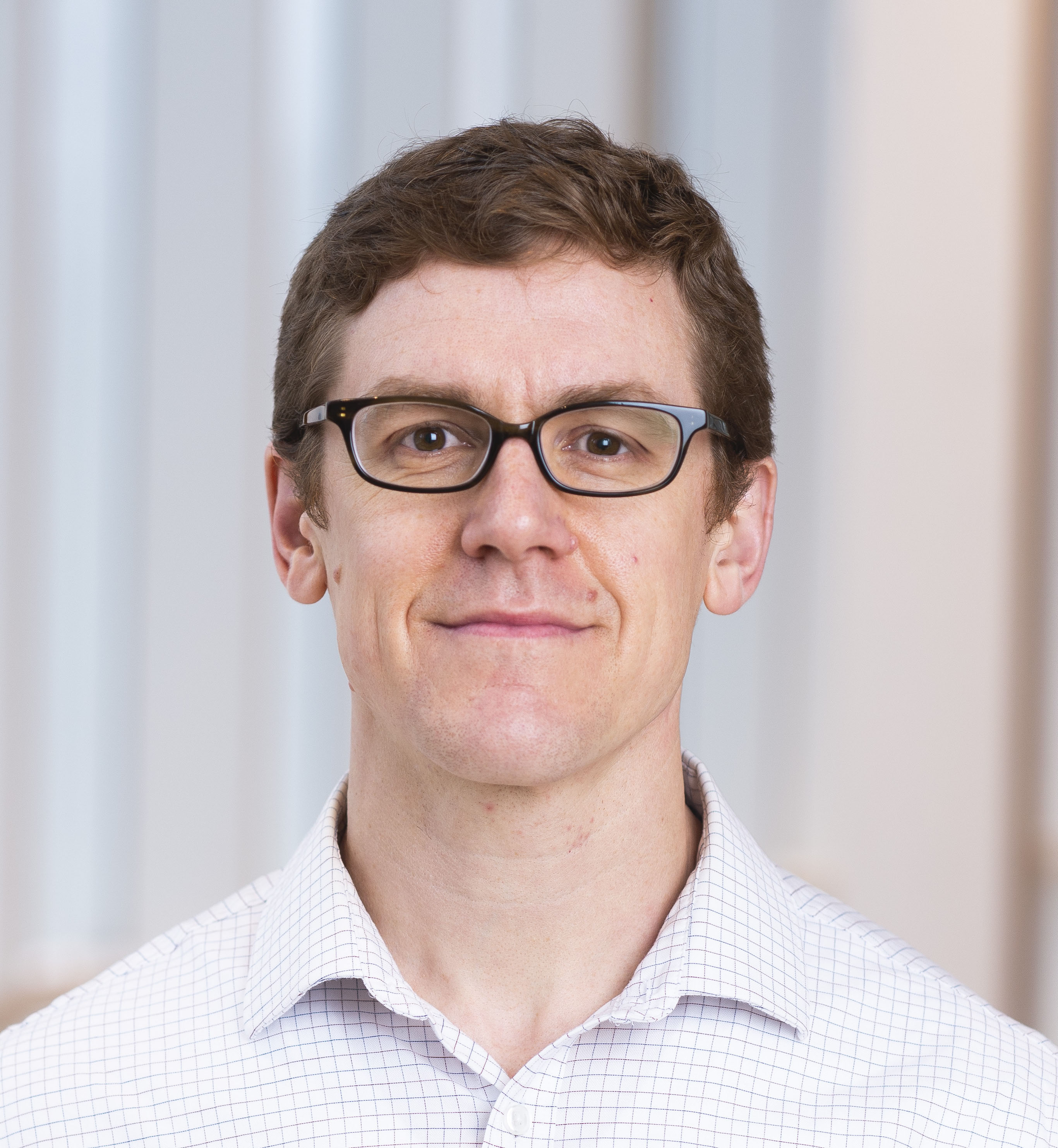
Sternbach, Aaron

  • Assistant Professor
  • 2154 Physical Sciences Complex
  • 301.405.0890
  • Website

Curriculum Vitae 

Biography

Aaron Sternbach earned a B.A. degree in physics from Boston University where he investigated metamaterial assisted light-induced phase transitions. After studying at the University of California San Diego, Dr. Sternbach moved to Columbia University where he received a Ph.D in 2020. His thesis concerns the dynamics of quantum materials, investigated with ultrafast nano optical experimental methods. He was awarded the Townes Fellowship for his thesis work in 2019. After his thesis work he served as a Energy Frontiers Postdoctoral Fellow at Columbia University until 2023. He joined the University of Maryland as an an Assistant Professor in 2024. Dr. Sternbach's interests include the physics of optically driven Quantum Materials. 

Research

The Sternbach lab adapts and uses optical technologies to explore the physics of quantum materials. Nano-optical probes enable a spatial resolution of about 10 nanometers from the far to near infrared (0.1-500 THz). These probes are used to explore phenomena including naturally occurring nano or mesoscale inhomogeneities. The momentum afforded by these probes is also leveraged to explore hybrid light-matter ‘polaritons’, which can propagate in, or at interfaces with, select quantum materials with sub-diffraction limited confinement. These techniques are used with pulsed light sources to explore transient states and interrogate non-linear properties of quantum matter. 

Research Areas:

  • Condensed Matter Experiment
  • Atomic, Molecular & Optical
  • Quantum Science and Technology

Centers & Institutes: Quantum Materials Center
 

Teaching

 Physics 487/687: Computerized Instrumentation

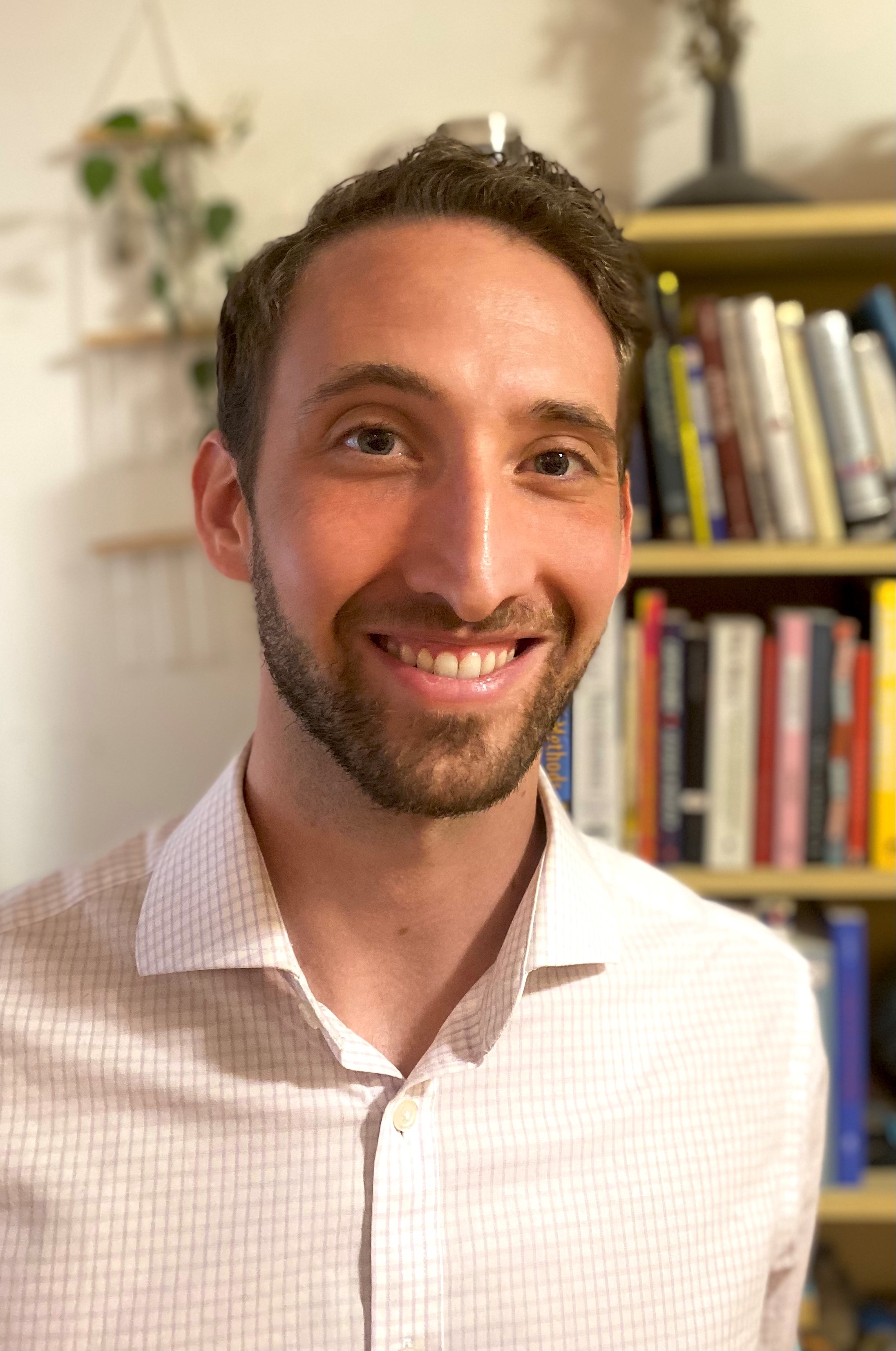
Mukhina, Maria

  • Assistant Professor
  • 1143 Physical Sciences Complex
  • 301.405.4805
  • Website

Curriculum Vitae 

Biography

Maria Mukhina received a PhD degree in Optics (2013) from ITMO University (Saint Petersburg, Russia) where she investigated the physics of anisotropic and chiral nanocrystals. This work was supported by the Scholarship of the President of the Russian Federation for Young Scientists and Graduate Students. In 2016, Dr. Mukhina started her postdoctoral appointment at Harvard University where she worked on intracellular force sensing as applied to the mechanics of chromosomes. Dr. Mukhina joined UMD Physics as an assistant professor in 2024. Her research relies on nanobiotechnology, materials science, and new microscopy techniques to elucidate the mechanics of the genome.

Research

Dr. Mukhina’s lab is interested in how cells use mechanical energy to operate and regulate subcellular structures consisting of millions of molecules. These structures generate, transduce, and respond to mechanical forces and strains that originate at the individual molecules and scale up to microns. To access this information, the lab develops intracellular force nanoprobes with quantitative optical readout, in vivo force-generating apparatus, in situ mechano-molecular controls, and novel adaptations of super-resolution imaging to be used in a synergistic combination. They apply these tools to elucidate the biochemistry-agnostic mechanisms of a number of pathways where piconewton forces are thought to be important. The special focus is on the pathways that cells use to distribute regulatory information and orchestrate global transitions between different functional architectures of the genome, both physiological and pathological.

Research Area: Biophysics

Institute for Physical Science & Technology

News

Exploring the Mechanics of Life’s Tiniest Machines

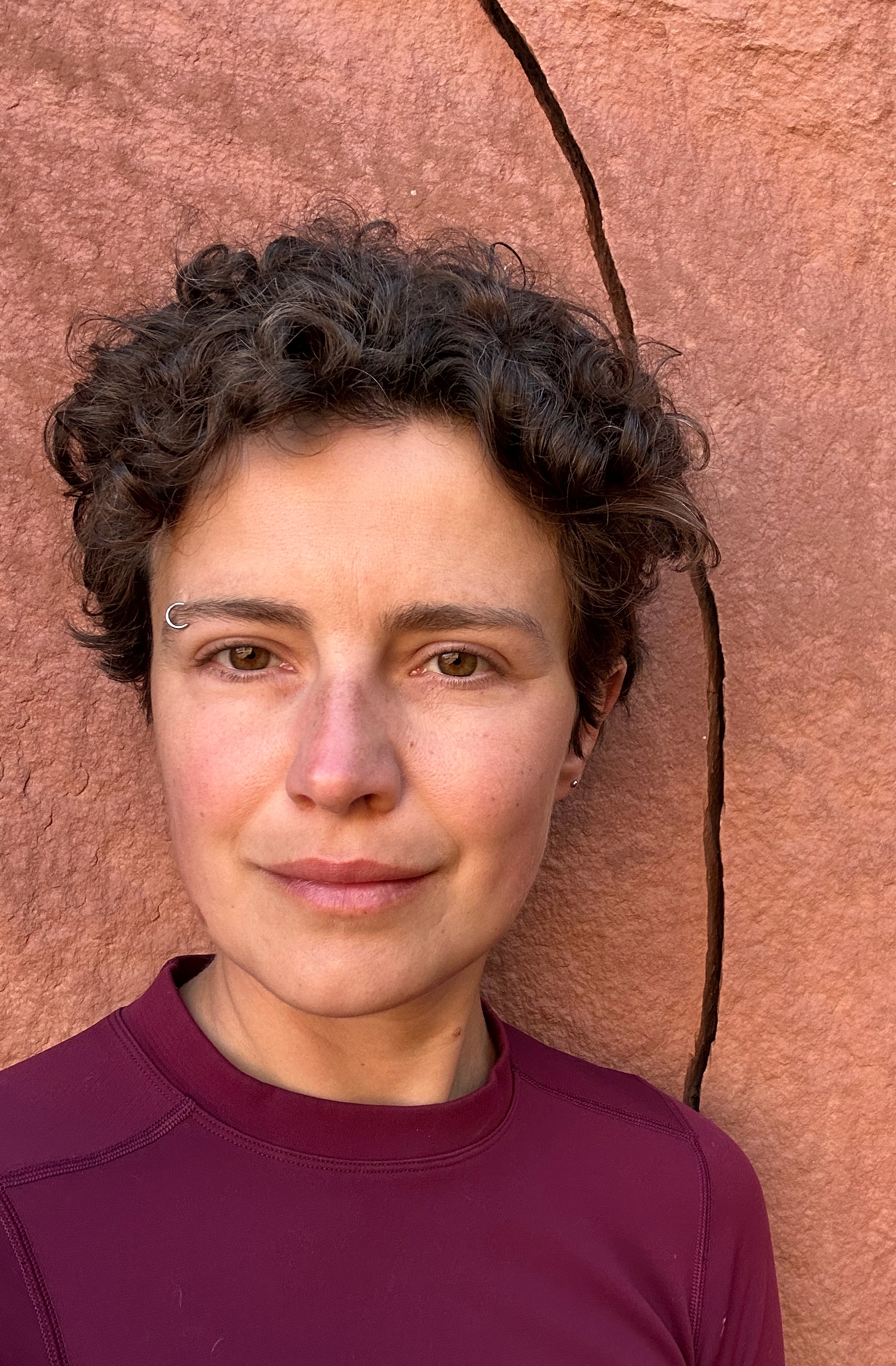
Schine, Nathan

  • Assistant Professor
  • 2160 Physical Sciences Complex
  • 301.314.2161
  • Website

Curriculum Vitae

Biography

Nathan Schine received his B.A. in physics from Williams College in 2013 and his Ph.D. in 2019 from the University of Chicago. There, he worked with Jonathan Simon to create strongly-interacting topological materials made of light. Nathan then joined the lab of Adam Kaufman at JILA as an NRC Postdoctoral Research Fellow where he developed a state-of-the-art strontium tweezer array apparatus for investigations of ultra-coherent optical atomic clocks, quantum information processing, and many-body physics. In the fall of 2022, Nathan joined the faculty at the University of Maryland. His group focuses on the intersection of controlled coherent dynamics and engineered dissipation in quantum systems, implemented by interfacing a neutral atom array with an optical cavity.

Research

Research Areas:

  • Atomic, Molecular & Optical
  • Quantum Science and Technology

News

  • Nathan Schine Twists Photons and Cools Atoms in a Unique Quantum Dance

Clark, Brian

  • Assistant Professor
  • 2105 Physical Sciences Complex
  • 301.405.6036

Curriculum Vitae

Biography

Brian Clark works on particle astrophysics, specifically high-energy neutrino astronomy. He received his PhD from The Ohio State University in 2019, where he was a National Science Foundation (NSF) Graduate Research Fellow. At OSU, he worked on the Askaryan Radio Array (ARA) experiment, which seeks to observe the highest energy neutrinos (above 10 PeV) through the radio detection technique. He worked on all aspects of the experiment, spanning data analysis, simulation, and detector development, including a deployment to the South Pole. After completing his PhD, he became a National Science Foundation Astronomy and Astrophysics Postdoctoral Fellow at Michigan State University. At MSU, he expanded his experimental efforts to include the IceCube Neutrino Observatory. His current efforts include work on ARA, IceCube, and next generation observatories like the Radio Neutrino Observatory in Greenland (RNO-G) and IceCube-Gen2. He currently serves as co-convener of the IceCube Diffuse Neutrino Group and as analysis co-coordinator for ARA.

Research

Research Areas:

  • Particle Astrophysics

Research Projects:

  • Ice-Cube
  • ARA

Centers & Institutes: Joint Space-Science Institute

News

  • IceCube Search for Extremely High-energy Neutrinos Contributes to Understanding of Cosmic Rays
  • IceCube Observes Seven Astrophysical Tau Neutrino Candidates
  • Brian Clark Hunts for the Most Elusive and Energetic Neutrinos

More Articles …

  1. Kollár, Alicia
  2. Davoudi, Zohreh
  3. Jarzynski, Christopher
  4. Fisk, Lennard

Page 1 of 12

  • 1
  • 2
  • 3
  • 4
  • 5
  • 6
  • 7
  • 8
  • 9
  • 10
  • All
  • Faculty
    • Current
    • Emeritus
    • Adjunct
    • Affiliate
    • Research Professors
  • Research Scientists
  • Postdocs
  • Staff
  • Lecturers
  • Visitors
  • Graduate Students

College and Department Links

Department of Physics

Physical Sciences Complex
4296 Stadium Dr
College Park, MD 20742
Phone: 301.405.3401

Information

  • Campus Directory
  • Undergraduate Research
  • Scholarships
  • Prospective Undergraduates
  • Directions & Transit
  • Web Accessibility
© 2026 University of Maryland - Department of Physics
Top
  • Home
  • About Us
    • Physics Administration
    • Directions
    • Awards
    • Student Awards
    • Make a Donation
    • News
      • Research News
      • Department News
      • Newsletters
    • PTK Policy
  • People
    • All
    • Faculty
      • Current
      • Emeritus
      • Adjunct
      • Affiliate
      • Research Professors
    • Research Scientists
    • Postdocs
    • Staff
    • Lecturers
    • Visitors
    • Graduate Students
  • Research
    • Research Areas
      • AI and Physical Sciences
      • Astro Metrology
      • Atomic, Molecular & Optical
      • Biophysics
      • Chemical Physics
      • Condensed Matter Experiment
      • Condensed Matter Theory
      • Cosmic Ray Physics
      • Elementary Particles
      • Gravitation Experiment
      • Gravitational Theory
      • High Energy Physics
      • Nonlinear Dynamics, Chaos and Complex Systems
      • Nuclear Physics
      • Particle Astrophysics
      • Physics Education Research
      • Plasma Physics
      • Plasma Theory
      • Quantum Science and Technology
      • Quarks, Hadrons and Nuclei
      • Space Physics
    • Centers & Institutes
  • Academics
    • OSES Home (Student Services)
    • OSES News
    • Undergraduate Program
      • Prospective Students
      • Apply Now
      • Degree Requirements and Policies
      • Scholarships
      • Undergraduate Research
      • Advising
      • Undergraduate Forms
      • Undergraduate Events
      • Departmental Honors
      • Society of Physics Students
      • FAQ
      • Undergraduate Student Committee
    • Graduate Program
      • Prospective Students
      • Open House
      • Degree Requirements
      • Graduate Resources
      • Deadlines and Forms
      • PhD Defenses
        • PhD Defenses 2026
        • PhD Defenses 2025
        • PhD Defenses 2024
        • PhD Defenses 2023
        • PhD Defenses 2022
        • PhD Defenses 2021
        • PhD Defenses 2020
        • PhD Defenses 2019
        • PhD Defenses 2018
        • PhD Defenses 2017
        • PhD Defenses 2016
      • Events
      • Scholarships & Awards
      • Qualifier
      • Graduate Student Organizations
      • FAQ
    • Student Opportunities
      • GRAD-MAP
      • Graduate Student Organizations
      • Outreach Volunteering
      • Society of Physics Students
      • NSF S-STEM Program
      • Undergraduate Research
      • Women in Physics
      • Undergraduate Quantum Association
    • Courses
    • Academic Support
    • NSF S-STEM Program
    • Teaching Assistants
  • Events
    • Calendar
    • Physics Colloquia
    • W.J. Carr Lecture
    • Research Interaction Team (RIT) Math/Physics
    • Mechanick Quantum Biology Lecture
    • Irving and Renee Milchberg Endowed Lectureship
    • Charles W. Misner Endowed Lectureship in Gravitational Physics
    • John S. Toll Endowed Lecture
    • Prange Prize Lecture
    • Maryland Day
    • Outreach
      • Outreach Home
      • Physics is Phun
      • Discovery Days
    • Summer Programs
      • Physics Makers Camp
      • Physics of Quidditch
      • Science Discovery Camp
      • Advanced Physics Summer Program
      • Toolkit for Success
    • CUWiP
    • Vortex Makerspace
    • QURiSE Conference
  • Services
    • Building Access Requests
    • Computing Services
    • Conference Room Reservations
    • Department Operations Directory
    • Electronic and Mechanical Development
    • Hiring Procedures
    • Lecture Demo
    • Mental Health Resources
    • Parking
    • Physics Ombudspersons
    • Printing Services
      • Poster Print Request
    • Proposal Submissions
    • Purchase Order
    • Suggestion Box
    • Textbook Information
  • Give