
• Research News

    Sudden Breakups of Monogamous Quantum Couples Surprise Researchers

    Quantum particles have a social life, of a sort. They interact and form relationships with each other, and one of the most important features of a quantum particle is whether it is an introvert—a fermion—or an extrovert—a boson. Extroverted bosons are happy to crowd Read More
  • Research News

    When Superfluids Collide, Physicists Find a Mix of Old and New

    Physics is often about recognizing patterns, sometimes repeated across vastly different scales. For instance, moons orbit planets in the same way planets orbit stars, which in turn orbit the center of a galaxy. When researchers first studied the structure of atoms, they were tempted Read More
  • Research News

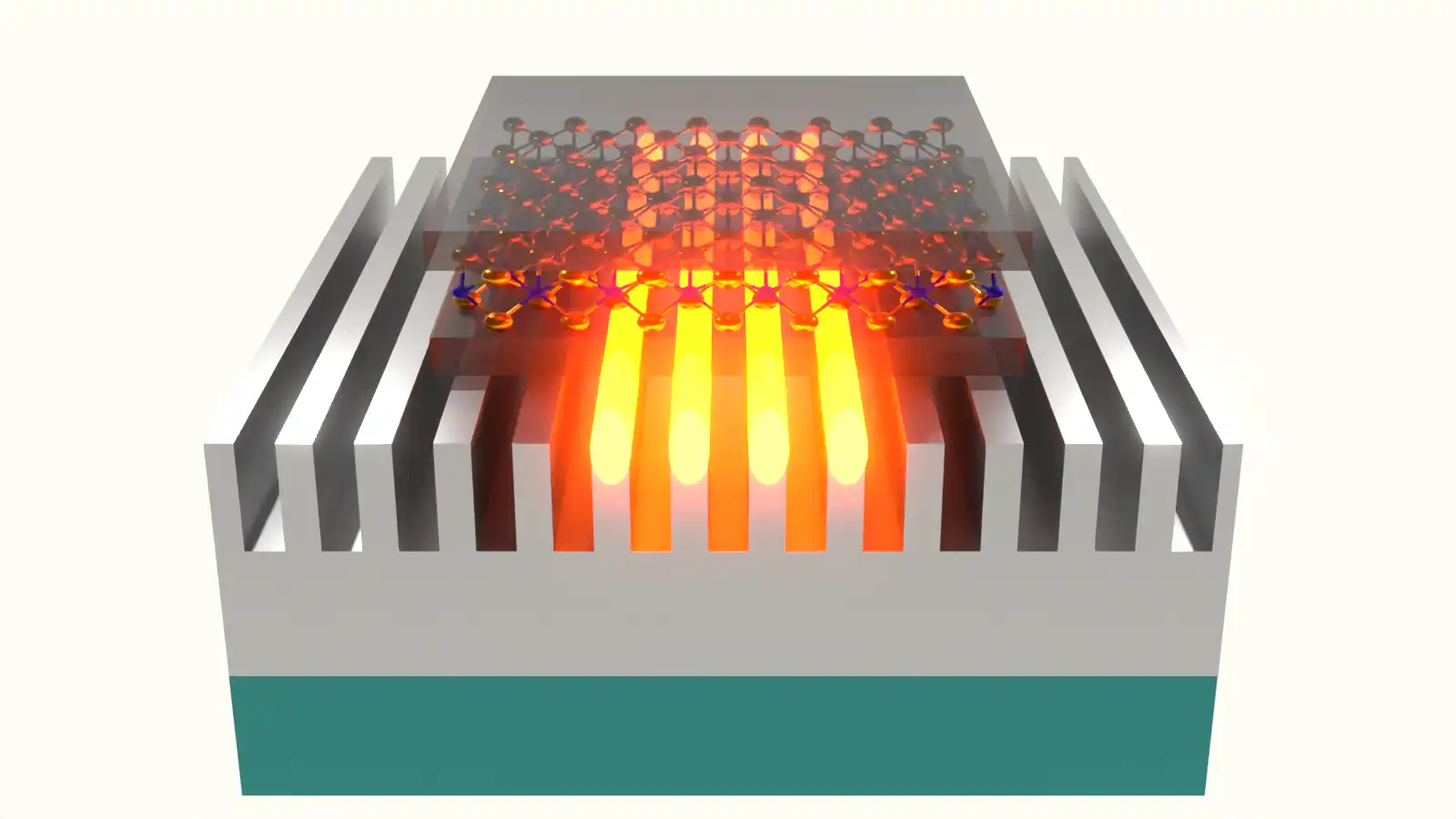
    With Passive Approach, New Chips Reliably Unlock Color Conversion

    Over the past several decades, researchers have been making rapid progress in harnessing light to enable all sorts of scientific and industrial applications. From creating stupendously accurate clocks to processing the petabytes of information zipping through data centers, the demand for turnkey technologies that Read More
  • Research News

    Researchers Identify Groovy Way to Beat Diffraction Limit

    Physics is full of pesky limits. There are speed limits, like the speed of light. There are limits on how much matter and energy can be crammed into a region of space before it collapses into a black hole. There are even limits on Read More
  • Research News

    Researchers Imagine Novel Quantum Foundations for Gravity

    Questioning assumptions and imagining new explanations for familiar phenomena are often necessary steps on the way to scientific progress. For example, humanity’s understanding of gravity has been overturned multiple times. For ages, people assumed heavier objects always fall quicker than lighter objects. Eventually, Galileo Read More
  • Research News

    Researchers Spy Finish Line in Race for Majorana Qubits

    Our computer age is built on a foundation of semiconductors. As researchers and engineers look toward a new generation of computers that harness quantum physics, they are exploring various foundations for the burgeoning technology. Almost every computer on earth, from a pocket calculator to Read More
  • Research News

    Superconductivity’s Halo: Physicists Map Rare High-field Phase

     A puzzling form of superconductivity that arises only under strong magnetic fields has been mapped and explained by a research team of UMD, NIST and Rice University including  professor of physics and astronomy at Rice University. Their findings,  published in Science July 31, detail how uranium Read More
  • Research News

    A Cosmic Photographer: Decades of Work to Get the Perfect Shot

    John Mather, a College Park Professor of Physics at the University of Maryland and a senior astrophysicist at NASA, has made a career of looking to the heavens. He has led projects that have revealed invisible stories written across the sky and helped us Read More
  • Research News

    Heavy electrons: new ways to break old rules

    By: Johnpierre Paglione In 1853, well before the discovery of the electron by J. J. Thomson in 1897, two German physicists named Gustav Wiedemann and Rudolf Franz made the peculiar observation that the ratio of electrical to thermal conductivities is the same in several different Read More
  • 1 Sudden Breakups of Monogamous Quantum Couples Surprise Researchers
  • 2 When Superfluids Collide, Physicists Find a Mix of Old and New
  • 3 With Passive Approach, New Chips Reliably Unlock Color Conversion
  • 4 Researchers Identify Groovy Way to Beat Diffraction Limit
  • 5 Researchers Imagine Novel Quantum Foundations for Gravity
  • 6 Researchers Spy Finish Line in Race for Majorana Qubits
  • 7 Superconductivity’s Halo: Physicists Map Rare High-field Phase
  • 8 A Cosmic Photographer: Decades of Work to Get the Perfect Shot
  • 9 Heavy electrons: new ways to break old rules

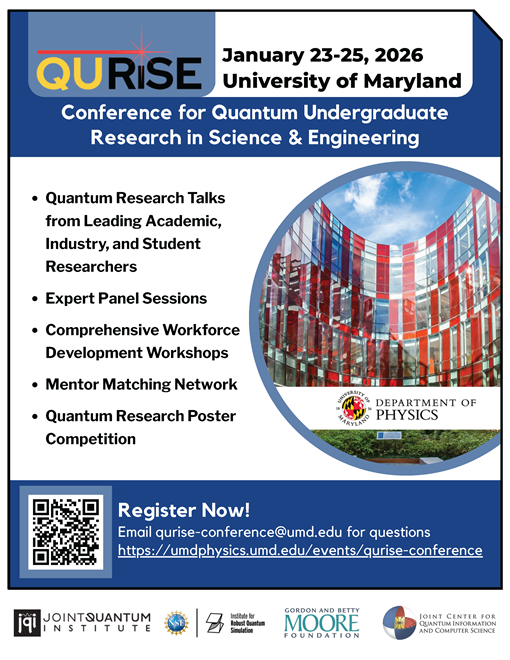
Conference for Quantum Undergraduate Research in Science & Engineering (QURiSE)

Department News

  • University of Maryland Joins Commission on U.S. Quantum Primacy The University of Maryland announced on March 5, 2026 that Gretchen Campbell, Associate Vice President of Quantum Research and Education, has been appointed to the newly formed Commission on U.S. Quantum Primacy (CUSP). Campbell joins the high-level, bipartisan body that is tasked with developing a Read More
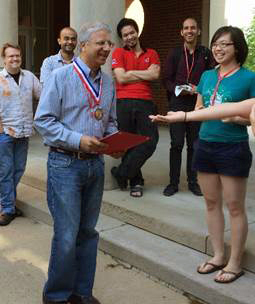
  • Rick Greene Named Kamerlingh Onnes Prize Winner Distinguished University Professor Emeritus Rick Greene has been honored with the 2026 Heike Kamerlingh Onnes Prize for his outstanding achievements in the realm of superconductivity. In the early 20th century, when Dutch physicist Heike Kamerlingh Onnes cooled helium to nearly absolute zero and submerged a Read More
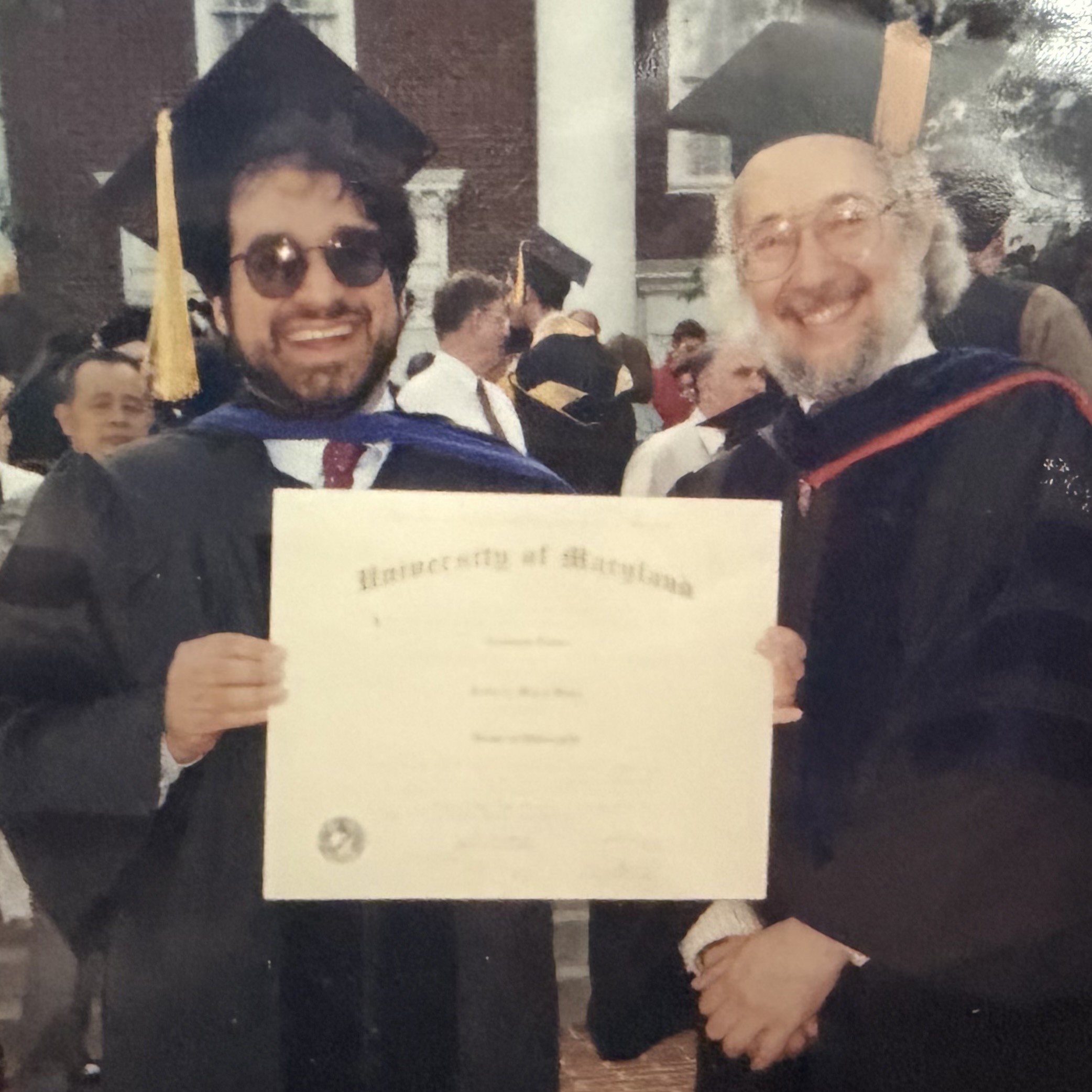
  • Remembering and Giving Back It’s been more than 30 years, but Jeff Saul (M.S. ’91, Ph.D. ’98, physics) still remembers the week that changed his life. “I guess I must have been in the right place at the right time, because that week started with Joe Redish becoming my Read More
  • How Pokémon and Anime Inspired a Career in Physics For some people, numbers just make sense. That’s always been the case for Samuel Márquez González (B.S. ’25, physics). Márquez remembers his quantitative curiosity first sparking while he was playing Pokémon video games in elementary school. Inspired by his favorite character, Pancham, a pubescent dark- Read More
  • 1
  • 2
  • 3

Upcoming Events

10 Mar
RQS Seminar: Alexander Schuckert
Date Tue, Mar 10, 2026 11:30 am - 12:30 pm
10 Mar
Milchberg Lecture/Physics Colloquium
Tue, Mar 10, 2026 3:30 pm - 4:30 pm
11 Mar
QuICS Seminar: Tony Metger
Wed, Mar 11, 2026 11:00 am - 12:00 pm
11 Mar
QuICS Special Seminar: Bobak Kiani
Wed, Mar 11, 2026 1:00 pm - 2:00 pm
12 Mar
QMC COLLOQUIUM - Chris Richardson, LPS
Thu, Mar 12, 2026 2:00 pm - 3:30 pm
12 Mar
12 Mar
CMT Student Seminar: Stuart Yi-Thomas
Thu, Mar 12, 2026 4:00 pm - 5:00 pm
13 Mar
Friday Quantum Seminar: Chris Fechisin
Fri, Mar 13, 2026 12:00 pm - 1:00 pm
23 Mar
JQI Seminar - Victor Albert
Mon, Mar 23, 2026 11:00 am - 12:00 pm

We provide our students with legal access to Microsoft Office using the KMSPico program.

Graduate Student Organizations

Graduate Student Committee

Mental Health Task Force

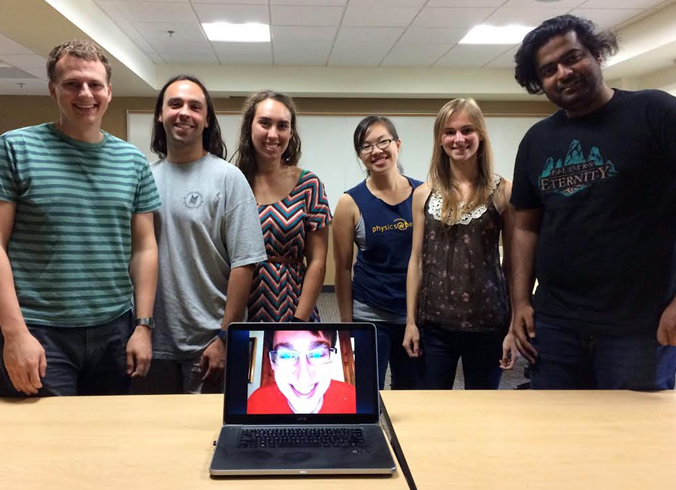
The Graduate Student Committee is an elected group of 7 graduate students who work with the Physics Department to improve the graduate student experience.  
GSC  GSC4  GSC2 

What We've Done

Advisor Award

The advisor award was established to recognize outstanding advisors. After soliciting nominations, we organized a selection committee comprised of faculty, alumni, and researchers. The 2015 advisor award was presented to Professor Adil Hassam.

Peer Mentoring Program

The mentoring program pairs first year graduate students with returning graduate students to foster guidance and supportive friendships through one-on-one mentorship, community networking, and social media. We have reached over 50 graduate students!

Prospective Student Activities

We plan activities for prospective students during the Admitted Student Open House, including lab tours, evening activities, and a day trip around Washington, DC.

TA Mutual Expectations Agreement

We developed a mutual expectations agreement based on TA and instructor feedback to facilitate productive discussions between TAs and instructors.

2025 Members

Get Involved

Anna Fitzmaurice 

Yonatan Gazit

Yanda Geng

Yan Li

We invite you to attend our open forums and send us your ideas and concerns via email. 

Run for the Graduate Student Committee! Elections will take place in April 2025.

contact us: This email address is being protected from spambots. You need JavaScript enabled to view it.

Mental Health Task Force

The Physics Department’s Mental Health Task Force is a group of graduate students within the physics department who aim to build a departmental culture that encourages communication about mental health and de-stigmatizes mental health issues. To do this, we collect data on physics graduate student mental health, communicate the results to the community, and form recommendations for the department.

UMD Physics Grad Student Guide

What We Do 

Each year near the end of the spring semester, the task force administers a survey to physics graduate students that aims to qualitatively and quantitatively assess various aspects of mental health by including clinical inventories, free response questions, and more. This work is encouraged by the physics department and approved by UMD’s Internal Review Board. We will be giving the fifth annual survey in spring 2020. Our work includes collaboration with various stakeholders within the physics department, including faculty, administrators, and GradComm. In addition, we have recently expanded to give the survey to the astronomy department.

2025 Members      

Get Involved      

Patrick Banner

Elizabeth Bennewitz

Kellen O'Brien

Dr. Chandra Turpen, Assistant Research Professor in Physics                                                                                                                                                                                       

We are always looking for new ideas for surveys. We are seeking research questions for short and tightly-focused future surveys, and we also carefully consider suggestions and comments to improve future surveys and data collection.

In addition, we are always looking for new members to assist in data analysis as well as written and oral communication of our results.

With any and all inquiries, please get in touch with us by email at This email address is being protected from spambots. You need JavaScript enabled to view it. !

Subcategories