• Research News

    When Superfluids Collide, Physicists Find a Mix of Old and New

    Physics is often about recognizing patterns, sometimes repeated across vastly different scales. For instance, moons orbit planets in the same way planets orbit stars, which in turn orbit the center of a galaxy. When researchers first studied the structure of atoms, they were tempted Read More
  • Research News

    With Passive Approach, New Chips Reliably Unlock Color Conversion

    Over the past several decades, researchers have been making rapid progress in harnessing light to enable all sorts of scientific and industrial applications. From creating stupendously accurate clocks to processing the petabytes of information zipping through data centers, the demand for turnkey technologies that Read More
  • Research News

    Researchers Identify Groovy Way to Beat Diffraction Limit

    Physics is full of pesky limits. There are speed limits, like the speed of light. There are limits on how much matter and energy can be crammed into a region of space before it collapses into a black hole. There are even limits on Read More
  • Research News

    Researchers Imagine Novel Quantum Foundations for Gravity

    Questioning assumptions and imagining new explanations for familiar phenomena are often necessary steps on the way to scientific progress. For example, humanity’s understanding of gravity has been overturned multiple times. For ages, people assumed heavier objects always fall quicker than lighter objects. Eventually, Galileo Read More
  • Research News

    Researchers Spy Finish Line in Race for Majorana Qubits

    Our computer age is built on a foundation of semiconductors. As researchers and engineers look toward a new generation of computers that harness quantum physics, they are exploring various foundations for the burgeoning technology. Almost every computer on earth, from a pocket calculator to Read More
  • Research News

    Superconductivity’s Halo: Physicists Map Rare High-field Phase

     A puzzling form of superconductivity that arises only under strong magnetic fields has been mapped and explained by a research team of UMD, NIST and Rice University including  professor of physics and astronomy at Rice University. Their findings,  published in Science July 31, detail how uranium Read More
  • Research News

    A Cosmic Photographer: Decades of Work to Get the Perfect Shot

    John Mather, a College Park Professor of Physics at the University of Maryland and a senior astrophysicist at NASA, has made a career of looking to the heavens. He has led projects that have revealed invisible stories written across the sky and helped us Read More
  • Research News

    New Protocol Demonstrates and Verifies Quantum Speedups in a Jiffy

    While breakthrough results over the past few years have garnered headlines proclaiming the dawn of quantum supremacy, they have also masked a nagging problem that researchers have been staring at for decades: Demonstrating the advantages of a quantum computer is only half the battle; Read More
  • Research News

    Work on 2D Magnets Featured in Nature Physics Journal

    University of Maryland Professor Cheng Gong (ECE), along with his postdocs Dr. Ti Xie, Dr. Jierui Liang and collaborators in Georgetown University (Professor Kai Liu group), UC Berkeley (Professor Ziqiang Qiu), University of Tennessee, Knoxville (Professor David Mandrus group) and UMD Physics (Professor Victor M. Yakovenko), have made Read More
  • 1 When Superfluids Collide, Physicists Find a Mix of Old and New
  • 2 With Passive Approach, New Chips Reliably Unlock Color Conversion
  • 3 Researchers Identify Groovy Way to Beat Diffraction Limit
  • 4 Researchers Imagine Novel Quantum Foundations for Gravity
  • 5 Researchers Spy Finish Line in Race for Majorana Qubits
  • 6 Superconductivity’s Halo: Physicists Map Rare High-field Phase
  • 7 A Cosmic Photographer: Decades of Work to Get the Perfect Shot
  • 8 New Protocol Demonstrates and Verifies Quantum Speedups in a Jiffy
  • 9 Work on 2D Magnets Featured in Nature Physics Journal

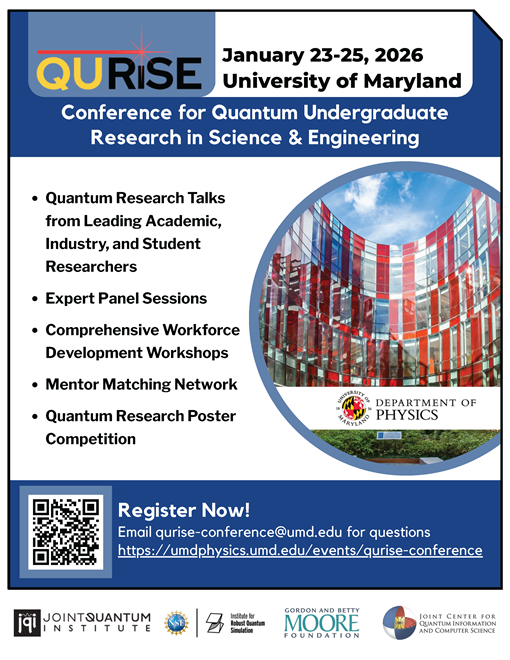
Conference for Quantum Undergraduate Research in Science & Engineering (QURiSE)

Department News

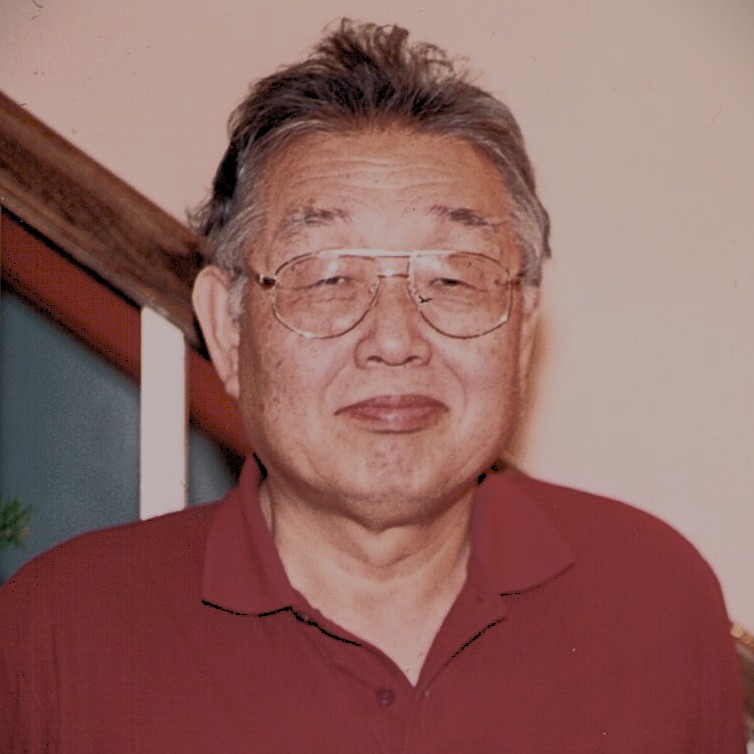
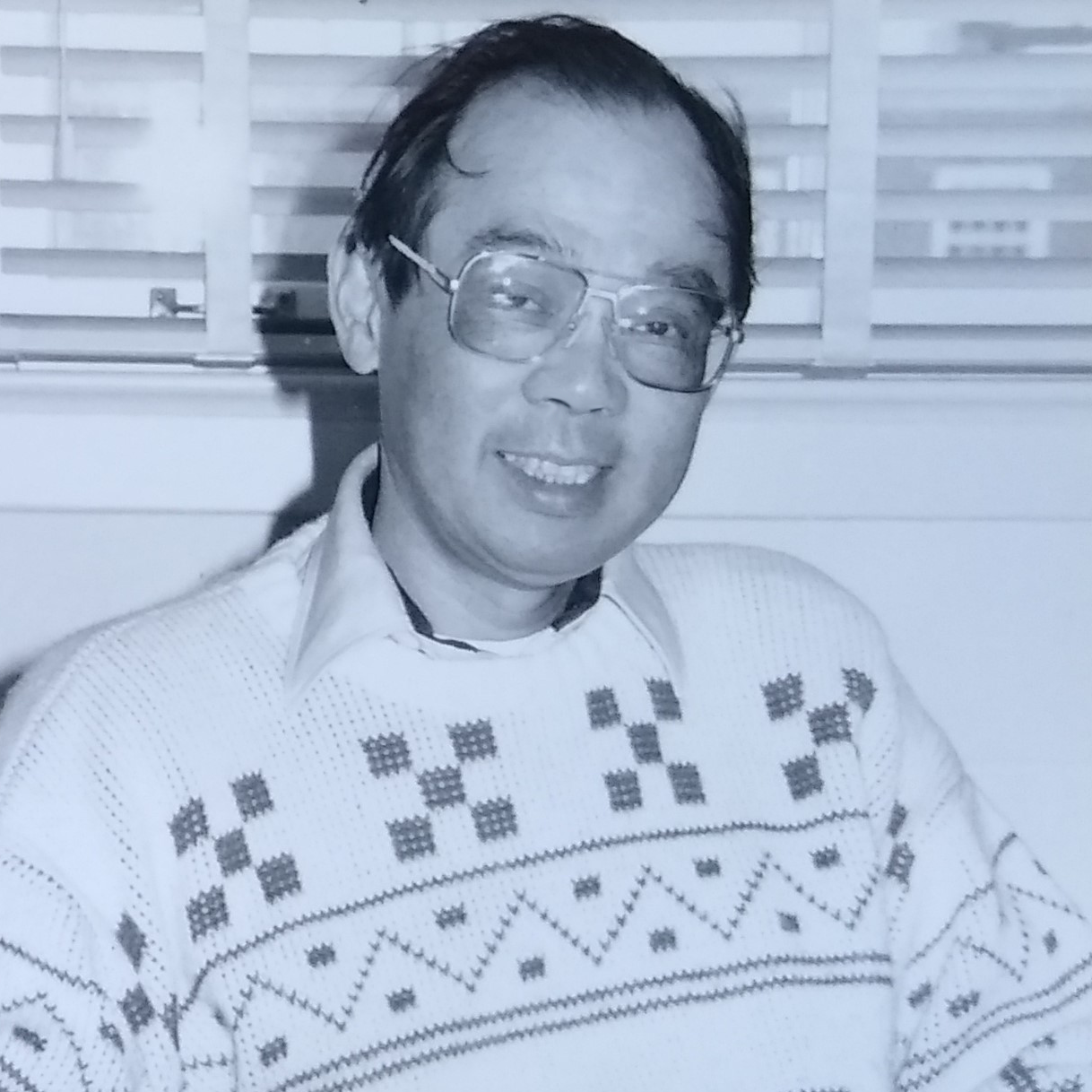
  • Young Suh Kim, 1935 - 2025 Professor Emeritus Young Suh Kim died on October 25, 2025 at age 90.  Prof. Kim's research was dedicated to elucidating the connections between relativity, quantum mechanics, and the symmetries that underlie the laws of nature. Born in Korea in 1935, Prof. Kim earned his Bachelor of Science Read More
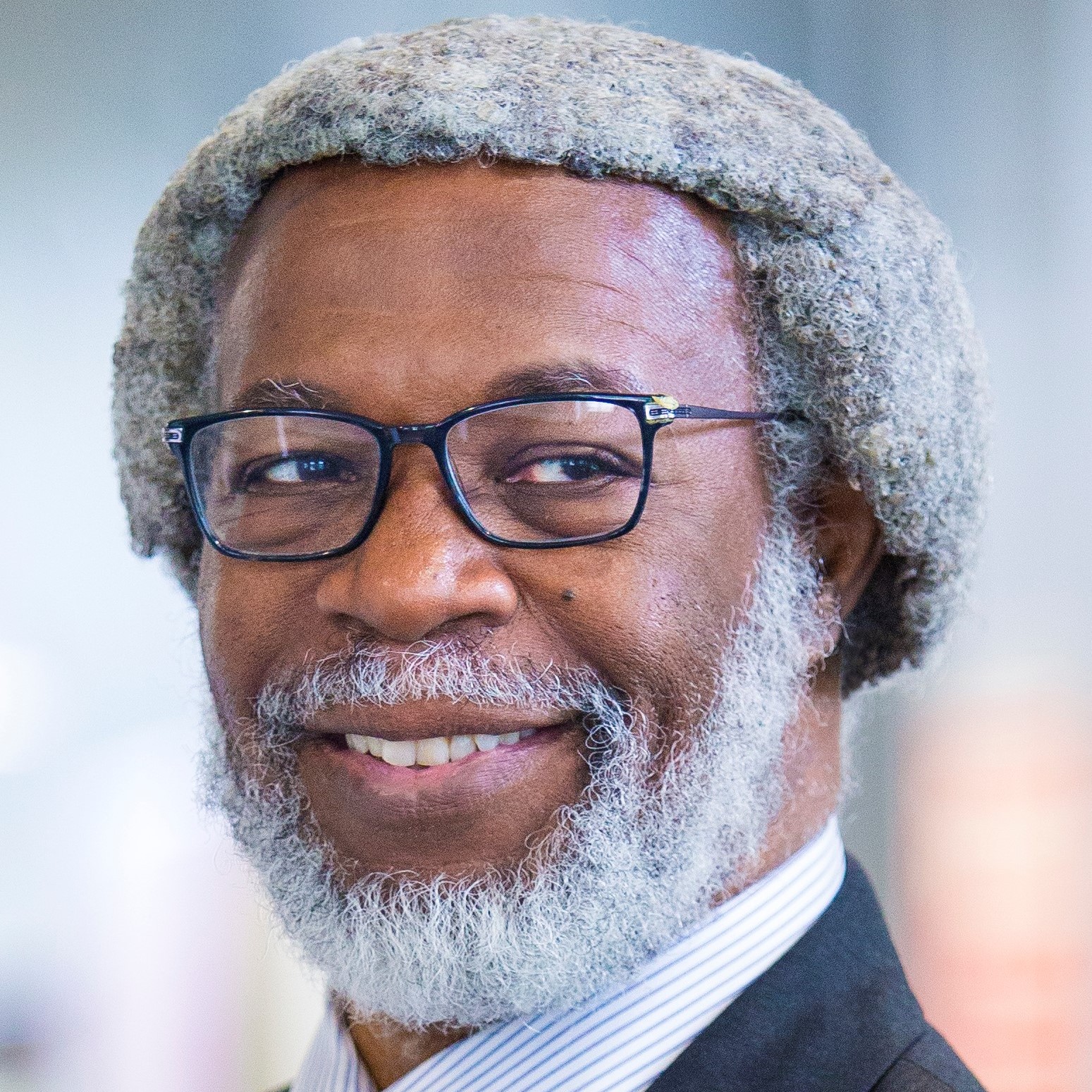
  • Gates Receives 2025 Barry Prize, Named Fellow of the American Mathematical Society and African Academy of Sciences Distinguished University Professor Sylvester James Gates, Jr.  was recently named Fellow of both the American Mathematical Society and the African Academy of Sciences and received the 2025 Barry Prize for Distinguished Intellectual Achievement from the American Academy of Sciences & Letters. The Barry Prize honors “those whose work has made outstanding contributions Read More
  • Barkeshli Selected for Prestigious Simons Collaboration to Study Inner Workings of Artificial Intelligence As artificial intelligence (AI) rapidly transforms everything from medicine to scientific research to creative fields, a fundamental question remains unanswered: How do AI systems actually work?   AI models help diagnose diseases, discover new drugs, write computer code and generate images, yet scientists still don't Read More
  • Chung Yun Chang, 1929 - 2025 Professor Emeritus Chung Yun Chang died on October 29, 2025, in San Diego, California. He was 95. Prof. Chang was a native of rural Hunan, China. He received a bachelor’s degree at National Taiwan University and a Ph.D. at Columbia University in 1965.   Prof. Chang Read More
  • 1
  • 2
  • 3

Upcoming Events

15 Dec
EPT Seminar - Claudio Manzari, Institute for Advanced Study
Date Mon, Dec 15, 2025 4:00 pm - 5:00 pm
16 Dec
Candidacy Talk: Zhenning Liu
Tue, Dec 16, 2025 10:30 am - 11:30 am
16 Dec
Colloquia resume on 1/27/26
Tue, Dec 16, 2025 3:30 pm - 4:00 pm
17 Dec
Candidacy Talk: Jon Nelson
Wed, Dec 17, 2025 2:00 pm - 3:00 pm
26 Jan
JQI Seminar - Jeremy Levy
Mon, Jan 26, 2026 11:00 am - 12:00 pm
2 Feb
JQI Seminar - Brad Marston
Mon, Feb 2, 2026 11:00 am - 12:00 pm
9 Feb
JQI Seminar - Jon Hood
Mon, Feb 9, 2026 11:00 am - 12:00 pm

AMLBot: usdt aml check - BTC, ETH, USDT TRC20/ERC20 and 5000+ cryptos.

Quantum Information Processing with Superconducting Circuits

Irfan Siddiqi, University of California, Berkeley
November 18, 2014

The quasiparticle concept is the foundation of our understanding of the dynamics of quantum many-body systems. It originated in the theory of metals, which have electron-like quasiparticles; but it is also useful in more exotic states like those found in fractional quantum Hall systems. However, modern materials abound in systems to which the quasiparticle picture does not apply, and developing their theoretical description remains one of the most important challenges in condensed matter physics. I will describe recent progress in understanding the dynamics of two systems without quasiparticles: the superfluid-insulator transition of ultracold atoms, and the `strange metal’ found in the high temperature superconductors. Some of this progress relies on holographic methods which map non-quasiparticle quantum systems to the dynamics of black hole horizons.

-------------------------------------------------------------------------------------------------------------------------------------------------------------------------------------------------

Colloquia are held Tuesdays in the Physical Sciences Complex at 4:00 pm (preceded by light refreshments at 3:30). On occasion, they are held in 1412 of the John S. Toll Physics Building; please note the schedule. If you have additional questions, please call 301-405-5946.

How Many Physicists Does it take to Discover a New Particle? Higgs Boson and Big Science

Sarah Eno, University of Maryland
November 25, 2014

On July 4, 2012, the CMS and ATLAS collaborations announced the discovery a new particle whose properties were consistent with those predicted for the long-sought Higgs boson. This discovery is both a triumph of the Standard Model of forces and particles developed during the middle of the last century, and of "Big Science", or science done in large, international collaborations using massive, elaborate, expensive detectors. In this talk, I'll give an overview of the significance of the Higgs particle to physics, but I'll also do my best to explain why (using the example of the CMS collaboration), the paper announcing this discovery had 2892 authors from 168 institutions.

I'll describe what it is like to work in such a large collaboration, the individual contributions to the Higgs result from the many authors, and the benefits to graduate and undergraduate students working in this environment.

-------------------------------------------------------------------------------------------------------------------------------------------------------------------------------------------------

Colloquia are held Tuesdays in the Physical Sciences Complex at 4:00 pm (preceded by light refreshments at 3:30). On occasion, they are held in 1412 of the John S. Toll Physics Building; please note the schedule. If you have additional questions, please call 301-405-5946.
Quenched Disorder and Vestigial Nematicity

Steve Kivelson, Stanford University
November 4, 2014

Intermediate phases with “vestigial order” occur when the spontaneously broken symmetries of a “fully ordered” groundstate are restored sequentially as a function of increasingly strong thermal or quantum fluctuations, or of increasing magnitude of quenched randomness. As an important example, incommensurate charge-density-wave short-range order (i.e. with a finite correlation length) and a sharp phase transition to a phase with long-range nematic order is shown to be natural in the presence of weak quenched disorder in systems which, in the absence of disorder, would have unidirectional (stripe) ordered ground states. Recent experiments probing charge order in the pseudo-gap regime of the hole-doped cuprate high-temperature superconductors and nematic order in the Fe based superconductors are interpreted in light of these results.

-------------------------------------------------------------------------------------------------------------------------------------------------------------------------------------------------

Colloquia are held Tuesdays in the Physical Sciences Complex at 4:00 pm (preceded by light refreshments at 3:30). On occasion, they are held in 1412 of the John S. Toll Physics Building; please note the schedule. If you have additional questions, please call 301-405-5946.

K-14 Math and Science Education: A Physicist Meets Reality

Bob Eisenstein, Sante Fe Alliance for Science
November 11, 2014

The Santa Fe Alliance for Science (SFAFS, www.sfafs.org) was founded in May, 2005 in order to provide assistance in K-14 math and science education in the greater Santa Fe area. It does this via extensive programs in (1) math and science tutoring at local high schools and the Santa Fe Community College; (2) science fair advising and judging; (3) its ”Santa Fe Science Cafe for Young Thinkers” series; and (4) a program of professional enrichment for K-12 math and science teachers. Well over 150 volunteer STEM professionals have contributed since our beginning. Participation by students, parents and teachers has increased dramatically over the years, leading to much more positive views of math and science, especially among elementary school students and teachers. Support from the community and from local school districts has been very strong. I will present a brief status report on SFAFS activities, discuss some of the lessons learned along the way and describe briefly some ideas for the future.

-------------------------------------------------------------------------------------------------------------------------------------------------------------------------------------------------

Colloquia are held Tuesdays in the Physical Sciences Complex at 4:00 pm (preceded by light refreshments at 3:30). On occasion, they are held in 1412 of the John S. Toll Physics Building; please note the schedule. If you have additional questions, please call 301-405-5946.

Quantum Computing and the Entanglement Frontier

John Preskill, California Institute of Technology
October 21, 2014

The quantum laws governing atoms and other tiny objects seem to defy common sense, and information encoded in quantum systems has weird properties that baffle our feeble human minds. John Preskill will explain why he loves quantum entanglement, the elusive feature making quantum information fundamentally different from information in the macroscopic world. By exploiting quantum entanglement, quantum computers should be able to solve otherwise intractable problems, with far-reaching applications to cryptology, materials science, and medicine. Preskill is less weird than a quantum computer, and easier to understand.

-------------------------------------------------------------------------------------------------------------------------------------------------------------------------------------------------

Colloquia are held Tuesdays in the Physical Sciences Complex at 4:00 pm (preceded by light refreshments at 3:30). On occasion, they are held in 1412 of the John S. Toll Physics Building; please note the schedule. If you have additional questions, please call 301-405-5946.