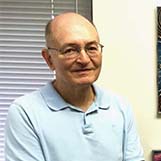
Jesse Anderson Retires Following 34-Year Career in the Department

As he finished his career in the Army with a posting at the old Walter Reed Hospital in Northwest Washington, Jesse James Anderson decided to enroll at the nearby University of Maryland in College Park in 1983. Ever industrious, he took two jobs: one as a carpenter in residential services, and another at the Stamp Student Union information desk. One day, in a Stamp elevator, a friend dared him to talk to a female student sharing the lift.  “And I did,” says Anderson, recalling the day he met his wife Danna.  “It worked out well for us.”

Danna Anderson studied in College Park for two years before transferring to the University of Maryland, Baltimore, to pursue her degree in medical technology. The couple moved to Charm City, where they have resided ever since. When she completed her practicum at Johns Hopkins University, Danna was immediately offered a staff position, and now supervises the Core Lab at JHU Hospital.

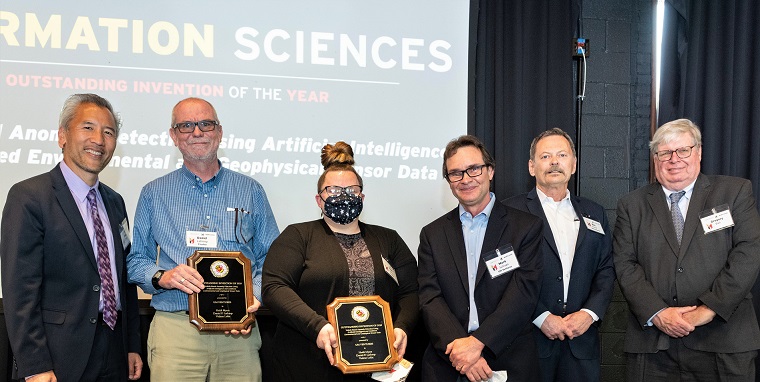
Despite the distance, Jesse Anderson chose to stick with UMD. He spotted and applied for a job in the physics machine shop, and was hired as a storekeeper under manager Frank Desrosier.  “I was studying electrical engineering and learning applied math, which made the shop stuff fun,” he said. “I was very interested in scientific methods and materials, and I learned a lot about metals.”  Over the course of a decade managing the Physics Material Store, he switched his studies to industrial technology, learning machining, drafting and lathe work, all of which he found intriguing and refreshing after his seven years in the Army, which were spent in somewhat monotonous finance and accounting work.Steve Rolston and Jesse Anderson at the 2018 staff awards.Steve Rolston and Jesse Anderson at the 2018 staff awards.

But military service had imparted meticulous record keeping habits that caught the attention of the physics purchasing manager, Camille Vogts. “I think she liked my paperwork,” chuckled Anderson. Vogts was often invited to vendor expos, which she regularly asked Anderson to attend. He recalls these outings as highlights of his UMD years, as they featured up-and-coming, whiz-bang technological developments in machining and laboratory devices. “Those shows were amazing to see,” Anderson recalls.

When an opening arose in the physics receiving office, personnel director Lorraine DeSalvo urged Anderson to apply. “I watched when he first arrived as the storekeeper in the shop,” said DeSalvo. “You just know when you see that sparkle in someone, that willingness and even eagerness to take on some new responsibilities.”

During his stint in receiving, Jesse and Danna enjoyed a four-week vacation, traveling to California to see Jesse’s brother. Upon his return, he found that business director Dean Kitchen had decided to expand his duties. “Dean said, ‘Well, if you’re good with receiving, you can likely handle purchasing, too,’” Anderson recalled.  And after the sudden death of purchasing manager Bob Dahms in 2013, Anderson’s purview expanded further.

From that time until his retirement in December 2021, Anderson faced a relentless workload that included the dizzying logistics of the 2014 move into the Physical Sciences Complex and the resultant need to coordinate purchasing, shipping and receiving for loading docks in separate buildings, ensuring a very busy life. And then, in March 2020, the campus abruptly ceased operations for all save a few staffers. Staying home was not an option for Anderson. During the COVID-19 shutdown, he continued to come to campus daily in support of the department.

“COVID was a lot,” Anderson said. “Managing the loading docks, sending up the mailed paychecks, dealing with the picked-up-in-person paychecks. Just a lot to manage.” Al Godinez, who staffed the Toll Building loading dock for many years, retired in December 2020. “Al urged me to consider retiring, too, but that would have been hard on the department,” Anderson said. And so he persevered for another year, until more normal operations were underway and a replacement could be hired.

For his efforts during the shutdown, Anderson received the first Lorraine DeSalvo Chair's Endowed Award for Outstanding Service, presented virtually by physics chair Steve Rolston in December, 2020.

“Jesse is amazing,” DeSalvo said. “He was always there, and has always gone above and beyond. I was so happy that he received the first DeSalvo Award.”  Anderson is the only physics employee to receive the department’s “outstanding service” staff award three times.

Reflecting upon his career, he reports no regrets, but a sense of appreciation. “It’s something to realize that the people you work with are the tops in their fields. It blows you away what people are doing,” Anderson said. “I enjoyed being familiar with the experiments, seeing the ingenuity involved. When you know the intent, helping with the supplying and the setting up and the installation is a thrill.”

Retirement is still a new sensation. Anderson finds the absence of a morning onslaught of anxious emails odd.  But he savored not having to face an icy I-95 when snow fell this winter. He enjoys seeing more of his daughter Jessica, who will soon finish her graduate degree in clinical psychology and already works as a social worker, doing home visits to assess children and to assist their parents. He is starting to digitize his vinyl record collection, and will soon enjoy a vacation with Danna to New Orleans. Also planned are trips to see family in Georgia, California and New York.Jesse Anderson and student employee Angela Madden at the 2005 staff awards.Jesse Anderson and student employee Angela Madden at the 2005 staff awards.

Throughout his 34 years in the department, Anderson was deeply appreciated for his even keel and reassuring demeanor. “We miss Jesse, because he was always such a tremendous person and colleague,” said Rolston. “I can’t recall ever seeing him frazzled or irritated in the least. But he richly deserves an excellent retirement. He did whatever was needed in the department, from filling dewars on the Toll loading dock to hand-delivering important mail. We can’t thank him enough.”

At a staff luncheon in December, Anderson’s colleagues recognized him with a Department of Physics purchase order for a happy and healthy retirement. Anderson expressed his gratitude and drew a laugh when noting, “I’ve spent more time with you than I have with anyone else in my life.” Anderson affirmed that he truly regards the physics department as family, meaning that at UMD he gained two: One begun in a momentous elevator ride, and one established through 34 years of camaraderie.   

Growing into a Physicist at UMD

Physics can sometimes come across as the business of cold, calculating geniuses. But it can often be joyful, fun, competitive, engaging and more. Physicists are normal people and each of them has a unique and evolving relationship with their discipline. 

University of Maryland physics graduate student Michael Winer has had a relationship with physics—and physics at UMD in particular—since he was a kid. He first came to UMD as a high school student pursuing his competitive spirit when physics was a fun challenge. Then over time, physics became something more nuanced for him. Now, he has returned to UMD to pursue physics as a career and is also helping introduce the joys of physics to a new generation of bright young minds.

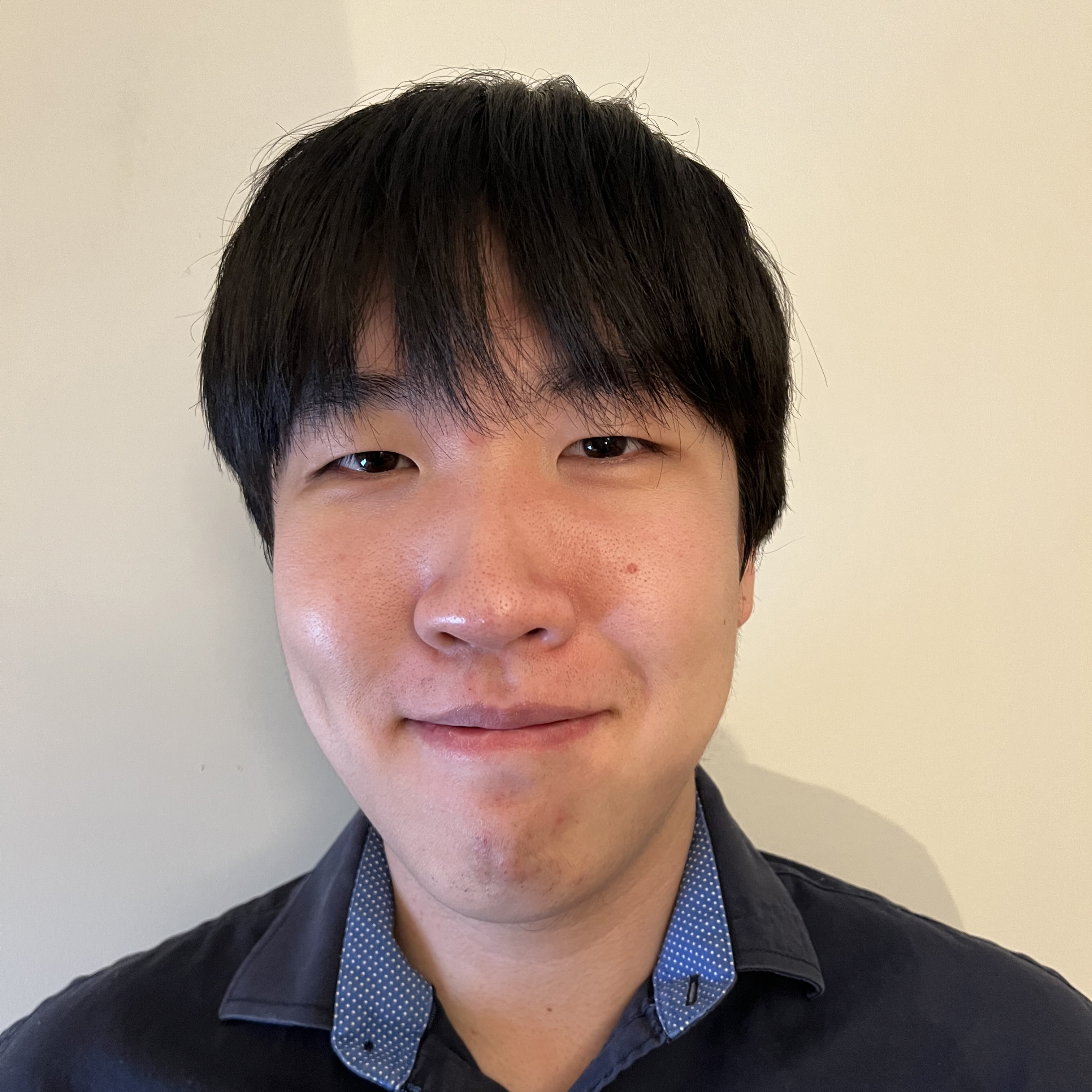
As a kid growing up in Maryland, Winer didn’t have an innate passion for physics. But he did have mathematical talent and a competitive streak. Before getting into physics, he started participating in math competitions when a family friend roped him into a middle school math competition.Michael Winer. Credit: Jess WinerMichael Winer. Credit: Jess Winer

“It was the best thing I've ever been badgered into,” Winer said. “I really liked it, but unfortunately I was not the best at math. So I had to sort of differentiate myself if you will and become the physics guy.”

Winer’s math skills led him to attend Montgomery Blair High School in Silver Spring, Maryland, which has a magnet program that offers accelerated courses in science, mathematics and computer science. There, he got his first taste of physics competitions. 

The tests that make up the U.S. Physics Olympiad were the most challenging Winer had ever taken, but his success on the tests in 10th grade—and then again in 11th grade—brought him to nearby UMD where he met several other promising young physics students from across the country. Each year (excepting virtual camps due to COVID-19) UMD hosts students at a training camp where they study physics and have a chance to make the U.S. International Physics Olympiad (IPhO) team.

“In 10th grade, I was really just happy to be there, and it was probably one of the best weeks of my life,” Winer said. “I was just enjoying basking in the glow of all these brilliant people and having all these interesting discussions and learning all these things. And then in 11th grade, I was much more focused on being one of the brightest kids there, making International Physics Olympiad, and then trying to get a gold medal at the International Physics Olympiad.”

In 10th grade, he also took the online course Exploring Quantum Physics with Victor Galitski, a Chesapeake Chair Professor of Theoretical Physics in the Department of Physics at UMD and a Fellow of the Joint Quantum Institute. Thanks to his positive experience with those two opportunities, Winer ended up reaching out to Galitski and arranging to work on a research project under his mentorship.

He studied how phonons—the quantum particle of sound—interact with electrons, a topic that is essential to understanding what makes superconductors work. That research experience was a radically new experience for Winer. 

He said that he likes to warn young people that research is a completely different beast from what they might be used to from homework or student competitions. 

“There are all sorts of differences,” Winer said. “Maybe you'll be able to solve this in two hours, maybe this will take 200 years, no one knows. And that's a lot of ambiguity, you don't know what you need to know, and you are not just allowed to—but almost always sort of required to—change the question as you're going. It's a completely different experience.” 

That early experience provided inspiration, and by working alongside graduate students, he got a glimpse into the future he is now living.

“By far the most valuable thing was not actually the research but sitting in a room full of grad students,” Winer said. “Sitting in a room with grad students, I think, gives you an insight into academia that just doing physics doesn't. I think you would expect it to sort of destroy the romanticized version I had in my head, but it did not. In fact, to this day, watching other people do physics is very motivating to me and reminds me how much I love doing physics.”

After this first experience with physics research, his passion for physics started yielding tangible rewards. In his sophomore year, he earned a silver medal at IPhO. And then after another summer working with Galitski, he won a first-place medal and $150,000 in the Intel Science Talent Search as a high school senior. 

“Both of those were very, very happy for me,” Winer said. “I did not think I would do well at the Intel contest and was wrong about that. What's interesting is I cared so much about Physics Olympiad. I spent years and years and years dreaming about Physics Olympiad whereas this research prize really just fell in my lap. Like, at no point in my life until it was announced that I had won did I think I would win.” 

After graduating high school and studying physics at MIT, Winer has returned to UMD as a graduate student to tackle much more substantial research. He is working on theories that describe some of the complex physics that play out inside of materials. Working under the mentorship of Galitski and Brian Swingle, an adjunct assistant professor of physics at UMD who is also an assistant professor at Brandeis University, Winer is studying spectral statistics—the distinctive signature that the energy levels of quantum objects collectively imprint on observable properties—in chaotic quantum systems. While it takes much longer to solve the problems he is tackling now, he said he still finds the same joy in learning new physics as he did in his first research experience and studying for the IPhO.

At UMD, Winer has helped mentor two Montgomery Blair students. He said that in addition to helping the students, these experiences have helped him understand his relationship with his own advisors by being on the other side of the table.

He has also given back to the IPhO program by being a coach who both helps write the tests used to select participants and also mentors the selected students. 

Winer said that while his participation as a student in the IPhO was probably helpful in getting to his current position, he thinks that an important part of the event is that it gives kids an opportunity to have fun. 

“Like a sailing club doesn't, you know, justify itself as creating passion for the all-important sailing industry, right?” Winer said. “They just say, ‘The kids are having fun. Let's help some kids have fun.’ And I think we can't forget that. Like, I was a kid, I had a lot of fun. It's good when kids have fun.”

Winer’s advice to any high school students considering studying physics is to try participating in the Physics Olympiad and, if possible, to look for research opportunities with professional physicists.

“You hopefully will discover you like it or at least have the potential to like it,” Winer said. “Then you will grow as a scientist over the course of that and over the course of your college research, and over the course of your grad school research.”

Story by Bailey Bedford

Related news stories: https://www.washingtonpost.com/local/education/montgomery-physics-phenom-tried-not-to-faint-as-he-won-national-award/2015/03/15/550d9bc4-c7e4-11e4-b2a1-bed1aaea2816_story.html

Thomas Ferbel, 1937- 2022

Thomas Ferbel, a UMD visiting professor since 2013, died at his home on Saturday, March 12. He was 84.

Ferbel was born in 1937 in Radom, Poland. During the tumult of World War II, he and his family endured exile in a Russian gulag and later, a camp for displaced persons in Stuttgart. Eventually, Ferbel arrived in New York and received a B.A. in Chemistry from Queens College, CUNY, and his and Ph.D. in Physics from Yale University (where his favorite professor was Bob Gluckstern, later the chancellor of this campus and a professor of physics).Thomas FerbelThomas Ferbel

After a postdoctoral appointment at Yale, Ferbel accepted a faculty position at the University of Rochester in 1965.  While there, he received an Alfred P. Sloan Fellowship, a John S. Guggenheim Fellowship and an Alexander von Humboldt Prize.

He was elected a Fellow of the American Physical Society in 1984, and served as the U.S. program manager for the Large Hadron Collider from 2004-08.

In 2020, Ferbel described both his early years and his life as a physicist as part of the American Institute of Physics Oral History project. The transcript is available here: https://www.aip.org/history-programs/niels-bohr-library/oral-histories/46304

Bennewitz Named Finalist for Hertz Fellowship

Elizabeth Bennewitz, a first-year physics graduate student at JQI and QuICS, has been named a finalist for a 2022 Hertz Fellowship. Out of more than 650 applicants, Bennewitz is one of 45 finalists with a chance of receiving up to $250,000 in support from the Fannie and John Hertz Foundation.

The fellowships provide up to five years of funding for recipients pursuing a Ph.D. The foundation seeks(link is external) individuals who intend to tackle “major, near-term problems facing society.”Elizabeth Bennewitz (credit:  Dan Spencer)Elizabeth Bennewitz (credit: Dan Spencer)

“This whole group of finalists have accomplished so much, and I’m very humbled to be among other people starting their Ph.D.s who are also pursuing big problems in science,” says Bennewitz. “I'm very honored to be part of this finalist group.”

Bennewitz is working with JQI and QuICS Fellow Alexey Gorshkov and is interested in researching large collections of interacting quantum particles—what scientists call many-body quantum systems. These systems are important to understanding cutting-edge physics and quantum computer technologies and can also be the basis of simulations that could provide insights into complex problems in physics, material science and chemistry.

“During my PhD, I want to develop tools and techniques that help harness the computational power of quantum devices in order to simulate these large quantum many-body systems,” Bennewitz says. “I’m excited to be pursuing this research at Maryland because of its commitment to quantum information and quantum computing research as well as its rich collaboration between theorists and experimentalists.”

Bennewitz is just at the beginning of her graduate student career, but she has already started investigating how quantum simulators might be used to understand the interactions of the particles that are responsible for holding the nuclei of atoms together.

“I'm very happy for Elizabeth, and I'm honored and excited that she chose to work with my group,” Gorshkov says.

An announcement of the winning fellows is expected to be made in May.

“I'm very thankful for all the opportunities I had before I got here,” Bennewitz says. “I would not be where I am today without the support and guidance I received from my professors and peers at Bowdoin College and Perimeter.”

Original story by Bailey Bedford: https://jqi.umd.edu/news/jqi-graduate-student-finalist-hertz-fellowship

Kollár Awarded Sloan Research Fellowship

Assistant Professor Alicia Kollár has been awarded a prestigious 2022 Sloan Research Fellowship. This award is given to early career researchers by the Alfred P. Sloan Foundation to recognize distinguished performance and the potential to make substantial contributions to their field. Each fellowship provides $75,000 to support the fellow’s research over two years.

Kollár will use the fellowship to support her research into creating new synthetic materials that are designed using quantum physics and applied mathematics. These synthetic materials can reveal physics that is difficult or impossible to observe in traditional materials.

“What really excites me about this award is to see support for the more interdisciplinary side of my research,” Kollár says. “My original background is in quantum physics and that's been where my grant support has come from so far, but this Sloan award is focused on looking at questions at the intersection of math and physics.”Alicia Kollár Alicia Kollár

This line of Kollár’s research uses mathematical tools based on the field of graph theory—the study of relationships between objects (in terms of a “graph” made of “vertices” that are connected by “edges”). Researchers use the tools to produce stripped down descriptions of materials in terms of just nodes and their connections—like if there is a connection where electrons can hop between specific points in a material. These descriptions don’t care about the exact distance between atoms or molecules or their precise orientation relative to each other but only about what connections exist between points. This approach is useful for identifying overarching features of different types of materials and is especially helpful in sorting out which material properties are derived from the basic connections being investigated, as opposed to those related to the quirks of a material’s particular components.

This mathematical perspective allows researchers, like Kollár, to design abstract connections that should produce unique properties, but it isn’t easy to then translate the idea on a page into a material that has the exact desired connections. Going from pure math to a real material is much harder than the reverse process of stripping details away from a well-studied material; to do so requires the exhaustive work of recognizing and juggling all the idiosyncrasies of real chemistry. The details of all the possible choices of atoms and how they interact and arrange themselves makes matching the elegant mathematical design to a physical material prohibitively challenging.

So instead Kollár has focused on synthetic materials made of circuits of resonators and superconducting qubits that house traveling microwaves. These circuits easily recreate the flexible connections of graph-theoretic descriptions and can let the complex physics play out, revealing features that current simulations can’t calculate. Essentially, Kollár can custom design the desired connections in a synthetic material and see if the results are interesting instead of going through the hassle of searching for a chemical structure that naturally has the connections every time she wants to do a new experiment. She has even been able to create connections that simulate a negatively curved space—a space impossible to create in the lab because they have “more space” than our normal space.

The insights from these synthetic materials have the potential to reveal new material behaviors and to give researchers a better understanding of how to best use graph-theoretic techniques.

Besides making these synthetic materials she is also working to push the mathematical side of this approach, including identifying new mathematical rules that govern one dimensional graphs that might provide insights into codes used in quantum computing.

 “This Sloan Fellowship will give my group the opportunity to really dig in to optimizing how synthetic materials are made in order to make them as versatile a tool as possible,” Kollár says.

The Sloan fellowships are awarded to untenured teaching faculty who work in the fields of chemistry, computer science, Earth system science, economics, mathematics, neuroscience, physics, or a related field. Candidates are nominated by their colleagues, and then fellows are selected by an independent committee of researchers in the relevant field based on the candidates’ “independent research accomplishments, creativity, and potential to become leaders in the scientific community through their contributions to their field,” according to the Sloan website. Other UMD winners this year are Lei Chen of mathematics and Pratyush Tiwary of chemistry/biochemisty and IPST. 

“Today’s Sloan Research Fellows represent the scientific leaders of tomorrow,” says Adam F. Falk, president of the Alfred P. Sloan Foundation. “As formidable young scholars, they are already shaping the research agenda within their respective fields—and their trailblazing won’t end here.”


Original story by Bailey Bedford: https://jqi.umd.edu/news/jqi-fellow-kollar-awarded-sloan-research-fellowship