Barkeshli Selected for Prestigious Simons Collaboration to Study Inner Workings of Artificial Intelligence

As artificial intelligence (AI) rapidly transforms everything from medicine to scientific research to creative fields, a fundamental question remains unanswered: How do AI systems actually work?  

AI models help diagnose diseases, discover new drugs, write computer code and generate images, yet scientists still don't fully understand the principles underlying their remarkable capabilities. Solving this ‘black box’ problem—where we can see AI's outputs but can’t fully comprehend its internal workings—has become more urgent as these systems become more deeply embedded in society.

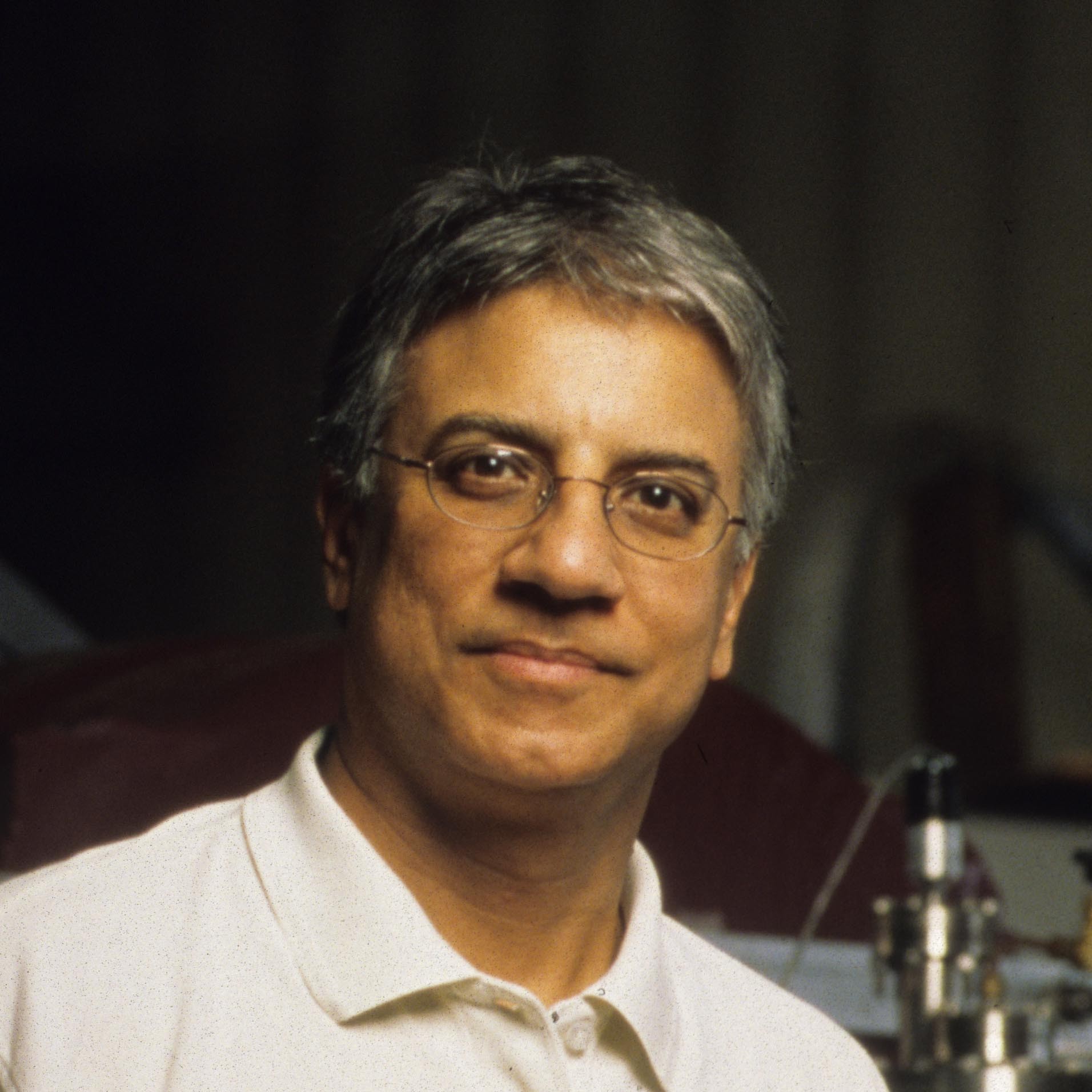
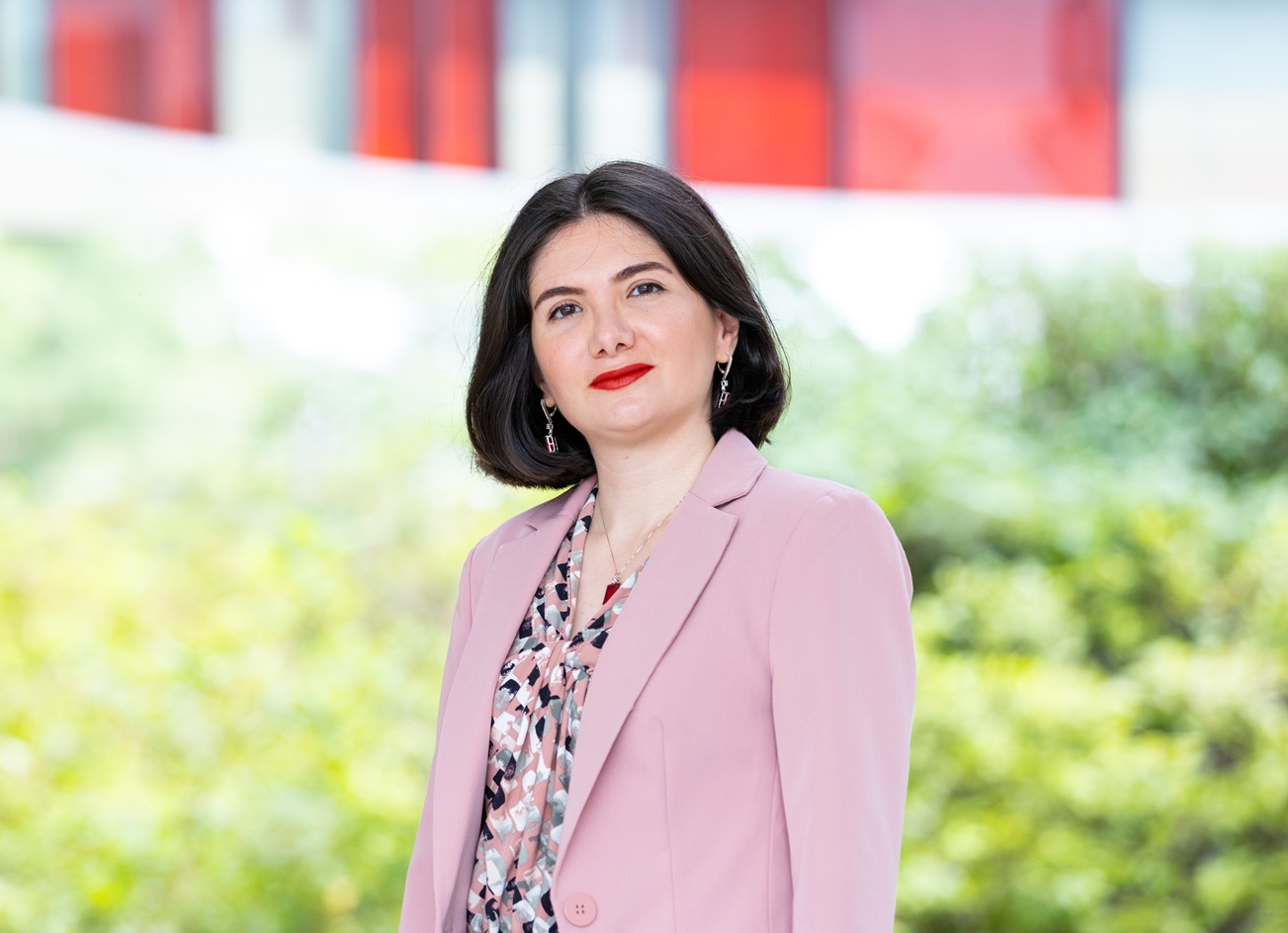
University of Maryland Physics Professor Maissam Barkeshli will help unravel that mystery. 

Barkeshli was one of 17 principal investigators recently chosen for the Simons Collaboration on the Physics of Learning and Neural Computation, an international research initiative that aims to investigate the complex inner workings of AI. The collaboration, which will receive $2 million annually for the next four years, brings together leading experts from physics, mathematics, computer science and neuroscience. The team will first identify key emerging phenomena in AI before isolating them and studying them systematically, forming smaller working groups to tackle specific questions, then combining their findings at the conclusion of the collaboration.

“Maissam exemplifies the intellectual agility we prize in our faculty,” said UMD Physics Chair and Professor Steven Rolston. “Originally hired for his work in condensed matter theory, he is pivoting to address the exciting and potentially impactful challenge of understanding why artificial intelligence models actually work, informed by the concepts of mathematical and statistical physics.”

At UMD, Barkeshli's primary research focuses on quantum many-body phenomena. He studies how collections of many particles like electrons in materials spontaneously organize into unusual or specific positions such as superconductors and quantum Hall systems. Such events are emergent phenomena, which occur when simple components interact to create behaviors that cannot be predicted from studying individual parts alone. 

“Fundamentally, the field is really about emergence,” Barkeshli noted. “It’s about understanding collective behavior that is qualitatively different when you go to different scales that you wouldn’t have seen at smaller scales.” 

For Barkeshli, intelligence and learning are forms of emergent phenomena as well. Just as billions of electrons can collectively create superconductivity, neural networks with billions of parameters somehow learn to reason and understand language. As he begins his collaboration with experts from multiple disciplines, Barkeshli believes the theoretical tools and perspectives that physicists have developed in understanding the natural world can help us understand how AI works as well.

“There are three core ingredients of AI systems that interact to produce intelligence: training data, neural network architecture and optimization algorithms that are used to train models,” Barkeshli explained. “There’s incredibly rich interaction between these ingredients, but they all act very differently between themselves and have their own peculiarities at the individual level. We don’t have a very good idea of how it all comes together or why it works so well.”

These interactions lead to even more mysteries. For example, Barkeshli noted that AI follows predictable “scaling laws.”

“As you increase the size of data, the network and the computing power spent on training, AI systems get better and better,” he said. “In some cases, they follow very predefined, almost law-like patterns, where they’re getting better in a very predictable way. This is an emergent phenomenon that isn’t understood very well that we hope to study.”

Current AI development relies heavily on trial and error, but Barkeshli’s work on emergent phenomena may be the key to answering fundamental questions—such as why the human brain can operate on about 20 watts of power, yet AI systems require much more energy to complete similar cognitive tasks. 

“People have been trying different ideas based on intuition, but a more systematic understanding of AI could unlock some useful capabilities, like bridging that efficiency gap between human brains and language models,” he explained. 

Although the Simons Collaboration will focus on the most fundamental aspects of AI systems, Barkeshli hopes that “peeking under the hood” will illuminate more profound applications for AI in everyday life. 

“There’s room for making immense improvements,” Barkeshli said. “With a deeper understanding of the fundamentals of AI, especially from a physicist’s point of view, we could come up with different kinds of curricula for data to train with, different kinds of architectures, different kinds of optimization algorithms—even entirely new paradigms that we haven’t thought of yet.”


Original story by Georgia Jiang: https://cmns.umd.edu/news-events/news/umd-physicist-selected-prestigious-simons-collaboration-study-inner-workings   


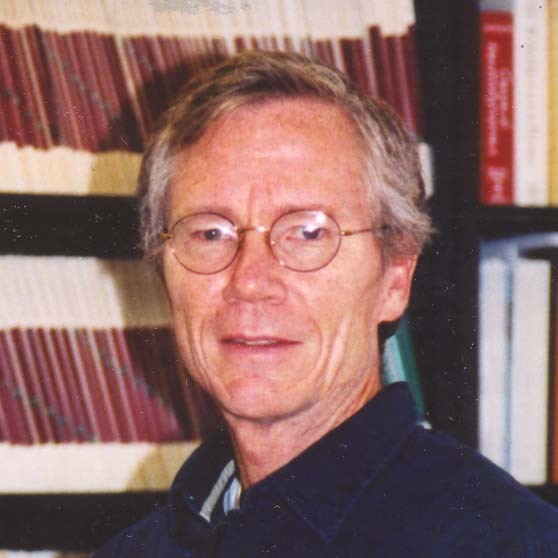
Chung Yun Chang (1929 - 2025)

Professor Emeritus Chung Yun Chang died on October 29, 2025, in San Diego, California. He was 95.

Prof. Chang was a native of rural Hunan, China. He received a bachelor’s degree at National Taiwan University and a Ph.D. at Columbia University in 1965.  

Prof. Chang joined the University of Maryland Physics department in the mid-1960s and worked with George Snow and Bob Glasser on the analysis of bubble chamber data. In those days almost the entire 4th floor of the Toll Physics Building consisted of bubble chamber scanning and measuring tables. Those were the days of establishing the properties of elementary particles that eventually led to the current Standard Model of Particle Physics. In the late 1960’s Prof. Chang and his coworkers worked on a Kp  Bubble Chamber exposure at Brookhaven National Lab to study decays and results that were inconsistent with an |ΔI| = ½ rule. The analysis of this exposure continued for a long time and the film existed at Maryland until the 1990’s when it was finally mined for its silver content.

With the advent of Fermilab, Prof. Chang and the Maryland group worked on a number of bubble chamber experiments at Fermilab. Fermilab experiment E2B was a hybrid spectrometer experiment with optical spark chambers measuring forward tracks produced by 100 Gev π− interactions in the Argonne 30” hydrogen bubble chamber. The spark chambers and the bubble chamber were triggered if two or more forward tracks were detected by dE/dx deposits in 3 independent scintillation counters, indicating the presence of a high multiplicity event. A hybrid triggered system avoided taking photos of uninteresting events. Profs. Chang, Snow and Glasser were joined by Phil Steinberg on this experiment.

Prof. Chang also worked with Prof. Steinberg on a Magnetized Beam Dump experiment at Fermilab looking for neutral heavy leptons at this time.

George Snow conceived of a search for Charm in the 15 foot Fermilab Bubble Chamber filled with deuterium before the discovery of the J/Ψ. Although the proposal was accepted it was delayed for many years. Prof. Chang and his coworkers did find several charm candidate events when the Bubble Chamber finally took data, but by then Charm was no longer just a conjecture. The Standard Model was on its way to being finalized.

After the discovery of the ϒ at Fermilab, and the proposal of QCD as the underpinning of the strong interactions, the Standard Model was heading towards completion. A set of experiments at DESY in Hamburg, Germany established the existence of the gluon, the particle that binds the quarks in strong interactions. Prof. Chang worked with Gus and Bice Zorn, Andris Skuja and Prof. Glasser on the PLUTO experiment at PETRA. PETRA was an e+e- collider. In 1979, three experiments at PETRA observed 3-particle jet events that were consistent with gluon production. Later the four experiments that operated at PETA were awarded a special EPS prize for the discovery and characterization of the gluon in strong interactions. PLUTO made many early contributions to our understanding of QCD and particle jet fragmentation as well as introducing the study of γγ production of hadrons.

After PLUTO on PETRA, Prof. Chang worked on the OPAL experiment at LEP (the Large Electron Positron collider) at CERN, Geneva, Switzerland.  While waiting for OPAL to begin data taking, Prof. Chang worked with Prof. Steinberg to find evidence for muonium and antimuonium oscillations. They did not find such evidence but for a while they had the best limits for non-existence of the phenomenon.

At LEP, Prof. Chang worked with Prof. Snow on the Z line-shape. The Maryland group had a major role in the OPAL experiment, leading the construction of the hadron calorimeter among other contributions. The analysis of the data from OPAL and other three experiments at the Z pole and later at higher energies led to the most precise measurements of the Electroweak interactions, validating the Standard Model predictions. Working with his students, Prof. Chang carried out studies of Z line-shape and its decay properties, and searches for new particles beyond the Standard Model.

After his retirement in 1997, Prof. Chang continued to do research, and had a deep interest in neutrino mixing studies. He was a Fellow of the American Physical Society.

Further information is posted here: https://www.dignitymemorial.com/funeral-homes/california/san-diego/pacific-beach-la-jolla-chapel/9560

Jaron E. Shrock Cited for Outstanding Thesis

Jaron E. Shrock has been named the 2025 recipient of the American Physical Society’s Marshall N. Rosenbluth Outstanding Doctoral Thesis Award. Shrock was cited for the first demonstration of multi-GeV laser wakefield acceleration using a plasma waveguide in an all-optical scheme.

After graduating from Swarthmore College in 2018, Jaron joined Distinguished University Professor Howard Milchberg’s Intense Laser Matter Interactions lab, where The accelerator in action. The accelerator in action. his research has focused on using lasers to accelerate electrons to multi-GeV energies over meter-scale distances. The laser intensities needed to do this are extremely high, and the key element that keeps them high is a plasma waveguide—first realized by Dr. Milchberg at the University of Maryland in the 1990’s. The plasma waveguide is analogous to a glass fiber optic cable, but it can confine laser intensities more than 7 orders of magnitude higher than would destroy the glass fiber. “Shrinking  a km-long machine to fit inside a university lab, manufacturing facility, or hospital has enormous potential to bring advanced light and radiation sources to a variety of applications, and provides a possible path towards developing compact high energy colliders for probing fundamental physics”, said Shrock.

Dr. Shrock defended his thesis, Multi-GeV Laser Wakefield Acceleration in Optically Generated Plasma Waveguides, in 2023, and has also been recognized with the John Dawson Thesis Prize at the 2025 Laser Plasma Accelerators Workshop in Ischia, Italy. The success of the Maryland platform for laser acceleration has led to its installation for collaborative experiments at leading high power laser facilities in the US and Europe. Jaron is continuing his work at UMD as a postdoc, both helping to install the UMD platform at the other facilities and doing experiments on UMd’s new 100 terawatt laser system.  In thinking about the future of this research, Jaron says “It’s been thrilling (and exhausting!) to see this platform grow from ideas developed by our small team to the centerpiece of international research efforts, and I believe we’re only scratching the surface of what these accelerators can do.”

Shrock (right) with Ela Rockafellow (left) installing a prototype 1 meter gas jet on the ALEPH laser system at Colorado State University.Shrock (right) with Ela Rockafellow (left) installing a prototype 1 meter gas jet on the ALEPH laser system at Colorado State University.Jaron is the fourth of Milchberg’s students to win the award, joining Thomas Clark (1999), Ki-Yong Kim (2004) and Yu-Hsin Chen (2012).

“Congratulations to Jaron for this outstanding achievement,” said physics chair Steve Rolston. “And kudos to Howard Milchberg for establishing such a constructive and creative atmosphere.”

The award consists of $2,000, a certificate, and an invitation to speak at the November 2025  Meeting of the APS Division of Plasma Physics (DPP) in Long Beach, California.

When Physics and Math Go Viral

With more viruses on Earth than stars in the observable universe, researchers like Raunak Dey may never run out of work.

As a physics Ph.D. student at the University of Maryland, Dey designs theoretical and mathematical models to understand how viruses interact in vast microbial communities. Part of the challenge is that these communities are crowded: A drop of water, a gram of soil and the human gut each harbors millions or billions of microbes and viruses.

“Some viruses can be useful, and some viruses can be harmful,” Dey said. “The beauty of it is that the knowledge you learn from these model systems can be translated into applications.”

Dey’s research intersects with a growing interest in phage therapy, which uses phages—viruses that only infect and replicate in bacterial cells—to treat antibiotic-resistant infections in humans. Much is still unknown about how phages interact with bacteria, but Dey’s problem-solving research fuses math, biology and computational physics to help demystify these processes.

“I don’t see myself as a physics or biology person,” Dey said. “I only see myself as a scientist who will use all the tools at our disposal to solve challenging problems.” Raunak Dey gesturing to a screen with information about one-step growth cruve data Raunak Dey's research aims to solve inverse and optimization problems using time series data. Image courtesy of Raunak Dey. Raunak Dey gesturing to a screen with information about one-step growth cruve data Raunak Dey's research aims to solve inverse and optimization problems using time series data. Image courtesy of Raunak Dey.

‘Mathematical modeling for good’

Driven by a desire to “understand how things work,” Dey enrolled in a dual bachelor’s and master’s degree program in physical sciences at the Indian Institute of Science Education and Research Kolkata, where he studied the random motions of tiny particles. 

After graduating in 2020, Dey moved to the U.S. to pursue a physics Ph.D. at Georgia Tech. As he watched the global pandemic unfold, he realized he wanted to conduct research that would directly benefit people.

“I had this philosophical feeling that the frontline workers were working so hard,” Dey said, “and I wanted to be doing research where I could apply my math aptitude to something useful to society.”

That’s when Dey started using “mathematical modeling for good” to study COVID-19 and its health implications with Joshua Weitz, now a professor in UMD’s Department of Biology and the University of Maryland Institute for Health Computing.

“The same class of models—compartmental differential equations—that we use to describe how viruses like COVID spread in the human population can be used to describe how viruses infect microbes,” Dey explained.

When Weitz moved to UMD in 2023, Dey followed. He wanted to continue what he started, and he also valued the interdisciplinary collaborations happening at UMD and the proximity to federal agencies like the National Institutes of Health. 

“I'm very appreciative of the environment UMD has provided,” Dey said. “There are a lot of projects with professors across departments that allowed me to make connections, which I'm grateful for.”

Capturing complexity

While working with Weitz, Dey also joined a national research project called the Simons Collaboration on Ocean Processes and Ecology (SCOPE) that’s aimed at understanding marine microbial processes. In his work with SCOPE, Dey helps quantify the role of phages in ocean ecosystems, where “good” viruses might help maintain balance by killing microbes and recycling nutrients back into the ocean.

Dey’s ongoing research uses models to understand how different species of viruses and microbes might interact—a process that reveals just how complex these microbial communities can be. 

“One of the fundamental things I’ve learned is that things in biology are really complicated, and we don’t know all the knobs that are turning to make something happen—you just see the output,” Dey said. “In our modeling framework, we try to capture a lot of these complexities, but it's not possible to capture everything.”

Viruses that live in the gut microbiome can be just as complex, but, if harnessed or managed well, can help to improve human health. As a fellow with UMD’s Center of Excellence in Microbiome Sciences, Dey said he’s looking for ways to “translate microbiome science research into policies” that will have an impact on people’s lives. 

In recognition of his research collaborations, Dey received the 2024 Thomas G. Mason Interdisciplinary Physics Fund award from UMD’s Department of Physics, which supports doctoral students who work with professors in other departments.

“Interdisciplinary science is necessary and hard, and sometimes it's frustrating because of how long it takes,” Dey said, “but it’s also rewarding and hopefully useful.”

Making science accessible

When he isn’t conducting research, Dey is passionate about making science accessible to more people—especially budding scientists in his home country, India.

“Many people from underrepresented communities never get a fair shot at trying science,” he said. “This needs to change, and I want to be a part of that positive change by reducing the barrier of entry for science.”

Over the last two years, Dey has been writing tutorials and gathering resources to provide a “good starting point” for students interested in learning more about his area of research. He also mentors other Ph.D. and undergraduate students, adding that this “fulfilling experience” has helped him tailor his teaching to different audiences.

In the future, Dey wants to dive deeper into biomedical research that leverages artificial intelligence (AI) and machine learning. While he doesn’t know exactly where his career might take him after graduation, he feels that UMD has prepared him for whatever challenges await. 

“I don’t know what the future holds, but I want to keep working on innovative and challenging problems that directly contribute to society,” Dey said. “That’s why I wanted to do science in the first place.”

Original story: https://cmns.umd.edu/news-events/news/raunak-dey-makes-physics-and-math-go-viral

UMD-Led Team Wins Major NSF Grant to Pioneer “High-Entropy” Quantum Materials

A University of Maryland–led research team has been awarded a highly competitive grant from the National Science Foundation’s Designing Materials to Revolutionize and Engineer our Future (DMREF) program to launch a bold new frontier in quantum materials science: High-Entropy Quantum Materials.

The $2 million, four-year award brings together scientists from UMD, the University of British Columbia (UBC), the University of North Texas (UNT), and national labs including NIST and the National High Magnetic Field Laboratory. Their mission is to harness “configurational entropy”—the mixing of multiple elements in a single crystal structure—to discover and control new forms of magnetism, superconductivity, and topological states of matter.

“Traditionally, materials scientists try to eliminate disorder when making new compounds,” said Johnpierre Paglione, UMD physics professor and director of the Maryland Quantum Materials Center, who is leading the project. “We’re flipping that idea around—embracing disorder as a way to stabilize entirely new phases of matter.”Approach of high entropy materials stabilization.Approach of high entropy materials stabilization.

High-entropy materials, first discovered in metallic alloys, contain five or more elements randomly distributed across a lattice site. This chemical “chaos” can give rise to surprising stability and novel properties. The UMD-UBC team aims to extend this concept into the quantum realm, coining a new class: High-Entropy Quantum Materials.

“As a chemist, I’m excited by the chance to explore how we can use entropy as a new design principle for building quantum materials,” said co-lead Efrain Rodriguez, UMD professor of chemistry and biochemistry and co-lead on the project. “By mixing multiple elements into a single structure, we’re creating an almost limitless playground for discovering unexpected electronic and magnetic behaviors. It’s a fundamentally new way to think about how chemistry can drive quantum science forward.”

The project will integrate theory, machine learning, and high-throughput synthesis to rapidly identify promising compounds, guided by the AFLOW computational platform and sped up by the use of combinatorial thin-film libraries. “This award allows us to couple cutting-edge computation with rapid experimentation, giving us a chance to accelerate discovery on an unprecedented scale,” said Ichiro Takeuchi, UMD materials scientist and co-lead on the project.

Beyond research, the team will contribute to quantum workforce development by expanding UMD’s Quantum Materials Winter School and Machine Learning for Materials Boot Camp, training the next generation of scientists in synthesis, computation, and quantum technologies.

The collaboration also includes building a public data repository in collaboration with the NSF-funded UC Santa Barbara Quantum Foundry to share results with the broader scientific community, amplifying the project’s impact through the Materials Genome Initiative.

“With this effort, we’re opening a whole new landscape for discovery,” said Paglione. “High-entropy quantum materials could unlock fundamental properties and quantum technologies we haven’t even imagined yet—we are excited to launch this new field of research.”