• Home
  • About Us
    • Physics Administration
    • Directions
    • Awards
    • Student Awards
    • Make a Donation
    • News
      • Research News
      • Department News
      • Newsletters
    • PTK Policy
  • People
    • All
    • Faculty
      • Current
      • Emeritus
      • Adjunct
      • Affiliate
      • Research Professors
    • Research Scientists
    • Postdocs
    • Staff
    • Lecturers
    • Visitors
    • Graduate Students
  • Research
    • Research Areas
      • AI and Physical Sciences
      • Astro Metrology
      • Atomic, Molecular & Optical
      • Biophysics
      • Chemical Physics
      • Condensed Matter Experiment
      • Condensed Matter Theory
      • Cosmic Ray Physics
      • Elementary Particles
      • Gravitation Experiment
      • Gravitational Theory
      • High Energy Physics
      • Nonlinear Dynamics, Chaos and Complex Systems
      • Nuclear Physics
      • Particle Astrophysics
      • Physics Education Research
      • Plasma Physics
      • Plasma Theory
      • Quantum Science and Technology
      • Quarks, Hadrons and Nuclei
      • Space Physics
    • Centers & Institutes
  • Academics
    • OSES Home (Student Services)
    • OSES News
    • Undergraduate Program
      • Prospective Students
      • Apply Now
      • Degree Requirements and Policies
      • Scholarships
      • Undergraduate Research
      • Advising
      • Undergraduate Forms
      • Undergraduate Events
      • Departmental Honors
      • Society of Physics Students
      • FAQ
      • Undergraduate Student Committee
    • Graduate Program
      • Prospective Students
      • Open House
      • Degree Requirements
      • Graduate Resources
      • Deadlines and Forms
      • PhD Defenses
        • PhD Defenses 2026
        • PhD Defenses 2025
        • PhD Defenses 2024
        • PhD Defenses 2023
        • PhD Defenses 2022
        • PhD Defenses 2021
        • PhD Defenses 2020
        • PhD Defenses 2019
        • PhD Defenses 2018
        • PhD Defenses 2017
        • PhD Defenses 2016
      • Events
      • Scholarships & Awards
      • Qualifier
      • Graduate Student Organizations
      • FAQ
    • Student Opportunities
      • GRAD-MAP
      • Graduate Student Organizations
      • Outreach Volunteering
      • Society of Physics Students
      • NSF S-STEM Program
      • Undergraduate Research
      • Women in Physics
      • Undergraduate Quantum Association
    • Courses
    • Academic Support
    • NSF S-STEM Program
    • Teaching Assistants
  • Events
    • Calendar
    • Physics Colloquia
    • W.J. Carr Lecture
    • Research Interaction Team (RIT) Math/Physics
    • Mechanick Quantum Biology Lecture
    • Irving and Renee Milchberg Endowed Lectureship
    • Charles W. Misner Endowed Lectureship in Gravitational Physics
    • John S. Toll Endowed Lecture
    • Prange Prize Lecture
    • Maryland Day
    • Outreach
      • Outreach Home
      • Physics is Phun
      • Discovery Days
    • Summer Programs
      • Physics Makers Camp
      • Physics of Quidditch
      • Science Discovery Camp
      • Advanced Physics Summer Program
      • Toolkit for Success
    • CUWiP
    • Vortex Makerspace
    • QURiSE Conference
  • Services
    • Building Access Requests
    • Computing Services
    • Conference Room Reservations
    • Department Operations Directory
    • Electronic and Mechanical Development
    • Hiring Procedures
    • Lecture Demo
    • Mental Health Resources
    • Parking
    • Physics Ombudspersons
    • Printing Services
      • Poster Print Request
    • Proposal Submissions
    • Purchase Order
    • Suggestion Box
    • Textbook Information
  • Give
  1. Home
  2. About Us
  3. News

Written on 07 April 2025. Posted in Department News.

Moille Awarded Distinguished Research Scientist Prize

Associate Research Scientist Grégory Moille has received the Distinguished Research Scientist Prize from the College of Computer, Mathematical and Natural Sciences at the University of Maryland. The award comes with a $5,000 prize and celebrates his research excellence. 

“I'm deeply honored and grateful for this recognition,” Moille says. “While it's an individual award, what it really highlights for me is the collaborative environment that makes our work possible. None of this meaningful science would happen without the talented colleagues I work with every day. This award inspires me to keep pushing forward with our research.”Grégory Moille and CMNS Dean Amitabh VarshneyGrégory Moille and CMNS Dean Amitabh Varshney

Moille works with JQI Fellow Kartik Srinivasan. His current research investigates the ways that light waves interact with matter and can be harnessed for practical applications. In particular, he is investigating how light behaves in microresonators—racetracks about as wide as a human hair—where light can circulate many times and create powerful interactions. These tiny devices offer an opportunity to study new physics and develop new measurement devices, especially smaller optical-atomic clocks that could help improve GPS and other ultra-precision timing applications. 


Original story by Bailey Bedford: https://jqi.umd.edu/news/jqi-researcher-awarded-distinguished-research-scientist-prize

Written on 07 April 2025. Posted in Department News.

Breakthrough Prize Awarded to CERN Experiments

On April 5, 2025, the CMS, LHCb, ALICE and ATLAS collaborations at the Large Hadron Collider at CERN were honored with the Breakthrough Prize in Fundamental Physics by the Breakthrough Prize Foundation. The prize is awarded to the four collaborations, which unite thousands of researchers from more than 70 countries, and concerns the papers authored based on LHC Run-2 data up to July 2024. It was received by the spokespersons who led the collaborations during that time. 

The prize was awarded to the collaborations for their “detailed measurements of Higgs boson properties confirming the symmetry-breaking mechanism of mass generation, the discovery of new strongly interacting particles, the study of rare processes and matter-antimatter asymmetry, and the exploration of nature at the shortest distances and most extreme conditions at CERN’s Large Hadron Collider”.

“I am extremely proud to see the extraordinary accomplishments of the LHC collaborations honoured with this prestigious Prize,” said Fabiola Gianotti, Director-General of CERN. “It is a beautiful recognition of the collective efforts, dedication, competence and hard work of thousands of people from all over the world who contribute daily to pushing the boundaries of human knowledge.”

Following consultation with the experiments’ management teams, the Breakthrough Prize Foundation will donate the $3 million Prize to the CERN & Society Foundation. The Prize money will be used to offer grants for doctoral students from the collaborations’ member institutes to spend research time at CERN, giving them experience in working at the forefront of science and new expertise to bring back to their home countries and regions.

Many current and past UMD physicists have contributed to the CMS and LHCb experiments. During run 2, Alberto Belloni was project leader for the CMS HCAL, and Sarah Eno was USCMS Collaboration board deputy chair. 

ATLAS and CMS are general-purpose experiments, which pursue the full programme of exploration offered by the LHC’s high-energy and high-intensity proton and ion beams. They jointly announced the discovery of the Higgs boson in 2012 and continue to investigate its properties.

"This prize recognises the collective vision and monumental effort of thousands of ATLAS collaborators worldwide", says ATLAS spokesperson Stephane Willocq. "Their talent and dedication, and the support of our public funding agencies, enabled the scientific breakthroughs that are being celebrated today. These results have transformed our understanding of the Universe at the most fundamental level.”

"CMS is deeply honoured to receive this prestigious prize,” said CMS spokesperson Gautier Hamel de Monchenault. “Through continuous innovation in exploiting the data from the Large Hadron Collider over the past fifteen years, the CMS collaboration is conducting a thorough characterisation of the Higgs boson, exploring the electroweak scale and beyond and probing the hot, dense state of nuclear matter that prevailed in the early Universe.”

ALICE studies quark-gluon plasma, a state of extremely hot and dense matter that existed in the first microseconds after the Big Bang, while LHCb explores minute differences between matter and antimatter, violation of fundamental symmetries and the complex spectra of composite particles (“hadrons”) made of heavy and light quarks, among other things.

“The ALICE collaboration is honoured to receive the Breakthrough Prize for the investigation of the properties of the hottest and densest matter available in a laboratory, quark-gluon plasma”, says ALICE spokesperson Marco Van Leeuwen. “The new grants funded through this prize will contribute to training the next generation of ALICE scientists.”

"The award of the 2025 Breakthrough Prize is a great honour for the LHCb collaboration. It underlines the importance of the many measurements made by the LHCb experiment in flavour physics and spectroscopy through the exploration of subtle differences between matter and antimatter and the discovery of several new heavy quark hadrons”, says LHCb spokesperson Vincenzo Vagnoni.

By performing these extraordinarily precise and delicate tests, the LHC experiments have pushed the boundaries of knowledge of fundamental physics to unprecedented limits. They will continue to do so with the upcoming upgrade of the Large Hadron Collider, the High-Luminosity LHC, which aims to ramp up the performance of the LHC, starting in 2030, in order to increase the potential for discoveries.


Original story: https://home.cern/news/press-release/knowledge-sharing/lhc-experiment-collaborations-cern-receive-breakthrough-prize


Written on 31 March 2025. Posted in Department News.

Sclafani Cited for Dissertation Work

Post-doctoral Associate Stephen Sclafani has been selected for the American Physical Society’s Ceclia Payne-Gaposchkin Doctoral Dissertation Award, which recognizes doctoral thesis research in astrophysics and encourages effective written and oral presentation of research results. Steve Sclafani at the South Pole. Steve Sclafani at the South Pole.
 
Sclafani was cited for performing the first observation of diffuse high-energy neutrinos from our Galaxy using the IceCube Neutrino Observatory's cascade data stream in a novel approach to mitigate high backgrounds and for the effective use of Machine Learning in realizing this observation.
 
Sclafani joined UMD in 2023, after receiving his doctorate at Drexel University. He works with the UMD particle astrophysics group on the IceCube experiment, a massive cosmic neutrino detector at the South Pole responsible for breakthroughs including the 2024 observation of  tau neutrinos and the recent detection of extremely high-energy neutrinos.  
 

Members of the UMD group include Brian Clark, Kara Hoffman, Greg Sullivan, Erik Blaufuss, Michael Larson, Rachel Procter-Murphy, Aishwarya Vijai, Taylor St Jean, Shannon Gray, Ergis Shaini, Zoe Brunton, Rohan Panchwagh and Santiago Sued. 

More information about Sclafani's work can be found on the Drexel University College of Arts and Sciences website: https://drexel.edu/coas/news-events/news/2025/March/physics-alum-awarded-for-icecube-research/

Photos courtesy of Steve Sclafani

Steve Sclafani discusses his work.Steve Sclafani discusses his work.

Written on 25 March 2025. Posted in Research News.

A New Piece in the Matter–Antimatter Puzzle

On March 24, 2025 at the annual Rencontres de Moriond conference taking place in La Thuile, Italy, the LHCb collaboration at CERN reported a new milestone in our understanding of the subtle yet profound differences between matter and antimatter. In its analysis of large quantities of data produced by the Large Hadron Collider (LHC), the international team found overwhelming evidence that particles known as baryons, such as the protons and neutrons that make up atomic nuclei, are subject to a mirror-like asymmetry in nature’s fundamental laws that causes matter and antimatter to behave differently. The discovery provides new ways to address why the elementary particles that make up matter fall into the neat patterns described by the Standard Model of particle physics, and to explore why matter apparently prevailed over antimatter after the Big Bang.View of the LHCb experiment in its underground cavern (image: CERN)  View of the LHCb experiment in its underground cavern (Credit: CERN)View of the LHCb experiment in its underground cavern (image: CERN) View of the LHCb experiment in its underground cavern (Credit: CERN)

First observed in the 1960s among a class of particles called mesons, which are made up of a quark–antiquark pair, the violation of “charge-parity (CP)” symmetry has been the subject of intense study at both fixed-target and collider experiments. While it was expected that the other main class of known particles – baryons, which are made up of three quarks – would also be subject to this phenomenon, experiments such as LHCb had only seen hints of CP violation in baryons until now.

“The reason why it took longer to observe CP violation in baryons than in mesons is down to the size of the effect and the available data,” explains LHCb spokesperson Vincenzo Vagnoni. “We needed a machine like the LHC capable of producing a large enough number of beauty baryons and their antimatter counterparts, and we needed an experiment at that machine capable of pinpointing their decay products. It took over 80 000 baryon decays for us to see matter–antimatter asymmetry with this class of particles for the first time.”

Particles are known to have identical mass and opposite charges with respect to their antimatter partners. However, when particles transform or decay into other particles, for example as occurs when an atomic nucleus undergoes radioactive decay, CP violation causes a crack in this mirror-like symmetry. The effect can manifest itself in a difference between the rates at which particles and their antimatter counterparts decay into lighter particles, which physicists can log using highly sophisticated detectors and data analysis techniques. 

The LHCb collaboration observed CP violation in a heavier, short-lived cousin of protons and neutrons called the beauty-lambda baryon Λb, which is composed of an up quark, a down quark and a beauty quark. First, they sifted through data collected by the LHCb detector during the first and second runs of the LHC (which lasted from 2009 to 2013 and from 2015 to 2018, respectively) in search of the decay of the Λb particle into a proton, a kaon and a pair of oppositely charged pions, as well as the corresponding decay of its antimatter counterpart, the anti-Λb. They then counted the numbers of the observed decays of each and took the difference between the two.

The analysis showed that the difference between the numbers of Λb and anti-Λb decays, divided by the sum of the two, differs by 2.45% from zero with an uncertainty of about 0.47%. Statistically speaking, the result differs from zero by 5.2 standard deviations, which is above the threshold required to claim an observation of the existence of CP violation in this baryon decay.

While it has long been expected that CP violation exists among baryons, the complex predictions of the Standard Model of particle physics are not yet precise enough to enable a thorough comparison between theory and the LHCb measurement.

Perplexingly, the amount of CP violation predicted by the Standard Model is many orders of magnitude too small to account for the matter–antimatter asymmetry observed in the Universe. This suggests the existence of new sources of CP violation beyond those predicted by the Standard Model, the search for which is an important part of the LHC physics programme and will continue at future colliders that may succeed it.

“The more systems in which we observe CP violations and the more precise the measurements are, the more opportunities we have to test the Standard Model and to look for physics beyond it,” says Vagnoni. “The first ever observation of CP violation in a baryon decay paves the way for further theoretical and experimental investigations of the nature of CP violation, potentially offering new constraints for physics beyond the Standard Model.”

The UMD members of the LHCb collaboration include professors Hassan Jawahery, Manuel Franco Sevilla and Phoebe Hamilton; postdoctoral associates Christos Hadjivasiliou, Lucas Meyer Garcia, and Parker Gardner; graduate research assistants Alex Fernez, Emily Jiang and Elizabeth Kowalczyk and undergraduate student Othello Gomes.

 “I congratulate the LHCb collaboration on this exciting result. It again underlines the scientific potential of the LHC and its experiments, offering a new tool with which to explore the matter–antimatter asymmetry in the Universe,” says CERN Director for Research and Computing, Joachim Mnich.

Written on 06 March 2025. Posted in Department News.

Senior Physics Major Becomes an Antarctic Ice Quake Detective

When senior physics major Zoe Schlossnagle arrived at the University of Maryland in fall 2021, she never could have imagined the opportunities she would seize.

“I was sure that I was going to receive a vigorous physics education, of course,” Schlossnagle said. “But I also ended up with these amazing, wildly different experiences that use my physics background in a way that goes beyond most normal classroom settings.”

Schlossnagle lugged around a sledgehammer to conduct ground tests on land degradation near the Anacostia River, trekked through the oppressive California summer heat—with highs of 115 degrees Fahrenheit—to examine mysterious landforms, and studied precursor solar flares from deep in space.

But her most recent research project truly captured her imagination: analyzing seismic activity in the ice sheets of Antarctica, one of the most remote places on Earth.

“I study Antarctic ice quakes, which are seismic events similar to earthquakes that happen in the ice,” Schlossnagle explained. “Those giant glaciers and ice shelves are usually pretty mysterious because we usually can’t physically see or access them in their entirety. Ice quakes let us ‘see’ their internal structure and dynamics. Studying them is crucial because ice instability can lead to sea-level rise, irreversible ice sheet collapse and the destruction of coastal communities and ecosystems.”

Zoe Schlossnagle presenting moment tensor research at American Geophysical Union, Dec 2024.Zoe Schlossnagle presenting moment tensor research at American Geophysical Union, Dec 2024.Schlossnagle joined Associate Professor of Geology Mong-han Huang’s Active Tectonics Laboratory in 2024 to understand how ice moves based on seismic waves. The project began the year before when a team of researchers, including Huang, deployed and retrieved a set of seismometers (instruments that respond to ground displacement and shaking) on the Ross Ice Shelf, the largest ice shelf in Antarctica. The waves captured by the seismometers reflect and refract based on the material they travel through, which allows researchers to image the immediate subsurface without excavation.

“I’m working on finding moment tensor solutions, which are mathematical ways to visualize and understand the forces that create earthquakes, for very low magnitude ice quakes,” Schlossnagle said. “Knowing what direction ice is slipping in—up and down, left to right—and where a quake’s focal point is can help us calculate things like where an ice shelf will be unstable or even how long we have until the sea level reaches a certain point.”

Though she does most of her work in Huang’s lab on campus, Schlossnagle said that her physics training has been invaluable to her research. Schlossnagle’s problem-solving mindset and the math skills developed in her physics studies helped her approach the challenges of dealing with massive quantities of data. In particular, she said PHYS 401: Quantum Physics and PHYS 404: Introduction to Thermodynamics and Statistical Mechanics played important roles in her research.

“Like quantum physicists, seismologists look at waves all day long,” Schlossnagle joked. “Having my physics background and learning how to apply those skills has been tremendously helpful. This work is extremely interdisciplinary and it’s definitely reflected in the people I work with—we’re all contributing what we know from different fields, from physics to geology to climate science, to solve mysteries hidden in the ice.”

Giving back to the community

Schlossnagle’s desire to give back to the “community that sparked [her] passion for research and problem-solving” led to a collaboration with Associate Research Professor of Physics Chandra Turpen. Together, they developed an extensive survey—inspired by the research-based approach to mental health taken by the UMD Physics Graduate Student Mental Health Task Force—to identify the unique challenges faced by undergraduates in STEM.

Schlossnagle said the survey explores everything from effective classroom practices for professors to helpful study techniques for students. She and Turpen hope that as they learn more about what undergraduate students experience in their studies, they can help bridge the gap between students and professors.Zoe Schlossnagle doing field work in California.Zoe Schlossnagle doing field work in California.

“Zoe has demonstrated excellent leadership skills and a commitment to transformative change in STEM higher education,” Turpen said. “I’m confident that she will continue to conduct innovative research, contribute to building inclusive research groups and positively shape the experiences of students around her.”

As her senior year draws to a close, Schlossnagle plans to continue her work on unraveling the mysteries of Earth’s frozen frontiers. She will pursue a Ph.D. in cryosphere geophysics in the fall, with a focus on improving ice sheet models and gaining new insight into just how quickly sea levels are changing.

“I think all my academic and extracurricular goals trace back to tackling problems that impact all of us universally,” Schlossnagle said. “And to me, that means we need interdisciplinary solutions from everyone as well.”


More Articles …

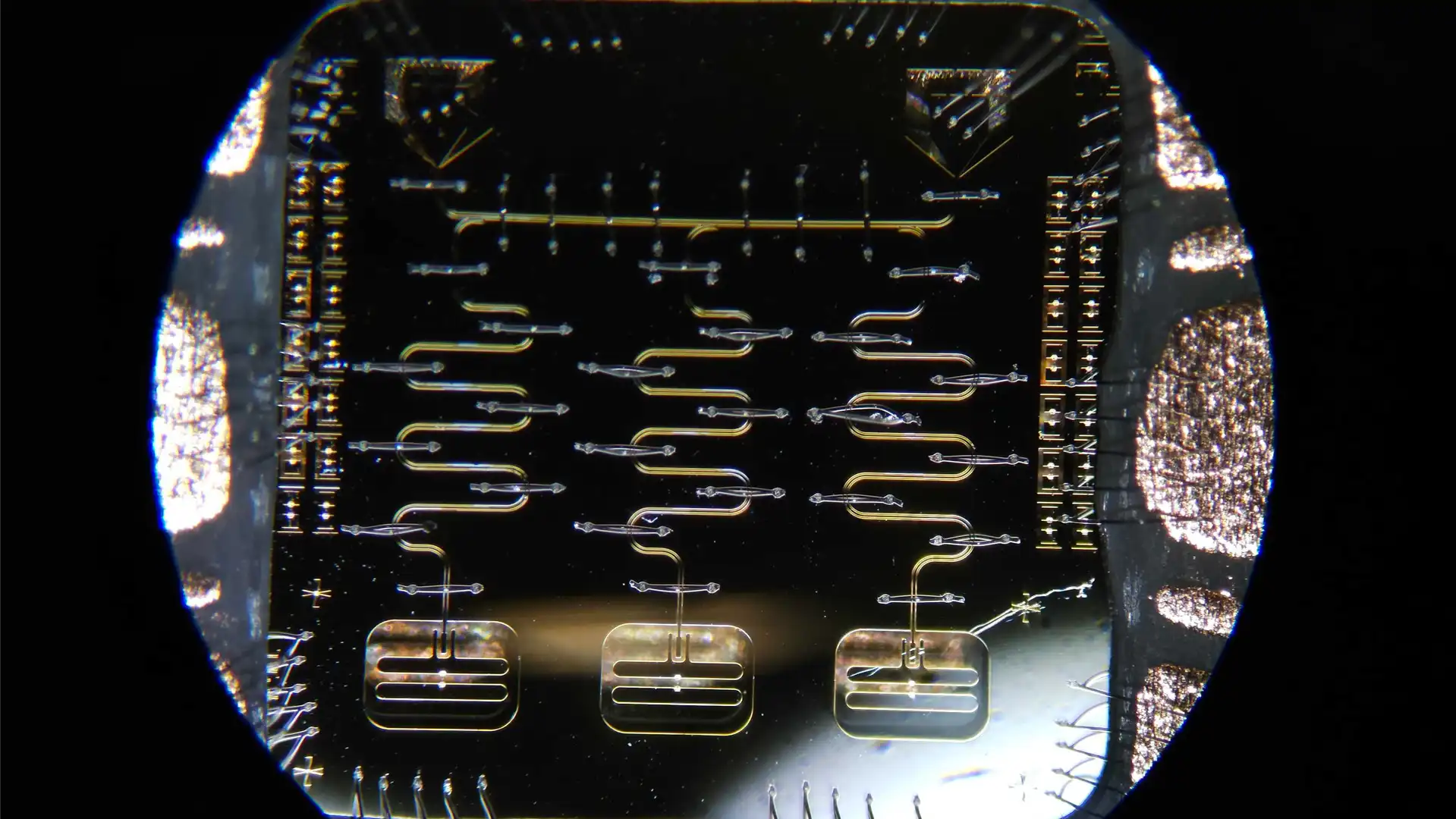
  1. Building an Error-Creating Quantum Computer
  2. Mapping Maryland’s Methane: UMD Initiative Takes Flight
  3. Researchers Play a Microscopic Game of Darts with Melted Gold
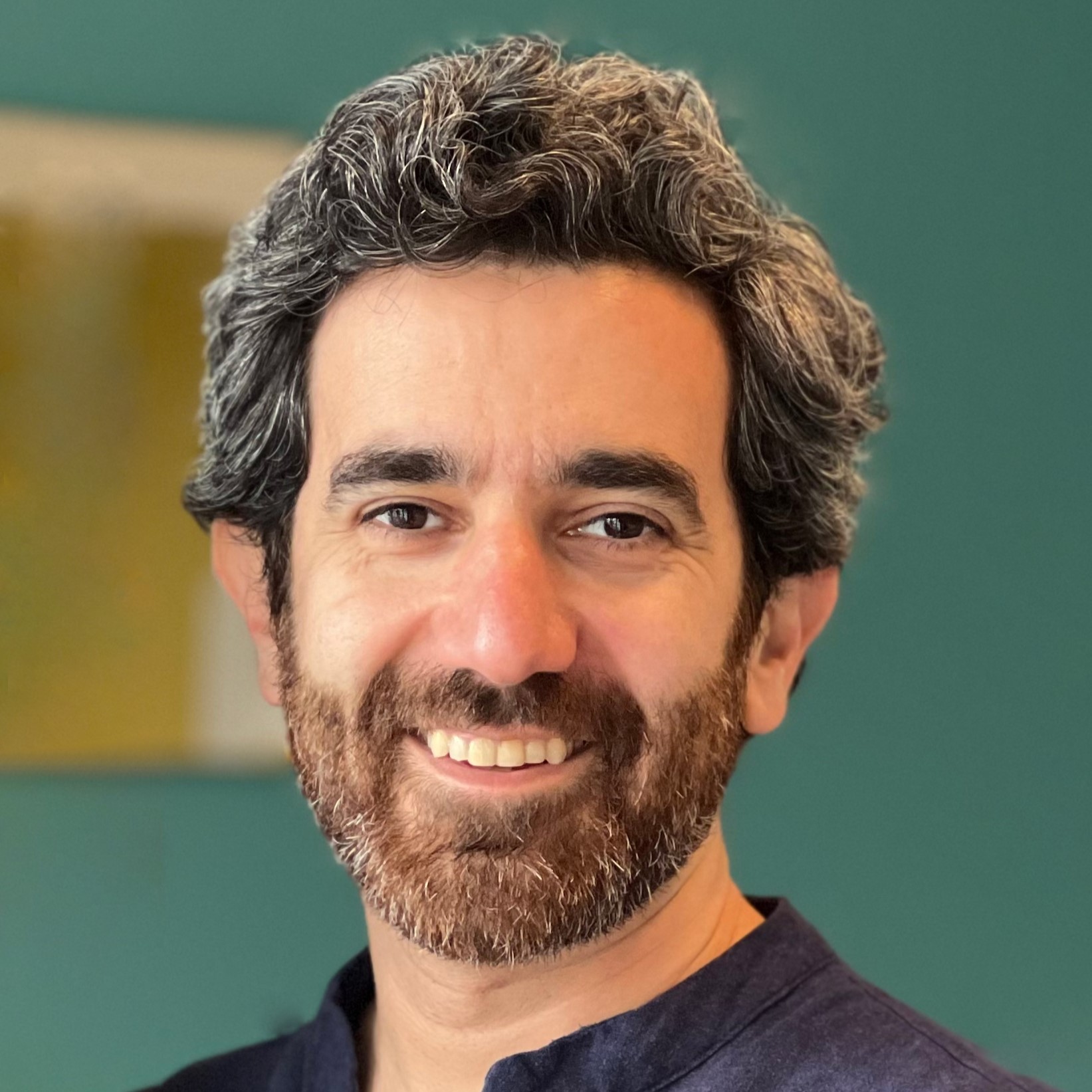
  4. Norbert M. Linke to Return to UMD

Page 16 of 203

  • 11
  • 12
  • 13
  • 14
  • 15
  • 16
  • 17
  • 18
  • 19
  • 20
  • Physics Administration
  • Directions
  • Awards
  • Student Awards
  • Make a Donation
  • News
    • Research News
    • Department News
    • Newsletters
  • PTK Policy

College and Department Links

Department of Physics

Physical Sciences Complex
4296 Stadium Dr
College Park, MD 20742
Phone: 301.405.3401

Information

  • Campus Directory
  • Undergraduate Research
  • Scholarships
  • Prospective Undergraduates
  • Directions & Transit
  • Web Accessibility
© 2026 University of Maryland - Department of Physics
Top
  • Home
  • About Us
    • Physics Administration
    • Directions
    • Awards
    • Student Awards
    • Make a Donation
    • News
      • Research News
      • Department News
      • Newsletters
    • PTK Policy
  • People
    • All
    • Faculty
      • Current
      • Emeritus
      • Adjunct
      • Affiliate
      • Research Professors
    • Research Scientists
    • Postdocs
    • Staff
    • Lecturers
    • Visitors
    • Graduate Students
  • Research
    • Research Areas
      • AI and Physical Sciences
      • Astro Metrology
      • Atomic, Molecular & Optical
      • Biophysics
      • Chemical Physics
      • Condensed Matter Experiment
      • Condensed Matter Theory
      • Cosmic Ray Physics
      • Elementary Particles
      • Gravitation Experiment
      • Gravitational Theory
      • High Energy Physics
      • Nonlinear Dynamics, Chaos and Complex Systems
      • Nuclear Physics
      • Particle Astrophysics
      • Physics Education Research
      • Plasma Physics
      • Plasma Theory
      • Quantum Science and Technology
      • Quarks, Hadrons and Nuclei
      • Space Physics
    • Centers & Institutes
  • Academics
    • OSES Home (Student Services)
    • OSES News
    • Undergraduate Program
      • Prospective Students
      • Apply Now
      • Degree Requirements and Policies
      • Scholarships
      • Undergraduate Research
      • Advising
      • Undergraduate Forms
      • Undergraduate Events
      • Departmental Honors
      • Society of Physics Students
      • FAQ
      • Undergraduate Student Committee
    • Graduate Program
      • Prospective Students
      • Open House
      • Degree Requirements
      • Graduate Resources
      • Deadlines and Forms
      • PhD Defenses
        • PhD Defenses 2026
        • PhD Defenses 2025
        • PhD Defenses 2024
        • PhD Defenses 2023
        • PhD Defenses 2022
        • PhD Defenses 2021
        • PhD Defenses 2020
        • PhD Defenses 2019
        • PhD Defenses 2018
        • PhD Defenses 2017
        • PhD Defenses 2016
      • Events
      • Scholarships & Awards
      • Qualifier
      • Graduate Student Organizations
      • FAQ
    • Student Opportunities
      • GRAD-MAP
      • Graduate Student Organizations
      • Outreach Volunteering
      • Society of Physics Students
      • NSF S-STEM Program
      • Undergraduate Research
      • Women in Physics
      • Undergraduate Quantum Association
    • Courses
    • Academic Support
    • NSF S-STEM Program
    • Teaching Assistants
  • Events
    • Calendar
    • Physics Colloquia
    • W.J. Carr Lecture
    • Research Interaction Team (RIT) Math/Physics
    • Mechanick Quantum Biology Lecture
    • Irving and Renee Milchberg Endowed Lectureship
    • Charles W. Misner Endowed Lectureship in Gravitational Physics
    • John S. Toll Endowed Lecture
    • Prange Prize Lecture
    • Maryland Day
    • Outreach
      • Outreach Home
      • Physics is Phun
      • Discovery Days
    • Summer Programs
      • Physics Makers Camp
      • Physics of Quidditch
      • Science Discovery Camp
      • Advanced Physics Summer Program
      • Toolkit for Success
    • CUWiP
    • Vortex Makerspace
    • QURiSE Conference
  • Services
    • Building Access Requests
    • Computing Services
    • Conference Room Reservations
    • Department Operations Directory
    • Electronic and Mechanical Development
    • Hiring Procedures
    • Lecture Demo
    • Mental Health Resources
    • Parking
    • Physics Ombudspersons
    • Printing Services
      • Poster Print Request
    • Proposal Submissions
    • Purchase Order
    • Suggestion Box
    • Textbook Information
  • Give