Air Force Veteran Rekindles His Passion for Science at UMD

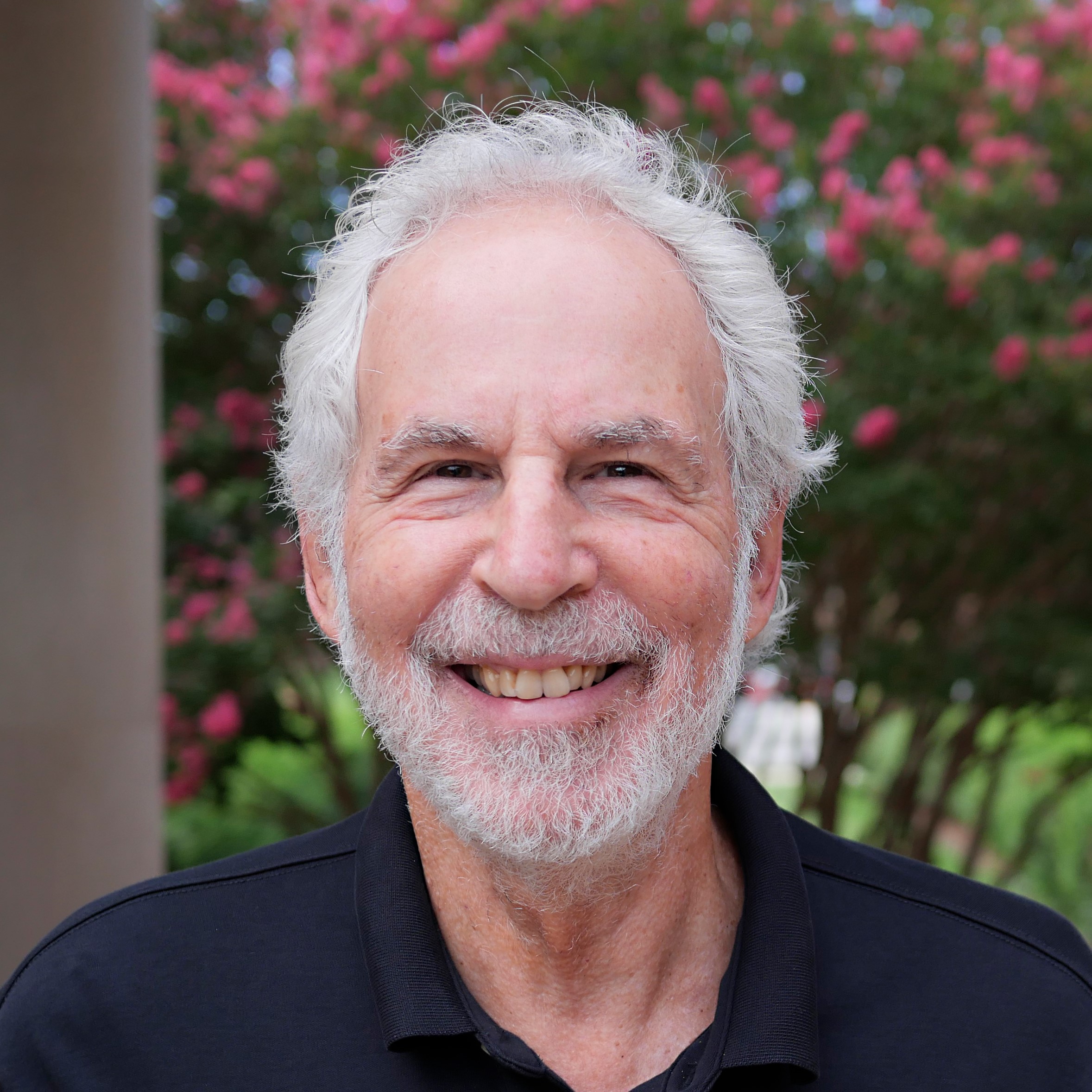
Morgan Smith (B.S. ’25, physics) wasn’t your typical undergraduate student. Before he even began his undergraduate degree at the University of Maryland at age 29, he’d traveled the United States and dedicated six years to serving his country in the military.

After graduating high school in 2010, Smith worked various odd jobs then spent two years traveling around the country, from Colorado to Florida to northern Virginia, where he enrolled in community college and enlisted in the U.S. Air Force. He spent the next six years in the military as a cryptologic language analyst, helping the intelligence community with Arabic translation and communication. But he always had goals beyond his service.Morgan SmithMorgan Smith

Growing up near Chattanooga, Tennessee, Smith dreamed of becoming an aerospace engineer. As a kid, he built remote-controlled airplanes with his friends and read books about everything from rocket ships to the Wright brothers. He won a prize in his high school science fair for a project analyzing airfoil shapes using a wind tunnel.

“My goal was to return to my scientific passions,” he said.

Now, after completing his physics degree and a minor in computer science at UMD, Smith works at NASA as a software engineer, tying together his interests in science and public service.

“What’s most rewarding to me is working toward a mission that is aligned with expanding humanity’s knowledge,” he said, “in bettering society and solving the puzzles necessary to do that.”

A career takes flight

You might think that an airman with a passion for planes would work in aeronautics for the Air Force, but that wasn’t the case for Smith.

“I wanted to gain a good skill while I was enlisted,” he said.

For him, that meant mastering a foreign language.

Smith earned an associate’s degree in Arabic language and foreign literature from the Defense Language Institute Foreign Language Center. While enlisted, he also earned an associate’s degree in intelligence studies and technology from the Community College of the Air Force and a bachelor’s degree in political science from Arizona State University.

He reached the rank of technical sergeant-select and spent his days translating documents and communications. Then, more than five years into his career, COVID-19 happened.

“Suddenly, I had a lot of time to think and evaluate where I’ve been. I remembered how much passion and joy I got in my science classes, especially physics,” he said. “Physics encompasses so much of the science about our universe. In high school, I liked it because I thought that planes were cool. But as I got older, I began to realize that, actually, the whole universe is cool.”

So, Smith reoriented his career toward science. It wasn’t easy, since he had forgotten quite a bit of math during his time in the Air Force.

“It took a lot of personal time and dedication to get those skills back. I actually used Khan Academy,” he said, laughing.

But his efforts paid off when he was admitted to UMD for the fall of 2021.

Sticking the landing at UMD

Smith didn’t find it unusual to be an undergraduate student in his 30s; instead, he says it was an asset.

“Being a little older and assured in what I was doing and having learned from past experiences, I was able to be disciplined and hopefully provide mentorship and direction to other students,” Smith said.

One of his most rewarding experiences was designing hands-on lab lessons for quantum science and technology courses under the mentorship of Alicia Kollár, a Chesapeake Assistant Professor of Physics Endowed Chair, and Alessandro Restelli, an associate research scientist at the Joint Quantum Institute. The lessons, which he designed in collaboration with the Institute for Robust Quantum Simulation, introduced students to the tools used in real-world quantum science, such as interferometers and vector network analyzers.

In 2023, Smith joined the NASA Pathways program, which is designed as a pipeline to full-time employment with the space agency. At NASA, he works on a variety of computing initiatives, including encryption, containerization and satellite telemetry. One of his current projects uses machine learning to determine whether anomalies detected by satellites are nefarious actors or otherwise warrant further investigation.

Whether he is learning coding languages or new physics concepts, Smith believes his experience mastering foreign languages helps.

“Learning all these different programming languages on the fly was definitely linked to being able to learn foreign languages,” he said. “It’s all about picking up patterns.”

Smith continues to exercise that muscle in his free time. He’s learning Japanese and even took up two Japanese forms of martial arts. He trains in karate and a traditional weapons art called Katori Shinto Ryu, which involves swords and bo staffs, practicing daily and formally training three times a week.

As he navigates his career in science, he believes his ability to learn on the fly will be a great asset. And wherever that career takes him, he wants to ensure that his work benefits society.

“As you grow older, you think a little more about the world and your place in it,” he said. “So having values and a mission aligned with what I believe in is hugely important to me.”

Written by Jason P. Dinh

From Physics to Finance

For Nathan Frohna (B.S. ’22, physics, MQF ’25, quantitative finance), an undergraduate degree in physics from the University of Maryland opened the door to business school, a master’s degree and an unexpected detour—from science to the financial world.

“When I was starting college at UMD, I can honestly say that I thought I’d always stay in physics research and academia. Finance was not on the radar,” Frohna said. “But I have come to appreciate that just as physics governs our universe, business and finance govern the world we live in and interact with, and solving the problems, complexities and challenges in that field can be just as rewarding. I feel very good about my path.”Nathan FrohnaNathan Frohna

Frohna’s path may have shifted toward finance, but he didn’t leave physics behind. Now working as an associate on the financial risk and assessment team at Morgan Stanley in Baltimore, he discovered that many of the skills he learned and applied in physics—tools like critical thinking, complex problem-solving, programming and analytical thinking—are invaluable to his work in finance as well.

“I’m still quite new in my current role, but so far, the things that are important in my day to day work now—having an intuition with statistics and logical processes, the ability to persevere working through long, complex problems, and the instinct to always develop a mental understanding of all the variables and unknowns—are skills that I honed from years of studying physics,” Frohna explained. “Solving puzzles in the financial world has lots of interesting rewards, benefits and consequences that I didn’t really see with physics, but many of the problems are remarkably similar.

Puzzles waiting to be solved

Frohna has always looked at the world around him as an endless array of puzzles waiting to be solved.

“Even as a kid, I was all about trying to understand the reality around me, and that kind of led me to pick physics as my main interest, my passion and eventually my major for undergrad,” Frohna said. “There’s just something about being able to quantify the world around me. I love the problem-solving.”

Even before he started studying physics in college, Frohna took a deep dive into physics videos on YouTube.

“I think that through the years, that’s where I’ve gotten probably 90% of my physics knowledge, just finding interesting physics topics and diving into them,” he said. “Watching those videos, just kind of stumbling down different rabbit holes online, would give me the same enjoyment as playing video games or hanging with friends. There was always so much more to learn.”

As a physics major at Maryland, Frohna embraced every challenge, from thermodynamics to quantum mechanics, the tougher the better.

“I would say quantum was where the intuition that drove me through physics just failed for me, because you have to think about it completely differently,” Frohna recalled. “That was where I was struggling the most, but at the same time, it was the most fun challenge that I’ve had academically. It was really inspiring. I felt like if you can tackle something like that, you’re pretty much golden. You can do anything.”

A bridge to the future

Though Frohna loved physics, he couldn’t help wondering how it would fit into his future career plan. During his senior year, his UMD business student girlfriend convinced him to join her team for the Impact Competition, where student teams pitch innovative projects and compete for funds to advance their work. For Frohna, the experience was life-changing.

“I took over as the analytics guy, the numbers guy for the team’s pitch, and I think that’s when I realized that the way I was taught to solve problems in physics at Maryland is extremely translatable to business and finance,” he said. “It helped me see in a very meaningful way how physics could be a bridge to that world.”

Inspired by the discovery, Frohna went on to earn his master’s degree in quantitative finance at UMD’s Robert H. Smith School of Business, where he saw an even stronger connection between physics and finance.

“I learned there are plenty of equations in finance that look remarkably similar to physics equations,” Frohna explained. “For example, Brownian motion--the random motion of particles suspended in a medium, and the mathematics that describe how the system evolves with respect to diffusion--and the Black-Scholes model, which is a mathematical model for the dynamics of a financial market, are incredibly similar.”

Now, in his work at Morgan Stanley, Frohna leverages his physics skill set to help the company meet regulatory standards and manage risks in its day-to-day operations.

“I work on financial regulatory reporting, testing financial IT SOX controls for our annual Form 10K filing,” he said of his work measuring the accuracy and integrity of financial reporting. And I feel my physics background suits me well, as each control I test involves systems and software that I am unfamiliar with,” he said. “Trying to understand and develop theories for where risk may arise in these processes always comes down to logic, evoking the same skills I needed when I was facing unfamiliar classical thermodynamics problems in physics.”

Frohna hopes that as he gains more experience, his work will take him even deeper into quantitative finance.

“I’d like to get to a place where I’m really challenged, just like I was with quantum mechanics, because if I can get to a place where I can work on problems that push me to my limit, that’s where I can get the most out of it,” he explained. “What’s great about being at Morgan Stanley is that it’s so big, and they promote moving up and moving around within the company, so this is a great place for me to grow.

For Frohna, it’s all about applying his physics knowledge in a way that makes a difference. And he couldn’t be more grateful for the degree that started it all.

“I like mentioning to people that I have a degree in physics from Maryland, even before I mention quant finance. It’s something I’m really proud of,” Frohna said. “Physics taught me so much about deep analytical, challenging problems and what you can accomplish when you try not to get too overwhelmed, and you just keep putting in the effort. My physics degree opened doors I didn’t expect, and I think it’s the most valuable thing I’ve ever done for myself.”

Written by Leslie Miller

How Physics Powers EA’s Next-Gen Video Games

What does quantum research have to do with video game graphics? Well, nothing—at least not directly, according to William Donnelly (Ph.D. '12, physics). Donnelly conducted quantum entanglement and gravity research for his dissertation at the University of Maryland and is now a senior rendering researcher at Electronic Arts (EA)—the video game company behind hit franchises including The Sims, Battlefield, Star Wars: Battlefront, Need for Speed and the EA Sports titles. William DonnellyWilliam Donnelly

He works in EA’s Search for Extraordinary Experiences Division (SEED), which houses roughly 60 researchers working on bringing digital characters to life, using machine learning for game AI and content creation, and developing novel real-time graphics & physics techniques. Donnelly is part of SEED’s Future Graphics team, which works on next-generation computer graphics and breakthrough physics simulation.

“Our goal is to push forward the state of the art in electronic entertainment,” he said.

His team’s recent projects include developing advanced techniques to denoise graphics and to animate cloth and fluids—and some of their tools have already been incorporated into EA’s titles and its game engine, Frostbite.

Although Donnelly noted that there are no direct applications from his theoretical physics research to his computer graphics work now, he doesn’t regret studying physics—far from it.

In his work at EA, Donnelly often uses the skills he developed in writing and presenting research. He also uses techniques from theoretical physics, such as heat kernel methods used to solve heat equations, in his work on generative artificial intelligence and computer graphics.

“You’re never sure how useful these things will be in the ‘real’ world,” he said. “But ultimately, they’re invaluable.”

On a fundamental level, Donnelly said that physics is at the core of creating video games. To create a realistic or believable virtual reality, game designers must have a deep understanding of the rules that govern the physical realm.

“To make cool gamelike simulations, you really have to understand how the world works,” he explained. “All of my experience at UMD translated extremely well to the work that I do now.”

From computer graphics to physics and back again

SEED isn’t Donnelly’s first stint working in computer science. He earned a bachelor’s degree in computer science and a master’s degree in applied mathematics from the University of Waterloo in Canada.

As an undergraduate student in the early 2000s, he interned at computer graphics companies—including NVIDIA—where he published his first scientific papers on graphics processing units. These were brand-new technologies at the time, so Donnelly invented and demonstrated new techniques to make the best use of them.

One of his early publications, titled “Variance shadow maps,” was a “big hit,” he said. The technique he proposed, which provides a solution for a problem called shadow map aliasing, rapidly spread through the gaming industry and appeared in published games.

But around this time, Donnelly began pondering deeply about the inner workings of the world. He took coursework in quantum mechanics, quantum information and general relativity, and he was captivated by problems at the forefront of quantum gravity.

He debated between pursuing a Ph.D. in computer graphics and a Ph.D. in physics and opted for the latter, enrolling at UMD, where his dissertation focused on quantum entanglement, black hole entropy and quantum gravity. After graduating, he spent nine years as a postdoctoral researcher at the University of Waterloo; the University of California, Santa Barbara; and the Perimeter Institute for Theoretical Physics in Waterloo.

Still, he left the door open to return to computer graphics. And although he found quantum physics “fascinating, deep, mysterious and worthwhile,” he never particularly enjoyed academia. So, he pivoted to industry and joined SEED in 2021.

‘Computer rendering is actually a physics problem’

Although there are no direct ties between Donnelly’s quantum research and his computer graphics work, his broader physics education helps in his current role.

“If you want to make a character jump, you have to know how a body moves under gravity. To simulate smoke, it’s important to understand not only the underlying physics of fluids, but also how light interacts with the material,” he explained. “There’s a lot of math and physics involved.”

In addition to mechanics, computer rendering, which involves translating a 3D geometry description to pixels on a screen, applies concepts in optics.

“Computer rendering is actually a physics problem,” he said. “You actually have to solve equations of light transport. You have to study how the light from the sun and other sources bounces around and makes it into your eye.”

One of Donnelly’s biggest achievements so far is improving how programs solve light transport equations to reduce noise in renderings. Effectively, the new technology hides noise generated during the graphics rendering process by pushing it into sensory spaces that humans can’t perceive. He and his collaborators published the technique in May 2024 in the Proceedings of the ACM on Computer Graphics and Interactive Techniques, and it has already been incorporated into EA’s Frostbite game engine.

That’s what Donnelly enjoys most about his career in industry compared with academic research in theoretical physics—how rapidly new findings get applied.

“I love that things go straight into the real world. You know it works because it instantly looks more real or better,” he said. “You immediately get feedback—60 frames per second worth of it.”

Written by Jason P. Dinh

Conducting Quantum Experiments in the ‘Coolest’ Lab on Campus

When University of Maryland physics Ph.D. candidate Yanda Geng tells people he works at the ‘coolest’ lab on campus, he’s not exaggerating. In his laboratory at the Joint Quantum Institute (JQI), atoms are cooled to 100 nanokelvin—about one billionth of a degree above absolute zero and roughly 1,000 times colder than the quantum systems used in superconducting quantum computers.Yanda Geng at work in the lab. Credit: Rahul ShresthaYanda Geng at work in the lab. Credit: Rahul Shrestha

In these extreme conditions, something bizarre happens. Atoms stop acting like individual particles and instead merge into a single quantum blob called a Bose-Einstein condensate (BEC). BECs contain millions of atoms that behave according to quantum mechanics rather than classical physics, and they reveal quantum dynamics on a scale large enough to observe without the extreme difficulty of studying single atoms or photons. 

“Simply put, we use laser cooling and trapping techniques to cool atoms down to a very cold temperature, changing the atoms into a different type of matter,” Geng said. 

Advised by Adjunct Professor of Physics Ian Spielman and Associate Vice President for Quantum Research and Education Gretchen Campbell, Geng used microwaves to split the BEC into two different superfluids—liquids that flow without friction. 

“Unlike regular fluids that eventually stop moving because of friction, superfluids can flow forever,” Geng explained. “For example, if you have superfluid in a bucket and rotate that bucket, the superfluid inside won’t follow the bucket because it doesn’t really ‘feel’ the motion of the wall.” 

Like oil and water, these two superfluids cannot mix. But Geng and postdoctoral researcher Junheng Tao discovered interesting swirling patterns as they pushed the superfluids together—the distinctive mushroom-shaped plumes were eerily similar to what happens when galaxies collide, volcanoes erupt or nuclear fusion occurs. Called the Rayleigh-Taylor instability (RTI), this phenomenon had been observed in classical fluids before, but never in superfluids.

“I remember quite distinctly when this data was presented at group meeting: it was a surprise,” noted Spielman. “Several of the cold atom students had been talking with me about measuring fluid dynamical instabilities for some time, but the first RTI data was taken in secret on a weekend, and neither Gretchen nor I knew it was coming!”

For Geng, the findings confirm something profound about the universe: some laws of physics are so fundamental that they work the same everywhere, from cosmic scales to the quantum realm. Finding the same patterns in the quantum world and the everyday world helps scientists understand where the rules of classical physics end and where unique quantum behaviors begin. Geng and the team published the discovery in the journal Sciences Advances in August 2025. 

“It’s kind of amazing to see that this [Rayleigh-Taylor instability] is everywhere, and that the ingredients you need to make it happen aren’t that difficult to put together,” Geng noted. “It’s a pattern with extremely simple origins, something you can find in countless other systems under countless different conditions.”

The journey to cold atom physics

Growing up, Geng was inspired by his uncle, a high-energy physicist, to pursue fundamental questions about how the universe works. After earning his undergraduate degree in physics at Nanjing University in 2020, Geng began looking for graduate schools with atomic physics programs. UMD quickly became a top choice.

“UMD was really a dream school because of its collaboration with [the U.S. National Institute of Standards and Technology] through JQI,” Geng recalled. “I was happy to accept an offer from UMD. Even when a Berkeley professor during my search warned that what I was interested in—ultracold neutral atoms—was ‘really difficult physics,’ I was more confident than ever that this is what I want to do.”

When he began working with Spielman and Campbell in his second year, Geng inherited an experiment from previous students that quickly needed major repairs and upgrades. The experiment itself was a marvel of complexity: four laser tables spanning a 20-foot-by-30-foot lab, requiring expertise in optics, vacuum systems, electronics and even plumbing for the water-cooling system. Everything was controlled by Python programs and code largely written by Geng himself, drawing on the programming skills he learned in high school.

“You have to make sure all subsystems work, and they have to all work at the same time. For the first two years, I worked to optimize each component to achieve the reliability needed for publishable research,” Geng said.

Advocacy in academia

Over the years, Geng has also embraced a leadership role, serving on the department’s Graduate Student Committee, where he organized outreach and social events to help bridge communication gaps between students and faculty members. Geng is particularly committed to supporting new graduate students studying cold atomic physics, emphasizing both the immense challenges and rewards in the field. 

“I remember how I was when I first started here,” Geng explained. “Having some guidance about what to expect as a graduate researcher in cold atomic physics would have really helped me, so I try to pass along my experiences about things like how to interact with a PI and how to be patient with projects. It’s my goal to be transparent and give everyone a realistic picture of what academic research environments can look like.” 

As he approaches his graduation, Geng plans to continue doing research that makes an impact beyond the lab.

“I want to see my work directly connected to people’s lives,” Geng said. “Even though my research is very fundamental, what I’ve found is actually very universal in some ways. I like fundamental research that explores the secrets of the universe, but I’m also interested in photonics applications like with biosensors or precision measurement work like atomic clocks—research that can potentially change people’s lives.”

Written by Georgia Jiang

Young Suh Kim, 1935 - 2025

Professor Emeritus Young Suh Kim died on October 25, 2025 at age 90.  Prof. Kim's research was dedicated to elucidating the connections between relativity, quantum mechanics, and the symmetries that underlie the laws of nature.

Born in Korea in 1935, Prof. Kim earned his Bachelor of Science degree from the Carnegie Institute of Technology (now Carnegie Mellon University) and his Ph.D. in Physics from Princeton University in 1961. He stayed at Princeton to complete his postdoctoral research. At the invitation of Department Chair John S. Toll, Kim joined the University of Maryland faculty in 1962. At the time, he was the youngest person to become assistant professor at the university. He retired in 2007.

While at Princeton as a graduate student, he studied Eugene Wigner’s influential 1939 paper on the inhomogeneous Lorentz group, and had the privilege of asking questions directly to Wigner. At the start of Prof. Kim’s career at Maryland, Paul A. M. Dirac visited for one week, and Prof. Kim was assigned to serve as Dirac’s personal assistant. During this time, Dirac suggested to Kim that more physicists should study the relationship of Lorentz covariance to the internal symmetries of particles.

Prof. Kim’s early research centered on the representations of the Lorentz and Poincaré groups, the fundamental symmetries of special relativity. Together with Marilyn E. Noz, he developed the covariant harmonic oscillator model, providing a relativistically consistent description of the internal structure of bound systems. Their 1977 paper, “Covariant Harmonic Oscillators and the Parton Picture” (Physical Review D, 15, 335), offered an innovative framework linking the quark model of hadrons with Feynman’s parton picture of high-energy processes. This work sought to reconcile the static quark view with the dynamic, frame-dependent parton model through Lorentz-covariant formalism.

Professor Kim’s numerous papers appeared in leading journals including Physical Review, Physical Review Letters, and Journal of Mathematical Physics. His 1989 paper, “Observable Gauge Transformations in the Parton Picture,” offered an important contribution to the study of relativistic symmetries in hadron structure by showing that the parton picture of fast-moving hadrons can be understood as a Lorentz covariant effect with the use of Wigner’s little group formalism, an insightful complement to the dynamical consequence of QCD interactions.

He had a long collaboration with Wigner, co-authoring the 1990 paper “Space-time Geometry of Relativistic Particles” in the Journal of Mathematical Physics. In it he uses Wigner’s little group formalism to unify the space-time geometry of relativistic particles — from massive quarks to massless photons — within a single Lorentz-covariant framework. Again complementing QCD, it is a deep symmetry-based reinterpretation of how internal quantum states (spin, helicity) are tied to external Lorentz transformations. His influential book “Theory and Applications of the Poincare Group” is a key resource for understanding how symmetries underpin modern physics, with discussions of how Poincaré symmetries explain conservation laws via Noether’s theorem.

Prof. Kim is survived by his wife, son, daughter-in-law, two grandchildren, and a global community of former students, collaborators, and admirers.