Patrick Kim Named Goldwater Scholar

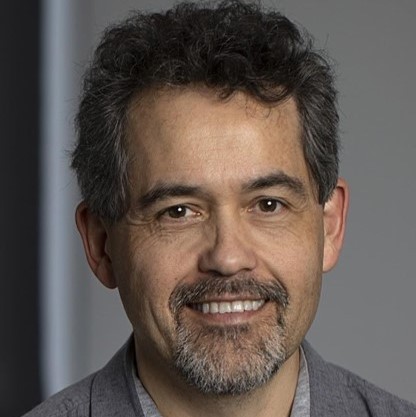
Patrick Kim, a junior physics and electrical engineering double-degree student, is one of three UMD students to have been awarded 2022 scholarships by the Barry Goldwater Scholarship and Excellence in Education Foundation, which encourages students to pursue advanced study and research careers in the sciences, engineering and mathematics.  Patrick Kim. Photo courtesy of same.Patrick Kim. Photo courtesy of same.

Over the last decade, UMD’s nominations yielded 35 scholarships—the second-most in the nation behind Stanford University. The Goldwater Foundation has honored 76 UMD winners and five honorable mentions since the program’s first award was given in 1989. In the last decade, 15 physics students have received Goldwater recognition: Kim, Ela Rockafellow, Scott Moroch, John Martyn, Nicholas Poniatowski, Mark Zic, Paul Neves, Christopher Bambic, Eliot Fenton, Prayaag Venkat, Nathan Ng, Geoffrey Ji, Stephen Randall and Noah Roth Mandell. 

“Our Goldwater Scholars are conducting research on the leading edge of their disciplines—engineering new clean energy solutions, using algorithms to optimize the distribution of limited resources in contact tracing or access to vaccines, and designing new gene-based diagnostics and therapies against aggressive cancers. Each of them is on a trajectory to make major research contributions that have societal impact,” said Robert Infantino, associate dean of undergraduate education in the College of Computer, Mathematical, and Natural Sciences. Infantino has led UMD’s Goldwater Scholarship nominating process since 2001.

Kim, a member of the University Honors program and President’s Scholarship recipient, is contributing to the quest for fusion energy—a process that forces atoms together under great heat and could mean an almost limitless supply of clean energy if successful. 

Kim began his first research project at UMD with Physics Professor William Dorland in 2017—two years before he became a college freshman. Now, Kim is working with Dorland to optimize fusion reactors to reduce their turbulent transport, which would otherwise greatly limit their efficiency and prevent net fusion power gain.

“Patrick is bright, resourceful, tenacious and curious,” Dorland said. “He is able to teach himself fast enough and thoroughly enough to have produced new results, which he published in a refereed journal and presented at the annual American Physical Society conference for the Division of Plasma Physics.”

Kim also conducts research at the Princeton Plasma Physics Laboratory (PPPL), where he studies reduced plasma models that can evaluate the plasma’s nonlinear macroscopic stability and dynamical properties more rapidly. He is co-author of a journal article submitted on this work. This summer, he plans to continue working at PPPL to develop improved optimization algorithms for fusion reactors.

After graduation, Kim plans to pursue a Ph.D., become a plasma physicist and help develop the first commercial nuclear fusion reactors that provide power to the electrical grid.

Other UMD winners this year were George Li, a sophomore computer science and mathematics double-degree student; and Kevin Tu, a junior biological sciences and economics double-degree student.  Goldwater Scholars receive one- or two-year scholarships that cover the cost of tuition, fees, books and room and board up to $7,500 per year.


In Memoriam

It is with much sadness that the Department of Physics announces the passing of several members of our community. 

  • Gerald Abrams (Ph.D., '67), who spent most of his career at Lawrence Berkeley National Laboratory, died on March 31, 2020.
  • Nick Chant, who researched nuclear physics and served as the department's graduate director, died on October 15, 2021.
  • Thomas Ferbel, a high energy physicist who held UMD appointments since 2013, died on March 13, 2022
  • Lavonne Dragt, wife of Prof. Emeritus Alex Dragt, died on November 12, 2021.
  • Charles S. Dulcey Jr (Ph.D., 1982), who worked as a research physicist at the Naval Research Laboratory, died on Dec. 30, 2021
  • Michael Fisher, whose many honors included a USM Regents Professorship, died on November 26, 2021.

Don’t Be Afraid of the Fog

As a young boy growing up in Iran, Masoud Loghmani (B.S. ’96, physics) loved to spend summer nights under the stars, imagining the possibilities.

“I remember back then there was a lot of buzz about humans landing on the moon and the Apollo flights were all over the news,” Loghmani said. “Every night in the summer we would go out and we would watch the moon and the stars and I would ask my parents, ‘Are the astronauts up there? Are they up there traveling?’ I was maybe four, five years old and it was just amazing for me.”

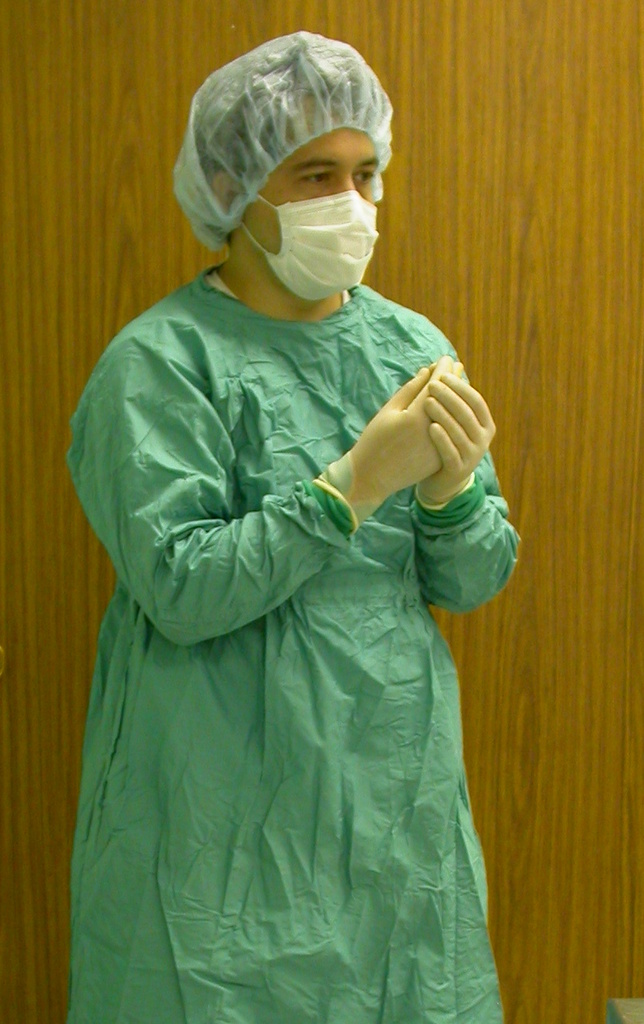
All these years later, some things haven’t changed.Masoud Loghmani  at Mt. FujiMasoud Loghmani at Mt. Fuji

“Curiosity about how the whole world works has been with me since childhood,” Loghmani explained. “When people ask me to describe myself, I tell them I’m eternally curious.”

Over the last 20-plus years—thanks to boundless curiosity and a unique talent for problem- solving—Loghmani has built a worldwide reputation as a visionary and innovator, developing next-generation tech products through his startups and as a product development leader at Google, YouTube and now TikTok, where he leads brand advertising solutions as director of product management.

And physics lies at the heart of everything he does.

“A lot of people ask me what physics has to do with what I do,” Loghmani explained. “Physics is broadly about learning how to solve problems with a degree of precision necessary for the problem at hand. And when you are solving a technology problem or solving a product problem for your customers, these are things you need to know.”

The complexities of physics captured Loghmani’s interest early on.

“In middle school, I didn’t want to do physics for a while, I wanted to be a surgeon,” Loghmani said. “But then when I was about 11 years old, I read a book I got from my uncle, and I still remember the book was ‘One Two Three . . . Infinity,’” Loghmani said. “It was about all different aspects of physics and the math behind physics and that just got me hooked. That’s when I decided to study physics.”

Loghmani focused on physics and math in high school and then left Iran for the U.S., thanks to a professor he knew at the State University of New York who helped him get a student visa to study physics and electrical engineering there. A self-taught programmer, Loghmani soon found himself balancing his college classes with a programming job at Digital Technics, a tech startup that built switches for telecommunications. 

“When you’re making phone calls, there’s a switch behind the scenes that’s making the connections, giving you all the services, and they were making that switch,” Loghmani said. “I had already been playing a lot with telecommunications switches, trying to figure out how they work, and that helped me secure the job in the company.”

When Digital Technics moved to the D.C. area, Loghmani moved, too. Still working full time, he transferred to the University of Maryland and zeroed in on physics.

“Coming to College Park, I had access to a whole different caliber of classmates and professors,” he recalled. “I was spending a lot of hallway hours with professors after classes and at one point one of them encouraged me to take an independent study course with him. He actually designed a course just for us to spend time on fractals and chaos in nonlinear systems and I really enjoyed that.”

Soon after Loghmani graduated with his B.S. in physics, he launched his first startup, LogicTree, from a Gateway 2000 computer in his bedroom. The company’s first product was a speech recognition system that could access information and share it over the phone. One of the first customers was Metro, the D.C. area’s transportation system. 

“We had built an automated system for them that would talk to callers and give them the information they needed,” Loghmani explained. “Before that, Washington Metro used actual people—an agent would look up your question and say, ‘Oh, you want to go from the National Mall to College Park, here’s which Metro to take, here’s the bus to take,’ and the agent would give you the itinerary over the phone. So we built a system that would give callers all that information automatically.”

In the years that followed, LogicTree sold speech-enabled systems for transit and traffic solutions to transportation agencies all over the country and eventually expanded its speech recognition products into the directory assistance/Yellow Pages technology business, serving customers like AT&T and Verizon. Loghmani had found his calling.

“I realized I enjoyed finding problems, solving them and building companies around them,” he said.

But he also learned there are no guarantees in the world of startups.

“Around 2007, I started a company, ti.ki, with a new idea to automate event planning, which is a very complex problem. That completely flopped,” Loghmani said. 

By 2010, realizing he wanted to learn more about product development and marketing, Loghmani enrolled in the Kellogg School of Management at Northwestern University and earned an MBA in marketing and finance two years later. He then relocated to California’s Silicon Valley where he joined the tech-consulting company Accenture and cofounded a group aimed at identifying promising startups and creating partnerships to support innovation. 

Meanwhile, he was preparing to launch a new product of his own.

“It was basically speech recognition built into a coin-sized wearable device that you could talk to and ask for information and then it would give you information back on a screen nearby,” Loghmani explained. “You could ask questions and it would connect to Google and do the search. The idea was like ‘Star Trek,’ you could tap and talk.”

As Loghmani started fundraising to launch the product, he found out about the work that tech giants were doing in the same space (Google, Amazon, Apple). So, after some exploration he ended up joining Google. Over the next six years, Loghmani developed a variety of next-generation products including a context-driven system that dramatically changed the way YouTube, part of Google, targeted online ads, initiating more choices for advertisers and less privacy intrusion for users. 

“I reinvented how we understand context on YouTube and let advertisers choose where their ad shows, providing advertising revenue that’s not privacy intrusive, it’s contextual,” Loghmani explained. “You see ads based on the content you are watching there, not because of your browsing behavior, and what you have done somewhere else on the web. We started that product literally from zero with one engineer and grew it to hundreds of millions of dollars of revenue in a very short time.”

Starting from zero to create something big is what Loghmani does best.

“I love challenges,” Loghmani said, “and I love to build things from zero to one. You start from scratch and make it happen.”

Even as Loghmani is taking tech innovation to new heights, he still dreams of pursuing a different passion. Someday, he hopes to immerse himself in the study of physics once again.

“I really like what I’m doing and I still read physics books in my spare time, but I would love to go back and study physics, just for the pleasure of understanding how nature works,” he reflected. “It may be a distant dream now, but I would love to do that someday.”

But he’s not likely to have time for that anytime soon. In 2021, Loghmani took on his latest challenge, joining the new video service TikTok, where he leads brand advertising solutions with a team of product managers in China and the U.S. It was a unique, history-making opportunity he couldn’t pass up.

“TikTok is like Google 10 years ago,” he said. “It has exploded on the scene and that speed of innovation is exciting. TikTok is demonstrating that innovation in the consumer digital space is not a monopoly of American companies like Google, Facebook and Amazon. TikTok demonstrated that a Chinese company can also become globally accepted by consumers and I believe that breaking the barriers makes the world a better place.”

For Loghmani, the magic of innovation and product development in technology never gets old. More than 20 years into a successful career, he’s just getting started—still imagining the possibilities, enjoying the journey and finding inspiration in the challenges along the way. 

“I think there is satisfaction in finding a hard problem that you don’t know the answer to but you know it can be solved and attracting smart people to work with you to find a solution,” Loghmani explained. “It’s like a mountaintop. You see the mountaintop but the rest of it is covered in fog. You don’t know how you’re going to get there, but if you keep climbing, then one day you’re at the top. I like to imagine the big mountaintop and tell people, ‘Don’t be afraid of the fog, we’ll find our way.’”

 Written by Leslie Miller

Faculty, Staff, Student and Alumni Awards & Notes

We proudly recognize members of our community who recently garnered major honors, began new positions and more.

Faculty and Staff 
  • Ruba Abukhdeir joined the department as the Director of Business and Finance. 
  • Kaustubh Agashe, Mohammad Hafezi and Arpita Upadhyaya were elected Fellows of the American Physical Society.
  • Jesse Anderson retired on December 31 after 34 years with the department. 
  • Lea Bartolome received the department's Staff Excellence Award. 
  • Alessandra Buonanno received the Balzan Prize.
  • Sankar Das Sarma was named a highly cited researcher by Clarivate Analytics. He also wrote a commentary for Physics Today. He recently discussed the latest developments in topological phases in quantum computing at a Microsoft conference. 
  • Work by Jim Drake on the heliosphere was described in Phys.org.
  • James Ellsworth joined the department as assistant director for of procurement, inventory and receiving.
  • Sarah Eno was elected a Fellow of the American Association for the Advancement of Science. 
  • Manuel Franco Sevilla was named liaison between EF and Rare Processes and Precision Measurement group at Snowmass.
  • Victor Galitski was quoated in Physics magazine.  
  • Jim Gates received the 2021 AIP Andrew Gemant Award. He was also profiled in Symmetry Magazine.
  • Carter Hall was featured on the Department of Energy website regarding what his 2011 Early Career Award had meant to his research.
  • Donna Hammer was named a Society of Physics Students Outstanding Chapter Advisor. 
  • Eliot Hammer joined the chair's office as coordinator of administration.
  • Work by Anson Hook was described in Science Daily.
  • Ted Jacobson's idea of a black hole laser was discussed in PhysicsWorld.
  • Danae Johnson joined the department as a business manager.
  • Melanie Knouse received the department's Staff Excellence Award. 
  • Alicia Kollár received a Sloan Research Fellowship.
  • Wolfgang Losert received a Brain and Behavior Institute seed grant award.
  • Howard Milchberg, Daniel Woodbury (Ph.D., '20), Robert Schwartz wrote a Physics Today Quick Study showing how revisiting early experiments with new tech leads to pinpointing individual electrons in ambient gases. 
  • Rabi Mohapatra will retire on August 1, 2022.
  • Allen Monroe received the department's Staff Excellence Award. 
  • Johnpierre Paglione was named an Outstanding Referee of the Physical Review journals.
  • Naomi Russo received the department's Sibylle Sampson Award.
  • Jay Sau was named UMD co-Director of the Joint Quantum Institute.
  • Yasser Saleh joined the department as procurement coordinator.
  • Brian Straughn received the Lorraine DeSalvo Chair's Award for Outstanding Service.
  • Fred Wellstood will retire on April 1, 2022.
  • LaVita Williams joined the payroll office as a business service specialist.
 Students
  • Elizabeth Bennewitz, a graduate student working with Alexey Gorshkov, has been named a finalist for a 2022 Hertz Fellowship.
  • Yonatan Gazit and Yanda Geng received the Richard and Anna Iskraut Award.
  • Donovan Buterakos, Haining Pan, DinhDuy Vu won the Richard E. Prange Graduate Student Award.
  • Sagar Airen received the Kapo-Barwick Award.
  • Batoul Banihashemi, Yan Li, Braden Kronheim, Edward Broadberry, Jeremy Shuler, Subhayan Sahu, Saurabh Kadam, Nathaniel Fried received the Ralph Myers Award
Alumni
  • Vakhtang Agayan (Ph.D., '00) was named Chief Technology Officer of KMK Consulting
  • Beatriz Burrola Gabilondo (Ph.D., '10) was named an APS Equity, Diversion and Inclusion Fellow.
  • Laird Egan, (Ph.D., '21), was quoted in a Physics story on quantum error correction. 
  • Alexei Fedotov (Ph.D. ’97), received teh Dieter Möhl Medal in the field of beam cooling.
  • Salman Habib, Director at Argonne Lab's high energy division was a PhD student of mine (1988).
  • Ruth Kastner received a  Visiting Fellowship at the University of Pittsburgh's Center for Philosophy of Science.
  • Ying-Cheng Lai (Ph.D., '92) was named a Regents Professor at Arizona State University.
  • Thomas Mason, B.S. '89, physics; B.S. '89, electrical engineering  https://www.chemistry.ucla.edu/news/mason-group-research-featured-science-advances  
  • Elizabeth Paul (Ph.D., '20) and Matt Landreman published work on a twisty stellarator in Physical Review Letters.
  • Denjoe O'Connor (Ph.D. '85) is now the Director of Dublin Institute for Advanced Studies, the position Erwin Schrödinger held during World War II.
  • TC Shen (Ph.D. '85) is a professor of physics at Utah State University.
  • Chris Stephens (Ph.D. '86) is the director of the Center for Complexity Science at UNAM, Mexico City.
Book Marks

Victor Yakovenko's work in econophysics was discussed extensively in the book Anthill Economics.

Department Notes