Two Distinguished University Professors in the University of Maryland’s Department of Physics have been elected to the National Academy of Sciences for outstanding accomplishments in quantum science.
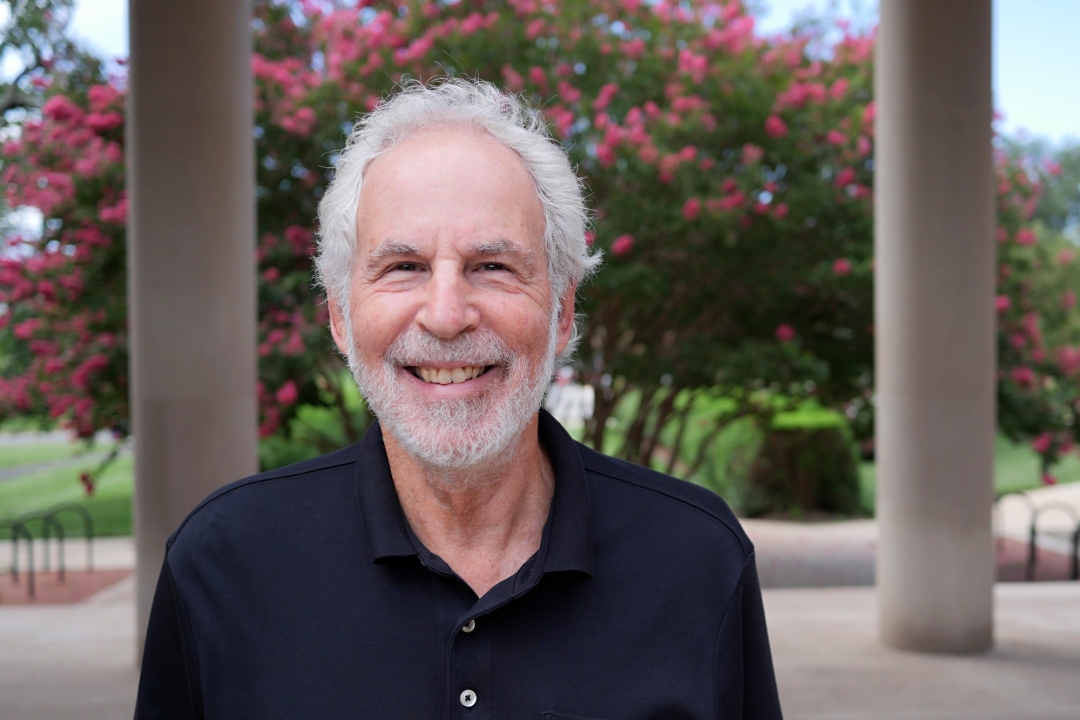
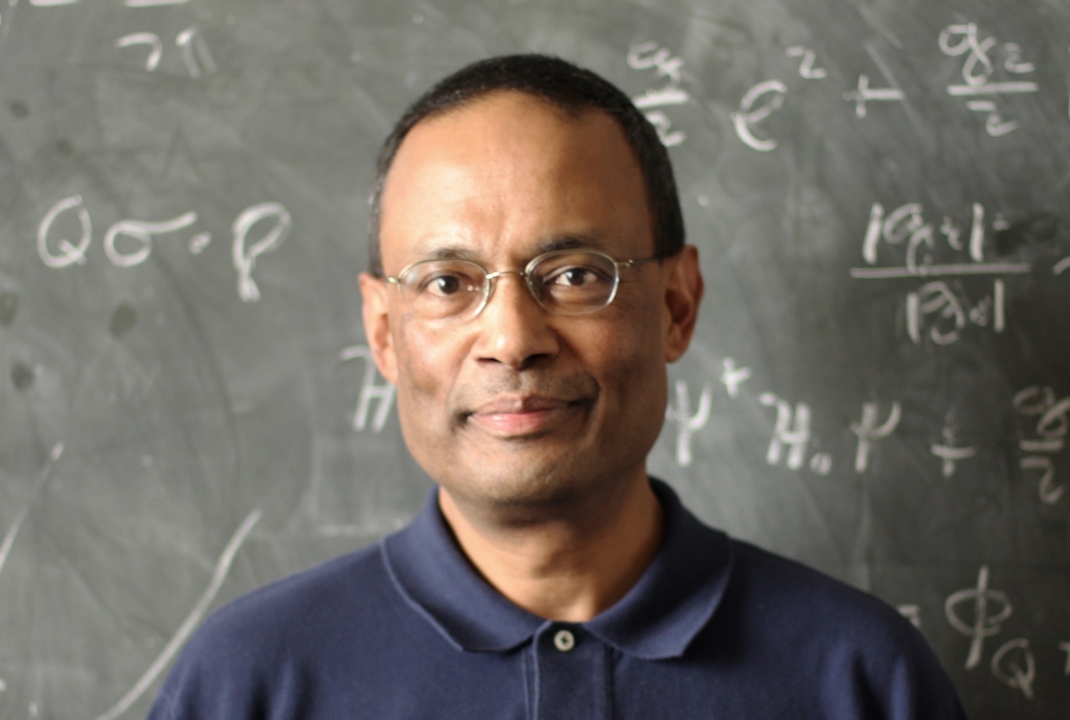
Sankar Das Sarma and Richard L. Greene were among the 120 American and 25 international scientists selected this year “in recognition of their distinguished and continuing achievements in original research.”
They join fewer than 2,800 American scientists from all disciplines who have been chosen by academy members for outstanding contributions. Their election brings the total number of Terps in the academy to 27; UMD faculty memberships in national academies now stand at more than 110.
“The dedication of Sankar Das Sarma and Richard Greene to excellence exemplifies the intellectual leadership of our faculty, and we are proud to see their contributions be recognized among the most impactful in science today,” said Amitabh Varshney, dean of the College of Computer, Mathematical, and Natural Sciences.
The recognition underscores UMD’s position as a leading global center of quantum science and technology, with more than 200 dedicated researchers, key partnerships with the National Institute of Standards and Technology and other federal agencies, and several on-campus research institutes.
“To have two of our finest researchers recognized by one of the highest honors in American science is a fitting testament to their pathfinding work, and it reflects the commitment to excellence in the Department of Physics and the university as a whole,” said Steven Rolston, chair of the Department of Physics.
Das Sarma—the Richard E. Prange Chair of Physics, fellow of the Joint Quantum Institute and director of the Condensed Matter Theory Center—is internationally known for groundbreaking work on the theory of topological quantum computation, a field that is poised to dramatically expand the capabilities of future designs and devices.
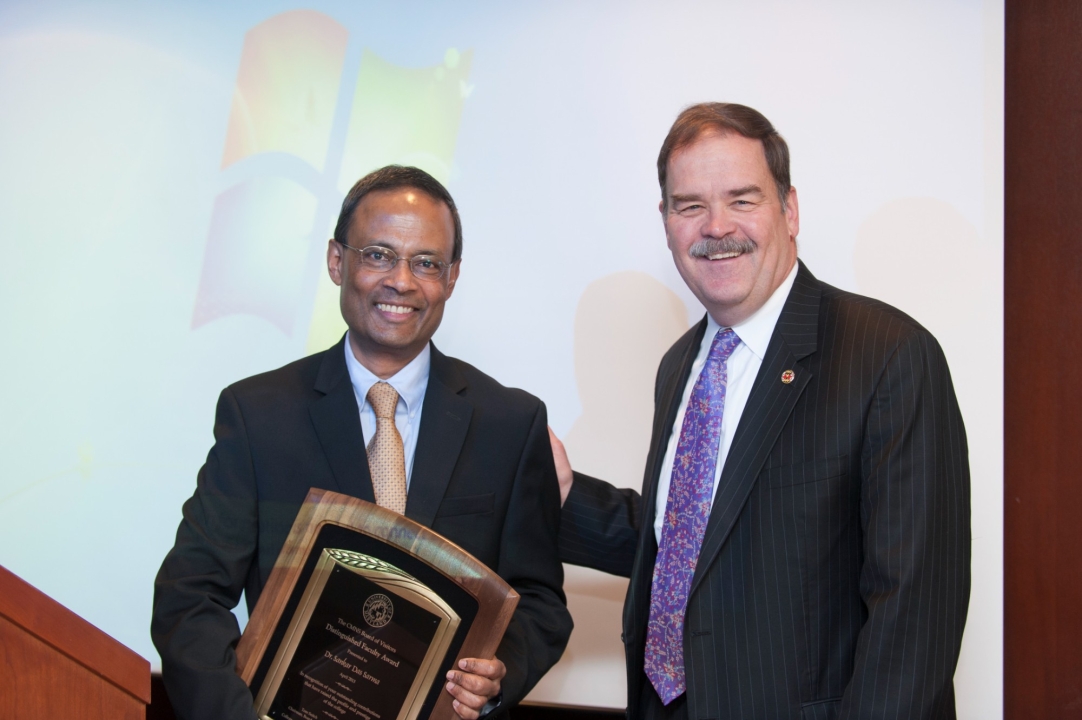
He earned his Ph.D. in physics from Brown University, studying under the late UMD alum John Quinn (Ph.D. ’58, physics). Das Sarma has been a faculty member at UMD since 1980. He was elected fellow of the American Physical Society (APS) in 1992, was named a Distinguished University Professor in 1995, and received the College of Computer, Mathematical, and Natural Sciences’ Board of Visitors Distinguished Faculty Award in 2013.
His research explores the quantum properties of condensed matter systems and theoretical predictions for how those properties could be used to create a stable, fault-tolerant basis for a quantum computer.
Conventional computers are based on the on-off, 0-or-1, switch-like electrical nature of transistors; they store and process data in the form of binary digits (bits). Quantum computers, by contrast, exploit a “superposition” of many states at once. That is, a quantum bit (qubit) can have a value of 0, 1 or some combination of the two.
Qubits can be stored in quantum states of superconductors, ions, atoms or photons. In each case, however, those fragile states are notoriously prone to errors (decoherence) even if carefully protected from their environment.
More than 20 years ago, Das Sarma, with others, theorized that robust qubits could emerge in the form of braids of unusual collective excitations in certain solid-state materials.
These braids are pinned in place (“topologically protected”) and thus less vulnerable to decoherence. In much the same way, the basic shape of a donut remains unchanged even if stretched or twisted.
That research, first published in 2005 in the journal Physical Review Letters as “Topologically Protected Qubits from a Possible Non-Abelian Fractional Quantum Hall State,” in effect created the theoretical basis for the entire field of topological computing and proposed a way to test it.
This is just one aspect of Das Sarma’s extensive work in virtually all areas of condensed-matter physics. He has published over 750 papers, garnering more than 100,000 citations.
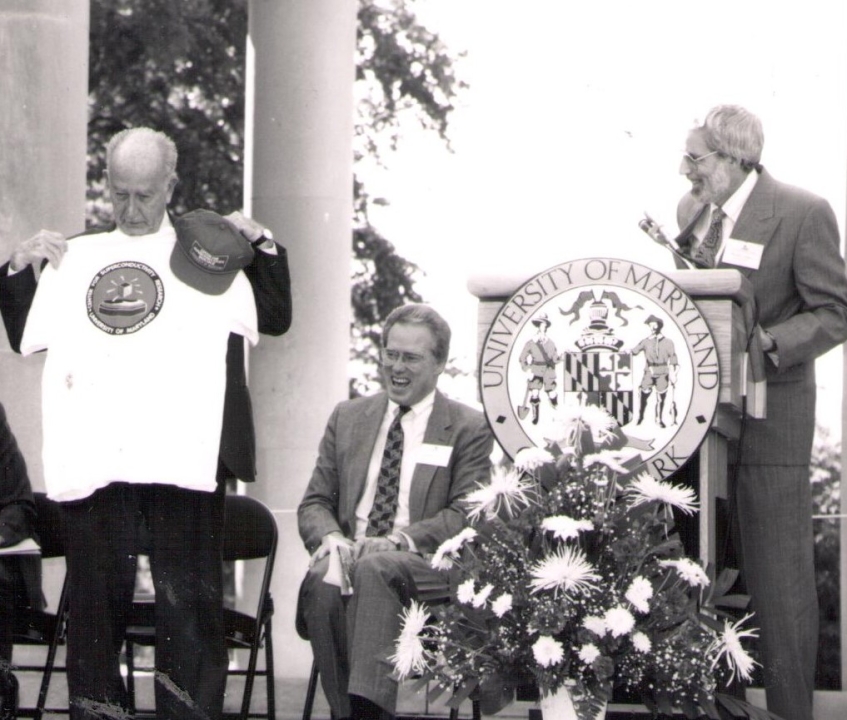
Greene, the founding director of UMD’s Center for Superconductivity Research (now the Quantum Materials Center), has made fundamental breakthroughs in understanding and measuring superconductivity—a condition in which an electrical current can flow without any resistance.
The phenomenon was first observed early in the 20th century, when Dutch physicist Heike Kamerlingh Onnes cooled helium to a liquid state near absolute zero. He then discovered that certain metals lost all resistance to the flow of electrical current at this temperature. Superconductivity has since been exploited for numerous uses, including superconducting magnets for medical imaging, maglev trains and controlled nuclear fusion.
Because the temperature of liquid helium (4 degrees above absolute zero) is hard to reach without specialized equipment, there has been global interest in producing superconductivity in much more accessible conditions, perhaps as warm as room temperature.
Over decades of research, Greene made major advances toward this goal. He discovered superconductivity in polythiazyl, (SN)x, the only known polymer superconductor. He discovered that certain novel materials—notably organic (carbon-based) formulations and specially doped copper oxides—could become superconducting, and he developed new methods to measure their electrical properties.
In the process, he became one of the world’s leading experts in an area with profound potential: If achieved, low-resistance electrical transmission would have a transformational impact on modern industry and human quality of life.
Greene has made significant contributions to other areas of materials physics, including the study of novel materials that exhibit a dramatic decrease in electrical resistance upon the application of a magnetic field. He helped develop the “relaxation” technique for specific heat measurements, a method that is now widely used in the Quantum Design Physical Property Measurement System. He has published about 450 papers, with over 36,000 citations.
Greene earned his B.S. in physics from the Massachusetts Institute of Technology and his Ph.D. from Stanford University. He is a fellow of the American Association for the Advancement of Science and the APS; the APS's dissertation award in experimental condensed matter physics bears his name. He was cited by the Philip Merrill Presidential Scholars Program at UMD in 2019 for his mentorship and was named a Distinguished University Professor in 2022. He was awarded the prestigious 2026 Heike Kamerlingh Onnes Prize for extraordinary experimental research in superconductivity, and retired earlier this year as a Distinguished University Professor Emeritus.