• Home
  • About Us
    • Physics Administration
    • Directions
    • Awards
    • Student Awards
    • Make a Donation
    • News
      • Research News
      • Department News
      • Newsletters
    • PTK Policy
  • People
    • All
    • Faculty
      • Current
      • Emeritus
      • Adjunct
      • Affiliate
      • Research Professors
    • Research Scientists
    • Postdocs
    • Staff
    • Lecturers
    • Visitors
    • Graduate Students
  • Research
    • Research Areas
      • AI and Physical Sciences
      • Astro Metrology
      • Atomic, Molecular & Optical
      • Biophysics
      • Chemical Physics
      • Condensed Matter Experiment
      • Condensed Matter Theory
      • Cosmic Ray Physics
      • Elementary Particles
      • Gravitation Experiment
      • Gravitational Theory
      • High Energy Physics
      • Nonlinear Dynamics, Chaos and Complex Systems
      • Nuclear Physics
      • Particle Astrophysics
      • Physics Education Research
      • Plasma Physics
      • Plasma Theory
      • Quantum Science and Technology
      • Quarks, Hadrons and Nuclei
      • Space Physics
    • Centers & Institutes
  • Academics
    • OSES Home (Student Services)
    • OSES News
    • Undergraduate Program
      • Prospective Students
      • Apply Now
      • Degree Requirements and Policies
      • Scholarships
      • Undergraduate Research
      • Advising
      • Undergraduate Forms
      • Undergraduate Events
      • Departmental Honors
      • Society of Physics Students
      • FAQ
      • Undergraduate Student Committee
    • Graduate Program
      • Prospective Students
      • Open House
      • Degree Requirements
      • Graduate Resources
      • Deadlines and Forms
      • PhD Defenses
        • PhD Defenses 2026
        • PhD Defenses 2025
        • PhD Defenses 2024
        • PhD Defenses 2023
        • PhD Defenses 2022
        • PhD Defenses 2021
        • PhD Defenses 2020
        • PhD Defenses 2019
        • PhD Defenses 2018
        • PhD Defenses 2017
        • PhD Defenses 2016
      • Events
      • Scholarships & Awards
      • Qualifier
      • Graduate Student Organizations
      • FAQ
    • Student Opportunities
      • GRAD-MAP
      • Graduate Student Organizations
      • Outreach Volunteering
      • Society of Physics Students
      • NSF S-STEM Program
      • Undergraduate Research
      • Women in Physics
      • Undergraduate Quantum Association
    • Courses
    • Academic Support
    • NSF S-STEM Program
    • Teaching Assistants
  • Events
    • Calendar
    • Physics Colloquia
    • W.J. Carr Lecture
    • Research Interaction Team (RIT) Math/Physics
    • Mechanick Quantum Biology Lecture
    • Irving and Renee Milchberg Endowed Lectureship
    • Charles W. Misner Endowed Lectureship in Gravitational Physics
    • John S. Toll Endowed Lecture
    • Prange Prize Lecture
    • Maryland Day
    • Outreach
      • Outreach Home
      • Physics is Phun
      • Discovery Days
    • Summer Programs
      • Physics Makers Camp
      • Physics of Quidditch
      • Science Discovery Camp
      • Advanced Physics Summer Program
      • Toolkit for Success
    • CUWiP
    • Vortex Makerspace
    • QURiSE Conference
  • Services
    • Building Access Requests
    • Computing Services
    • Conference Room Reservations
    • Department Operations Directory
    • Electronic and Mechanical Development
    • Hiring Procedures
    • Lecture Demo
    • Mental Health Resources
    • Parking
    • Physics Ombudspersons
    • Printing Services
      • Poster Print Request
    • Proposal Submissions
    • Purchase Order
    • Suggestion Box
    • Textbook Information
  • Give
  1. Home
  2. About Us
  3. News
  4. Department News

Written on 02 April 2020.

Physics Students Receive NSF Graduate Research Fellowships

Five current students and a recent alumnus of the Department of Physics received prestigious National Science Foundation (NSF) Graduate Research Fellowships, which recognize outstanding graduate students in science, technology, engineering, and mathematics.

NSF Graduate Research Fellowship Program logo

“I’m so happy to see our students honored with prestigious NSF Graduate Research Fellowships that acknowledge their hard work in their research endeavors and in the classroom,” said  Amitabh Varshney, dean of the College of Computer, Mathematical, and Natural Sciences (CMNS).

Across the university, 29 undergraduates and recent alumni were among the fellowship winners announced by the NSF. As a result, UMD ranks ninth in the nation and second in the Big Ten for the number of fellows who received their bachelor’s degrees at the university.

The college’s 17 awardees include eight current undergraduates with CMNS majors, three recent alumni who received bachelor’s degrees in CMNS majors, and six current graduate students enrolled in CMNS programs (one of whom is also a recent graduate).

Undergraduate student fellowship recipients:

  • Anna Grafov
  • Caleb Harada
  • Michael Nastac
  • Nicholas Poniatowski
  • Mark Zic

Alumni fellowship recipients:

  • John Martyn (B.S. ’19)

NSF fellows receive three years of support, including a $34,000 annual stipend, a $12,000 cost-of-education allowance to the graduate degree-granting institution, international research and professional development opportunities, and access to a supercomputer.

The NSF Graduate Research Fellowship Program helps ensure the vitality of the human resource base of science and engineering in the United States and reinforces its diversity. The program recognizes and supports outstanding graduate students in NSF-supported science, technology, engineering, and mathematics disciplines who are pursuing research-based master’s and doctoral degrees at accredited U.S. institutions.

Since 1952, NSF has funded more than 50,000 Graduate Research Fellowships out of more than 500,000 applicants. Currently, 42 fellows have gone on to become Nobel laureates, and more than 450 have become members of the National Academy of Sciences.

###

Read about the other CMNS recipients here.
Media Relations Contact: Abby Robinson, 301-405-5845, abbyr [AT] umd [DOT] eduabbyr [AT] umd [DOT] edu
University of Maryland
College of Computer, Mathematical, and Natural Sciences
2300 Symons Hall
College Park, MD 20742
www.cmns.umd.edu
@UMDscience

Written on 30 March 2020.

Physics Student Named 2020 Goldwater Scholar

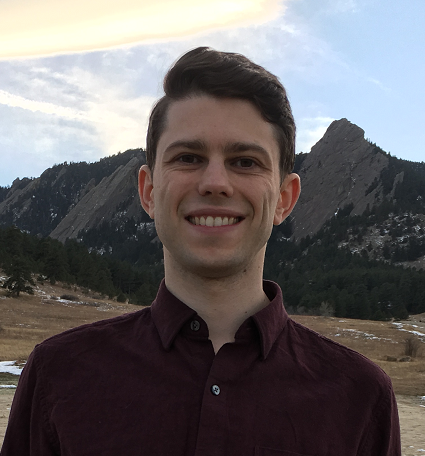
moroch goldwaterScott Moroch, courtesy of same

Scott Moroch was one of four CMNS undergraduates to receive a scholarship from the Barry Goldwater Scholarship and Excellence in Education Foundation, which encourages students to pursue advanced study and research careers in the sciences, engineering and mathematics.  Over the last decade, UMD’s nominations yielded 33 scholarships—the most in the nation, followed by Stanford University with 32. Harvard University, the Massachusetts Institute of Technology and Johns Hopkins University also rank in the top 10. Moroch is the eighth physics undergraduate recipient in the past four years. 

“Our scholars are a uniquely talented group, already making discoveries in their fields of study—from developing more stable batteries and innovative power supplies to streamlining the pathway of drug design and understanding the contributions of RNA in cancer and other diseases,” said Robert Infantino, associate dean of undergraduate education in the College of Computer, Mathematical, and Natural Sciences. Infantino has led UMD’s Goldwater Scholarship nominating process since 2001.

Moroch was among the 396 Barry Goldwater Scholars selected from 1,343 students nominated nationally this year. Goldwater Scholars receive one- or two-year scholarships that cover the cost of tuition, fees, books, and room and board up to $7,500 per year. These scholarships are a stepping-stone to future support for the students’ research careers. The Goldwater Foundation has honored 70 UMD winners and five honorable mentions since the program’s first award was given in 1989.

Moroch, a native of Wayne, New Jersey, designed his own particle accelerator when he was still in high school. Since enrolling at Maryland, he has been working on UMD’s cyclotron with Timothy Koeth, an assistant professor in the Department of Materials Science and Engineering and the Institute for Research in Electronics and Applied Physics.

A cyclotron is a type of particle accelerator that won its inventor the Nobel Prize in physics in 1939. The beams that cyclotrons produce, while potentially dangerous, accomplish wondrous things—killing cancer cells with extreme precision, for instance, or changing atoms into a different element altogether.

Moroch is working with Koeth to develop a novel cyclotron storage ring for Lockheed Martin. The company is interested in using the technology for a new class of power supplies for aerospace electric propulsion systems that can carry things into the solar system and beyond.

With initial funding from Lockheed, Moroch showed that a cyclotron design could be effective, but it was unstable. So the company decided to fund a more ambitious project at UMD—where the instabilities could be factored out. Moroch now leads a significant portion of the research team.

“Scott is no ordinary exceptional student,” said E. H. “Ned” Allen, senior fellow and chief scientist at Lockheed Martin. “He has won so much respect that he has become a colleague and a first-line team member—even though still an undergraduate.”

Last summer and fall, Moroch led a team of three undergraduates in assembling and upgrading a low-energy storage ring as part of the project. A storage ring is a type of particle accelerator in which a continuous or pulsed particle beam may be kept circulating typically for many hours. The students retrieved used components from another university, restored the retrieved components, designed and fabricated missing subsystems, reassembled them into a working ion storage ring, and brought the whole assembly under high vacuum. The new accelerator got up and running early in the spring semester, achieving what’s known as “first beam.”

“In the past 20 years, I have mentored several dozen undergraduate researchers, and Scott Moroch is the first that has demonstrated the entire cycle of research and brought in substantial research funds,” Koeth said.

Moroch also helped design an electron beamline in collaboration with Los Alamos National Laboratory. In graduate school, Moroch plans to pursue a Ph.D. in accelerator physics.

Read about the other CMNS recipients here.

Written on 12 March 2020.

Newsletter Archive

To submit news for the Department of Physics bi-annual e-newsletter, please send a brief description to physics-news [AT] umd [DOT] edu.

2026

  • February 2026

2025

  • September 2025
  • March 2025

2024

  • September 2024
  • March 2024

2023

  • September 2023
  • February 2023

2022

  • September 2022
  • March 2022

2021

  • September 2021
  • February 2021

2020

  • September 2020
  • January 2020

Written on 11 March 2020.

COVID-19 Updates

Please stay up-to-date with campus information here  https://umd.edu/virusinfo  and information about research returning to campus here https://return.umd.edu/


Written on 10 March 2020.

Jarzynski Wins Simons Fellowship

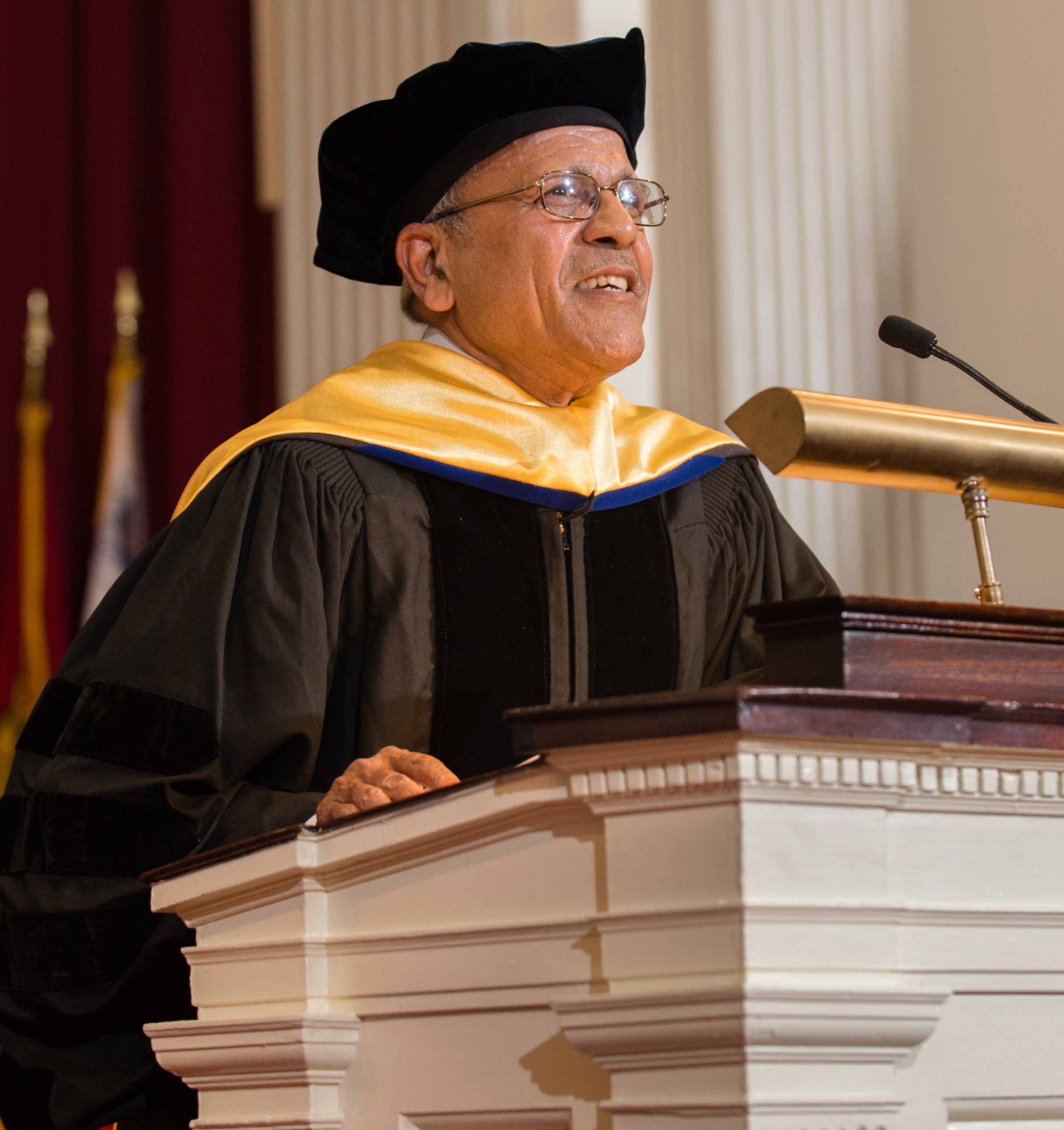
Chris Jarzynski,  a Distinguished University Professor in the University of jarzynski by levine 23Christopher Jarzynski. Photo: by Faye Levine Maryland’s Department of Chemistry and Biochemistry, Department of Physics, and Institute for Physical Science and Technology (IPST), is one of three faculty members in the University of Maryland’s College of Computer, Mathematical, and Natural Sciences (CMNS) to received a 2020 Simons Foundation Fellowship. The prestigious fellowships provide support for faculty scientists to extend a one-term, university-sponsored sabbatical into a full year, allowing them to focus solely on advancing fundamental research in mathematics or theoretical physics.

UMD researchers received 2 of the 40 fellowships awarded for mathematics and one of the eight fellowships for theoretical physics. UMD topped the list with the most 2020 Simons Fellows, tied with the University of Michigan, the University of Illinois at Urbana-Champaign and Stony Brook University. UMD’s 2020 Simons Fellows join six other CMNS faculty members who were named Simons Fellows since 2013.

“We are very pleased to congratulate all three of these very accomplished researchers,” said CMNS Dean Amitabh Varshney. “The awarding of this very competitive fellowship to three of our researchers demonstrates UMD’s strength in fundamental research in both mathematics and physics.” 

Jarzynski is a statistical physicist and theoretical chemist who models the random motions of atoms and molecules. Working at the boundary between chemistry and physics, Jarzynski studies how the laws of thermodynamics—originally developed to describe the operation of steam engines—apply to complex microscopic systems such as living cells and artificial nanoscale machines.

Jarzkynski is well known for developing an equation to express the second law of thermodynamics for systems at the molecular scale. The equation is known as the Jarzynski equality, which was noted by the Nobel Committee for Physics as an application of the 2018 prize-winning invention, optical tweezers. This research has led to a new method for measuring “free energy”—the energy available to any system to perform useful work—in extremely small systems.

A Fellow of the American Physical Society (APS) and the American Academy of Arts and Sciences, Jarzynski received the APS 2019 Lars Onsager Prize, which recognizes outstanding research in theoretical statistical physics. He was also awarded a Fulbright Fellowship and the Raymond and Beverly Sackler Prize in the Physical Sciences. He serves on the editorial board for the Journal of Statistical Mechanics: Theory and Experiment and is an associate editor for the Journal of Statistical Physics.

Jarzynksi earned his B.A. in physics from Princeton University and his Ph.D. in physics from the University of California, Berkeley. After a postdoctoral appointment at the Institute for Nuclear Theory in Seattle, he spent 10 years at Los Alamos National Laboratory. He has been on the faculty of the University of Maryland since 2006.

During his sabbatical, Jarzynski will be based at UMD but intends to travel to Europe and California for workshops, visiting professorships and collaborations.

UMD's other Simons Fellows were Professor Jacob Bedrossian of the Department of Mathematics and the Center for Scientific Computation and Mathematical Modeling and Professor Leonid Koralov of the Department of Mathematics. Mohammad Hafezi of Physics and ECE was named a 2020 Simons Investigator.

Original story here.


More Articles …

  1. Physics Professors Selected for MURI Awards
  2. Maryland Quantum Alliance Launched
  3. Summer Camps Introduce High School Girls to Physics
  4. Longtime Staff Member Lorraine DeSalvo Retires
  5. Faculty, Staff, Student and Alumni Awards & Notes

Page 61 of 153

  • 56
  • 57
  • 58
  • 59
  • 60
  • 61
  • 62
  • 63
  • 64
  • 65
  • Physics Administration
  • Directions
  • Awards
  • Student Awards
  • Make a Donation
  • News
    • Research News
    • Department News
    • Newsletters
  • PTK Policy

College and Department Links

Department of Physics

Physical Sciences Complex
4296 Stadium Dr
College Park, MD 20742
Phone: 301.405.3401

Information

  • Campus Directory
  • Undergraduate Research
  • Scholarships
  • Prospective Undergraduates
  • Directions & Transit
  • Web Accessibility
© 2026 University of Maryland - Department of Physics
Top
  • Home
  • About Us
    • Physics Administration
    • Directions
    • Awards
    • Student Awards
    • Make a Donation
    • News
      • Research News
      • Department News
      • Newsletters
    • PTK Policy
  • People
    • All
    • Faculty
      • Current
      • Emeritus
      • Adjunct
      • Affiliate
      • Research Professors
    • Research Scientists
    • Postdocs
    • Staff
    • Lecturers
    • Visitors
    • Graduate Students
  • Research
    • Research Areas
      • AI and Physical Sciences
      • Astro Metrology
      • Atomic, Molecular & Optical
      • Biophysics
      • Chemical Physics
      • Condensed Matter Experiment
      • Condensed Matter Theory
      • Cosmic Ray Physics
      • Elementary Particles
      • Gravitation Experiment
      • Gravitational Theory
      • High Energy Physics
      • Nonlinear Dynamics, Chaos and Complex Systems
      • Nuclear Physics
      • Particle Astrophysics
      • Physics Education Research
      • Plasma Physics
      • Plasma Theory
      • Quantum Science and Technology
      • Quarks, Hadrons and Nuclei
      • Space Physics
    • Centers & Institutes
  • Academics
    • OSES Home (Student Services)
    • OSES News
    • Undergraduate Program
      • Prospective Students
      • Apply Now
      • Degree Requirements and Policies
      • Scholarships
      • Undergraduate Research
      • Advising
      • Undergraduate Forms
      • Undergraduate Events
      • Departmental Honors
      • Society of Physics Students
      • FAQ
      • Undergraduate Student Committee
    • Graduate Program
      • Prospective Students
      • Open House
      • Degree Requirements
      • Graduate Resources
      • Deadlines and Forms
      • PhD Defenses
        • PhD Defenses 2026
        • PhD Defenses 2025
        • PhD Defenses 2024
        • PhD Defenses 2023
        • PhD Defenses 2022
        • PhD Defenses 2021
        • PhD Defenses 2020
        • PhD Defenses 2019
        • PhD Defenses 2018
        • PhD Defenses 2017
        • PhD Defenses 2016
      • Events
      • Scholarships & Awards
      • Qualifier
      • Graduate Student Organizations
      • FAQ
    • Student Opportunities
      • GRAD-MAP
      • Graduate Student Organizations
      • Outreach Volunteering
      • Society of Physics Students
      • NSF S-STEM Program
      • Undergraduate Research
      • Women in Physics
      • Undergraduate Quantum Association
    • Courses
    • Academic Support
    • NSF S-STEM Program
    • Teaching Assistants
  • Events
    • Calendar
    • Physics Colloquia
    • W.J. Carr Lecture
    • Research Interaction Team (RIT) Math/Physics
    • Mechanick Quantum Biology Lecture
    • Irving and Renee Milchberg Endowed Lectureship
    • Charles W. Misner Endowed Lectureship in Gravitational Physics
    • John S. Toll Endowed Lecture
    • Prange Prize Lecture
    • Maryland Day
    • Outreach
      • Outreach Home
      • Physics is Phun
      • Discovery Days
    • Summer Programs
      • Physics Makers Camp
      • Physics of Quidditch
      • Science Discovery Camp
      • Advanced Physics Summer Program
      • Toolkit for Success
    • CUWiP
    • Vortex Makerspace
    • QURiSE Conference
  • Services
    • Building Access Requests
    • Computing Services
    • Conference Room Reservations
    • Department Operations Directory
    • Electronic and Mechanical Development
    • Hiring Procedures
    • Lecture Demo
    • Mental Health Resources
    • Parking
    • Physics Ombudspersons
    • Printing Services
      • Poster Print Request
    • Proposal Submissions
    • Purchase Order
    • Suggestion Box
    • Textbook Information
  • Give