• Home
  • About Us
    • Physics Administration
    • Directions
    • Awards
    • Student Awards
    • Make a Donation
    • News
      • Research News
      • Department News
      • Newsletters
    • PTK Policy
  • People
    • All
    • Faculty
      • Current
      • Emeritus
      • Adjunct
      • Affiliate
      • Research Professors
    • Research Scientists
    • Postdocs
    • Staff
    • Lecturers
    • Visitors
    • Graduate Students
  • Research
    • Research Areas
      • AI and Physical Sciences
      • Astro Metrology
      • Atomic, Molecular & Optical
      • Biophysics
      • Chemical Physics
      • Condensed Matter Experiment
      • Condensed Matter Theory
      • Cosmic Ray Physics
      • Elementary Particles
      • Gravitation Experiment
      • Gravitational Theory
      • High Energy Physics
      • Nonlinear Dynamics, Chaos and Complex Systems
      • Nuclear Physics
      • Particle Astrophysics
      • Physics Education Research
      • Plasma Physics
      • Plasma Theory
      • Quantum Science and Technology
      • Quarks, Hadrons and Nuclei
      • Space Physics
    • Centers & Institutes
  • Academics
    • OSES Home (Student Services)
    • OSES News
    • Undergraduate Program
      • Prospective Students
      • Apply Now
      • Degree Requirements and Policies
      • Scholarships
      • Undergraduate Research
      • Advising
      • Undergraduate Forms
      • Undergraduate Events
      • Departmental Honors
      • Society of Physics Students
      • FAQ
      • Undergraduate Student Committee
    • Graduate Program
      • Prospective Students
      • Open House
      • Degree Requirements
      • Graduate Resources
      • Deadlines and Forms
      • PhD Defenses
        • PhD Defenses 2026
        • PhD Defenses 2025
        • PhD Defenses 2024
        • PhD Defenses 2023
        • PhD Defenses 2022
        • PhD Defenses 2021
        • PhD Defenses 2020
        • PhD Defenses 2019
        • PhD Defenses 2018
        • PhD Defenses 2017
        • PhD Defenses 2016
      • Events
      • Scholarships & Awards
      • Qualifier
      • Graduate Student Organizations
      • FAQ
    • Student Opportunities
      • GRAD-MAP
      • Graduate Student Organizations
      • Outreach Volunteering
      • Society of Physics Students
      • NSF S-STEM Program
      • Undergraduate Research
      • The Noether Physics Society
      • Undergraduate Quantum Association
    • Courses
    • Academic Support
    • NSF S-STEM Program
    • Teaching Assistants
  • Events
    • Calendar
    • Physics Colloquia
    • W.J. Carr Lecture
    • Research Interaction Team (RIT) Math/Physics
    • Mechanick Quantum Biology Lecture
    • Irving and Renee Milchberg Endowed Lectureship
    • Charles W. Misner Endowed Lectureship in Gravitational Physics
    • Charles W. Misner Memorial Symposium
    • John S. Toll Endowed Lecture
    • Prange Prize Lecture
    • Maryland Day
    • Outreach
      • Outreach Home
      • Physics is Phun
      • Discovery Days
    • Summer Programs
      • Physics Makers Camp
      • Physics of Quidditch
      • Science Discovery Camp
      • Advanced Physics Summer Program
      • Toolkit for Success
    • CUWiP
    • Vortex Makerspace
    • QURiSE Conference
  • Services
    • Building Access Requests
    • Computing Services
    • Conference Room Reservations
    • Department Operations Directory
    • Electronic and Mechanical Development
    • Hiring Procedures
    • Lecture Demo
    • Mental Health Resources
    • Parking
    • Physics Ombudspersons
    • Printing Services
      • Poster Print Request
    • Proposal Submissions
    • Purchase Order
    • Suggestion Box
    • Textbook Information
  • Give
  1. Home
  2. About Us
  3. News
  4. Department News

Written on 03 September 2025.

Solving a Decades-long Solar Flare Mystery

For almost half a century, scientists have been scratching their heads over one of the strangest and most inexplicable phenomena to occur on the sun. During certain explosive events like solar flares, helium-3 (an extremely rare isotope normally found in tiny quantities) suddenly becomes dramatically more abundant than usual as it gets blasted toward Earth. Sometimes, it even outnumbers helium-4, the most common variant of the element—a complete reversal of expectations. 

Now, Anna Fitzmaurice, a physics Ph.D. student at the University of Maryland, may have brought scientists a step closer to solving this cosmic puzzle. Working with Distinguished University Professor of Physics James Drake, Fitzmaurice narrowed down potential culprits for the abnormally high amount of helium-3 during solar flares by focusing on a fundamental process called magnetic reconnection. Anna FitzmauriceAnna Fitzmaurice
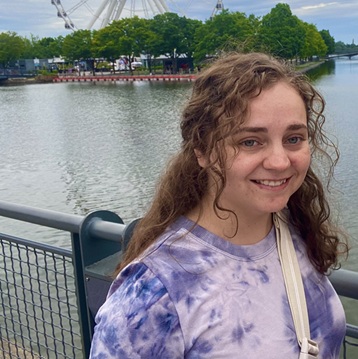
“Magnetic reconnection is a driving force behind solar flares and their interactions with Earth's magnetic field, such as what we see as the northern and southern lights,” Fitzmaurice explained. “Although the sun’s magnetic reconnection and the helium being released toward Earth usually isn’t harmful to us, it influences space weather and potentially impacts our satellites, power grids and even astronauts we send up to space. Studying this phenomenon can help us predict and maybe even prepare for when things get rough.”

A new approach to an old problem

Previous scientific theories focused on high-energy electrons (negatively charged particles) somehow creating the right conditions to accelerate helium-3. But based on previous magnetic reconnection research,  Drake’s group thought that the real drivers might be just the opposite:  they believed that protons (positively charged particles) were more likely to be able to transfer energy into helium-3, superheating the rare isotope and pushing it past helium-4 toward Earth. 

To test this theory, Fitzmaurice developed a detailed simulation of solar environments by modeling a uniform magnetic field containing cold background protons and hot, energetic particles streaming through them like jets.

“Imagine if you had a pond full of water. If you shoot a hose through this pond, you’d get all these ripples and waves in the water,” Fitzmaurice explained. “Something similar happens when you shoot high-energy protons through a background of still, non-moving protons.” 3He acceleration. Credit: Anna Fitzmaurice.3He acceleration. Credit: Anna Fitzmaurice.

Fitzmaurice found that magnetic reconnection on the sun created beams of fast-moving particles, and these particles generated two types of plasma waves that heated helium-3 to extremely high temperatures—nearly 20 times hotter than its original temperature. The  temperatures were so intense that superheated helium-3 could move into regions of the sun where particles get accelerated and eventually shot toward Earth. However, helium-4 experienced less heating, so it stayed behind this speed threshold and was unable to reach the acceleration zones. Fitzmaurice’s research resulted in two recent papers, one published in The Astrophysical Journal and the other in the journal Physics of Plasmas. 

“My  simulations indicate that helium-3 enhancement events are probably much more common than we previously thought,” Fitzmaurice said. “This suggests that there’s some underlying physical process that’s a fundamental feature of solar flare physics rather than a rare anomaly. Learning more about these fundamental processes can help us better understand how the universe works. We can apply this to many different contexts, including learning about environments around black holes and neutron stars, or how the sun’s activity influences life on Earth and humans.”

From family stargazer to solar flare detective

Fitzmaurice feels like she’s come a long way in her journey as an astrophysicist. Growing up in a family where “no one was very science-minded,” she often reflects on how her serendipitous path to astrophysics began—with her father, who often took her to watch rocket launches from NASA’s Wallops Visitor Center in Virginia when she was growing up. 

“I feel pretty lucky to have someone who really fed my curiosity about space as a kid,” Fitzmaurice explained. “We would go as a family to watch meteor showers and rocket launches. He pointed out stars and planets in the night sky. It was because of those experiences that I ‘accidentally’ ended up studying the sun during my undergrad at Catholic University, even though it really wasn’t my original plan in college.”  

Looking back, Fitzmaurice believes she couldn’t have picked a better time to study the sun and its fiery storms. She initially began her research around the 2017 total solar eclipse, which captured the attention of millions of Americans, and has observed many unique solar events since. Now in her final year of her Ph.D. program, Fitzmaurice hopes to connect her theoretical breakthrough about helium-3 to real satellite measurements and essentially prove that her computer models match what actually happens deep in space. She hopes her work will help scientists understand the fundamental physics behind solar flares and bring researchers closer to predicting when and how violently the sun might act up.

“It’s honestly been a very exciting time for me and other solar scientists,” Fitzmaurice said. “We’re now nearing the end of the solar maximum, the peak of the sun’s 11-year activity cycle and when there are more frequent and violent solar flares. With satellites like the Parker Solar Probe and Solar Orbiter, we’re getting closer to the sun than ever before and learning things we would never have expected.” 
Written on 02 September 2025.

Summer at Summit Station

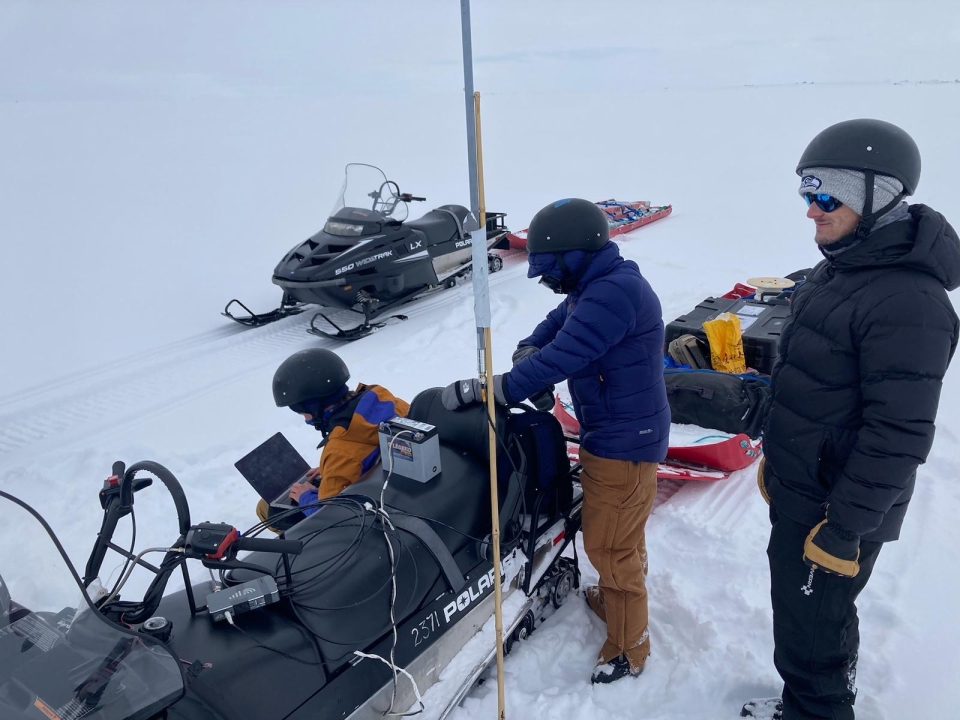
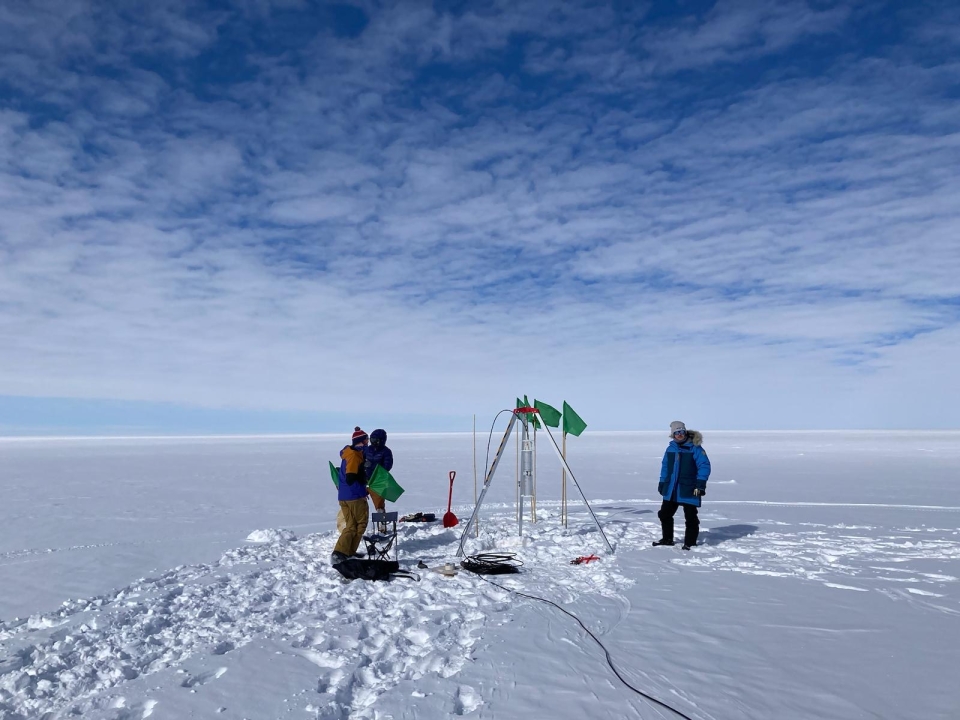
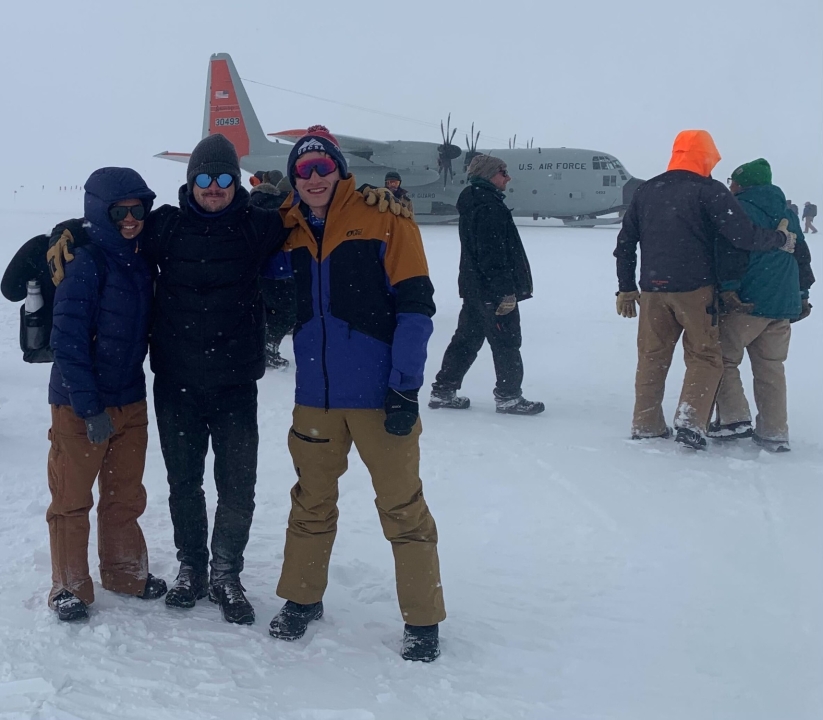
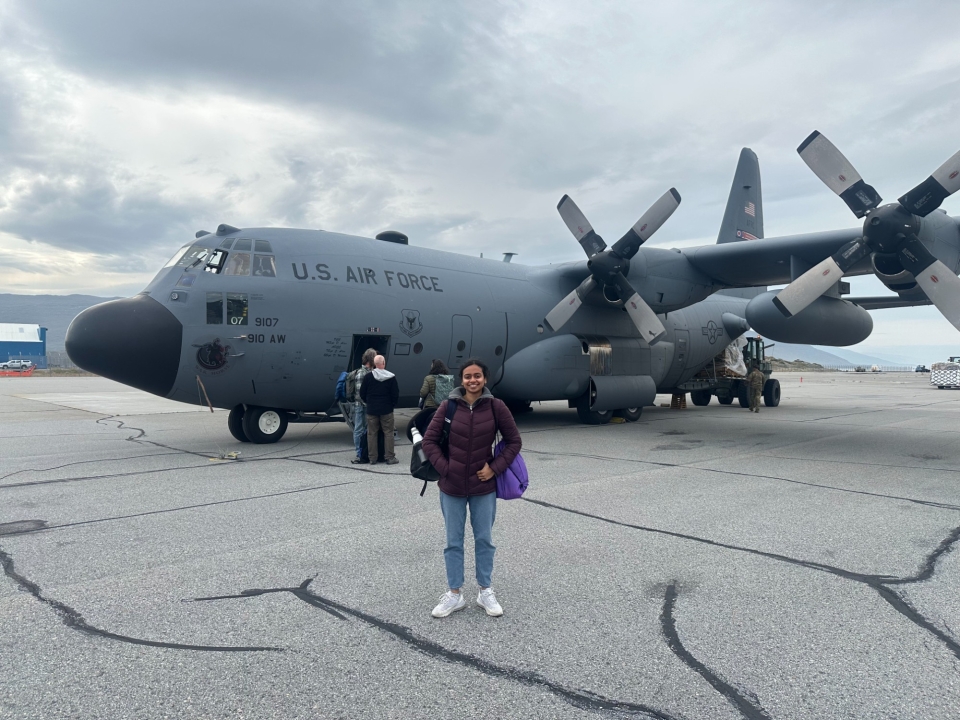
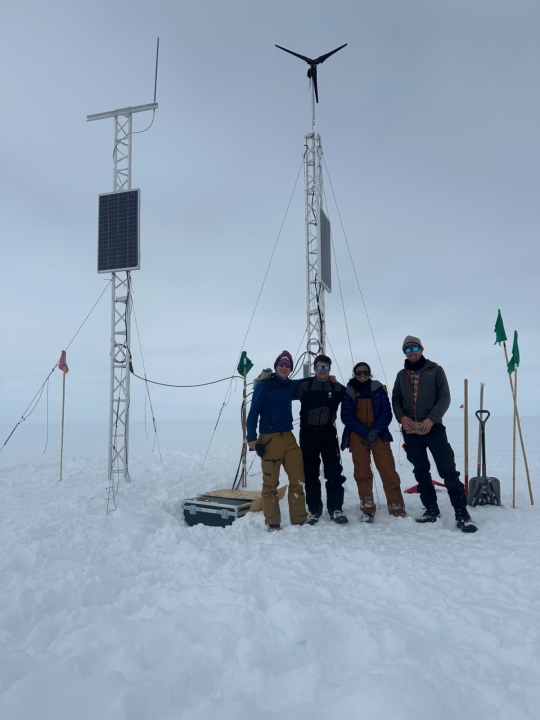
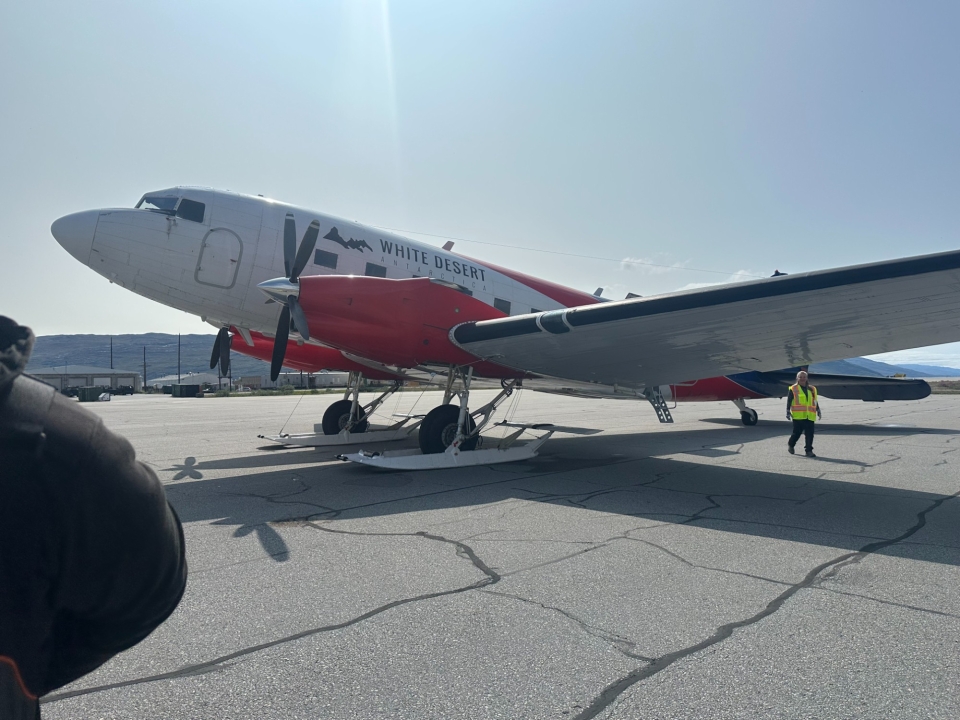
For most graduate students, research trips primarily mean conferences. For Aishwarya Vijai, it meant a month at Summit Station, Greenland, deep inside the Arctic Circle. Summit Station is located near the apex of the Greenland ice sheet at an elevation of ~10,000 feet above sea level. The station hosts scientists from collaborations around the world to conduct experiments on and with the Greenland ice sheet. One such collaboration is the Radio Neutrino Observatory in Greenland (RNO-G), a next-generation, ultra-high energy (UHE) neutrino detector. RNO-G sends teams of 4-5 people to help build the detector, and this year, these teams included a student from UMD: Aishwarya, a fourth-year graduate student in the physics department. Aishwarya works with Assistant Professor Brian Clark. The team flew to Summit Station via miltary aircrafts called LC-130s from Kangerlussuaq, a small town in Western Greenland. They stayed at Summit Station for a month to do maintenance work and collect data for calibration purposes. 

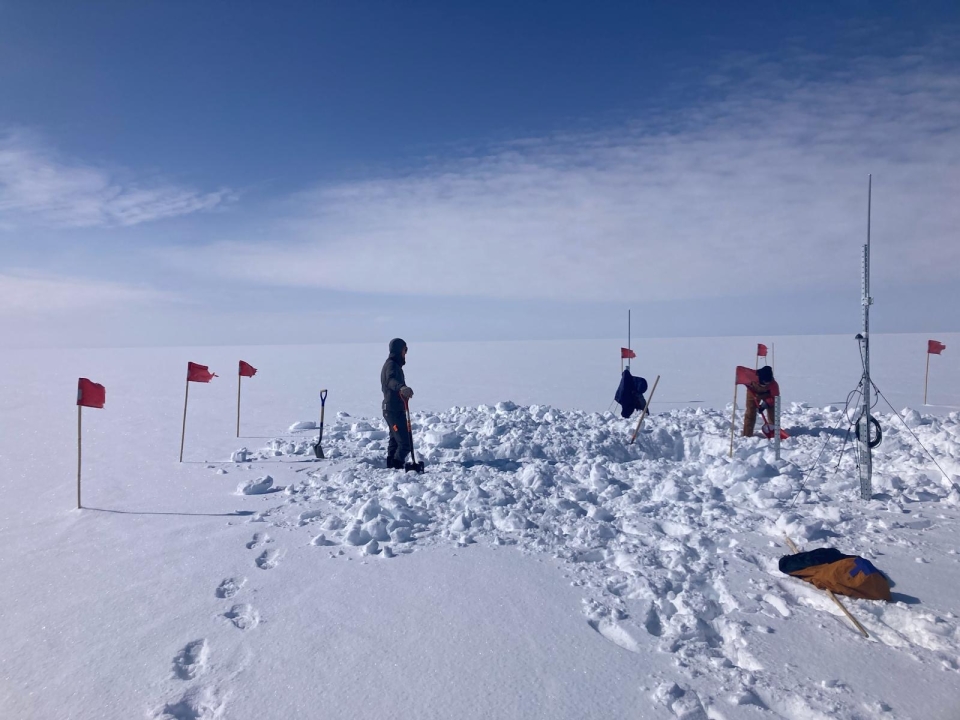
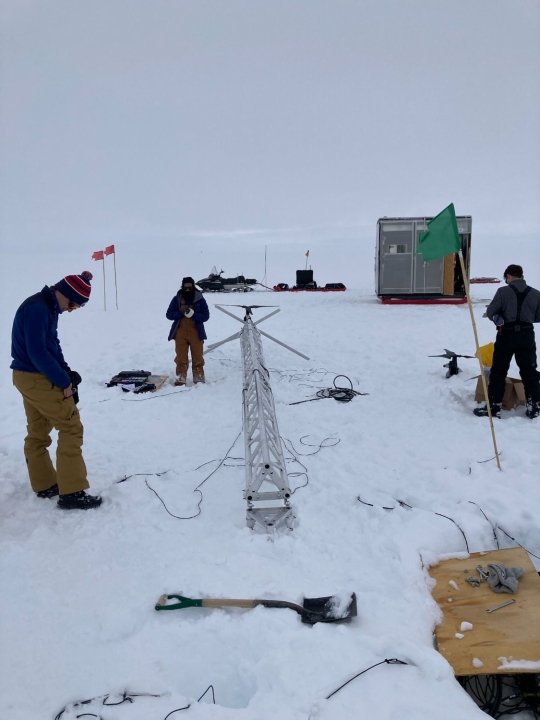
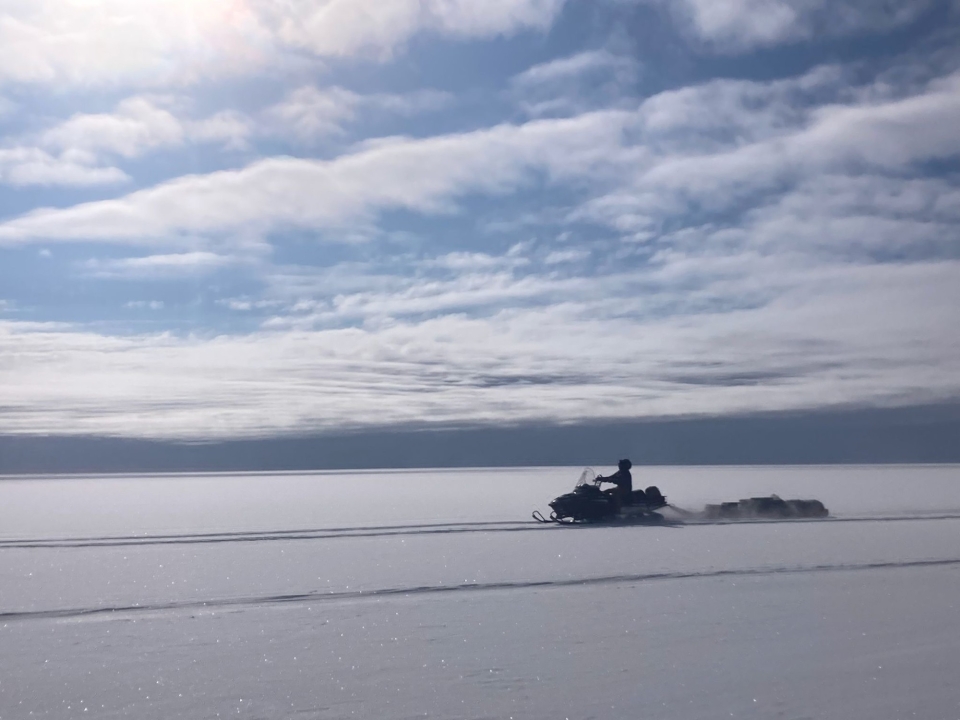
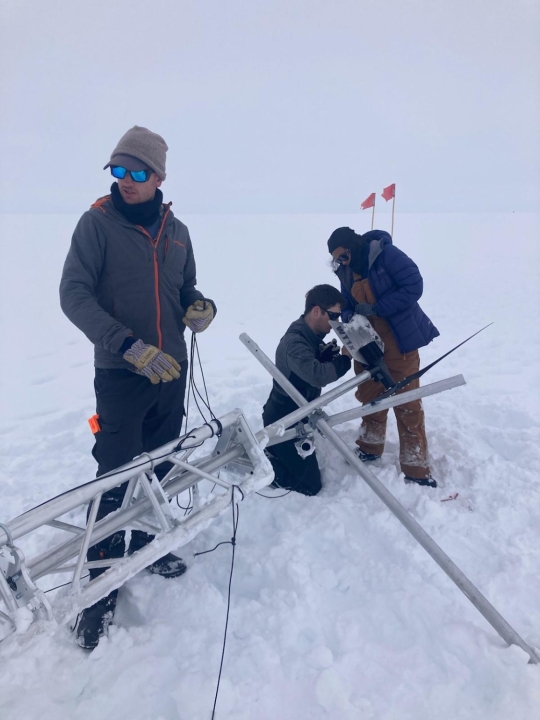
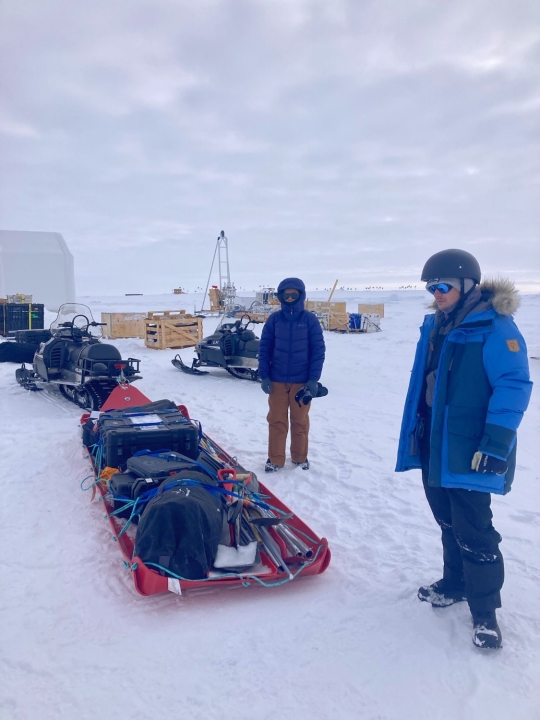
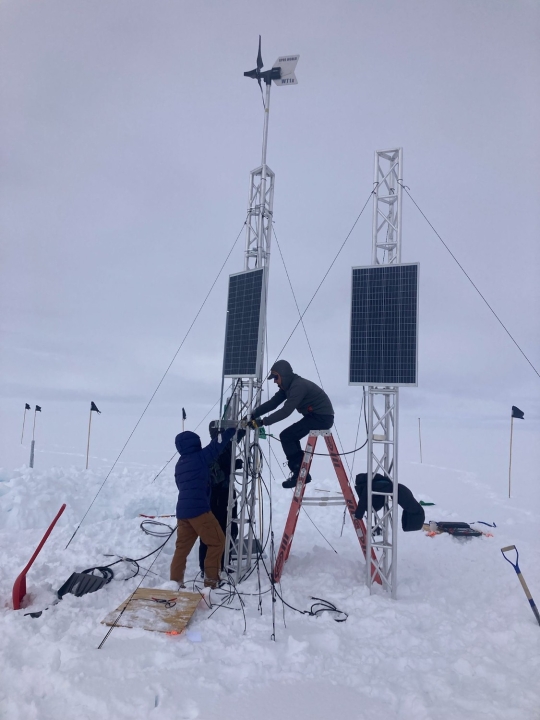
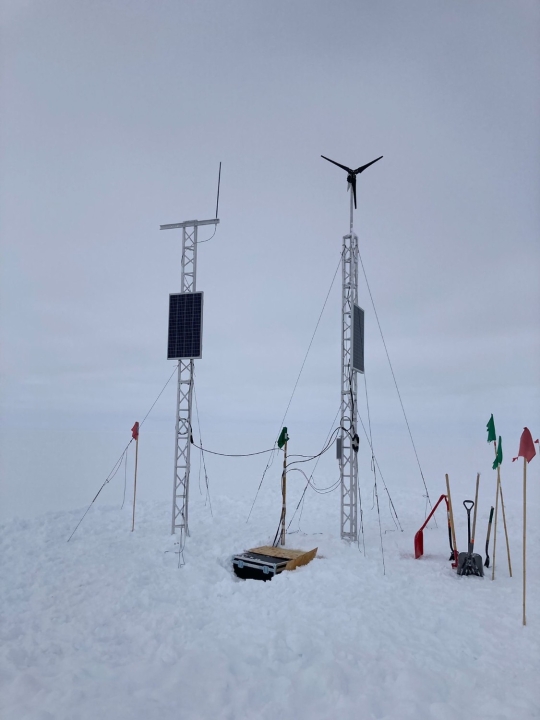
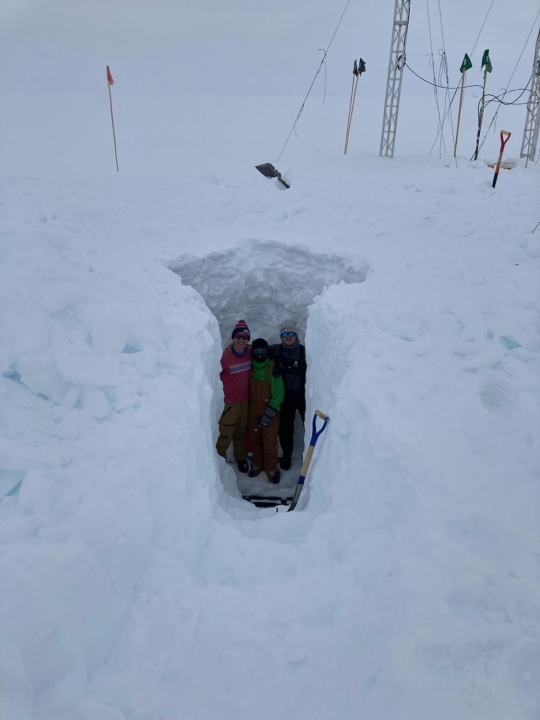
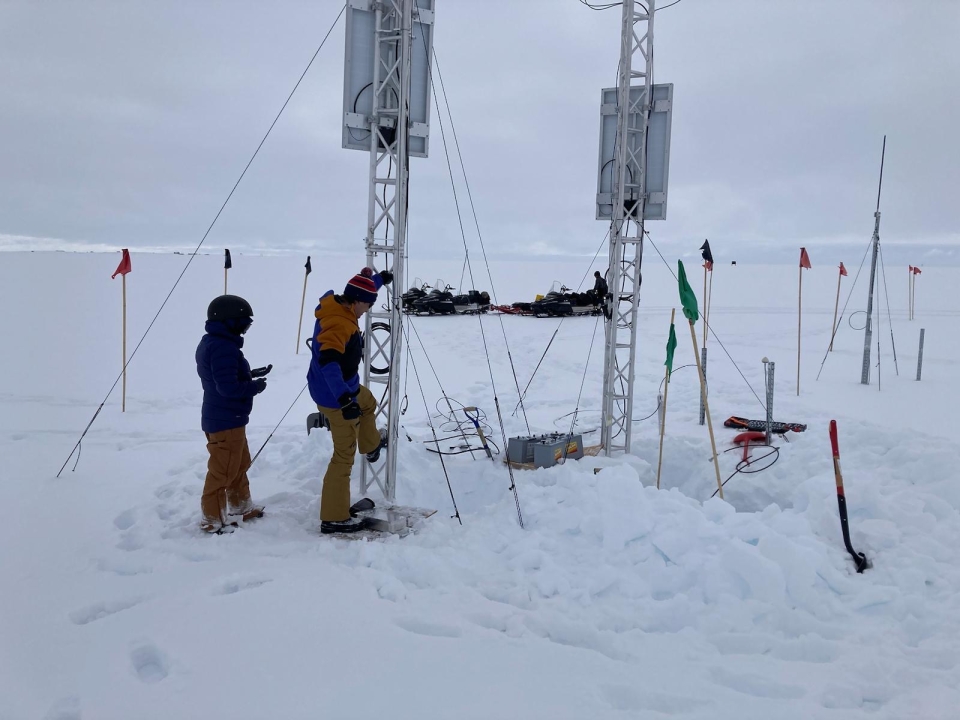
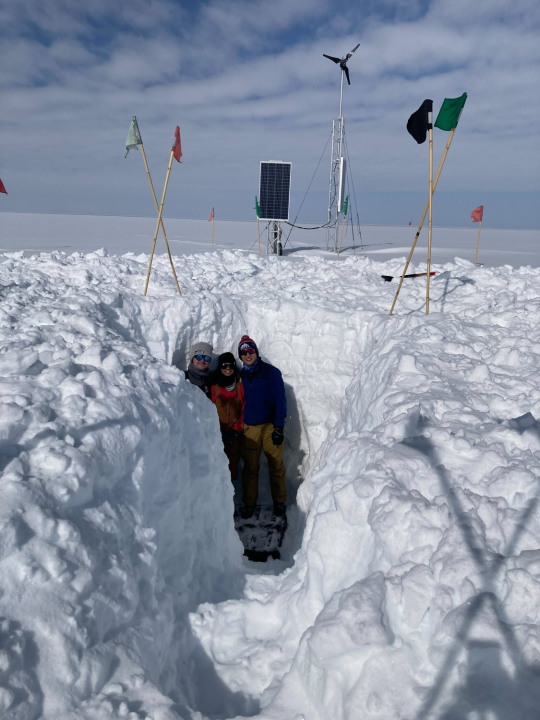
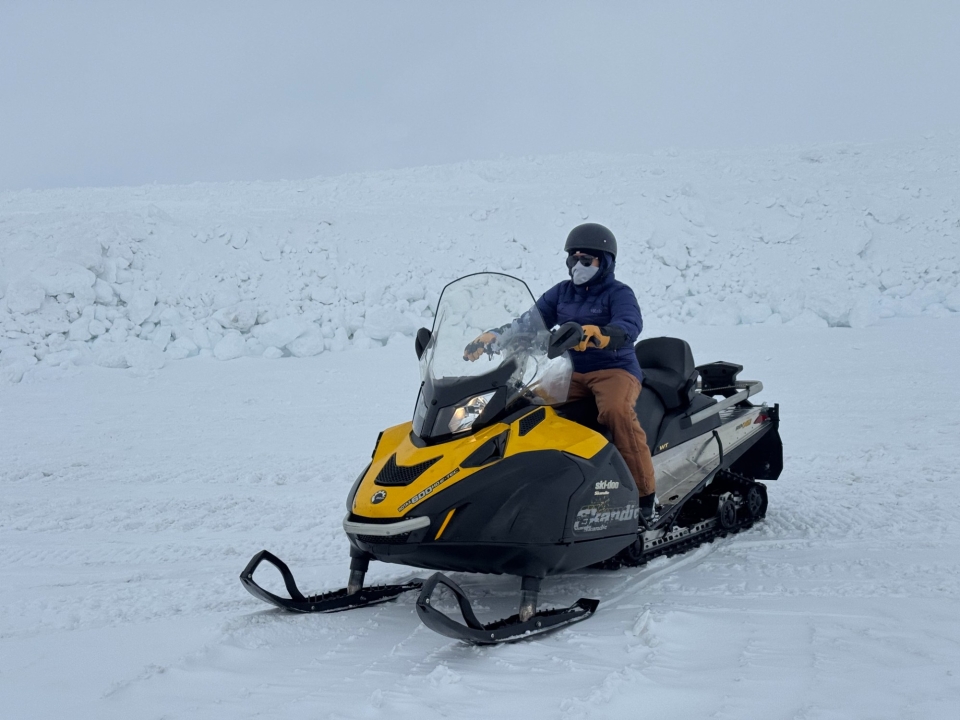
From Summit Station, the RNO-G detector, which is spread out over multiple locations (“stations”) on the ice sheet, is accessed via snow machines. Primary work done by this year included raising structures like solar panels and wind turbines which are used to power the detector. This involved a lot of shoveling to remove the drifting snow and attaching extensions to the bases of these structures to raise their heights. In addition, the team collected critical data to better understand the detector’s performance. This was achieved by campaigns where antennas were lowered hundreds of feet into the ice sheet. 

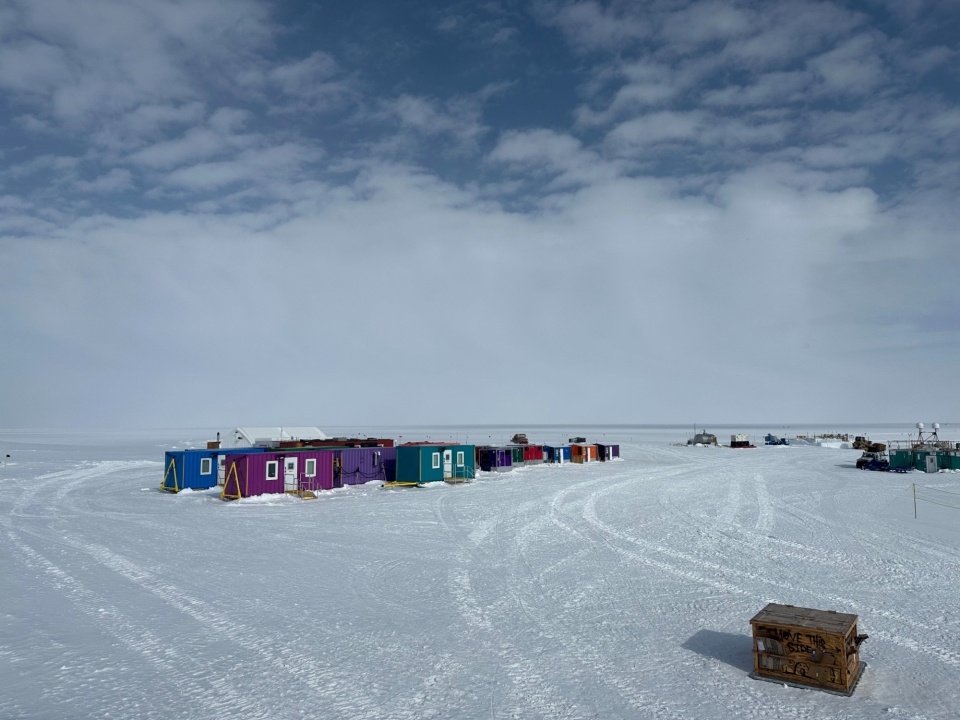
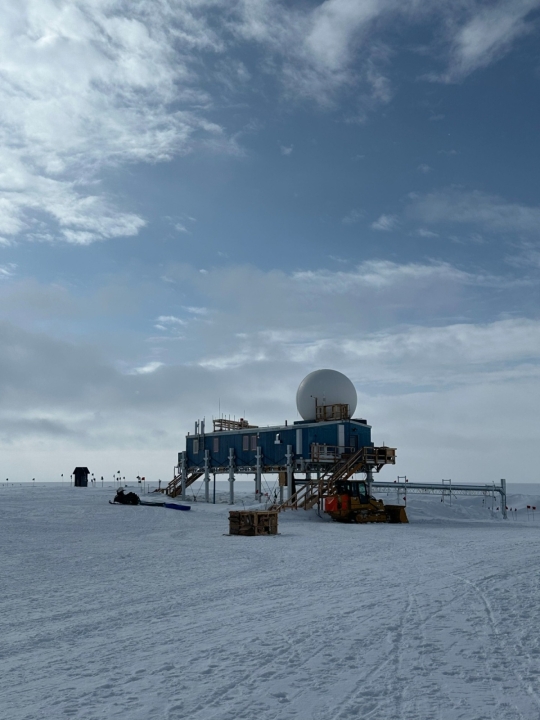
Summit Station has a maximum capacity of 40 people and operates 6 days a week with Sundays off. The biggest building on station is the aptly named Big House, a common area for meals, bathrooms, showers and entertainment in the form of books and board games. Food is prepared on station by a chef 6 days a week with leftovers on Sundays. Additional amenities include a gym, a recreational tent with a projector for watching movies, and a sauna. Sleeping accommodations are in the form of fish huts (small hard-sided structures for 1 person), the Flarm and the Caboose (hard-sided structures for 6-8 people). 

Temperatures at Summit Station typically fluctuate around -10 degrees Fahrenheit with wind chill, with occasional storms generating wind gusts of up to 50 mph. All people on Summit Station are equipped with winter gear to handle extreme weather. The station is located within the Arctic Circle so the sun doesn’t set in the summer until the beginning of August. The constant sunlight reflecting off the ice sheet leads to a high albedo. Sunglasses are worn outside at almost all times. 

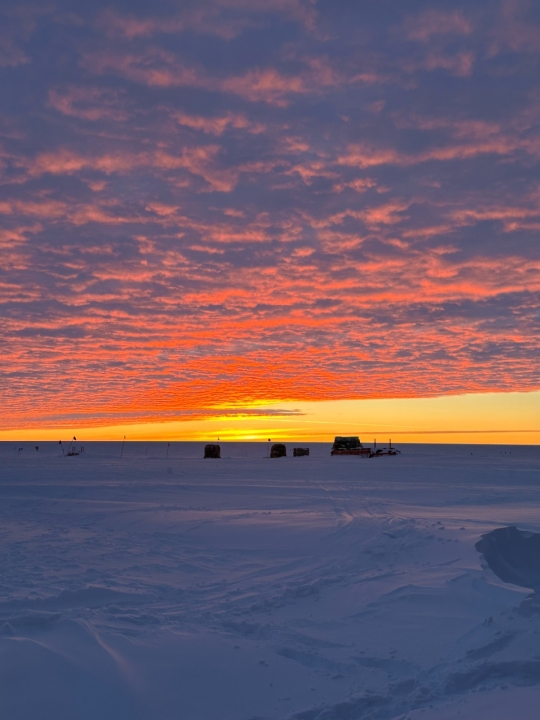
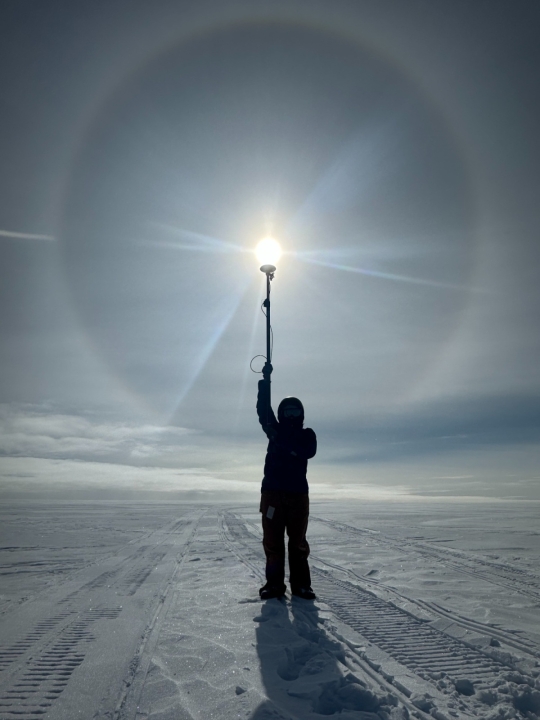
Summit Station and the surrounding ice sheet was an incredible place to visit. The ice sheet is extremely beautiful and vast, appearing almost infinite in size. There are also several cool phenomena that can be observed on the ice sheet, like sun dogs and halos, which are produced when sunlight refracts through the ice crystals in the atmosphere. Sunsets at Summit Station saturate the sky in shades of red and yellow that appear even brighter in contrast to the white surroundings. The community at Summit Station also made the experience incredible, turning a nearly inhospitable place into the place to be for an experience of a lifetime. 

The Greenland ice sheet is one of the only places in the world where a UHE neutrino observatory like RNO-G can be built. The collaboration as a whole looks forward to returning next year and continuing work building the detector and hopefully using it to elevate our understanding of the universe at the highest of energies. 

More About RNO-G

The Radio Neutrino Observatory in Greenland (RNO-G) is a UHE neutrino telescope located at Summit Station, Greenland. The detector aims to find UHE neutrinos potentially emitted from energetic phenomena in the universe like black hole mergers and supernovas (explosions of stars). The detector is currently under construction and the University of Maryland (UMD) is a major construction site. Currently, the RNO-G group at UMD has built nearly 250 antennas. These antennas are the primary detection unit of RNO-G and aim to find the broadband radio pulse that is produced when UHE neutrinos interact with ice.

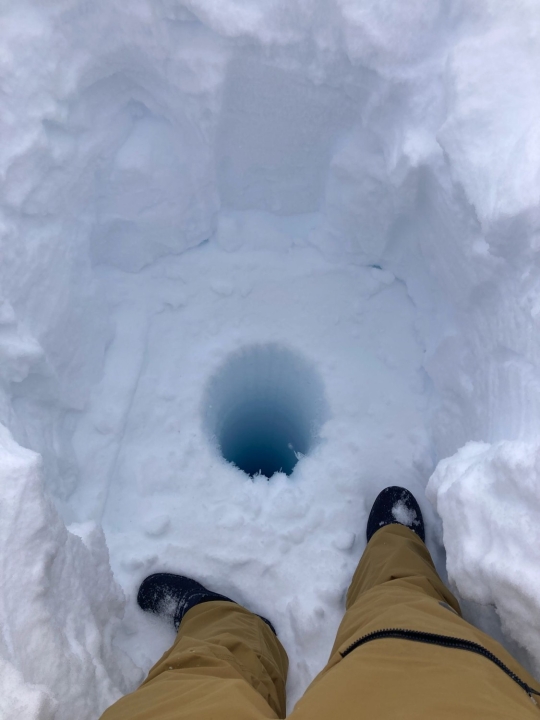
The fully completed detector will have 35 stations spaced 1 km apart to create an array. Each station will be equipped with 24 antennas buried in the Greenland Ice Sheet in drilled holes ~100 meters in depth. 8 stations have been built so far.

  • 1313
  • 1414
  • 15
  • 16
  • 17
  • 18
  • 19
  • 20
  • 21
  • 22
  • 23
  • 24
  • 25
  • 26
  • 1
  • 2
  • 3
  • 4
  • 5
  • 6
  • 7
  • 8
  • 9
  • 10
  • 11
  • 12

Riding snowmachines for the first time.

Shoveling, shoveling and more shoveling.

Raising a wind turbine.

A drilled, ~100 meter deep, RNO-G hole.

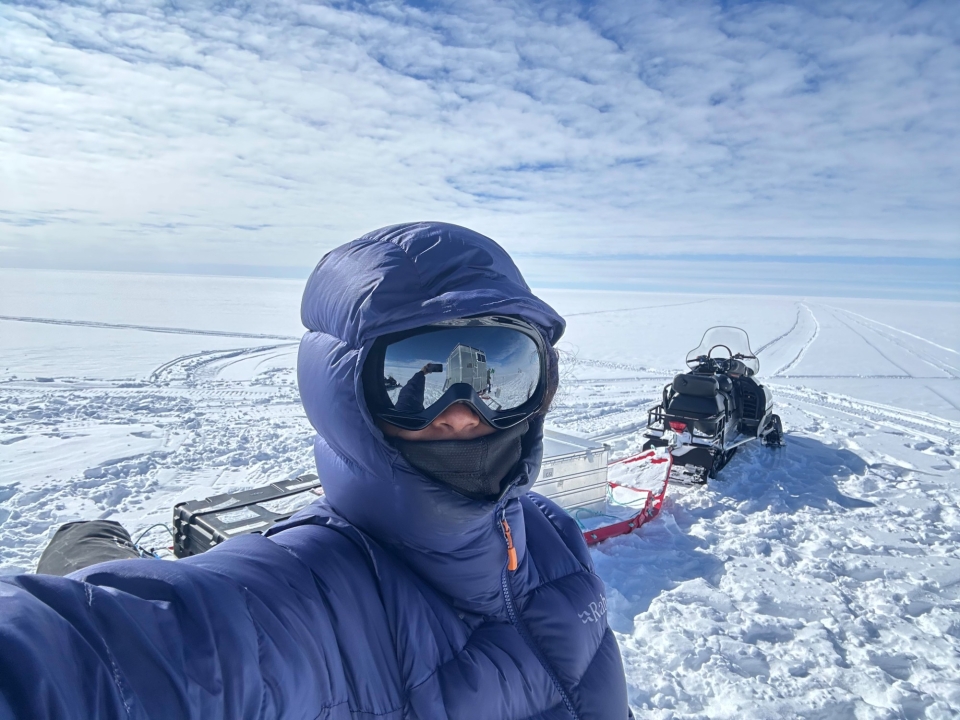
Snowmachines on the ice sheet.

Mounting a wind turbine.

Packing sleds with equipment at Summit Station.

RNO-G station maintenance.

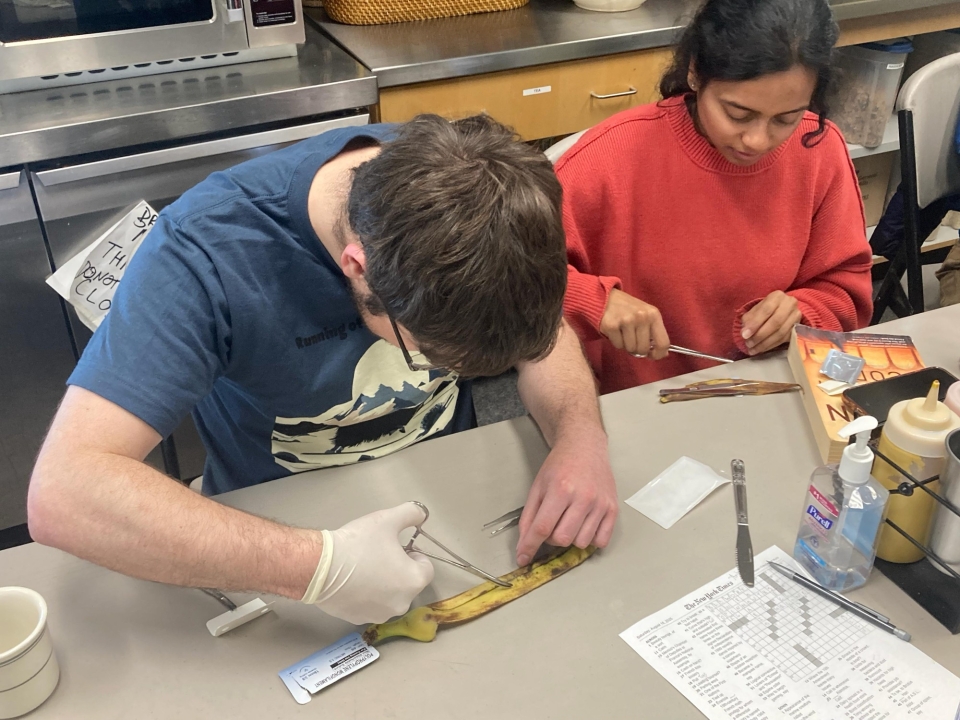
Suturing workshop hosted by the on-station medic.

Remotely connecting to RNO-G stations.

A typical RNO-G station with wind turbines and solar panels aboveground.

Digging out the DAQ box (data acquisition system).

RNO-G station maintenance.

Calibration pulser runs.

The science team about to leave Summit Station.

LC-130 flight from Kanger to Scotia, NY.

Sunset at Summit Station.

Sun dogs and sun halos.

Cold day on the ice sheet.

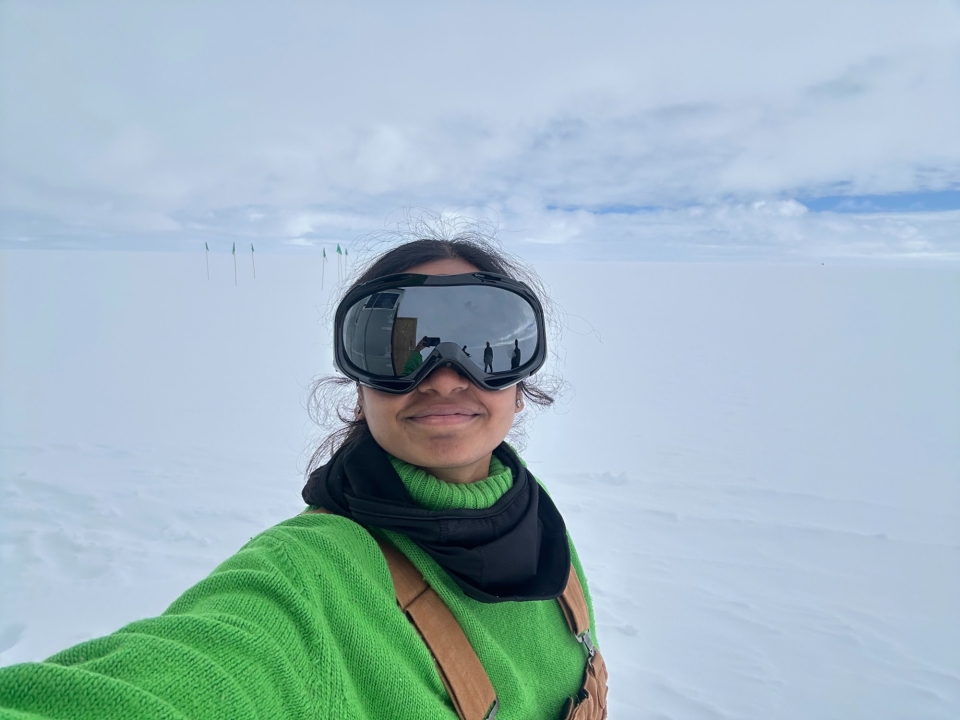
Warm day on the ice sheet.

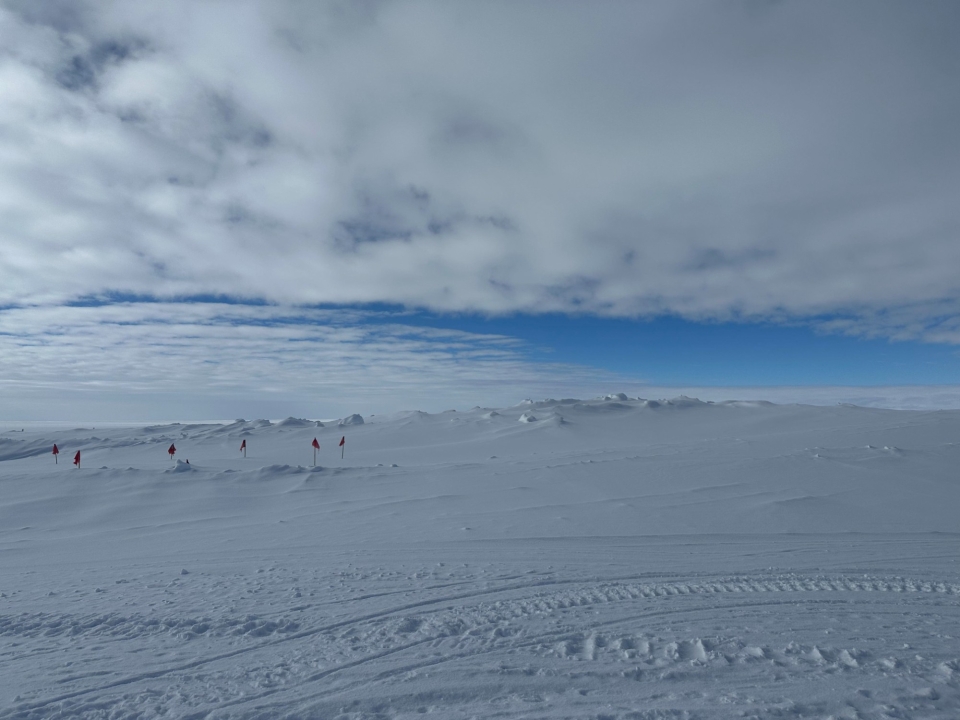
Greenland ice sheet.

Science team at an RNO-G station.

Digging out the DAQ box (data acquisition system).

Fish Hut City.

The Big House.

Basler from Kanger to Summit Station.


Written on 29 August 2025.

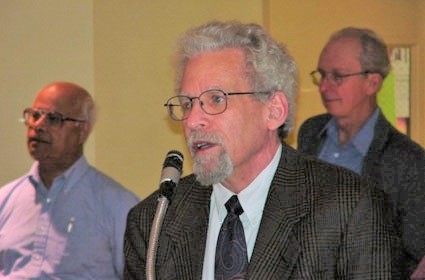
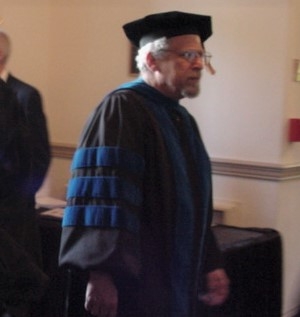
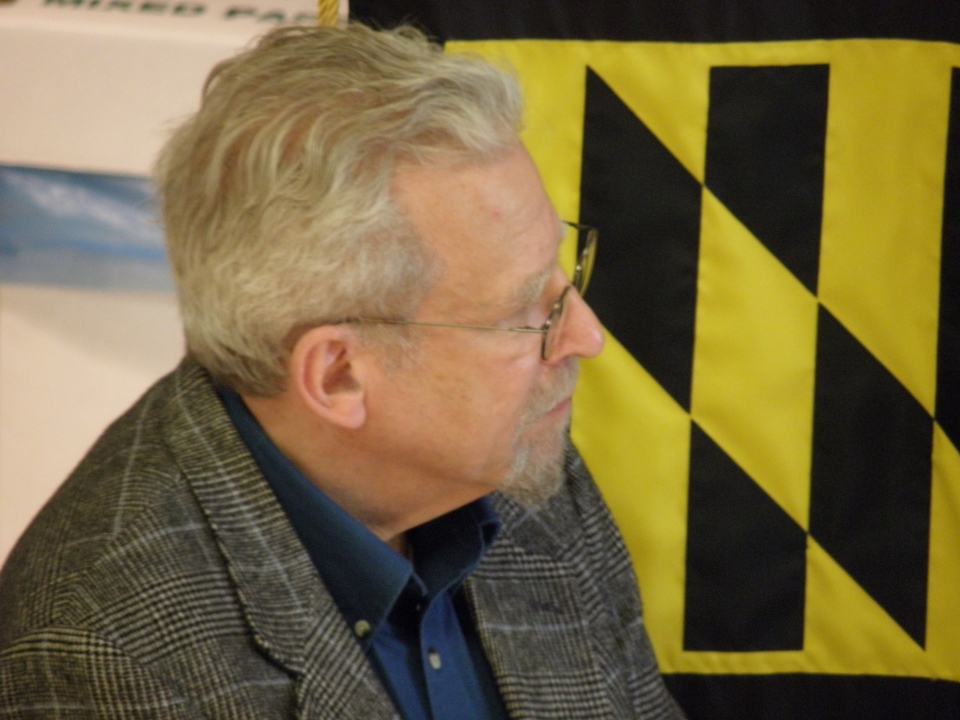
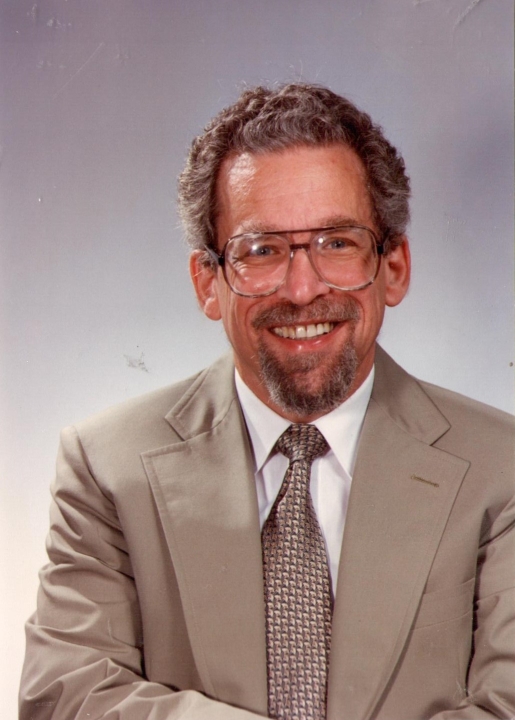
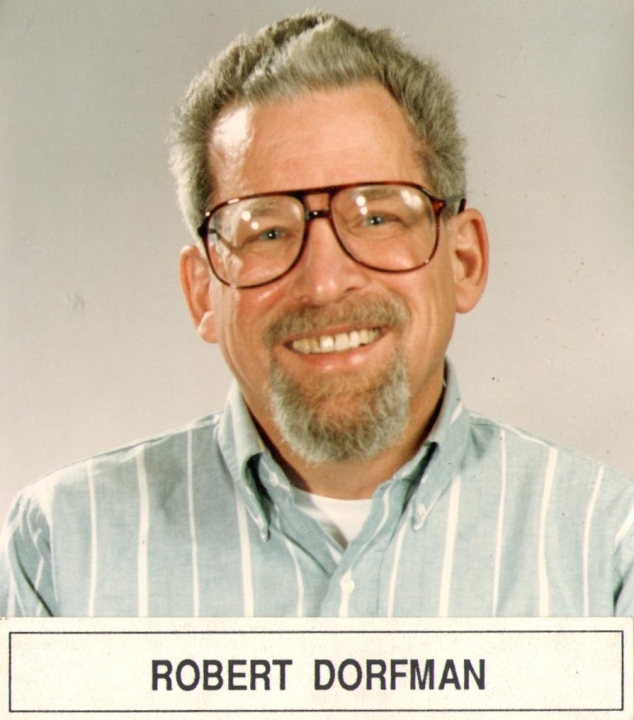
Jacob "Bob" Dorfman, 1937-2025

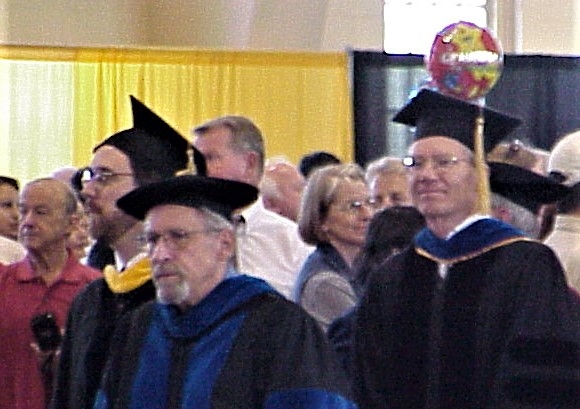
Professor Emeritus Jacob Robert Dorfman died on August 27, 2025. A native of Pittsburgh, Dorfman grew up in Baltimore and received his bachelor’s degree and doctorate at Johns Hopkins University. After three years of post-doctoral research at the Rockefeller University, he was appointed a UMD assistant professor in physics. During his time in College Park, he served as the Director of the Institute for Physical Science and Technology, Dean of the College of Computer, Mathematical and Physical Sciences, and Vice President for Academic Affairs and Provost, returning to teaching and research in 1992. He retired as an emeritus professor in 2005.

"The entire University of Maryland community extends its deepest condolences to Dr. Dorfman's family, friends and colleagues,” said UMD President Darryll J. Pines. "Dr. Dorfman's contributions to the university were substantial and wide-ranging, from serving as a dean and as provost to chairing a committee focused on improving student academic outcomes. He played a critical role in laying the foundation for our institution to achieve excellence, and we are grateful for all he did to advance the university.”

Dorfman enjoyed visiting professor appointments at the University of Utrecht, Rockefeller University and The Technion in Haifa, Israel.  He is the author of over one hundred scientific papers and books on statistical thermodynamic and chaos theory. His most recent book, Contemporary Kinetic Theory of Matter, written with Henk van Beijeren and T. R. Kirkpatrick, was published in 2021.

In addition to his scientific work, Dorfman studied art history, specializing in 17th century Dutch art, and continued to serve on thesis committees in recent years.

A memorial service is planned for Sunday, Aug. 31 at 10 a.m. at Temple Micah, 2829 Wisconsin Ave. NW: https://umdphysics.umd.edu/administrator/index.php?option=com_content&view=article&layout=edit&id=2057

A memorial was posted in Physica A: https://www.sciencedirect.com/science/article/pii/S0378437125008994?via%3Dihub

  • IMG 20211209 155054926IMG 20211209 155054926
  • DSC00285DSC00285
  • DSC000702
  • Acad Awards 09  27
  • jrd
  • Dorfman
  • MVC 006Xa


Written on 28 August 2025.

Faculty, Staff, Student and Alumni Awards & Notes

Follow us on LinkedIn: https://www.linkedin.com/company/umdphysics 


Faculty and Staff 
  • Zohreh Davoudi was quoted in Symmetry magazine.
  • Jim Drake was interviewed by NPR about solar flares.
  • Jim Gates received Doctor of Science (Sc.D.), Honoris Causa from the State University of New York at Old Westbury.
  • Michelle Girvan was elected President of the Network Science Society. 
  • Wally Greenberg's workon quarks was described in the Cern Courier.
  • Howard Milchberg's paper was featured in PhysicsWorld. His student Andrew Goffin, a recent ECE grad, received a Cosmos Club Foundation Prize in Physical Science.
  • Sankar Das Sarma was quoted in Science News.
  • William DeRocca's idea for a dark matter detector was featured in Gizmodo.
  • Wolfgang Losert and Hoony Kang (Ph.D. '24) were honored with UMD's Invention of the Year Award.
  • Ryo Mori joined the department as an Assistant Professor.
  • Johnpierre Paglione's work was featured in Physics World.
  • Bill Phillips discussed his passion for quantum science with PhysicsWorld.
  • Steve Rolston was quoted in a Baltimore Banner story on Governor Wes Moore's quantum initiatives, and in Live Science on the solidity of matter.
  • Roald Sagdeev was interviewed in The Atlantic about the decline of scientific research.
  • Shanta Saha was promoted to the rank of Research Scientist.
  • Jay Sau was quoted in PhysicsWorld.
  • Peter Shawhan explained the physics of the hammer throw as Chioma Njoku prepared fot the NCAA Track and Field Championships.
  • Kartik Srinivasan was named the new NIST Co-Director of JQI.
  • Ron Walsworth was profiled by the Capital News Service.
  • Frank Zhao joined the department as an Assistant Professor.
Students
  • Dhruv Agarwal and Hannah McCright received CMNS Alumni Network Endowed undergraduate awards.
  • Isabella Giovannelli was quoted in Physics.
  • Rodrigo Andrade e Silva and Saketh Muddu received the Charles W. Misner Award in Gravitational Physics.
  • Rajrupa Mondal and Zhaohui Xu received the Joseph and Dorothy Sucher Graduate Prize in Physics.
  • Iman Ahmadabadi and Jeffery Yu received the Thomas Mason Interdisciplinary Physics Award.
  • Sagnik Mondal, Kushan Panchal, Alexandra Behne and Greeshma Oruganti received the Charles T. Husar Fellowship in Physics.
  • Shuzhe Zeng received the Leon A. Herreid Science Fellowship.
  • Aishwarya Vijai spent the summer at Summit Station in Greenland.
Alumni
  • Susan Holcomb (B.S., '10) won the 2023 Cupboard Pamphlet Contest for her book Wolfbaby.

Written on 28 August 2025.

Faculty, Staff, Student and Alumni Awards & Notes

Follow us on LinkedIn: https://www.linkedin.com/company/umdphysics 


Faculty and Staff 
  • Brian Clark was quoted in NewScientist.
  • Tom Cohen was quoted in The Guardian.
  • Jim Gates received the 2025 Barry Prize and was named a Fellow of the American Mathematical Society and African Academy of Sciences.
  • Dennis Papadopoulos contributed a letter to The Washington Post. 
  • Steve Rolston was interviewed on MPT Public Square on September 22, 2025 and featured in The Diamondback with Gretchen Campbell and Norbert Linke.
  • Matt Severson was quoted in The Washington Post.
  • Stephanie Williams was quoted in The Diamondback. 
Students
  • Anthony Boboc was quoted in The Diamondback. 
  • Yanda Geng was quoted in PhysicsWorld.
Alumni
  • SeokJin Bae (Ph.D., '20) received the Boeing Quantum Creators Prize.
  • Damian Blazy (B.S. '02) is the the CEO of Mersive Technologies.
  • Jaron E. Shrock received the American Physical Society’s Marshall N. Rosenbluth Outstanding Doctoral Thesis Award. Shrock, now a post-doctoral associate, was also quoted in Science News.
  • George Sterman (Ph.D., '74) received an Honorary Doctorate at ETH Zurich.
 Department news
  • UMD-Led Team Wins Major NSF Grant to Pioneer “High-Entropy” Quantum Materials
  • The Maryland Quantum-Thermodynamics Hub Secures Funding for Three More Years 

More Articles …

  1. In Memoriam
  2. In Memoriam
  3. Driving AI Innovation for Autonomous Vehicles
  4. JQI Hosts Quantum Workshop for Science Communicators
  5. GRAD-MAP Students, Mentors ‘Learn From Each Other’

Page 11 of 155

  • 6
  • 7
  • 8
  • 9
  • 10
  • 11
  • 12
  • 13
  • 14
  • 15
  • Physics Administration
  • Directions
  • Awards
  • Student Awards
  • Make a Donation
  • News
    • Research News
    • Department News
    • Newsletters
  • PTK Policy

College and Department Links

Department of Physics

Physical Sciences Complex
4296 Stadium Dr
College Park, MD 20742
Phone: 301.405.3401

Information

  • Campus Directory
  • Undergraduate Research
  • Scholarships
  • Prospective Undergraduates
  • Directions & Transit
  • Web Accessibility
© 2026 University of Maryland - Department of Physics
Top
  • Home
  • About Us
    • Physics Administration
    • Directions
    • Awards
    • Student Awards
    • Make a Donation
    • News
      • Research News
      • Department News
      • Newsletters
    • PTK Policy
  • People
    • All
    • Faculty
      • Current
      • Emeritus
      • Adjunct
      • Affiliate
      • Research Professors
    • Research Scientists
    • Postdocs
    • Staff
    • Lecturers
    • Visitors
    • Graduate Students
  • Research
    • Research Areas
      • AI and Physical Sciences
      • Astro Metrology
      • Atomic, Molecular & Optical
      • Biophysics
      • Chemical Physics
      • Condensed Matter Experiment
      • Condensed Matter Theory
      • Cosmic Ray Physics
      • Elementary Particles
      • Gravitation Experiment
      • Gravitational Theory
      • High Energy Physics
      • Nonlinear Dynamics, Chaos and Complex Systems
      • Nuclear Physics
      • Particle Astrophysics
      • Physics Education Research
      • Plasma Physics
      • Plasma Theory
      • Quantum Science and Technology
      • Quarks, Hadrons and Nuclei
      • Space Physics
    • Centers & Institutes
  • Academics
    • OSES Home (Student Services)
    • OSES News
    • Undergraduate Program
      • Prospective Students
      • Apply Now
      • Degree Requirements and Policies
      • Scholarships
      • Undergraduate Research
      • Advising
      • Undergraduate Forms
      • Undergraduate Events
      • Departmental Honors
      • Society of Physics Students
      • FAQ
      • Undergraduate Student Committee
    • Graduate Program
      • Prospective Students
      • Open House
      • Degree Requirements
      • Graduate Resources
      • Deadlines and Forms
      • PhD Defenses
        • PhD Defenses 2026
        • PhD Defenses 2025
        • PhD Defenses 2024
        • PhD Defenses 2023
        • PhD Defenses 2022
        • PhD Defenses 2021
        • PhD Defenses 2020
        • PhD Defenses 2019
        • PhD Defenses 2018
        • PhD Defenses 2017
        • PhD Defenses 2016
      • Events
      • Scholarships & Awards
      • Qualifier
      • Graduate Student Organizations
      • FAQ
    • Student Opportunities
      • GRAD-MAP
      • Graduate Student Organizations
      • Outreach Volunteering
      • Society of Physics Students
      • NSF S-STEM Program
      • Undergraduate Research
      • The Noether Physics Society
      • Undergraduate Quantum Association
    • Courses
    • Academic Support
    • NSF S-STEM Program
    • Teaching Assistants
  • Events
    • Calendar
    • Physics Colloquia
    • W.J. Carr Lecture
    • Research Interaction Team (RIT) Math/Physics
    • Mechanick Quantum Biology Lecture
    • Irving and Renee Milchberg Endowed Lectureship
    • Charles W. Misner Endowed Lectureship in Gravitational Physics
    • Charles W. Misner Memorial Symposium
    • John S. Toll Endowed Lecture
    • Prange Prize Lecture
    • Maryland Day
    • Outreach
      • Outreach Home
      • Physics is Phun
      • Discovery Days
    • Summer Programs
      • Physics Makers Camp
      • Physics of Quidditch
      • Science Discovery Camp
      • Advanced Physics Summer Program
      • Toolkit for Success
    • CUWiP
    • Vortex Makerspace
    • QURiSE Conference
  • Services
    • Building Access Requests
    • Computing Services
    • Conference Room Reservations
    • Department Operations Directory
    • Electronic and Mechanical Development
    • Hiring Procedures
    • Lecture Demo
    • Mental Health Resources
    • Parking
    • Physics Ombudspersons
    • Printing Services
      • Poster Print Request
    • Proposal Submissions
    • Purchase Order
    • Suggestion Box
    • Textbook Information
  • Give