Patrick Kim Named Goldwater Scholar

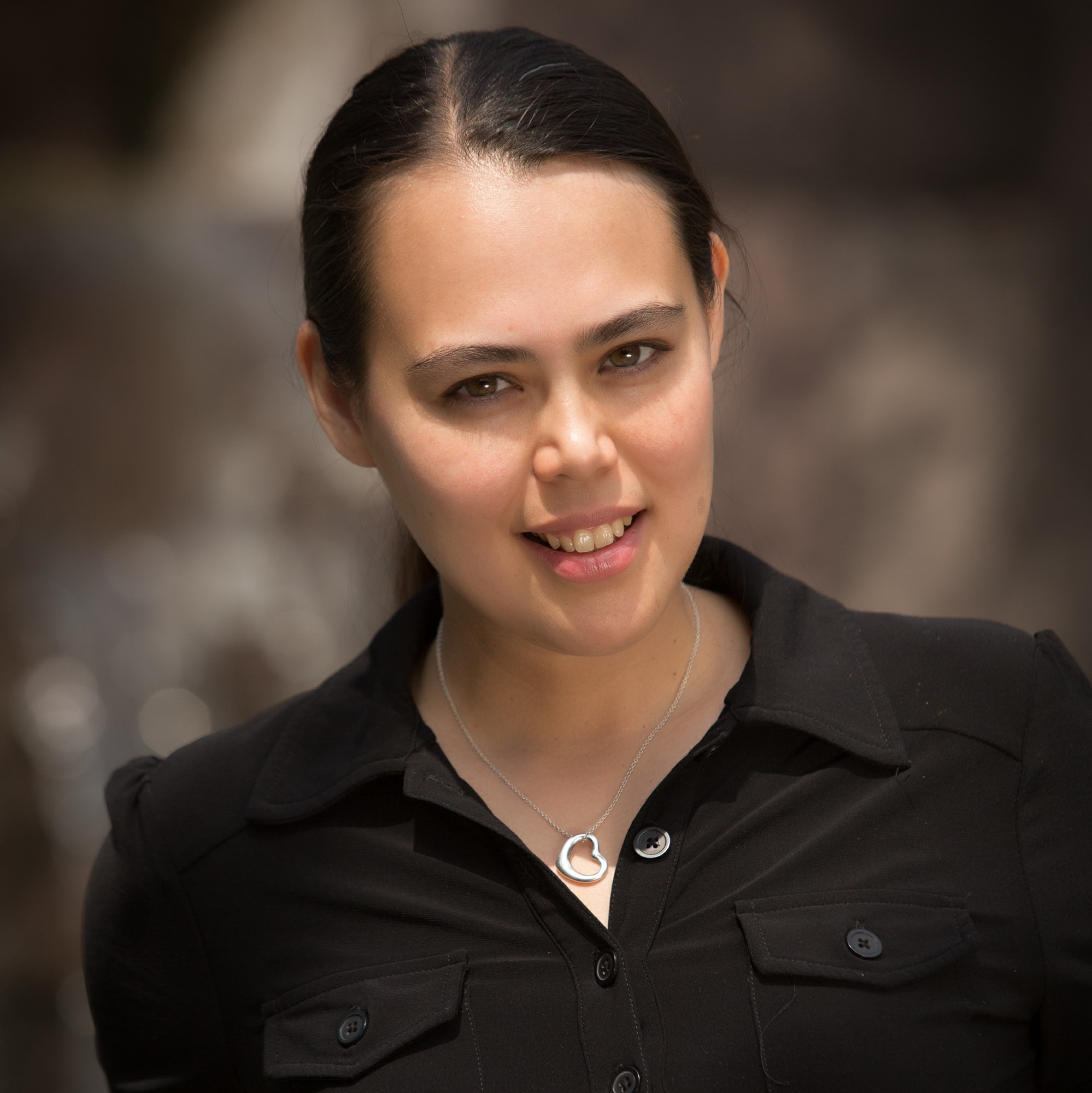
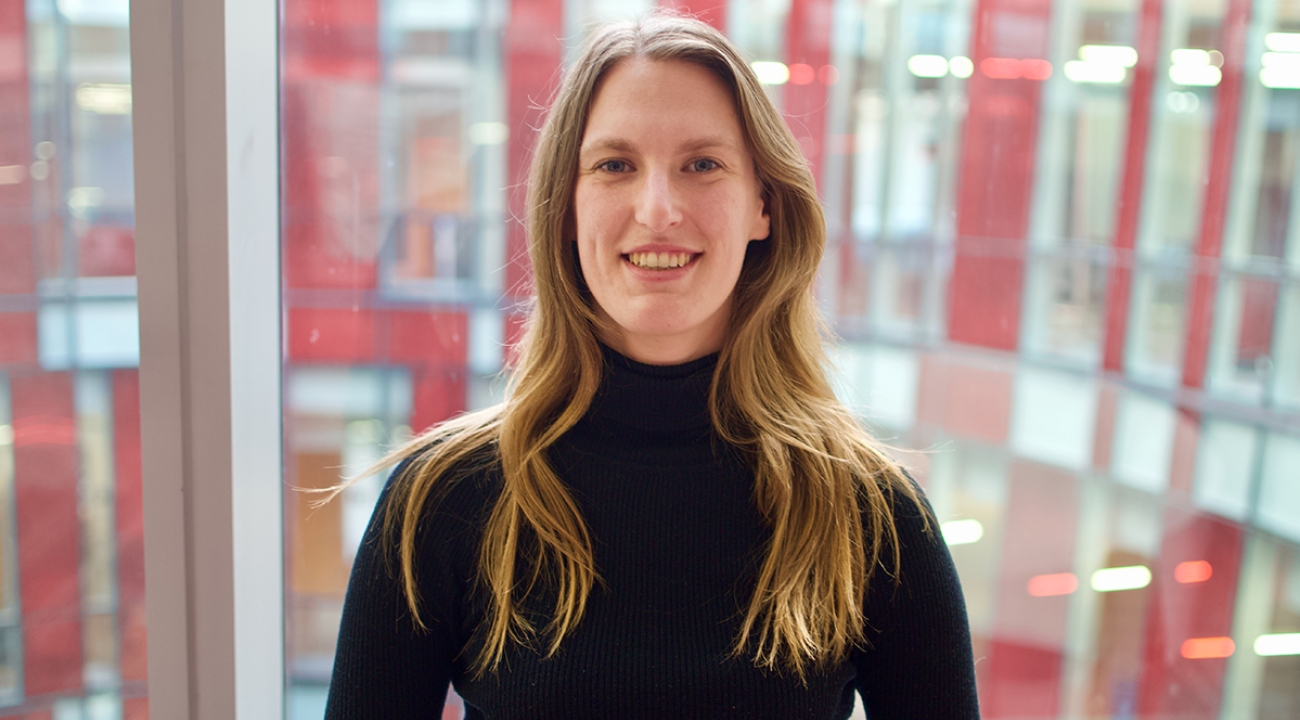
Patrick Kim, a junior physics and electrical engineering double-degree student, is one of three UMD students to have been awarded 2022 scholarships by the Barry Goldwater Scholarship and Excellence in Education Foundation, which encourages students to pursue advanced study and research careers in the sciences, engineering and mathematics.  Patrick Kim. Photo courtesy of same.Patrick Kim. Photo courtesy of same.

Over the last decade, UMD’s nominations yielded 35 scholarships—the second-most in the nation behind Stanford University. The Goldwater Foundation has honored 76 UMD winners and five honorable mentions since the program’s first award was given in 1989. In the last decade, 15 physics students have received Goldwater recognition: Kim, Ela Rockafellow, Scott Moroch, John Martyn, Nicholas Poniatowski, Mark Zic, Paul Neves, Christopher Bambic, Eliot Fenton, Prayaag Venkat, Nathan Ng, Geoffrey Ji, Stephen Randall and Noah Roth Mandell. 

“Our Goldwater Scholars are conducting research on the leading edge of their disciplines—engineering new clean energy solutions, using algorithms to optimize the distribution of limited resources in contact tracing or access to vaccines, and designing new gene-based diagnostics and therapies against aggressive cancers. Each of them is on a trajectory to make major research contributions that have societal impact,” said Robert Infantino, associate dean of undergraduate education in the College of Computer, Mathematical, and Natural Sciences. Infantino has led UMD’s Goldwater Scholarship nominating process since 2001.

Kim, a member of the University Honors program and President’s Scholarship recipient, is contributing to the quest for fusion energy—a process that forces atoms together under great heat and could mean an almost limitless supply of clean energy if successful. 

Kim began his first research project at UMD with Physics Professor William Dorland in 2017—two years before he became a college freshman. Now, Kim is working with Dorland to optimize fusion reactors to reduce their turbulent transport, which would otherwise greatly limit their efficiency and prevent net fusion power gain.

“Patrick is bright, resourceful, tenacious and curious,” Dorland said. “He is able to teach himself fast enough and thoroughly enough to have produced new results, which he published in a refereed journal and presented at the annual American Physical Society conference for the Division of Plasma Physics.”

Kim also conducts research at the Princeton Plasma Physics Laboratory (PPPL), where he studies reduced plasma models that can evaluate the plasma’s nonlinear macroscopic stability and dynamical properties more rapidly. He is co-author of a journal article submitted on this work. This summer, he plans to continue working at PPPL to develop improved optimization algorithms for fusion reactors.

After graduation, Kim plans to pursue a Ph.D., become a plasma physicist and help develop the first commercial nuclear fusion reactors that provide power to the electrical grid.

Other UMD winners this year were George Li, a sophomore computer science and mathematics double-degree student; and Kevin Tu, a junior biological sciences and economics double-degree student.  Goldwater Scholars receive one- or two-year scholarships that cover the cost of tuition, fees, books and room and board up to $7,500 per year.


In Memoriam

It is with much sadness that the Department of Physics announces the passing of several members of our community. 

  • Gerald Abrams (Ph.D., '67), who spent most of his career at Lawrence Berkeley National Laboratory, died on March 31, 2020.
  • Nick Chant, who researched nuclear physics and served as the department's graduate director, died on October 15, 2021.
  • Thomas Ferbel, a high energy physicist who held UMD appointments since 2013, died on March 13, 2022
  • Lavonne Dragt, wife of Prof. Emeritus Alex Dragt, died on November 12, 2021.
  • Charles S. Dulcey Jr (Ph.D., 1982), who worked as a research physicist at the Naval Research Laboratory, died on Dec. 30, 2021
  • Michael Fisher, whose many honors included a USM Regents Professorship, died on November 26, 2021.

Alicia Kollár Bridges Abstract Math with Realities of the Lab

Eugene Wigner, a Nobel Prize-winning mathematical physicist, once said, “The miracle of the appropriateness of the language of mathematics for the formulation of the laws of physics is a wonderful gift which we neither understand nor deserve.”

Indeed, mathematics may seem abstract or even irrelevant until it’s used to describe the natural world around us. The reverse is occasionally also true: Physical realities, when brought to a mathematician’s attention, can inspire new questions and new discoveries. 

The research of Alicia Kollár, a Chesapeake Assistant Professor of Physics at the University of Maryland and a Fellow of the Joint Quantum Institute, embodies the give and take of this relationship between physics and mathematics. In her lab, she brings abstract theories to life and in turn collaborates on new theorems. She has forged a research program of manipulating light on a chip, coaxing the light into behaving as though it lives on the surface of a sphere, or a mathematical abstraction known as a hyperbolic surface. She also collaborates with mathematicians, furthering both the understanding of what these chips can do and their underlying mathematics. 

Alicia KollárAlicia KollárA direct collaboration with pure mathematicians is uncommon for a physicist, particularly an experimentalist. But Kollár is no stranger to mathematics. Raised by two mathematicians in Princeton, New Jersey, she was exposed to the discipline early on. However, Kollár said her parents didn’t pressure her to pursue mathematics growing up. 

“It never crossed my dad’s mind to try to force me to do what he loved,” Kollár said. “He considered that pointless, like ‘You should go into research for you, not for somebody else’s expectations.’” 

Her father, János Kollár, a professor of mathematics at Princeton, had a slightly different take. 

“She was always interested in science, so I didn’t need to apply any influence,” he said. “If she was only interested in rock music it might have been different.”

Free to pursue whatever she pleased (short of rock music), Kollár studied advanced math, but without much enthusiasm. 

“I was fortunate to be able to take quite a bit of college-level pure math as a high schooler,” she said. “And I would say that I think I was good at it, but I didn’t love it. I just kind of didn’t care.” 

What really caught Kollár’s attention was physics. Her high school physics teacher’s style really resonated with her. 

“He was a crusty old dude that loved Far Side cartoons,” she recalled. “And he wouldn’t put up with anybody that was too cool for school. He taught non-calculus physics, but he taught that you have to think about it—not ‘Here’s a method learn how to do it.’ We became really good friends, and I really liked thinking about how it works, you know, the physical intuition part of physics.”

She attended college at Princeton University, remaining in her hometown and further developing her fascination with physics. 

“I was sort of divided between math and physics as a freshman,” Kollár said. “But the more physics I took, I never looked back.”

During her first summer research experience, she was charged with taking apart a telescope mount for a cosmology group. That’s when she found her calling as an experimentalist.  

“I had a lot of fun that summer,” she said, smiling. “I ended up building a 1500-pound steel support structure. I was up to my eyeballs in machine oil and loving every minute of it.”

When applying to graduate schools, Kollár’s soon-to-be Ph.D. adviser Benjamin Lev, now an associate professor of physics and applied physics at Standford University, called her and convinced her to join his lab. He enticed her with the promise that, as an atomic and optical physicist, she could do both theory and experiment side by side. She joined his group at the University of Illinois at Urbana-Champaign, and, in her first year, moved with the whole team to Stanford.

Kollár’s Ph.D. work consisted of building a novel experimental apparatus from scratch, designed to trap atoms and photons together and allow them to influence each other in significant, controllable ways. The resulting experimental setup launched a new direction in its field, according to Lev. 

“From beginning to end, it was just an amazing graduate school experience, where you see something from the inception of the idea to actually showing that this new experimental technique can work,” Lev said. “And she was always a thought partner. We were thinking through the ideas, writing the equations on the board, working with theorists, and she was an equal thought partner on all of that.”

After graduate school, Kollár found herself returning to Princeton. “Princeton is a black hole,” she said. “You can never quite leave. Maybe it’s the Hotel California, you know?”

She became a postdoctoral researcher in the lab of Andrew Houck, a professor of electrical and computer engineering and a Fellow in the Princeton Center for Theoretical Science. Houck worked with coplanar waveguides—little paths printed on a circuit board that confine light in a tube the thickness of a human hair. These paths have become the setting of many of Kollár’s mathematical explorations. 

Kollár was in her office one day, playing around with one of these coplanar waveguide chips. This one contained a waveguide lattice—a repeating grid, one waveguide after the other. Lattices are a familiar concept to physicists from the study of metals, where atomic nuclei form repeating patterns, extending in all three directions.

Kollar’s mathematical training bubbled up, flooding her brain with ideas. She envisioned a similar lattice, but instead of one dimension it would extend in two. And, she realized, thanks to the properties of coplanar waveguides, there was a lot of flexibility in the ways she could shape these grids.  

Instead of being points, as in a conventional lattice of nuclei in a metal, the sites of this lattice were paths—lines that guide light around. And, Kollár could bend and stretch these lines however she wanted without changing the underlying physics, as long as the total length stayed the same. 

Kollár realized that by scrunching and stretching these waveguides, she could connect them to each other in ways that aren’t possible for normal lattices of points, at least not in the world we are used to. Instead, the waveguides would act as though they are on the surface of a sphere, or a mathematical construction known as a hyperbolic surface, where traditional ideas of parallel lines, triangles and navigation break down.  

A hyperbolic surface is, in a sense, the opposite of a sphere. So much so that a two-dimensional hyperbolic surface can’t exist within our three-dimensional world—basically, it doesn’t fit. Kollár said the best way to imagine hyperbolic space is with some of M. C. Escher’s pictures. 

Kollár and her collaborators successfully showed that coplanar waveguides can indeed form lattices that act as though they live on a hyperbolic surface. 

Kollár found that these hyperbolic lattices had some cool physics properties. In particular, she found that they gave rise to something called flat bands—paradoxical places where, regardless of how fast a particle is moving, its energy stays the same. These flat bands are thought to be behind some of the most intriguing unexplained physical effects, like the fractional quantum Hall effect, spin-​liquids, and even some cases of high-temperature superconductivity. 

“When I discovered these flat bands, I actually thought I made a mistake in my code,” Kollár said, “I turned around to my lab partner, and I was like, ‘I think I messed up but if I didn’t, this is really cool.’ And so at the time, we didn't understand where that was coming from. What we've since come to understand is that was really just the tip of the iceberg.”

To understand the full potential of this new technique, Kollár joined forces with Peter Sarnak, professor of mathematics at the Institute for Advanced Study at Princeton. This collaboration has proved extremely fruitful. Together, they showed that the flat bands were far from a mistake. In fact, they proved that the flat bands must exist in any hyperbolic lattice of the kind Kollár creates.

“There's been this constant feedback between very general math theorems leading to good examples and then good examples leading to new math theorems,” Kollár said.

Now, she is leading her own group at UMD and is working on coupling bits of quantum information—called qubits—to these exotic lattices. She has assembled a group of like-minded students, interested in addressing novel physics. Although there’s no way to know exactly what the future holds for Kollár, it’s fair to anticipate that she will continue to follow her nose to interesting and unexpected places. 

“I think what was special about Alicia is that she always had her own mind and she did not want to follow what others were doing,” her father, János, said. “It can be frustrating when you're a two-year-old, but I think in the long run if you can follow your own mind very seriously it can work out very well.”

Written by Dina Genkina

Growing into a Physicist at UMD

Physics can sometimes come across as the business of cold, calculating geniuses. But it can often be joyful, fun, competitive, engaging and more. Physicists are normal people and each of them has a unique and evolving relationship with their discipline. 

University of Maryland physics graduate student Michael Winer has had a relationship with physics—and physics at UMD in particular—since he was a kid. He first came to UMD as a high school student pursuing his competitive spirit when physics was a fun challenge. Then over time, physics became something more nuanced for him. Now, he has returned to UMD to pursue physics as a career and is also helping introduce the joys of physics to a new generation of bright young minds.

As a kid growing up in Maryland, Winer didn’t have an innate passion for physics. But he did have mathematical talent and a competitive streak. Before getting into physics, he started participating in math competitions when a family friend roped him into a middle school math competition.Michael Winer. Credit: Jess WinerMichael Winer. Credit: Jess Winer

“It was the best thing I've ever been badgered into,” Winer said. “I really liked it, but unfortunately I was not the best at math. So I had to sort of differentiate myself if you will and become the physics guy.”

Winer’s math skills led him to attend Montgomery Blair High School in Silver Spring, Maryland, which has a magnet program that offers accelerated courses in science, mathematics and computer science. There, he got his first taste of physics competitions. 

The tests that make up the U.S. Physics Olympiad were the most challenging Winer had ever taken, but his success on the tests in 10th grade—and then again in 11th grade—brought him to nearby UMD where he met several other promising young physics students from across the country. Each year (excepting virtual camps due to COVID-19) UMD hosts students at a training camp where they study physics and have a chance to make the U.S. International Physics Olympiad (IPhO) team.

“In 10th grade, I was really just happy to be there, and it was probably one of the best weeks of my life,” Winer said. “I was just enjoying basking in the glow of all these brilliant people and having all these interesting discussions and learning all these things. And then in 11th grade, I was much more focused on being one of the brightest kids there, making International Physics Olympiad, and then trying to get a gold medal at the International Physics Olympiad.”

In 10th grade, he also took the online course Exploring Quantum Physics with Victor Galitski, a Chesapeake Chair Professor of Theoretical Physics in the Department of Physics at UMD and a Fellow of the Joint Quantum Institute. Thanks to his positive experience with those two opportunities, Winer ended up reaching out to Galitski and arranging to work on a research project under his mentorship.

He studied how phonons—the quantum particle of sound—interact with electrons, a topic that is essential to understanding what makes superconductors work. That research experience was a radically new experience for Winer. 

He said that he likes to warn young people that research is a completely different beast from what they might be used to from homework or student competitions. 

“There are all sorts of differences,” Winer said. “Maybe you'll be able to solve this in two hours, maybe this will take 200 years, no one knows. And that's a lot of ambiguity, you don't know what you need to know, and you are not just allowed to—but almost always sort of required to—change the question as you're going. It's a completely different experience.” 

That early experience provided inspiration, and by working alongside graduate students, he got a glimpse into the future he is now living.

“By far the most valuable thing was not actually the research but sitting in a room full of grad students,” Winer said. “Sitting in a room with grad students, I think, gives you an insight into academia that just doing physics doesn't. I think you would expect it to sort of destroy the romanticized version I had in my head, but it did not. In fact, to this day, watching other people do physics is very motivating to me and reminds me how much I love doing physics.”

After this first experience with physics research, his passion for physics started yielding tangible rewards. In his sophomore year, he earned a silver medal at IPhO. And then after another summer working with Galitski, he won a first-place medal and $150,000 in the Intel Science Talent Search as a high school senior. 

“Both of those were very, very happy for me,” Winer said. “I did not think I would do well at the Intel contest and was wrong about that. What's interesting is I cared so much about Physics Olympiad. I spent years and years and years dreaming about Physics Olympiad whereas this research prize really just fell in my lap. Like, at no point in my life until it was announced that I had won did I think I would win.” 

After graduating high school and studying physics at MIT, Winer has returned to UMD as a graduate student to tackle much more substantial research. He is working on theories that describe some of the complex physics that play out inside of materials. Working under the mentorship of Galitski and Brian Swingle, an adjunct assistant professor of physics at UMD who is also an assistant professor at Brandeis University, Winer is studying spectral statistics—the distinctive signature that the energy levels of quantum objects collectively imprint on observable properties—in chaotic quantum systems. While it takes much longer to solve the problems he is tackling now, he said he still finds the same joy in learning new physics as he did in his first research experience and studying for the IPhO.

At UMD, Winer has helped mentor two Montgomery Blair students. He said that in addition to helping the students, these experiences have helped him understand his relationship with his own advisors by being on the other side of the table.

He has also given back to the IPhO program by being a coach who both helps write the tests used to select participants and also mentors the selected students. 

Winer said that while his participation as a student in the IPhO was probably helpful in getting to his current position, he thinks that an important part of the event is that it gives kids an opportunity to have fun. 

“Like a sailing club doesn't, you know, justify itself as creating passion for the all-important sailing industry, right?” Winer said. “They just say, ‘The kids are having fun. Let's help some kids have fun.’ And I think we can't forget that. Like, I was a kid, I had a lot of fun. It's good when kids have fun.”

Winer’s advice to any high school students considering studying physics is to try participating in the Physics Olympiad and, if possible, to look for research opportunities with professional physicists.

“You hopefully will discover you like it or at least have the potential to like it,” Winer said. “Then you will grow as a scientist over the course of that and over the course of your college research, and over the course of your grad school research.”

Story by Bailey Bedford

Related news stories: https://www.washingtonpost.com/local/education/montgomery-physics-phenom-tried-not-to-faint-as-he-won-national-award/2015/03/15/550d9bc4-c7e4-11e4-b2a1-bed1aaea2816_story.html

Jesse Anderson Retires Following 34-Year Career in the Department

As he finished his career in the Army with a posting at the old Walter Reed Hospital in Northwest Washington, Jesse James Anderson decided to enroll at the nearby University of Maryland in College Park in 1983. Ever industrious, he took two jobs: one as a carpenter in residential services, and another at the Stamp Student Union information desk. One day, in a Stamp elevator, a friend dared him to talk to a female student sharing the lift.  “And I did,” says Anderson, recalling the day he met his wife Danna.  “It worked out well for us.”

Danna Anderson studied in College Park for two years before transferring to the University of Maryland, Baltimore, to pursue her degree in medical technology. The couple moved to Charm City, where they have resided ever since. When she completed her practicum at Johns Hopkins University, Danna was immediately offered a staff position, and now supervises the Core Lab at JHU Hospital.

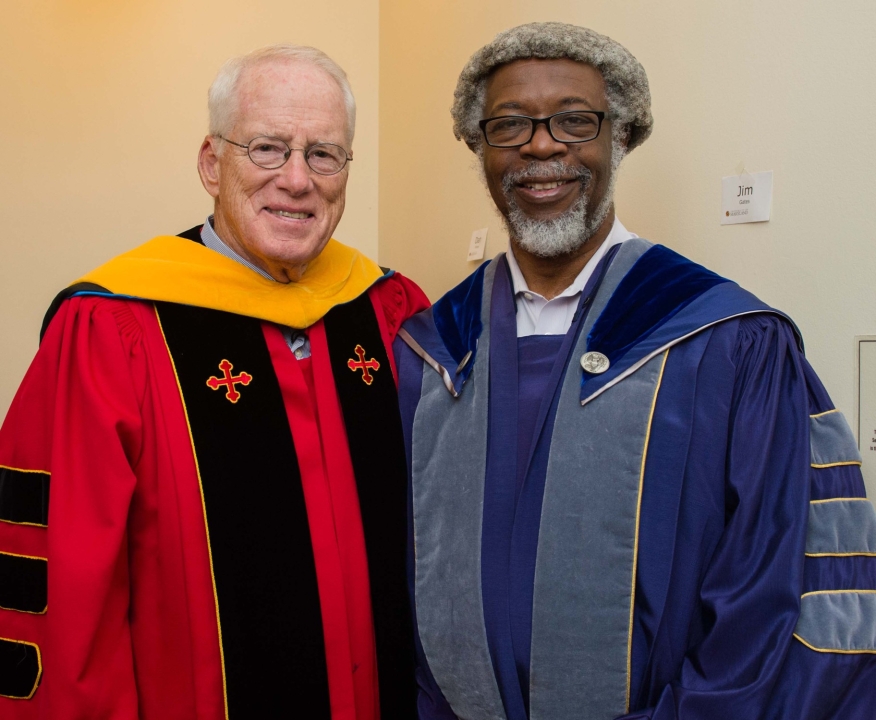
Despite the distance, Jesse Anderson chose to stick with UMD. He spotted and applied for a job in the physics machine shop, and was hired as a storekeeper under manager Frank Desrosier.  “I was studying electrical engineering and learning applied math, which made the shop stuff fun,” he said. “I was very interested in scientific methods and materials, and I learned a lot about metals.”  Over the course of a decade managing the Physics Material Store, he switched his studies to industrial technology, learning machining, drafting and lathe work, all of which he found intriguing and refreshing after his seven years in the Army, which were spent in somewhat monotonous finance and accounting work.Steve Rolston and Jesse Anderson at the 2018 staff awards.Steve Rolston and Jesse Anderson at the 2018 staff awards.

But military service had imparted meticulous record keeping habits that caught the attention of the physics purchasing manager, Camille Vogts. “I think she liked my paperwork,” chuckled Anderson. Vogts was often invited to vendor expos, which she regularly asked Anderson to attend. He recalls these outings as highlights of his UMD years, as they featured up-and-coming, whiz-bang technological developments in machining and laboratory devices. “Those shows were amazing to see,” Anderson recalls.

When an opening arose in the physics receiving office, personnel director Lorraine DeSalvo urged Anderson to apply. “I watched when he first arrived as the storekeeper in the shop,” said DeSalvo. “You just know when you see that sparkle in someone, that willingness and even eagerness to take on some new responsibilities.”

During his stint in receiving, Jesse and Danna enjoyed a four-week vacation, traveling to California to see Jesse’s brother. Upon his return, he found that business director Dean Kitchen had decided to expand his duties. “Dean said, ‘Well, if you’re good with receiving, you can likely handle purchasing, too,’” Anderson recalled.  And after the sudden death of purchasing manager Bob Dahms in 2013, Anderson’s purview expanded further.

From that time until his retirement in December 2021, Anderson faced a relentless workload that included the dizzying logistics of the 2014 move into the Physical Sciences Complex and the resultant need to coordinate purchasing, shipping and receiving for loading docks in separate buildings, ensuring a very busy life. And then, in March 2020, the campus abruptly ceased operations for all save a few staffers. Staying home was not an option for Anderson. During the COVID-19 shutdown, he continued to come to campus daily in support of the department.

“COVID was a lot,” Anderson said. “Managing the loading docks, sending up the mailed paychecks, dealing with the picked-up-in-person paychecks. Just a lot to manage.” Al Godinez, who staffed the Toll Building loading dock for many years, retired in December 2020. “Al urged me to consider retiring, too, but that would have been hard on the department,” Anderson said. And so he persevered for another year, until more normal operations were underway and a replacement could be hired.

For his efforts during the shutdown, Anderson received the first Lorraine DeSalvo Chair's Endowed Award for Outstanding Service, presented virtually by physics chair Steve Rolston in December, 2020.

“Jesse is amazing,” DeSalvo said. “He was always there, and has always gone above and beyond. I was so happy that he received the first DeSalvo Award.”  Anderson is the only physics employee to receive the department’s “outstanding service” staff award three times.

Reflecting upon his career, he reports no regrets, but a sense of appreciation. “It’s something to realize that the people you work with are the tops in their fields. It blows you away what people are doing,” Anderson said. “I enjoyed being familiar with the experiments, seeing the ingenuity involved. When you know the intent, helping with the supplying and the setting up and the installation is a thrill.”

Retirement is still a new sensation. Anderson finds the absence of a morning onslaught of anxious emails odd.  But he savored not having to face an icy I-95 when snow fell this winter. He enjoys seeing more of his daughter Jessica, who will soon finish her graduate degree in clinical psychology and already works as a social worker, doing home visits to assess children and to assist their parents. He is starting to digitize his vinyl record collection, and will soon enjoy a vacation with Danna to New Orleans. Also planned are trips to see family in Georgia, California and New York.Jesse Anderson and student employee Angela Madden at the 2005 staff awards.Jesse Anderson and student employee Angela Madden at the 2005 staff awards.

Throughout his 34 years in the department, Anderson was deeply appreciated for his even keel and reassuring demeanor. “We miss Jesse, because he was always such a tremendous person and colleague,” said Rolston. “I can’t recall ever seeing him frazzled or irritated in the least. But he richly deserves an excellent retirement. He did whatever was needed in the department, from filling dewars on the Toll loading dock to hand-delivering important mail. We can’t thank him enough.”

At a staff luncheon in December, Anderson’s colleagues recognized him with a Department of Physics purchase order for a happy and healthy retirement. Anderson expressed his gratitude and drew a laugh when noting, “I’ve spent more time with you than I have with anyone else in my life.” Anderson affirmed that he truly regards the physics department as family, meaning that at UMD he gained two: One begun in a momentous elevator ride, and one established through 34 years of camaraderie.