• Home
  • About Us
    • Physics Administration
    • Directions
    • Awards
    • Student Awards
    • Make a Donation
    • News
      • Research News
      • Department News
      • Newsletters
    • PTK Policy
  • People
    • All
    • Faculty
      • Current
      • Emeritus
      • Adjunct
      • Affiliate
      • Research Professors
    • Research Scientists
    • Postdocs
    • Staff
    • Lecturers
    • Visitors
    • Graduate Students
  • Research
    • Research Areas
      • AI and Physical Sciences
      • Astro Metrology
      • Atomic, Molecular & Optical
      • Biophysics
      • Chemical Physics
      • Condensed Matter Experiment
      • Condensed Matter Theory
      • Cosmic Ray Physics
      • Elementary Particles
      • Gravitation Experiment
      • Gravitational Theory
      • High Energy Physics
      • Nonlinear Dynamics, Chaos and Complex Systems
      • Nuclear Physics
      • Particle Astrophysics
      • Physics Education Research
      • Plasma Physics
      • Plasma Theory
      • Quantum Science and Technology
      • Quarks, Hadrons and Nuclei
      • Space Physics
    • Centers & Institutes
  • Academics
    • OSES Home (Student Services)
    • OSES News
    • Undergraduate Program
      • Prospective Students
      • Apply Now
      • Degree Requirements and Policies
      • Scholarships
      • Undergraduate Research
      • Advising
      • Undergraduate Forms
      • Undergraduate Events
      • Departmental Honors
      • Society of Physics Students
      • FAQ
      • Undergraduate Student Committee
    • Graduate Program
      • Prospective Students
      • Open House
      • Degree Requirements
      • Graduate Resources
      • Deadlines and Forms
      • PhD Defenses
        • PhD Defenses 2026
        • PhD Defenses 2025
        • PhD Defenses 2024
        • PhD Defenses 2023
        • PhD Defenses 2022
        • PhD Defenses 2021
        • PhD Defenses 2020
        • PhD Defenses 2019
        • PhD Defenses 2018
        • PhD Defenses 2017
        • PhD Defenses 2016
      • Events
      • Scholarships & Awards
      • Qualifier
      • Graduate Student Organizations
      • FAQ
    • Student Opportunities
      • GRAD-MAP
      • Graduate Student Organizations
      • Outreach Volunteering
      • Society of Physics Students
      • NSF S-STEM Program
      • Undergraduate Research
      • Women in Physics
      • Undergraduate Quantum Association
    • Courses
    • Academic Support
    • NSF S-STEM Program
    • Teaching Assistants
  • Events
    • Calendar
    • Physics Colloquia
    • W.J. Carr Lecture
    • Research Interaction Team (RIT) Math/Physics
    • Mechanick Quantum Biology Lecture
    • Irving and Renee Milchberg Endowed Lectureship
    • Charles W. Misner Endowed Lectureship in Gravitational Physics
    • John S. Toll Endowed Lecture
    • Prange Prize Lecture
    • Maryland Day
    • Outreach
      • Outreach Home
      • Physics is Phun
      • Discovery Days
    • Summer Programs
      • Physics Makers Camp
      • Physics of Quidditch
      • Science Discovery Camp
      • Advanced Physics Summer Program
      • Toolkit for Success
    • CUWiP
    • Vortex Makerspace
    • QURiSE Conference
  • Services
    • Building Access Requests
    • Computing Services
    • Conference Room Reservations
    • Department Operations Directory
    • Electronic and Mechanical Development
    • Hiring Procedures
    • Lecture Demo
    • Mental Health Resources
    • Parking
    • Physics Ombudspersons
    • Printing Services
      • Poster Print Request
    • Proposal Submissions
    • Purchase Order
    • Suggestion Box
    • Textbook Information
  • Give
  1. Home
  2. About Us
  3. News
  4. Department News

Written on 04 February 2026.

How Pokémon and Anime Inspired a Career in Physics

For some people, numbers just make sense. That’s always been the case for Samuel Márquez González (B.S. ’25, physics).

Márquez remembers his quantitative curiosity first sparking while he was playing Pokémon video games in elementary school. Inspired by his favorite character, Pancham, a pubescent dark- and fighting-type panda, Márquez wanted to come up with a formula that could calculate how much damage an attack would do based on each Pokémon’s level and type.

“I was never able to do it, if I’m being honest,” Márquez said, laughing.

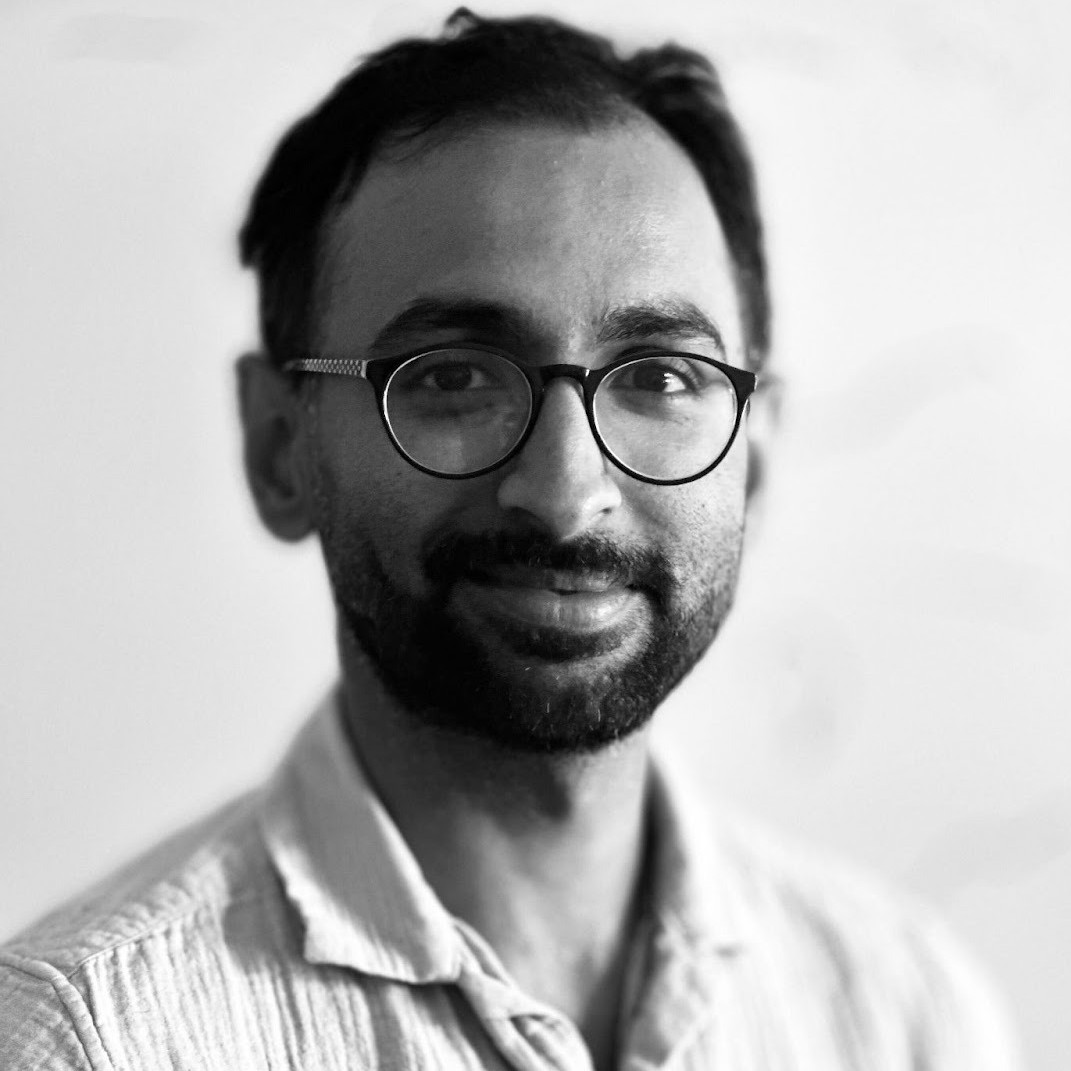
Photo of Samuel MárquezSamuel Márquez

Nonetheless, that quantitative penchant grew to new heights at the University of Maryland. Márquez spent his undergraduate career researching materials science and quantum physics. Now, he seeks Ph.D. opportunities in quantum information, where he hopes to forge new and surprising interdisciplinary connections—as he once did playing Pokémon.

“I challenge myself to think of creative ideas where I take two different topics and try to unify them,” Márquez said. “That’s what motivates my science.”

An anime, a new country and a devastating blackout

Márquez grew up in Venezuela. His family was familiar with ambitious, quantitative endeavors: His father was a computer scientist, his mother studied law and his sister became a civil engineer.

It was Márquez’s father who first got him interested in physics through an anime called “Evangelion.”

“My dad—he introduced me to the world of anime. In ‘Evangelion’, there's a governmental institution called NERV,” Márquez said. “I wanted to study physics because I wanted to work for NERV.”

When Márquez was in high school, his family moved to Brazil, where his dad found contract work. There, navigating academics through a new language in Portuguese, he developed his physics intuition. He remembers walking through town, using kinematic laws and trigonometry to estimate how fast an airplane was moving from the size of its shadow.

Márquez’s family returned to Venezuela once his dad’s contract ended and he finished high school. But shortly after, the country suffered a devastating blackout that led to dozens of deaths. The Guri Dam—the primary electricity source for more than 70% of the country—failed. The Márquez family was without power for a week.

“It was a crazy time I had to live through,” Márquez said.

Even after power was restored, intermittent blackouts persisted. His dad, who was employed by Nokia at the time, couldn’t work consistently, so the family traveled to Florida to live with an aunt in what they thought would be a temporary arrangement.

“I remember my bag was only five pounds. My plan was to come here, buy stuff, and then bring it back with me to Venezuela,” Márquez said. “But then, we ended up staying here.”

A circuitous path to UMD

With little English knowledge, Márquez moved to Bethesda, Maryland, to be near his sister, who was enrolled in a civil engineering master’s program nearby. His family eventually to Rockville, where he lives to this day. He wanted to study physics in college, but first, he had to learn the language.

“I only knew very basic English, like the ‘to be’ verbs,” Márquez said. “Six years ago, I wouldn't have been able to have a conversation.”

So, he enrolled in a one-year program for non-native English speakers called English Language for Academic Purposes at Montgomery College , where he developed a working fluency before continuing to earn an associate’s degree in physics and computer science.

It was during community college that Márquez began his physics research. He worked for a year at the National Institute of Standards and Technology, where he researched organic semiconductors that could improve solar cells and quantum technologies. He continued doing physics research at UMD’s Quantum Materials Center at UMD after transferring to College Park in spring 2024.

At UMD, Márquez worked with Physics Adjunct Professor Nicholas Butch and graduate student Gicela Saucedo Salas to study the material properties of crystals made of nickel and varying amounts of scandium and yttrium.

Altering the chemical composition of these crystals changes the magnetic and physical properties. Because these materials are used in superconductors, MRIs, and quantum computers, this research could help technology developers select the best composition for their specific needs.

“There are so many applications,” Márquez said.

Now, Márquez is applying for Ph.D. programs in quantum information science. He’s interested in quantum decoherence—a phenomenon where quantum particles begin to lose their “quantumness” and behave more like classical systems.

Meanwhile, he is independently writing a paper on how decoherence affects quantum entanglement, a property describing how the states of quantum particles are linked, which he will soon submit for peer review.

Márquez believes his captivation with numbers will always drive his work. But he doesn’t do scientific research just to satisfy a curiosity. He pursues discoveries that can improve the world—and sees quantum physics as potentially transformational.

“Technology can't advance without advancements in science,” he said. “I want to make a change in society by discovering something big.”

Written by Jason P. Dinh

Written on 04 February 2026.

Remembering and Giving Back

It’s been more than 30 years, but Jeff Saul (M.S. ’91, Ph.D. ’98, physics) still remembers the week that changed his life.

“I guess I must have been in the right place at the right time, because that week started with Joe Redish becoming my advisor, then, the same week, I had my first date with Joy—who’s now my wife—and I got my first teaching job,” Saul recalled. “That week changed everything.”Jeff Saul and Joe Redish in cap and gown at Saul's PhD ceremony.Jeff Saul and Joe Redish

At the time, Saul was a physics graduate student at the University of Maryland, looking forward to a career teaching college-level physics. The late Physics Professor Joe Redish, a nuclear theorist who became an internationally recognized expert in physics education research, became Saul’s mentor and friend and made him part of the new Maryland Physics Education Research Group (PERG).

“It was great to work for Joe. It was exciting and fun,” Saul recalled. “For me, it was the first time I was working in a physics lab where everything just sort of clicked.”

In their work, Saul and Redish and the rest of the founding Maryland PERG group members (Richard Steinberg, Michael Wittmann, Mel Sabella, and Bao Lei) conducted research on students’ physics learning, developed new assessment strategies, and explored innovative, activity-based approaches to teaching college-level physics. As they developed strategies to make physics education less lecture-driven and more interactive, Saul and Redish operated on the same wavelength—in more ways than one.

“If you saw the two of them together, you could see the connection,” recalled Saul’s wife, Joy Watnik-Saul. “They both had the beards, and they both had the round glasses. And they both wore that same kind of fedora-type hat. So, people would sometimes call Jeff a ‘Mini Joe.’ Joe was just a really important part of Jeff’s life and his whole career.”

For Saul, Redish’s mentorship and their work in physics education research became the inspiration for a decades-long career as a teacher, advocate, innovator in physics and STEM education, and physics faculty member at the University of Central Florida, Florida International University and the University of New Mexico. Now retired, Saul is committed to paying that life-changing UMD physics experience forward.

“I knew I wanted to make a contribution that would last longer than me,” Saul explained. “I want physics education research to continue at Maryland, and I want Maryland to continue working at making physics more fun and more accessible and helping students get more out of it.”

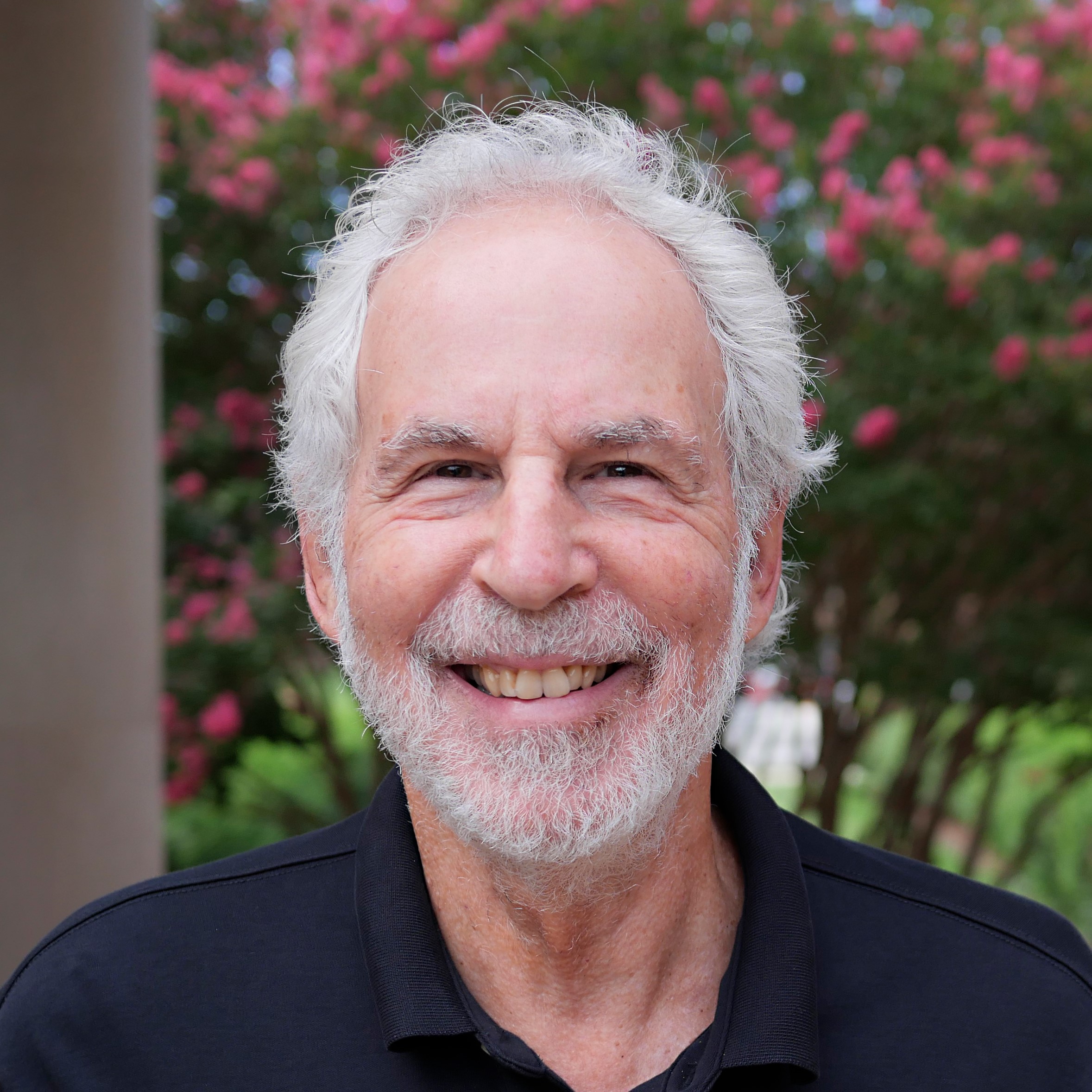
Now, Saul and his wife are doing their part by making a planned gift to Forward: The University of Maryland Campaign for the Fearless, a $2.5 billion initiative that officially launched in November 2025 to accelerate advances in research, education and science.Joy Watnik-Saul and Jeff SaulJoy Watnik-Saul and Jeff Saul

“Joe Redish was one of the pioneers of physics education research – the recognition that if we want to improve the teaching of physics, it needs to be done by physicists, treating it as a science.  This has since broadened throughout the sciences as discipline-based science education research,” Physics Chair Steven Rolston explained.  “This gift from Jeff and Joy emphasizes the outsized impact of Joe’s work and helps continue the tradition here at UMD.”

The Sauls’ generous gift will establish the Dr. Jeff Saul and Joy Watnik-Saul Endowed Distinguished Graduate Fellowship in Physics.

“It’s a fellowship for graduate students doing physics education research,” Saul explained, “and the fact that there's a fellowship for that helps increase the prestige of the field, and it helps attract good graduate students to continue to work in the field.”

To support physics undergraduates interested in physics education, they will also establish the Dr. Jeff Saul and Joy Watnik-Saul Endowed Undergraduate Student Support Fund in Physics.

“The undergraduate scholarship is for a student doing physics education research,” Saul said. “The idea is to get students interested in this field and keep them going forward.”

The Sauls’ gift also includes a contribution to name a collaboration room in the Physical Sciences Complex in memory of Redish.

“A research group really should have its own space and its own conference room where they can get together and talk, and I remember that being part of an active group was a big part of being at Maryland, working on a lot of different things, sharing ideas and really being a team,” Saul said. “And I thought, what a great way to memorialize Joe as well.”

The Sauls’ commitment is also part of the Bequest Legacy Challenge, an incentive program that provides an immediate cash match for donors who document new or increased planned giving commitments to the College of Computer, Mathematical, and Natural Sciences. The Sauls hope their gift can inspire others to do the same thing.

“I'm happy we’re able to make a lasting difference for another generation of students,” Saul said.

Saul says he’ll never forget the many ways that UMD changed his life. Now, it’s all about giving back.

“I owe my career to the University of Maryland, and the people who mentored me and worked with me,” he reflected. “This is a way that I can continue to make a difference and give something back.”

Written by Leslie Miller

Written on 04 February 2026.

Air Force Veteran Rekindles His Passion for Science at UMD

Morgan Smith (B.S. ’25, physics) wasn’t your typical undergraduate student. Before he even began his undergraduate degree at the University of Maryland at age 29, he’d traveled the United States and dedicated six years to serving his country in the military.

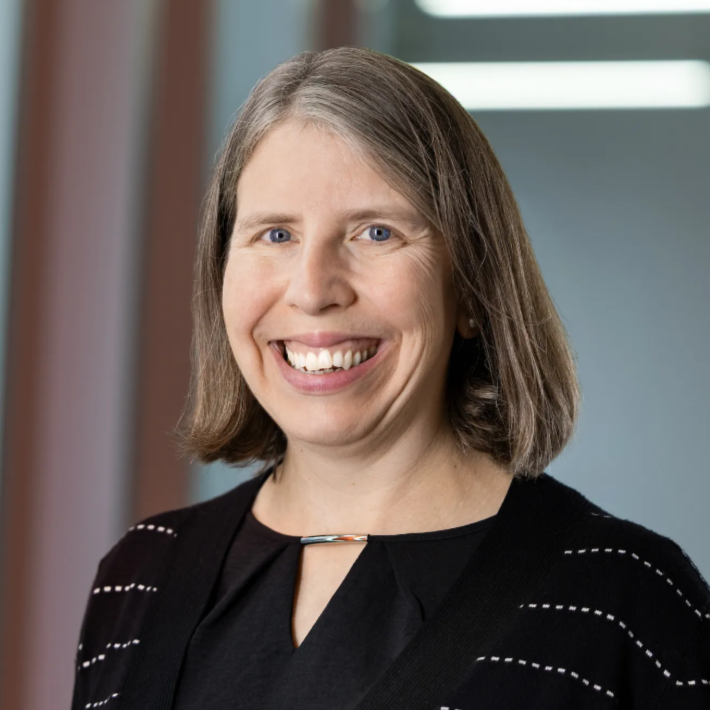
After graduating high school in 2010, Smith worked various odd jobs then spent two years traveling around the country, from Colorado to Florida to northern Virginia, where he enrolled in community college and enlisted in the U.S. Air Force. He spent the next six years in the military as a cryptologic language analyst, helping the intelligence community with Arabic translation and communication. But he always had goals beyond his service.Morgan SmithMorgan Smith

Growing up near Chattanooga, Tennessee, Smith dreamed of becoming an aerospace engineer. As a kid, he built remote-controlled airplanes with his friends and read books about everything from rocket ships to the Wright brothers. He won a prize in his high school science fair for a project analyzing airfoil shapes using a wind tunnel.

“My goal was to return to my scientific passions,” he said.

Now, after completing his physics degree and a minor in computer science at UMD, Smith works at NASA as a software engineer, tying together his interests in science and public service.

“What’s most rewarding to me is working toward a mission that is aligned with expanding humanity’s knowledge,” he said, “in bettering society and solving the puzzles necessary to do that.”

A career takes flight

You might think that an airman with a passion for planes would work in aeronautics for the Air Force, but that wasn’t the case for Smith.

“I wanted to gain a good skill while I was enlisted,” he said.

For him, that meant mastering a foreign language.

Smith earned an associate’s degree in Arabic language and foreign literature from the Defense Language Institute Foreign Language Center. While enlisted, he also earned an associate’s degree in intelligence studies and technology from the Community College of the Air Force and a bachelor’s degree in political science from Arizona State University.

He reached the rank of technical sergeant-select and spent his days translating documents and communications. Then, more than five years into his career, COVID-19 happened.

“Suddenly, I had a lot of time to think and evaluate where I’ve been. I remembered how much passion and joy I got in my science classes, especially physics,” he said. “Physics encompasses so much of the science about our universe. In high school, I liked it because I thought that planes were cool. But as I got older, I began to realize that, actually, the whole universe is cool.”

So, Smith reoriented his career toward science. It wasn’t easy, since he had forgotten quite a bit of math during his time in the Air Force.

“It took a lot of personal time and dedication to get those skills back. I actually used Khan Academy,” he said, laughing.

But his efforts paid off when he was admitted to UMD for the fall of 2021.

Sticking the landing at UMD

Smith didn’t find it unusual to be an undergraduate student in his 30s; instead, he says it was an asset.

“Being a little older and assured in what I was doing and having learned from past experiences, I was able to be disciplined and hopefully provide mentorship and direction to other students,” Smith said.

One of his most rewarding experiences was designing hands-on lab lessons for quantum science and technology courses under the mentorship of Alicia Kollár, a Chesapeake Assistant Professor of Physics Endowed Chair, and Alessandro Restelli, an associate research scientist at the Joint Quantum Institute. The lessons, which he designed in collaboration with the Institute for Robust Quantum Simulation, introduced students to the tools used in real-world quantum science, such as interferometers and vector network analyzers.

In 2023, Smith joined the NASA Pathways program, which is designed as a pipeline to full-time employment with the space agency. At NASA, he works on a variety of computing initiatives, including encryption, containerization and satellite telemetry. One of his current projects uses machine learning to determine whether anomalies detected by satellites are nefarious actors or otherwise warrant further investigation.

Whether he is learning coding languages or new physics concepts, Smith believes his experience mastering foreign languages helps.

“Learning all these different programming languages on the fly was definitely linked to being able to learn foreign languages,” he said. “It’s all about picking up patterns.”

Smith continues to exercise that muscle in his free time. He’s learning Japanese and even took up two Japanese forms of martial arts. He trains in karate and a traditional weapons art called Katori Shinto Ryu, which involves swords and bo staffs, practicing daily and formally training three times a week.

As he navigates his career in science, he believes his ability to learn on the fly will be a great asset. And wherever that career takes him, he wants to ensure that his work benefits society.

“As you grow older, you think a little more about the world and your place in it,” he said. “So having values and a mission aligned with what I believe in is hugely important to me.”

Written by Jason P. Dinh

Written on 04 February 2026.

Faculty, Staff, Student and Alumni Awards & Notes

Faculty and Staff 

  • Jim Drake's work was featured in Space Daily. 
  • Jay Sau was quoted in Physics World
  • Raman Sundrum was quoted in Popular Mechanics.
  • Erik Blaufuss was quoted in The New York Times.
  • Hassan Jawahery spoke to Science Friday.
  • Frank Zhao’s work was highlighted in phys.org.

Written on 04 February 2026.

From Physics to Finance

For Nathan Frohna (B.S. ’22, physics, MQF ’25, quantitative finance), an undergraduate degree in physics from the University of Maryland opened the door to business school, a master’s degree and an unexpected detour—from science to the financial world.

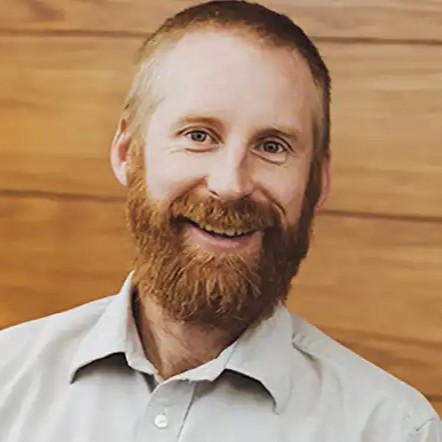
“When I was starting college at UMD, I can honestly say that I thought I’d always stay in physics research and academia. Finance was not on the radar,” Frohna said. “But I have come to appreciate that just as physics governs our universe, business and finance govern the world we live in and interact with, and solving the problems, complexities and challenges in that field can be just as rewarding. I feel very good about my path.”Nathan FrohnaNathan Frohna

Frohna’s path may have shifted toward finance, but he didn’t leave physics behind. Now working as an associate on the financial risk and assessment team at Morgan Stanley in Baltimore, he discovered that many of the skills he learned and applied in physics—tools like critical thinking, complex problem-solving, programming and analytical thinking—are invaluable to his work in finance as well.

“I’m still quite new in my current role, but so far, the things that are important in my day to day work now—having an intuition with statistics and logical processes, the ability to persevere working through long, complex problems, and the instinct to always develop a mental understanding of all the variables and unknowns—are skills that I honed from years of studying physics,” Frohna explained. “Solving puzzles in the financial world has lots of interesting rewards, benefits and consequences that I didn’t really see with physics, but many of the problems are remarkably similar.

Puzzles waiting to be solved

Frohna has always looked at the world around him as an endless array of puzzles waiting to be solved.

“Even as a kid, I was all about trying to understand the reality around me, and that kind of led me to pick physics as my main interest, my passion and eventually my major for undergrad,” Frohna said. “There’s just something about being able to quantify the world around me. I love the problem-solving.”

Even before he started studying physics in college, Frohna took a deep dive into physics videos on YouTube.

“I think that through the years, that’s where I’ve gotten probably 90% of my physics knowledge, just finding interesting physics topics and diving into them,” he said. “Watching those videos, just kind of stumbling down different rabbit holes online, would give me the same enjoyment as playing video games or hanging with friends. There was always so much more to learn.”

As a physics major at Maryland, Frohna embraced every challenge, from thermodynamics to quantum mechanics, the tougher the better.

“I would say quantum was where the intuition that drove me through physics just failed for me, because you have to think about it completely differently,” Frohna recalled. “That was where I was struggling the most, but at the same time, it was the most fun challenge that I’ve had academically. It was really inspiring. I felt like if you can tackle something like that, you’re pretty much golden. You can do anything.”

A bridge to the future

Though Frohna loved physics, he couldn’t help wondering how it would fit into his future career plan. During his senior year, his UMD business student girlfriend convinced him to join her team for the Impact Competition, where student teams pitch innovative projects and compete for funds to advance their work. For Frohna, the experience was life-changing.

“I took over as the analytics guy, the numbers guy for the team’s pitch, and I think that’s when I realized that the way I was taught to solve problems in physics at Maryland is extremely translatable to business and finance,” he said. “It helped me see in a very meaningful way how physics could be a bridge to that world.”

Inspired by the discovery, Frohna went on to earn his master’s degree in quantitative finance at UMD’s Robert H. Smith School of Business, where he saw an even stronger connection between physics and finance.

“I learned there are plenty of equations in finance that look remarkably similar to physics equations,” Frohna explained. “For example, Brownian motion--the random motion of particles suspended in a medium, and the mathematics that describe how the system evolves with respect to diffusion--and the Black-Scholes model, which is a mathematical model for the dynamics of a financial market, are incredibly similar.”

Now, in his work at Morgan Stanley, Frohna leverages his physics skill set to help the company meet regulatory standards and manage risks in its day-to-day operations.

“I work on financial regulatory reporting, testing financial IT SOX controls for our annual Form 10K filing,” he said of his work measuring the accuracy and integrity of financial reporting. And I feel my physics background suits me well, as each control I test involves systems and software that I am unfamiliar with,” he said. “Trying to understand and develop theories for where risk may arise in these processes always comes down to logic, evoking the same skills I needed when I was facing unfamiliar classical thermodynamics problems in physics.”

Frohna hopes that as he gains more experience, his work will take him even deeper into quantitative finance.

“I’d like to get to a place where I’m really challenged, just like I was with quantum mechanics, because if I can get to a place where I can work on problems that push me to my limit, that’s where I can get the most out of it,” he explained. “What’s great about being at Morgan Stanley is that it’s so big, and they promote moving up and moving around within the company, so this is a great place for me to grow.

For Frohna, it’s all about applying his physics knowledge in a way that makes a difference. And he couldn’t be more grateful for the degree that started it all.

“I like mentioning to people that I have a degree in physics from Maryland, even before I mention quant finance. It’s something I’m really proud of,” Frohna said. “Physics taught me so much about deep analytical, challenging problems and what you can accomplish when you try not to get too overwhelmed, and you just keep putting in the effort. My physics degree opened doors I didn’t expect, and I think it’s the most valuable thing I’ve ever done for myself.”

Written by Leslie Miller

More Articles …

  1. How Physics Powers EA’s Next-Gen Video Games
  2. Conducting Quantum Experiments in the ‘Coolest’ Lab on Campus
  3. Young Suh Kim, 1935 - 2025
  4. Gates Receives 2025 Barry Prize, Named Fellow of the American Mathematical Society and African Academy of Sciences
  5. Barkeshli Selected for Prestigious Simons Collaboration to Study Inner Workings of Artificial Intelligence

Page 6 of 153

  • 1
  • 2
  • 3
  • 4
  • 5
  • 6
  • 7
  • 8
  • 9
  • 10
  • Physics Administration
  • Directions
  • Awards
  • Student Awards
  • Make a Donation
  • News
    • Research News
    • Department News
    • Newsletters
  • PTK Policy

College and Department Links

Department of Physics

Physical Sciences Complex
4296 Stadium Dr
College Park, MD 20742
Phone: 301.405.3401

Information

  • Campus Directory
  • Undergraduate Research
  • Scholarships
  • Prospective Undergraduates
  • Directions & Transit
  • Web Accessibility
© 2026 University of Maryland - Department of Physics
Top
  • Home
  • About Us
    • Physics Administration
    • Directions
    • Awards
    • Student Awards
    • Make a Donation
    • News
      • Research News
      • Department News
      • Newsletters
    • PTK Policy
  • People
    • All
    • Faculty
      • Current
      • Emeritus
      • Adjunct
      • Affiliate
      • Research Professors
    • Research Scientists
    • Postdocs
    • Staff
    • Lecturers
    • Visitors
    • Graduate Students
  • Research
    • Research Areas
      • AI and Physical Sciences
      • Astro Metrology
      • Atomic, Molecular & Optical
      • Biophysics
      • Chemical Physics
      • Condensed Matter Experiment
      • Condensed Matter Theory
      • Cosmic Ray Physics
      • Elementary Particles
      • Gravitation Experiment
      • Gravitational Theory
      • High Energy Physics
      • Nonlinear Dynamics, Chaos and Complex Systems
      • Nuclear Physics
      • Particle Astrophysics
      • Physics Education Research
      • Plasma Physics
      • Plasma Theory
      • Quantum Science and Technology
      • Quarks, Hadrons and Nuclei
      • Space Physics
    • Centers & Institutes
  • Academics
    • OSES Home (Student Services)
    • OSES News
    • Undergraduate Program
      • Prospective Students
      • Apply Now
      • Degree Requirements and Policies
      • Scholarships
      • Undergraduate Research
      • Advising
      • Undergraduate Forms
      • Undergraduate Events
      • Departmental Honors
      • Society of Physics Students
      • FAQ
      • Undergraduate Student Committee
    • Graduate Program
      • Prospective Students
      • Open House
      • Degree Requirements
      • Graduate Resources
      • Deadlines and Forms
      • PhD Defenses
        • PhD Defenses 2026
        • PhD Defenses 2025
        • PhD Defenses 2024
        • PhD Defenses 2023
        • PhD Defenses 2022
        • PhD Defenses 2021
        • PhD Defenses 2020
        • PhD Defenses 2019
        • PhD Defenses 2018
        • PhD Defenses 2017
        • PhD Defenses 2016
      • Events
      • Scholarships & Awards
      • Qualifier
      • Graduate Student Organizations
      • FAQ
    • Student Opportunities
      • GRAD-MAP
      • Graduate Student Organizations
      • Outreach Volunteering
      • Society of Physics Students
      • NSF S-STEM Program
      • Undergraduate Research
      • Women in Physics
      • Undergraduate Quantum Association
    • Courses
    • Academic Support
    • NSF S-STEM Program
    • Teaching Assistants
  • Events
    • Calendar
    • Physics Colloquia
    • W.J. Carr Lecture
    • Research Interaction Team (RIT) Math/Physics
    • Mechanick Quantum Biology Lecture
    • Irving and Renee Milchberg Endowed Lectureship
    • Charles W. Misner Endowed Lectureship in Gravitational Physics
    • John S. Toll Endowed Lecture
    • Prange Prize Lecture
    • Maryland Day
    • Outreach
      • Outreach Home
      • Physics is Phun
      • Discovery Days
    • Summer Programs
      • Physics Makers Camp
      • Physics of Quidditch
      • Science Discovery Camp
      • Advanced Physics Summer Program
      • Toolkit for Success
    • CUWiP
    • Vortex Makerspace
    • QURiSE Conference
  • Services
    • Building Access Requests
    • Computing Services
    • Conference Room Reservations
    • Department Operations Directory
    • Electronic and Mechanical Development
    • Hiring Procedures
    • Lecture Demo
    • Mental Health Resources
    • Parking
    • Physics Ombudspersons
    • Printing Services
      • Poster Print Request
    • Proposal Submissions
    • Purchase Order
    • Suggestion Box
    • Textbook Information
  • Give