Recent Physics Grad Sees Many Roads Ahead
- Details
- Published: Friday, September 02 2022 00:01
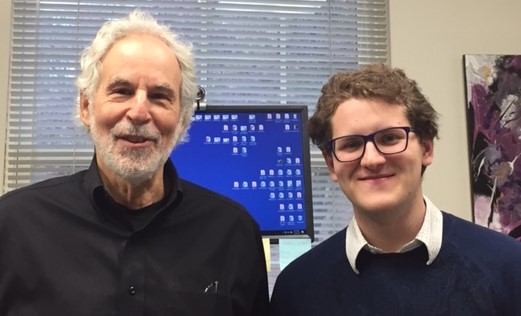
As Jeffrey Wack (B.S. ’22, physics; B.S. ’22, mathematics) walked across the graduation stage in May 2022, he carried with him a lot of uncertainty about where to go next. His trepidation came from his voracious curiosity for a broad range of things, primarily within physics and math—the subjects of his two degrees—but also from his interests in teaching, outreach and music. The prospect of having to pick just one path forward felt confining to Wack. But that same curiosity served him extremely well during his time at the University of Maryland, and it left him with many opportunities for next steps.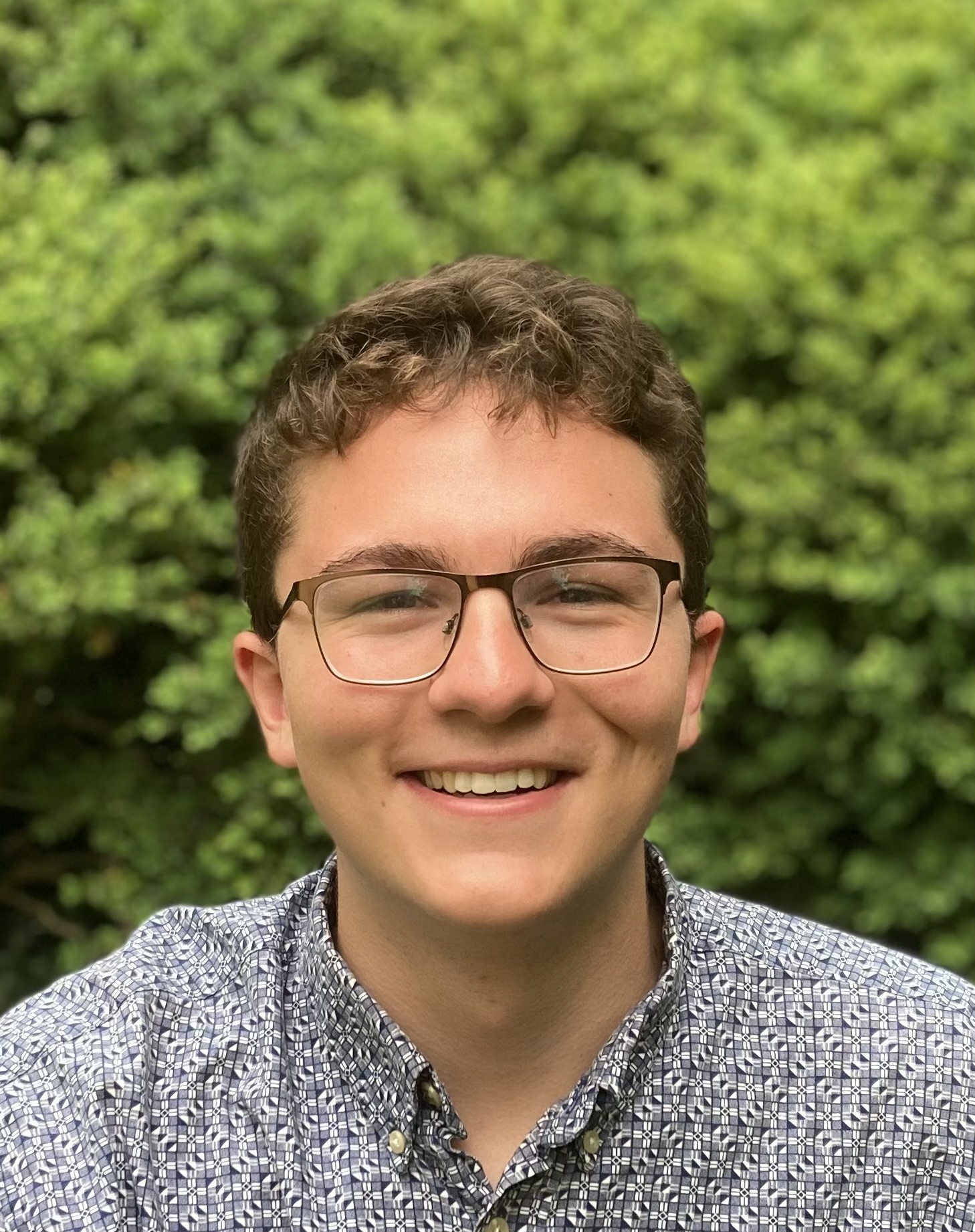 Jeffrey Wack (courtesy of same)
Wack collected an impressive resume at UMD. He taught an introductory course on nuclear physics and reactor operations, studied physics in Florence, participated in an optomechanics research project that resulted in a publication, made significant contributions to experimental research with coplanar waveguides, and co-taught a self-designed course on music theory and math. Since graduating, he began working as a fellow at the Museum of Math in New York City, sampling the working world while contemplating graduate school.
“The four years I spent at UMD were the best four years of my life this far,” Wack says. “I’m already having a blast living in New York, but I’m going to miss all the great people I met in College Park.”
Born and raised in Carroll County, Maryland, Wack attributes his broad scientific curiosity to his upbringing and the influence of his father.
“My dad is a pediatrician, but he's very interested in all sorts of science,” Wack says. “I have memories of playing the ‘why’ game with him and just asking him why. You know, you ask why, and then no matter what the answer is, you can always ask why again, and you sort of end up down this rabbit hole.”
Although the younger Wack asked questions about everything, from why fruit grows to what an immune system is, his earliest fascination orbited around astronomy. Then, during high school, his curiosity shifted gears, landing on the curiously strong connection between physics and mathematics.
“There was something about physics and calculus in particular that I really enjoyed,” says Wack. “Those relationships between position and velocity and acceleration, there's something about them that really caught me. Like ‘that's awesome!’”
Following in his older sister’s footsteps, Wack chose to attend UMD, drawn in by the opportunities for learning all things physics and math at a large university. In the fall of 2019, Wack studied abroad in the Maryland-in-Florence program, specifically designed for physics students to continue taking required courses while exposing themselves to a foreign culture and language. He was particularly inspired by the instruction of Luis Orozco, now professor emeritus at UMD and a Fellow at the Joint Quantum Institute (JQI). After the semester abroad ended, Wack reached out to Orozco to see if he could work with him on a research project. Orozco agreed, and during the summer of 2020 invited him to join a nanofiber project.
Orozco’s research interests include optomechanics, the study of interactions between mechanical systems and electromagnetic waves. The project Wack joined was a multi-national collaboration, with an experimental group at Shanxi University in China and a collaborator at the University of Conception in Chile. The goal was to use light to cool an optical fiber as it travels through it.
Optical fibers are used to confine and direct light, whether it’s for carrying internet signals to homes or aiding in research. The fibers Orozco’s team used are stretched incredibly thin, about a hundred times thinner than human hair. These nano-fibers guide light, but they hardly confine it—some of the light actually travels outside the fiber. This is particularly useful for studying the interaction of light with atoms and ions, which can be brought close to (but remain outside of) the fiber. The downside is that the fiber is quite fragile and prone to tiny vibrations that shake and twist it, disturbing the light as it travels.
To minimize these tiny twists, the team sent in a laser beam of a particular intensity. The interaction of the beam with the material inside the fiber counteracted the fiber’s twisting, minimizing that particular vibration and thus cooling down the fiber overall. To detect this cooling, the team sent a second, probing laser beam and observed how much the fiber’s twists and turns perturbed that beam.
Wack’s role was to analyze the raw photodetector data from the probing laser and use it to extract information about the fiber twists. He analyzed the data and concluded that the method was successful, as detailed in a recent paper published in Photonics Research. But Wack wasn’t satisfied with simply analyzing data. He played the ‘why’ game, trying to understand the deeper physics of what was going on. He made his own, simplified model of the cooling mechanism—not to put in the paper, but enough to model the system to his own satisfaction. “I did that just to entertain myself,” Wack explains.
"Jeffrey contributed crucially in understanding the cooling process, thanks to his analysis of the distribution of the temperature fluctuations,” Orozco says. “The plots he produced made it into figure two of the publication."
By the summer of 2021, COVID-19 restrictions were easing up, and Wack was itching to try hands-on lab work. He joined the group of one of UMD’s most mathematically minded experimentalists, Chesapeake Assistant Professor of Physics and JQI Fellow Alicia Kollár. Kollár’s research concerns coplanar waveguides—little paths printed on a circuit board that microwaves can travel through—to create never before seen geometries and interaction patterns between bits of quantum information known as qubits.
Kollár’s creation of novel geometries relies on a peculiar theoretical property of coplanar waveguides: that stretching or scrunching them up does not change the frequency of microwaves they carry. Wack’s role was to make careful measurements to test how well this property holds in practice.
To investigate this, Wack had to get his hands dirty with several different lab skills. He had to learn to solder and assemble electronics, work with graduate students to create coplanar waveguides of different lengths, analyze data, and model the system using purpose-built software.
“Jeff did really phenomenal work,” Kollár says. “He was really just sort of diving into research, almost like a senior graduate student.”
Wack automated some simulation steps that had previously been done manually and used the new process to quantify a confounding effect—that the frequency change depended on the number of times that the waveguide was bent. If this pattern is confirmed experimentally, Kollár says, it will be used in many future experiments and theoretical studies alike.
On top of his studies and research, Wack also found ways to participate in outreach and teaching throughout his time at UMD. He volunteered to film a slinky demonstration of wave propagation. He taught an introductory course on nuclear physics and reactor theory to undergraduates for the Maryland Undergraduate Training Reactor (MUTR) program, where undergrads can become certified reactor operators. He also has an interest in music, having sung and performed in musicals in high school and having picked up electric bass during his college years. “And also, because I'm such a geek for computers, I do some digital synthesis,” Wack says. He found a way to weave this in with his math interest by creating a co-teaching a course on the math of music for the Student Initiated Courses (STIC) program.
Upon graduating last spring, Wack decided to take a gap year. This summer, he started a fellowship at the Museum of Math, combining his passion for mathematics and outreach. As a docent there, he talks to visitors about the exhibits and thinks a lot about math. As part of the fellowship, he’s also pursuing a personal project: planning a live performance that combines music, physics demos and lectures on math and music theory.
“So many of the paths forward seem appealing to me,” Wack says. “I'm going to go to grad school at some point, but this is part of why I wanted to do a gap year. I'm hoping that over the next two years, it'll come to me like ‘Aha! This is exactly what I want to do.’”
Written by Dina Genkina